

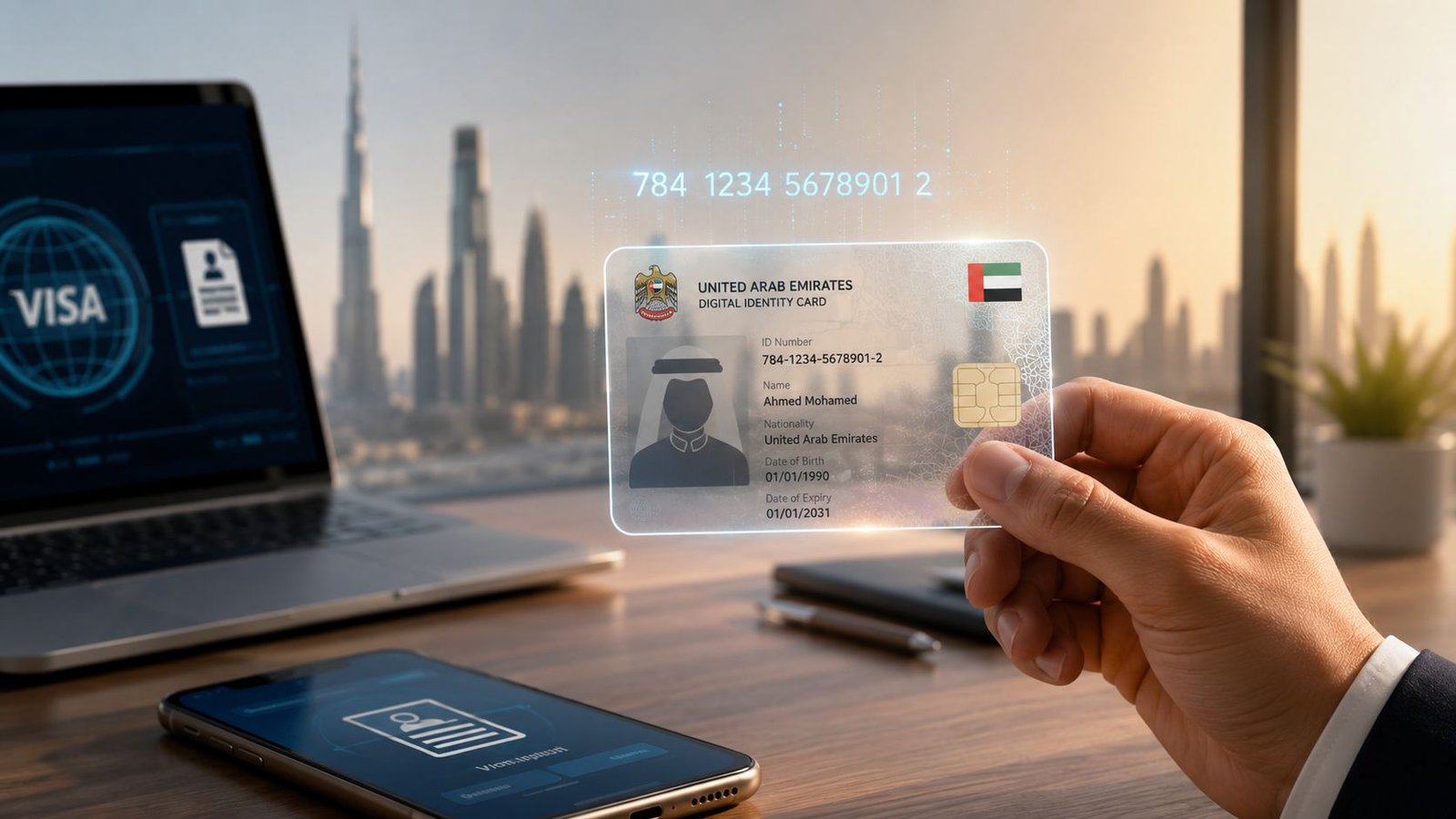
A Unified Number, usually called a UID, is the unique 9-digit identification code assigned by UAE immigration to a person on their first entry into the country. It becomes your master reference inside the federal identity system, and if that record is wrong, your visa, Emirates ID, business setup, and sometimes even your bank onboarding can slow down or stop.
Many founders search “what is unified number” and land on the wrong topic. In the United Arab Emirates, the phrase can also refer to business telecom services, but that's not the number that matters for your immigration file. If you're setting up in Dubai, Abu Dhabi, Sharjah, or a free zone, the UID is the one that affects your personal record with the government.
Table of Contents
- Your Essential UAE Identification Number Explained
- What Exactly Is the Unified Number (UID)
- How to Find Your Unified Number
- Why Your Unified Number Is So Important for Business and Visas
- Common Problems and How to Fix Them
- Managing Your UAE Journey with Expert Support
Your Essential UAE Identification Number Explained
The Unified Identification Number, or UID, is the core immigration reference attached to your name in the UAE. It isn't your Emirates ID number, and it isn't a commercial phone product sold under a similar name.
That distinction matters because the telecom version of “Unified Number” appears in some UAE business content, but it describes a business communications setup, not your immigration identity. This article is only about the government-issued UID used in visa and identity processes.
If you're entering the United Arab Emirates as an investor, employee, freelancer, dependent, or visitor who later changes status, your UID becomes the thread that ties your records together. Government systems use it to match your entry history, visa actions, and related identity records.
Practical rule: If a government form, visa workflow, or PRO request asks for a unified number in an immigration context, think UID, not phone number.
For a founder, this number often becomes relevant earlier than expected. It can affect investor visa processing, employee onboarding, family sponsorship, Emirates ID steps, and the consistency of the data banks and compliance teams review later.
A simple way to think about it is this:
| Number | What it is | What it's used for |
|---|---|---|
| UID | Your immigration master file reference | Entry records, visa processing, identity matching |
| Emirates ID number | Your national ID card number after residency | Daily identification and many public/private services |
| Visa file details | Application-specific visa references | Particular visa records and processing stages |
When people ask what is Unified Number in the UAE, they usually need this answer. It's the identifier that sits underneath much of your official record, and getting it right early saves time later.
What Exactly Is the Unified Number (UID)
A UID is a permanent immigration identifier created for an individual in the UAE federal system. Its job is simple. It keeps one person tied to one underlying record, even as that person moves from entry permit to residence visa, or from one sponsor to another.
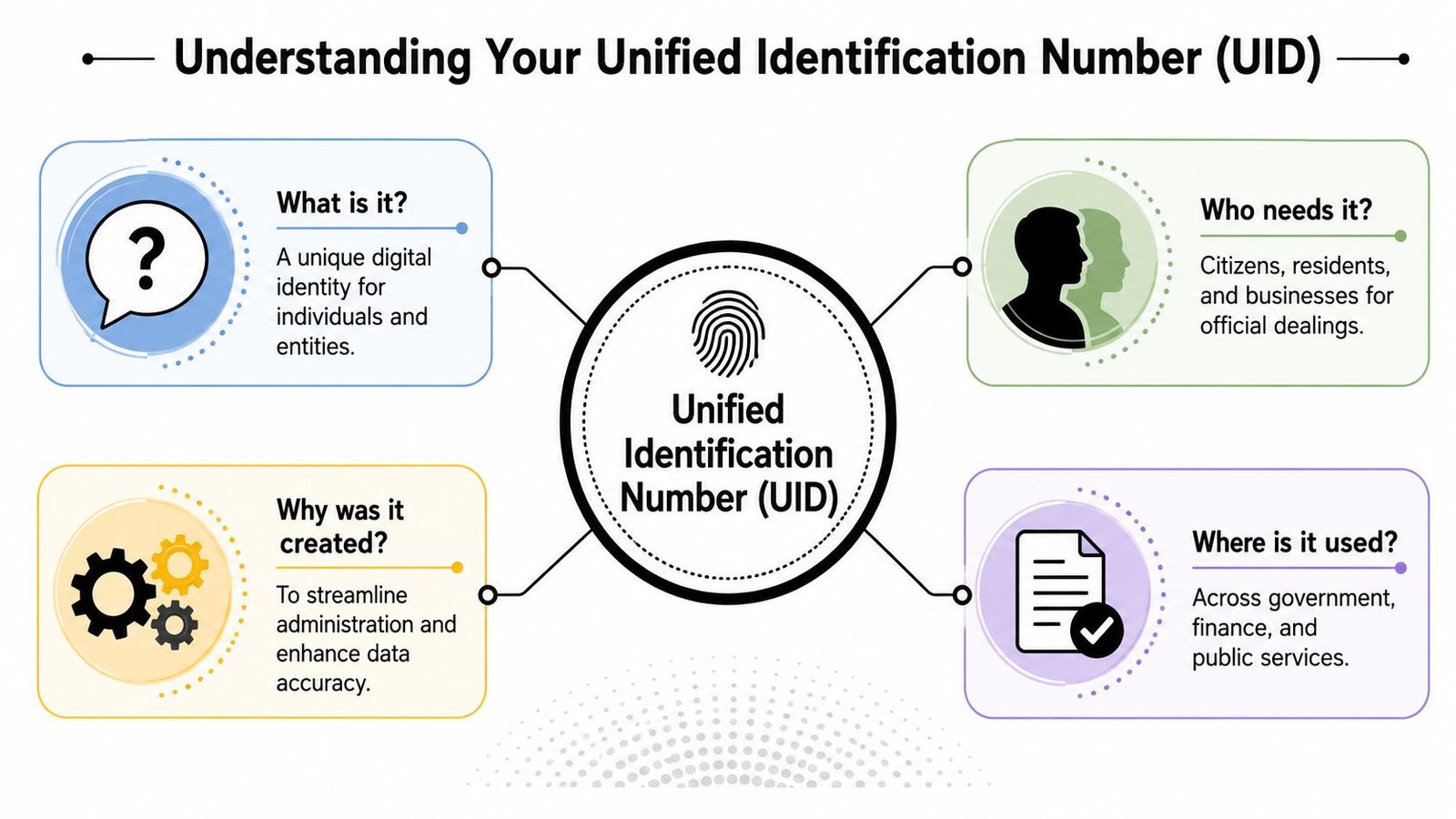
Why do people confuse the UID with other numbers
The confusion usually comes from documents. A person may see a visa number, a file number, an Emirates ID application reference, and a UID at different stages, then assume they all mean the same thing. They don't.
The UID is the immigration identity anchor. The Emirates ID number comes later as part of the resident identity card system. A visa number or file number relates to a specific application or document, while the UID is meant to remain the consistent personal record behind those actions.
If the UID is the person's base record, the other numbers are labels attached to particular services or documents.
Who gets a UID in the UAE
In practical terms, anyone entering the UAE and appearing in the immigration system may end up with a UID record. That's why old visits matter. A founder arriving now for company formation may already have a UID from a previous tourist trip years ago.
This is one reason experienced PRO teams check historical records instead of assuming a new application will create a clean file. A past entry can still shape the current process.
Is the UID always shown in the same format
No, and that's one of the main reasons people get stuck. A UAE-focused explainer notes that the Unified Number's format can look inconsistent. It is typically a 9-digit number, but it may appear as a 6-digit code on a passport entry stamp or be embedded within file details on some visa documents, and it often appears in the ICP app under residency details, as explained in this guide to the UAE UID format and where it appears.
That inconsistency doesn't mean you have multiple identities. It usually means the same underlying record is being displayed differently across channels and documents.
- On older or travel-related records, the number may be harder to spot.
- In app-based systems, it may sit under residency or identity details.
- On visa documents, it can appear near file information rather than in a clearly labelled box.
If you're unsure, don't guess. One wrong digit can send an application into manual review.
How to Find Your Unified Number
The fastest way to find your UID is usually to check the visa or immigration document already tied to your entry record, then confirm it against your digital profile if available.
Where should you check first
Start with the document that created or carried your immigration file.
- Entry permit or e-visa: Look around the file details section. Depending on document layout, the UID may be shown directly or appear within a longer file reference.
- Residence visa page or visa record: Check the upper sections and any area labelled with file or unified data.
- Passport entry stamp history: In some cases, the number appears in shortened form rather than as the familiar full 9-digit presentation.
If you're working through company setup, ask for the exact immigration document used to open your process. Founders often receive only the latest approval PDF and miss the earlier document that shows the number more clearly.
What if you only have digital records
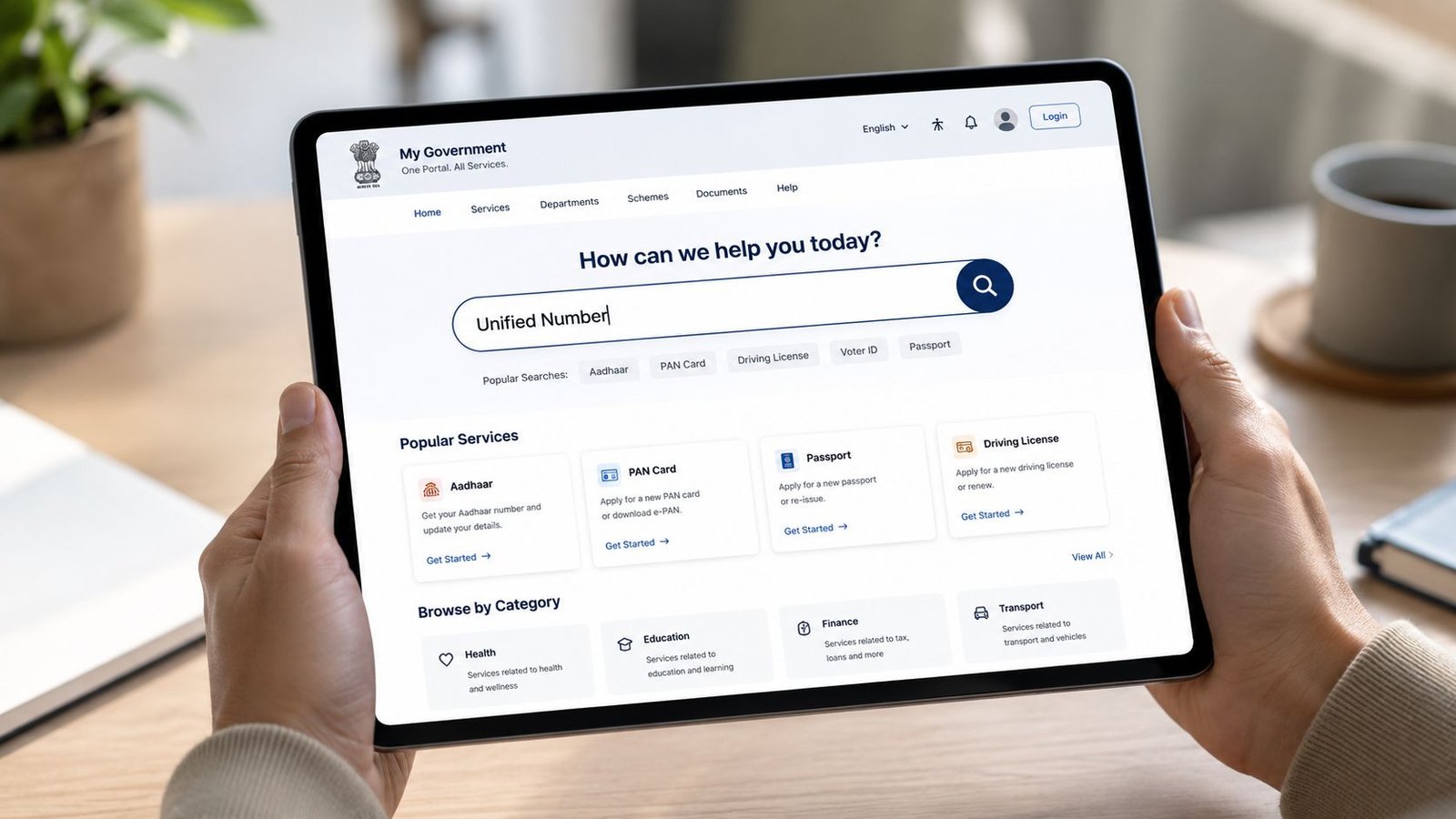
If your documents are digital, check your profile through the Federal Authority for Identity, Citizenship, Customs & Port Security, commonly called ICP. In many cases, the UID appears inside residency-related fields rather than as a separate obvious label.
People often realise they were looking for the wrong number. The record is there, but it's buried in the identity layer of the app or portal.
Here's a simple walkthrough format many people find helpful:
What should you compare before using it
Before you submit the UID for a visa, labour, or banking step, compare the record against your passport details.
Check these items carefully:
- Name spelling: Match your passport exactly, including spacing and sequence.
- Date of birth: A small mismatch can trigger manual review later.
- Nationality and passport number: These should align with the travel document currently in use.
- Previous entry history: If you've visited the UAE before, confirm the UID isn't duplicated under an older passport.
A missing UID is less common than a hidden UID. A wrong UID is more dangerous than both.
Why Your Unified Number Is So Important for Business and Visas
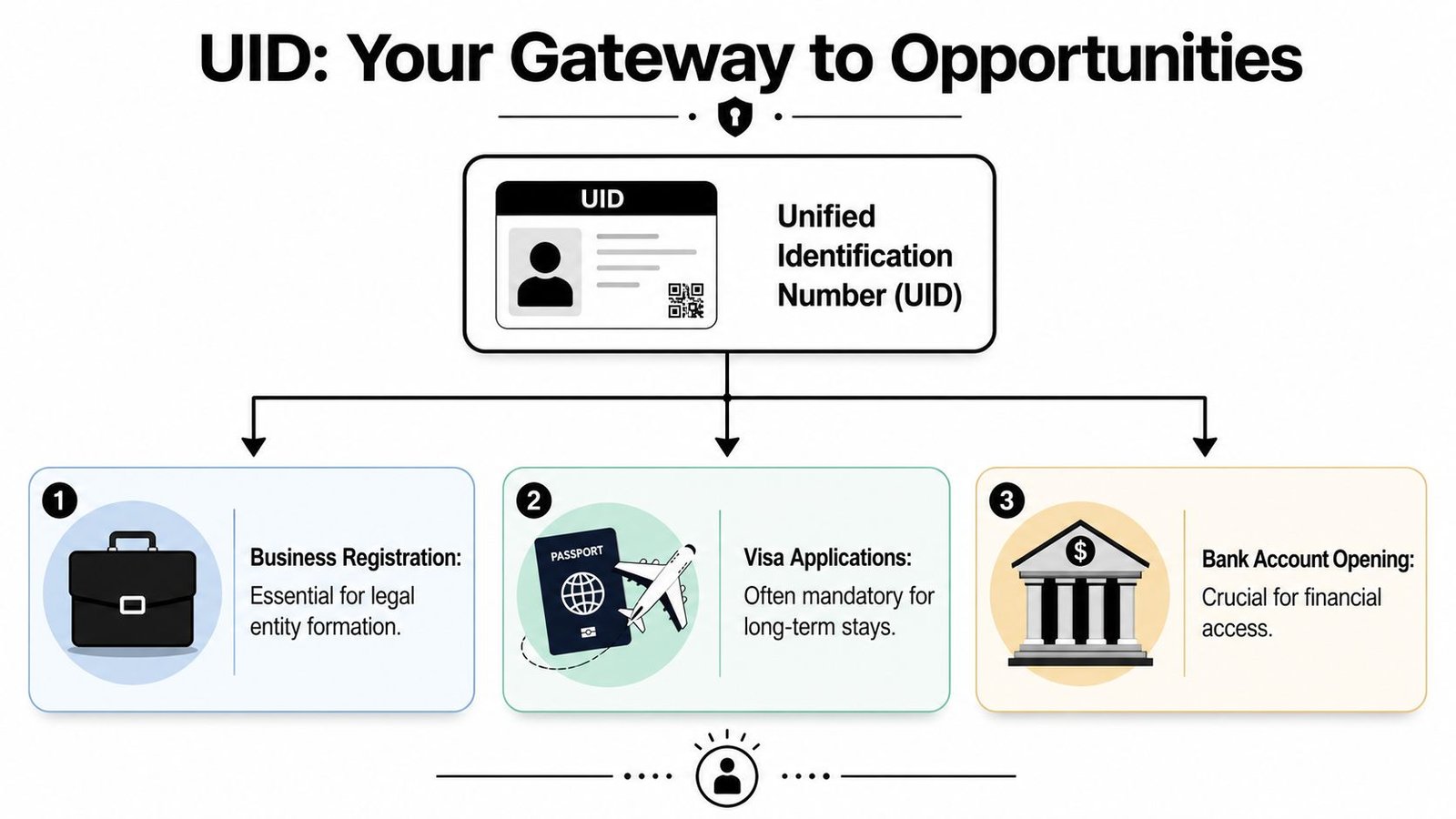
For most founders, the UID stops being an abstract immigration number the moment they start a company or apply for residency. It becomes the link between the person, the visa file, and the business record.
How does the UID affect visa processing
In the UAE, visa systems work best when one person has one clean identity trail. According to the UAE Ministry of Human Resources and Emiratisation, known as MOHRE, companies that properly use a Unified Number in their applications achieve 45% faster visa approval times, with an average processing time of 2.1 days compared with 4.8 days for manual entries, as stated in the 2025 MOHRE Digital Transformation Framework.
That gap reflects a practical truth consultants see every week. When the UID matches the person's existing government record, fewer parts of the file need human correction. When it doesn't, approvals can slow down while someone checks the mismatch.
Why does it matter during company setup
A founder's immigration identity often sits behind several early setup actions. If you're applying for an investor visa, adding a partner, or sponsoring staff later, the UID helps keep those records attached to the right person.
This matters in both Mainland and free zone setups across Dubai, Abu Dhabi, and other emirates. A business licence might be issued through one authority, while labour and immigration actions move through other systems. The cleaner your identity record, the easier it is for those systems to align.
A few practical examples:
- Investor visa workflows: Your personal immigration history needs to map correctly to your current application.
- Employee onboarding: HR teams need each employee's UID to connect visa steps to the right file.
- Family sponsorship: A sponsor's identity record needs to be consistent before dependent applications move smoothly.
What happens when banks or compliance teams review your file
Banks don't issue the UID, but they do care about identity consistency. If your trade licence, visa status, Emirates ID application, and passport details don't line up cleanly, bank onboarding can become slower or require more clarification.
Clean identity records help with more than immigration. They reduce friction across compliance checks.
This is why experienced advisors treat the UID as an early-stage control point, not a minor admin detail. If it's correct, later steps tend to feel routine. If it's wrong, the problem usually shows up when timing matters most.
Common Problems and How to Fix Them
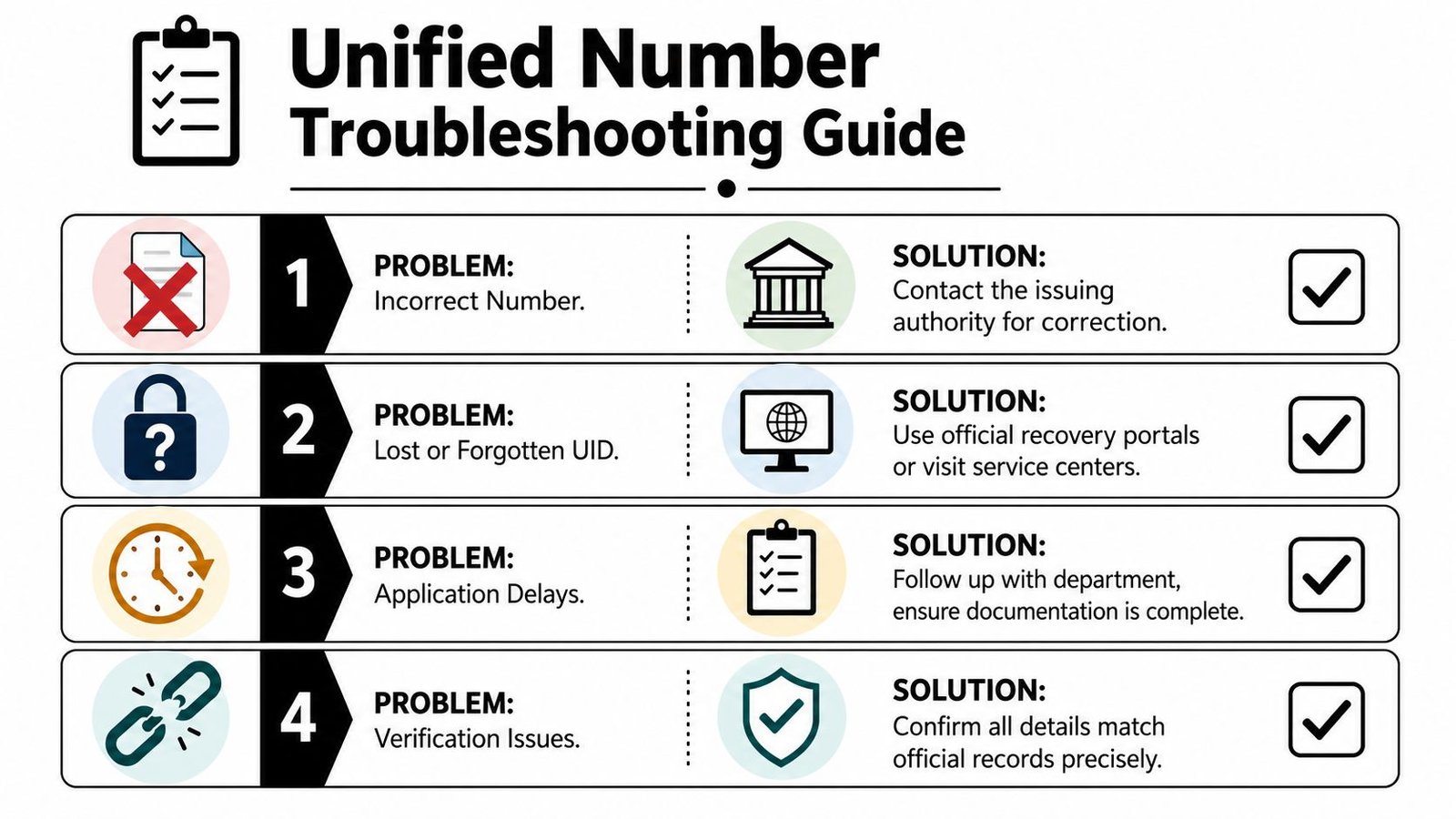
Most UID issues aren't dramatic. They're administrative. The problem is that small record errors can block steps that depend on a clean immigration identity.
What if you have more than one UID
This is one of the most common real-world problems. A UAE explainer on UID records notes that a person can end up with multiple Unified Identification numbers from previous visits or visa applications, and a formal request may be required to merge these into one consolidated record to prevent issues with future visa and Emirates ID applications, as described in this explanation of duplicate UID records and merging.
That usually happens when an old visit, a different passport, or a separate application path created another file. The practical fix is record consolidation. Don't ignore it and hope the next visa stage will sort itself out. It usually won't.
What if your personal details are wrong
Name mismatches, date-of-birth errors, and passport inconsistencies can all cause trouble. These are the cases where people say, “My visa is pending for no clear reason,” when the actual issue is identity mismatch across systems.
Use a simple correction approach:
- Collect the mismatched documents so the issue is visible in one file.
- Identify which record is correct based on your current passport and official supporting documents.
- Submit the correction through the proper immigration channel or through a PRO handling the case.
- Wait for confirmation before moving to the next step such as medical, Emirates ID, or stamping.
When should you get help instead of waiting
If you have duplicate records, repeated rejections, or a file that seems frozen despite complete documents, waiting rarely improves the outcome. A proper review is usually faster than repeated submissions.
One person should have one immigration identity record. If the system shows more than one, fix that first.
That advice is especially relevant for founders under time pressure. Company launch dates, office leases, employee start dates, and travel plans can all shift because of a UID issue that looked small at the start.
Managing Your UAE Journey with Expert Support
The UID is a simple number with outsized consequences. In the United Arab Emirates, it acts as the base layer for your immigration identity, and that affects far more than just one visa form.
For founders, freelancers, HR managers, and Golden Visa applicants, the practical lesson is straightforward. Check the UID early, make sure the personal details match the passport, and resolve duplicate records before they block a later stage. Prevention is easier than correction once multiple systems are already using the wrong file.
In day-to-day practice, the smoothest cases are usually the ones where someone reviewed the identity record before rushing into submissions. The most stressful cases are often the opposite. The documents look fine on the surface, but the underlying UID trail is split or inconsistent.
If you're asking what is Unified Number because you're preparing to relocate, set up a company, sponsor staff, or sort out a visa issue in Dubai, Abu Dhabi, Sharjah, or elsewhere in the UAE, treat the UID as a first-step check, not an afterthought.
Not sure where to start? Inpro Corporate Services L.L.C. can help you review your UID record, fix filing issues, and handle your UAE company setup and visa process with less guesswork. Book a free strategy call to discuss your case.