

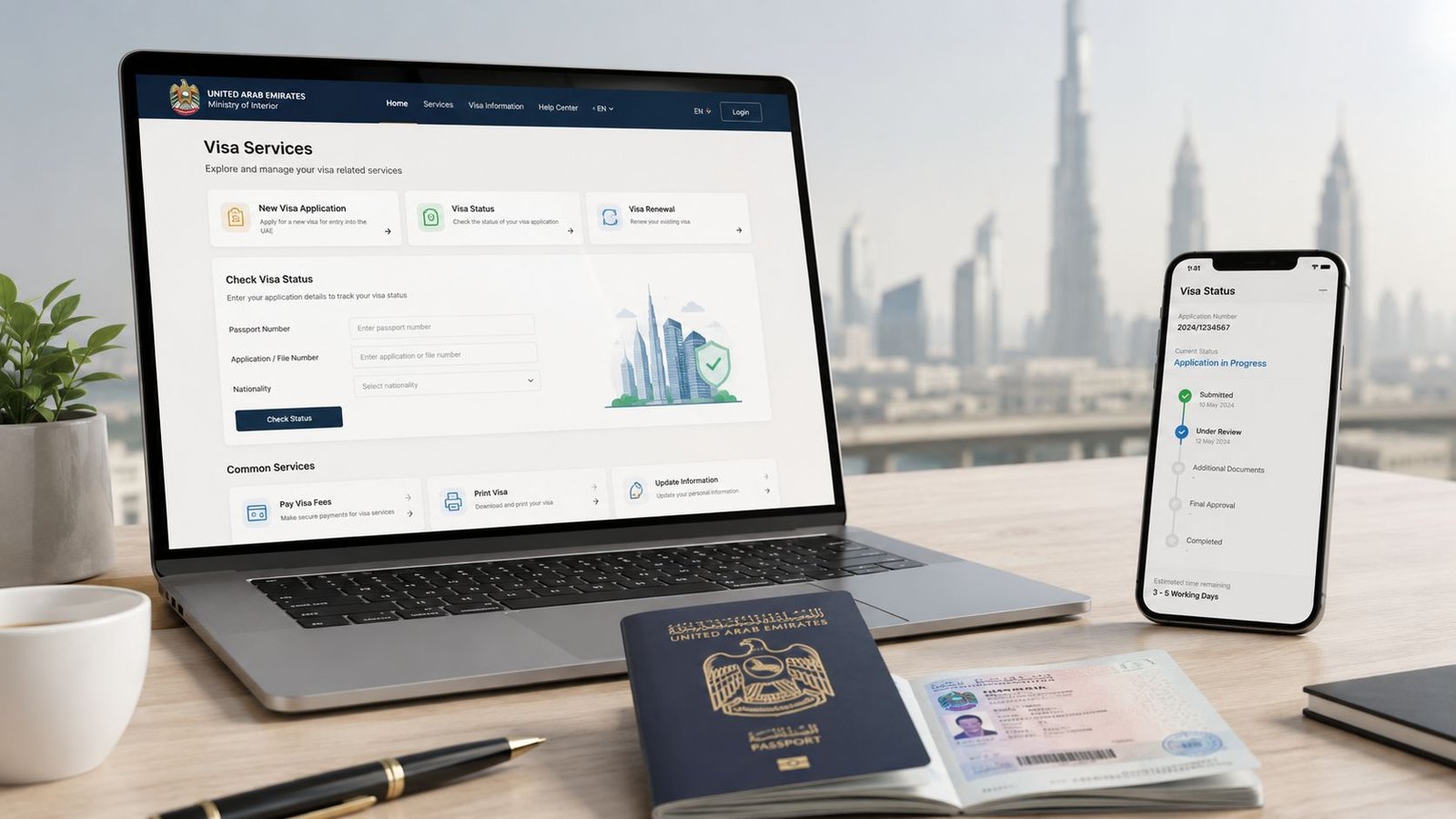
You can track your UAE visa status online through the official government portals. Use the GDRFA website for Dubai visas and the ICP Smart Services platform for all other emirates.
If you're waiting on a visa for Dubai, Abu Dhabi, Sharjah, or a UAE free zone, the hardest part is usually not the application itself. It's the silence after submission. Many are unaware that the United Arab Emirates runs visa tracking through two separate government systems, and that one detail causes a lot of the confusion, especially when a passport number works in one case and fails in another.
Table of Contents
- Your Guide to UAE Visa Status Tracking in 2026
- The Two Official Channels for UAE Visa Tracking
- What Your Visa Status Message Actually Means
- Common Tracking Problems and How to Fix Them
- Other Ways to Check Your Visa Status
- How Inpro Simplifies the Entire Visa Process
Your Guide to UAE Visa Status Tracking in 2026
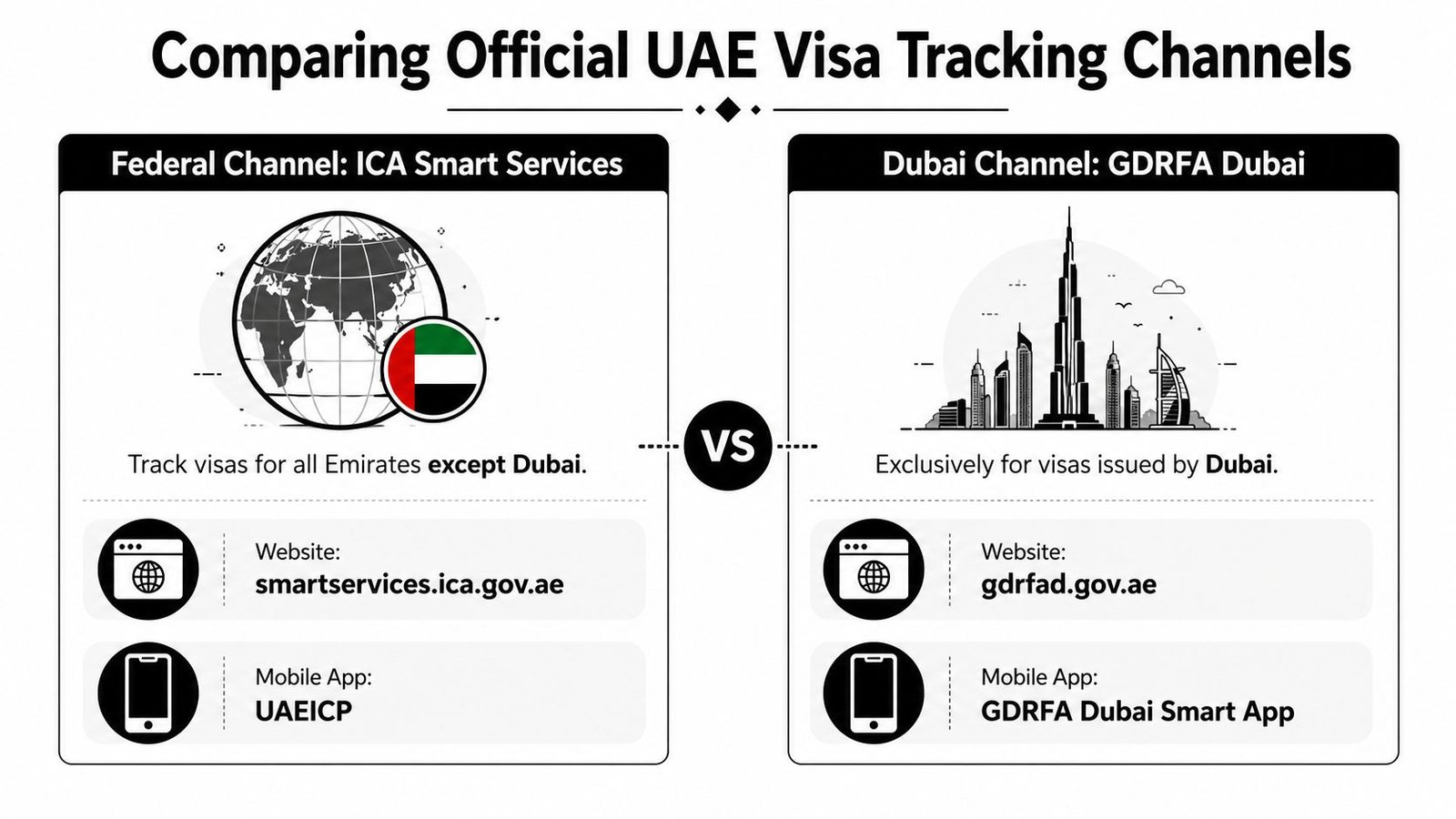
UAE visa status tracking is a two-path process. If the visa was issued through Dubai, you track it with GDRFA. If it was issued through Abu Dhabi, Sharjah, Ajman, Umm Al Quwain, Ras Al Khaimah, or Fujairah, you use ICP.
That split matters more than most applicants realise. A founder setting up in Dubai Mainland, an HR manager handling an employee in Abu Dhabi, and a family applicant in Sharjah may all be checking the same kind of immigration status, but they won't use the same website or the same search method.
The UAE has built a fast digital process around this. In 2024, the UAE processed 2.4 million visa applications, up 18.5% from 2023, with a 97.8% approval rate and a 1.2% improvement from the previous year according to UAE visa processing statistics for 2024. That volume tells you two things. First, the system handles a huge number of applications. Second, small user errors can still create unnecessary delays and worry.
Practical rule: Start by confirming the issuing emirate before you type anything into a tracking portal.
Confusion often starts with one simple assumption. They think "UAE visa" means one central tracking tool. It doesn't. The United Arab Emirates has a federal route and a Dubai-specific route, and your status check will only work properly if you choose the right one first.
A few details also make the process smoother:
- Keep the right reference ready: Your file number, application number, or transaction number usually gives cleaner results than broad identity details.
- Wait for the system to refresh: A just-submitted application may not appear instantly.
- Match the visa type to the purpose: A visit visa, employment entry permit, and residence process are not interchangeable.
That last point matters for founders and HR teams. A visa status isn't just about whether the file exists. It also tells you what stage of legal stay or work eligibility the person is in.
The Two Official Channels for UAE Visa Tracking
Start with one question: which emirate issued the file?
That single detail decides whether your status check works or fails. In practice, many "missing visa" cases are not missing at all. The applicant is checking a Dubai file on ICP, or a federal file on GDRFA, and the system returns nothing useful.
Which portal should you use for Dubai visas
Dubai visas are tracked through GDRFA Dubai. Use the GDRFA Dubai smart portal if the application was issued in Dubai.
Many applicants encounter a common issue. They enter a passport number, the search fails, and they assume the application was never submitted. For Dubai files, passport details are often not the strongest search key. GDRFA commonly matches records more reliably through the application reference used at filing.
Keep these details ready before you open the portal:
- Order number
- Transaction number
- Application or submission date
- Sponsor or typing centre receipt, if available
If you have all of those, start with the order number or transaction number first. That is the cleaner route for Dubai entry permits, status changes, and residence-related applications.
The Dubai-specific tracking tool guidance also points users to GDRFA for Dubai-issued files. The practical takeaway is simple. If a Dubai visa does not appear under a passport search, switch to the receipt details from the sponsor, PRO, or typing centre before treating it as a delay.
For Dubai files, receipt numbers usually work better than passport numbers.
Which portal should you use for Abu Dhabi Sharjah and the other emirates
Visas issued outside Dubai are tracked through ICP. Use the ICP Smart Services platform for Abu Dhabi, Sharjah, Ajman, Umm Al Quwain, Ras Al Khaimah, and Fujairah.
Here the search logic is different from Dubai. ICP more commonly accepts identity-based inputs, so passport-based checks are more likely to work if the file belongs to one of the other emirates.
| Emirate | Official tracking authority |
|---|---|
| Abu Dhabi | ICP |
| Sharjah | ICP |
| Ajman | ICP |
| Umm Al Quwain | ICP |
| Ras Al Khaimah | ICP |
| Fujairah | ICP |
On ICP, the usual inputs are:
- Passport number
- Passport expiry date
- Nationality
- File number or Unified ID, if you have it
For company hires and family applications, I always recommend asking the sponsor or PRO for the exact file reference even if a passport search is possible. That avoids confusion where there are amendments, duplicate submissions, or linked dependants under the same sponsor.
Processing systems also need time to display a new file. As noted earlier, allow the initial update window before assuming the record is missing.
If the status still does not appear after that window, use the support route tied to the correct authority:
- ICP contact centre: 600522222
- GDRFA Dubai inside the UAE: 8005111
- GDRFA Dubai outside the UAE: +9714-313-9999
Use this sequence every time:
- Confirm the issuing emirate on the application receipt or with the sponsor.
- Open the matching portal first, GDRFA for Dubai, ICP for the other emirates.
- Use the strongest identifier available, usually an order number, transaction number, file number, or Unified ID.
- Escalate through the correct authority if the file is still not visible after the normal update period.
That split between GDRFA and ICP is the part many guides gloss over. It matters because it changes both the website you should use and the numbers that will return a result.
What Your Visa Status Message Actually Means
A status message gives you one practical answer: wait, prepare the next step, or fix something now.
The hardest part for applicants is that a status can look alarming even when the file is progressing normally. Public portals show short labels. They do not show the internal review queue, document checks, sponsor actions, or whether the system has not refreshed yet. As noted earlier, give a new submission time to appear before reading too much into an early status.
What does pending or in process usually mean
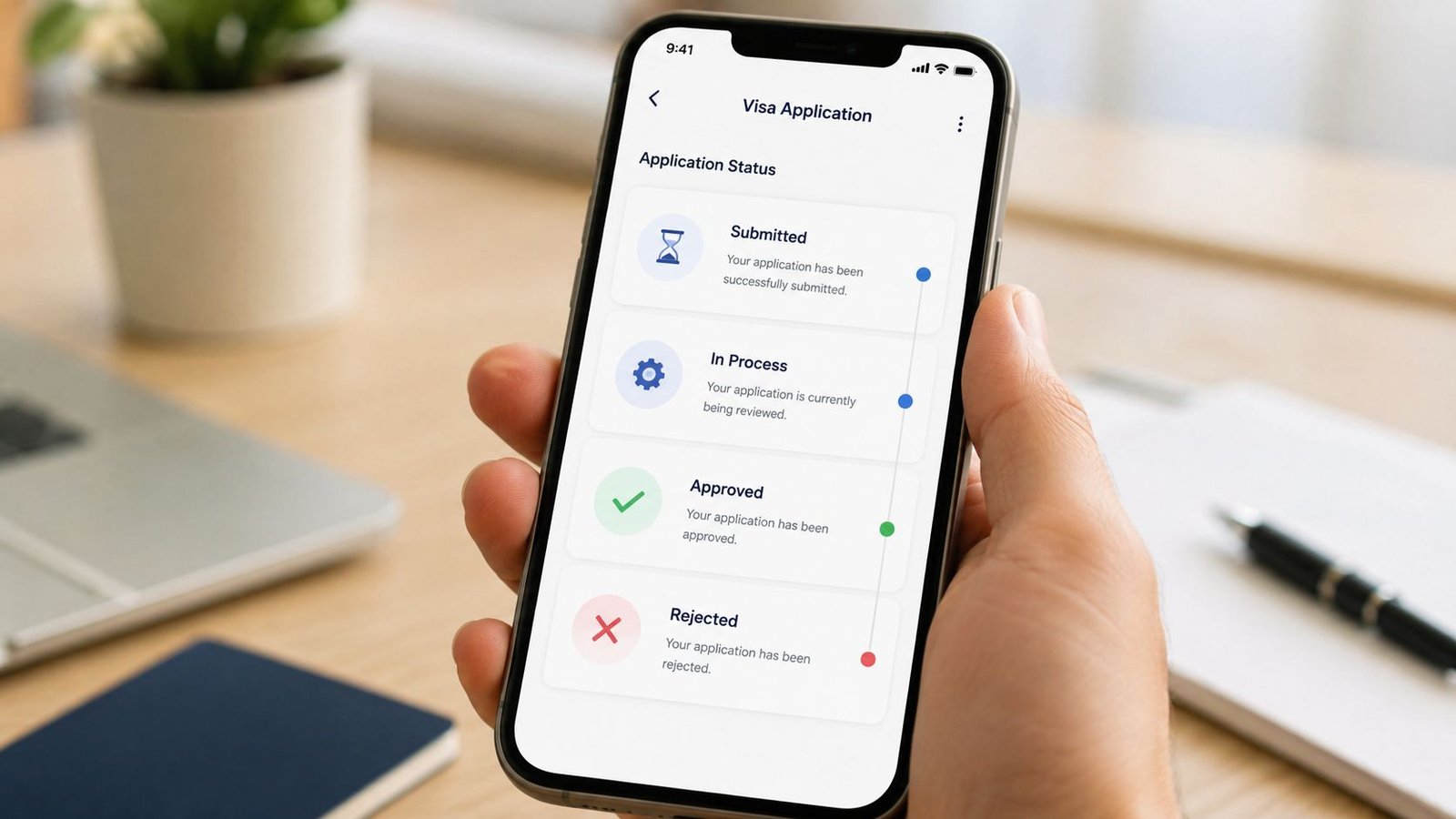
Pending usually means the application has been submitted and logged, but the review stage is not yet visible on the portal.
In process means the file is under review or moving between steps. That can include document verification, sponsor approval, quota or permit checks, and internal immigration handling. For an employee entry permit, investor file, or dependent visa, this is usually routine.
Use these labels this way:
- Submitted or pending: The authority has received the file.
- In process: Review is underway.
- Status unchanged for longer than expected: Ask the sponsor or PRO to confirm whether any document, payment, or correction request is holding the file.
I tell clients not to panic at this stage. Early tracking checks create a lot of unnecessary stress because the portal often updates later than the submission receipt.
What does approved rejected or modification required mean
Approved means that stage of the application has cleared. It does not always mean the full visa journey is finished. In many cases, another step follows, such as entry permit issuance, status change, medical, Emirates ID biometrics, or residence stamping workflow, depending on the visa type and where the file was opened.
Rejected means the file was not accepted in its current form. Public status pages often do not show a full reason, so guessing is a bad use of time. The fastest route is to ask the sponsor, typing centre, or company PRO to pull the detailed note from the issuing authority and confirm whether the case needs a correction, a new submission, or an appeal route.
Modification required means the file can usually be saved without starting over. A blurred passport copy, mismatched name format, wrong passport expiry date, sponsor document issue, or missing attachment can trigger it. In practice, this is a fix request, not a refusal.
One more point matters for legal status. A visit visa or tourist visa is not work authorisation. If your portal shows a visit-based status, the employer still needs to complete the proper employment and residence process before lawful work can begin, and the sponsor should guide the next step based on the visa category and emirate.
Here's a short visual walkthrough if you'd like to see the process in action:
Common Tracking Problems and How to Fix Them
Most tracking failures come from process mistakes, not immigration refusals. That distinction matters, because the fix is often simple.
Why does no record found appear
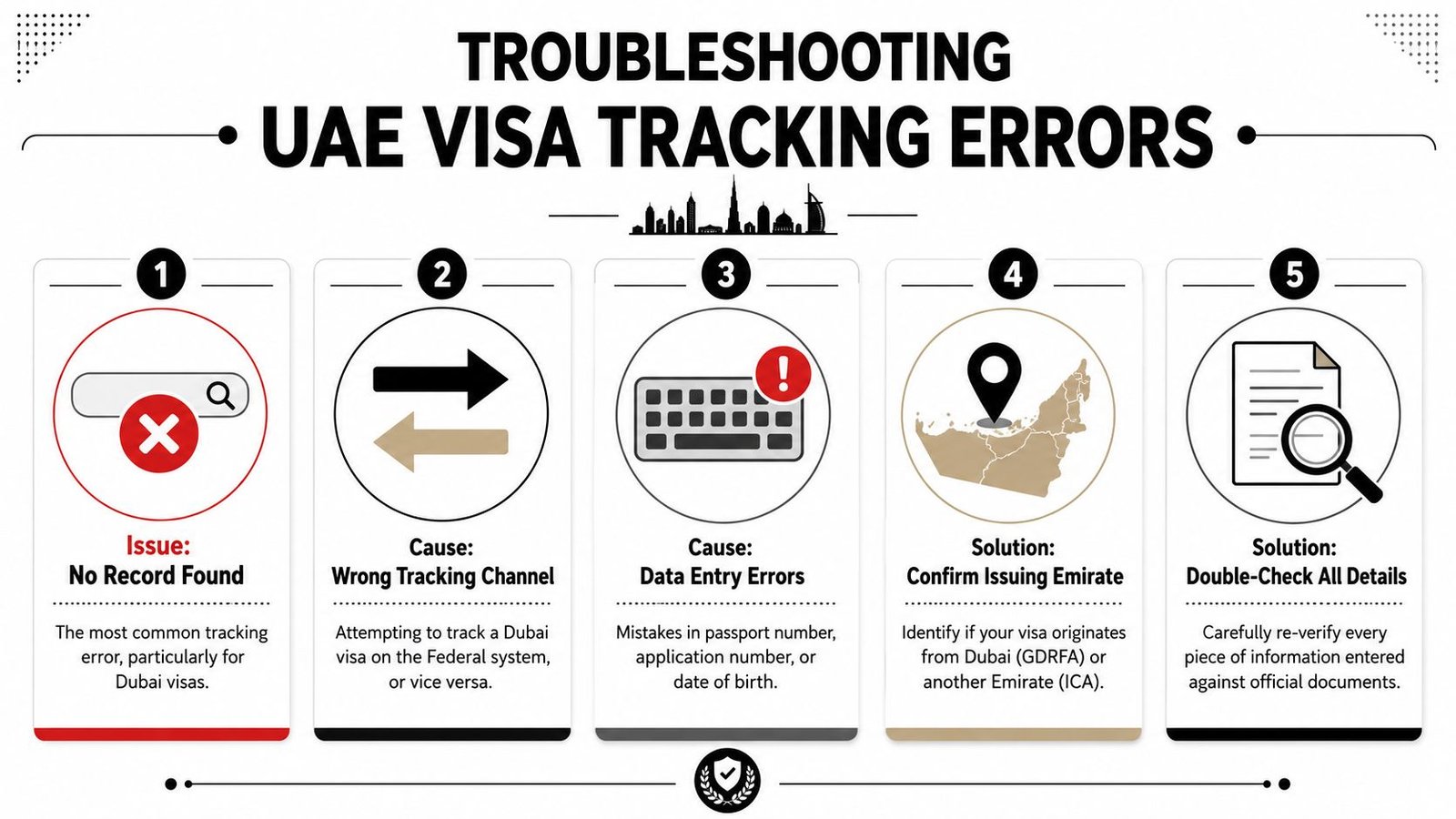
No record found is usually a search problem. The most common causes are the wrong portal, the wrong identifier, a typing error, or checking before the record appears in the live system.
Dubai is where this causes the most stress. The Dubai visa status checker analysis explains that passport-based tracking fails for Dubai visas because the GDRFA portal does not support passport-based searches in the same way many people expect. It points users instead toward file, application, or transaction numbers, and notes that 48 to 72 hours of waiting may be needed before those details appear properly in the system.
When you hit this error, work through it in order:
- Check the issuing emirate: If it is Dubai, stop using the ICP route.
- Switch the identifier: Move from passport details to file number, order number, or transaction number.
- Match every field exactly: One wrong digit, date, or nationality entry can break the search.
- Give the system time: Early checks often produce false alarms.
A failed search doesn't automatically mean a failed visa.
When should you stop waiting and contact someone
Some delay is normal. Silence beyond the normal window is when you need a clear escalation path.
If the status hasn't updated beyond the usual 24 to 72 hour visibility period already covered above, don't keep submitting repeated searches all day. Recheck your details once, then contact the right authority for manual clarification.
Use these contacts based on jurisdiction:
- ICP for non-Dubai emirates: Call 600522222
- GDRFA within the UAE: Call 8005111
- GDRFA from outside the UAE: Call +9714-313-9999
There is also a practical threshold for longer delays. The reported discussion of UAE visa delays and escalation timing points to a gap between the usual stated processing window and cases that run beyond it, and advises escalation if delays go beyond 7 days rather than waiting indefinitely.
For employers, internal coordination is particularly important. Before you call, have the employee name, passport copy, application receipt, visa type, and issuing emirate in one place. That turns a vague enquiry into a useful case check.
Other Ways to Check Your Visa Status
The online portal is still the main route. It's usually the fastest and clearest method for UAE visa status tracking. But it isn't the only one.
Can you check without using the portal yourself
Yes. If your visa was filed by an employer, free zone, PRO, or authorised typing centre, that party can often check the same status using the application references they already hold.
This is often easier for:
- HR teams: They usually have the transaction details and supporting documents together.
- Family applications: One sponsor may hold the full file references for several dependants.
- Founders in setup stage: A business setup adviser or PRO may already be handling linked immigration steps alongside licensing.
Some applicants also receive portal-linked notifications or sponsor updates during the process. Those updates are helpful, but they shouldn't replace checking the official record when timing matters.
When is an in person visit worth it
An in-person visit makes sense when the online result is unclear, when a correction is needed, or when the sponsor needs help interpreting a status. In Dubai, applicants often go through Amer centres for support with immigration-related services. In other emirates, government-approved typing centres can help verify what reference should be used and whether the file needs amendment.
A visit is usually worth the time when:
- The status shows modification required and the reason isn't obvious.
- The file can't be found online after you've confirmed the right authority and identifier.
- A deadline is close for joining, travel, or a follow-on residence step.
Bring the same documents you would want on a phone call, plus any application receipt and passport copy. The more precise your file details are, the quicker the conversation goes.
How Inpro Simplifies the Entire Visa Process
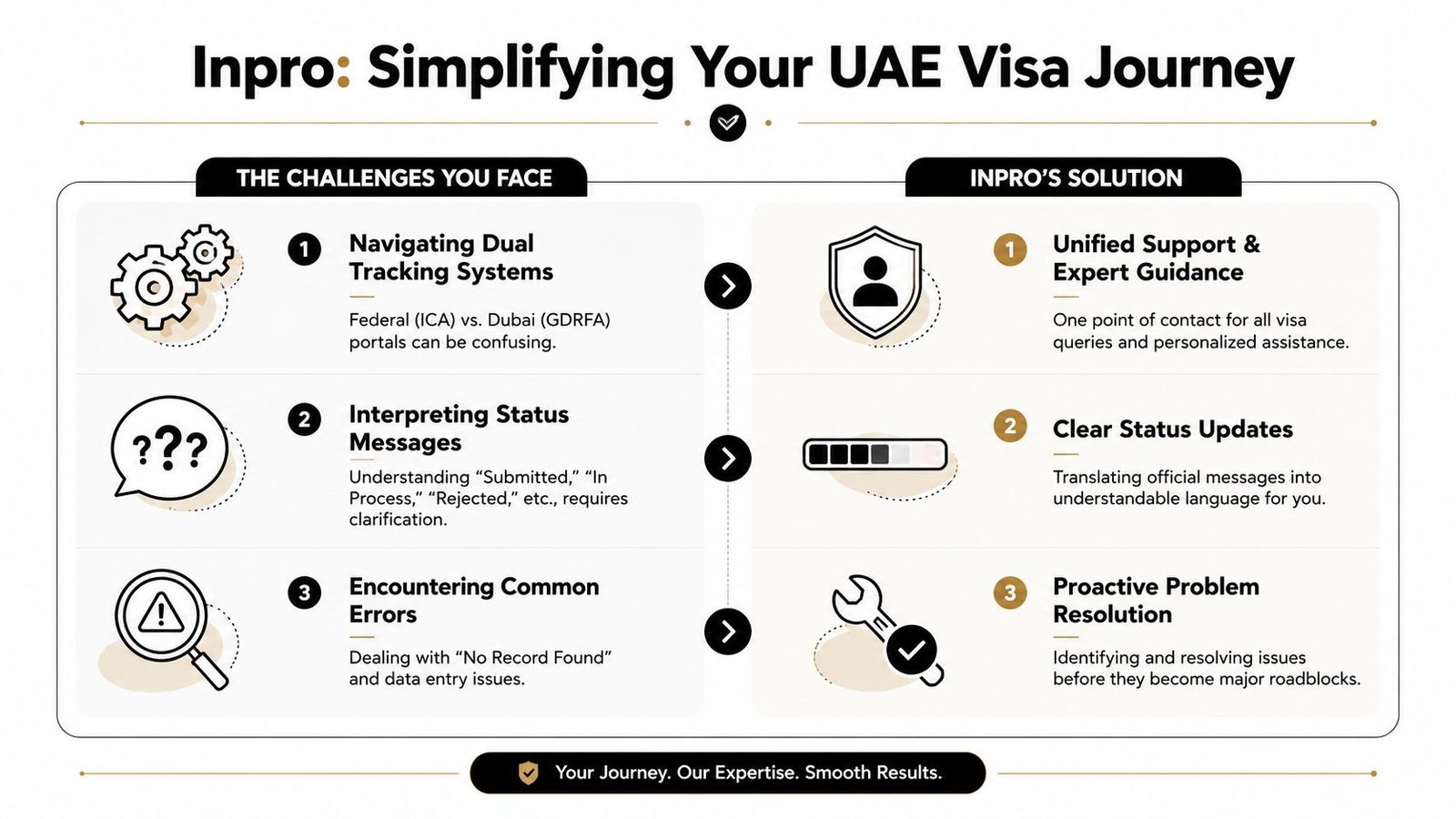
For busy founders, HR leads, and international applicants, the hard part isn't clicking "check status". It's keeping the full immigration sequence organised when every step depends on the one before it.
Why professional handling helps
A good PRO doesn't just monitor the screen. They make sure the file starts in the right jurisdiction, carries the right supporting documents, and moves through the correct sequence for the visa type involved.
That matters in Dubai in particular. The Dubai government guidance on visa validity and application tracking states that a residence visa in Dubai cannot be processed or issued if the candidate is outside the UAE. The applicant must first enter on an employment entry permit before the employer can complete the residence process.
That is the kind of mechanical rule that causes avoidable confusion when people try to interpret status messages on their own. The screen may look inactive, stalled, or incomplete when the problem is that the file cannot legally move to the next step yet.
Who benefits most from managed visa support
Managed support is useful for anyone, but it helps most when the visa is tied to a business timeline or employee onboarding date.
Typical cases include:
- A founder opening in Dubai or Abu Dhabi: Company formation, establishment cards, entry permits, and residence steps all need to line up.
- An HR team onboarding overseas hires: One wrong sequence can push back a start date.
- A Golden Visa applicant or investor: The documents may be strong, but the filing path still needs to be clean and correctly routed.
The value isn't mystery or special access. It's clarity. Someone is watching the file, interpreting the status properly, and acting before a small issue turns into a missed deadline.
Not sure where to start? Book a free strategy call with Inpro Corporate Services L.L.C. and get clear guidance on UAE company setup, employee visas, investor visas, and the right path for your application.