

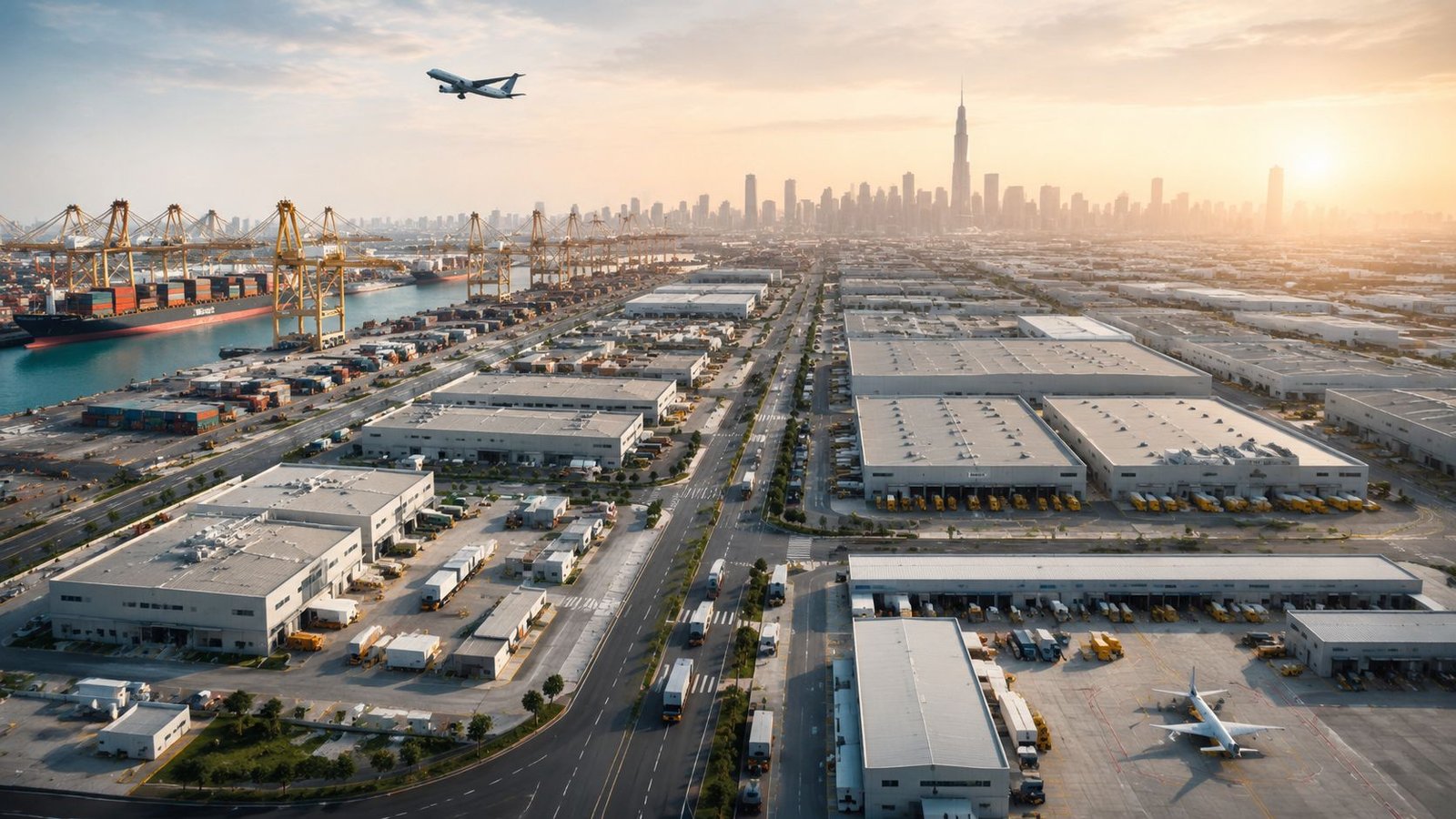
The best industrial area in Dubai isn't the one with the cheapest warehouse. It's the one whose jurisdiction, licence scope, and logistics fit your business model, because a wrong setup can leave you with usable space but the wrong permissions to trade.
Table of Contents
- Choosing Your Industrial Base in 2026
- Profiles of Dubai's Key Industrial Areas
- The Mainland vs Free Zone Licensing Trap
- Budgeting for Your Industrial Operations
- How to Choose the Right Industrial Area
- Starting Your Industrial Company Formation
Choosing Your Industrial Base in 2026
Dubai's industrial areas are specialised operating environments, not interchangeable plots on a map. In the UAE and the wider United Arab Emirates market, the right choice depends on what you make, where you sell, how you move goods, and which authority will licence that activity.
Why is this choice bigger than location
A founder usually starts by asking about warehouse rent, road access, or distance to a port. Those matter, but they come after a more basic question. Can this jurisdiction legally support the way your business earns money?
An industrial setup affects more than real estate. It shapes your licence category, your permit path, your ability to serve the local UAE market, and the practical workload for visas, document clearances, and ongoing government approvals.
Practical rule: Pick the licence first, then the facility. Many founders do it the other way round and end up trying to force their business model into the wrong zone.
That's why the best industrial areas in Dubai look different for different operators. A workshop serving Dubai clients has a different logic from a manufacturer shipping containers abroad. An e-commerce fulfilment operator tied to airport cargo has different needs again.
What do Mainland and Free Zone actually mean
Mainland is a UAE company setup regulated through the local commercial framework. In Dubai, that usually means working through the relevant mainland authority structure, and it often suits businesses that need broad access to the domestic market.
Free Zone is a company setup inside a designated economic zone with its own authority and rulebook. It can be a strong fit for import-export, regional distribution, and internationally focused manufacturing, but the licence terms matter more than the marketing.
The strategic point is simple. If your revenue depends on selling inside Dubai, Abu Dhabi, Sharjah, or elsewhere in the United Arab Emirates, your market-access assumptions need checking before you sign a lease.
A lot of industrial decisions become easier when you sort them into three buckets:
- Customer location: Are you selling inside the UAE, outside it, or both?
- Operational profile: Do you need a workshop, a production plant, bulk storage, or a fast-turn distribution unit?
- Compliance load: Will your activity need special building approvals, waste handling controls, vehicle access permissions, or utility capacity planning?
Profiles of Dubai's Key Industrial Areas
The wrong industrial address in Dubai does more than slow deliveries. It can leave you with the wrong licence structure for how you plan to sell, store, or produce.
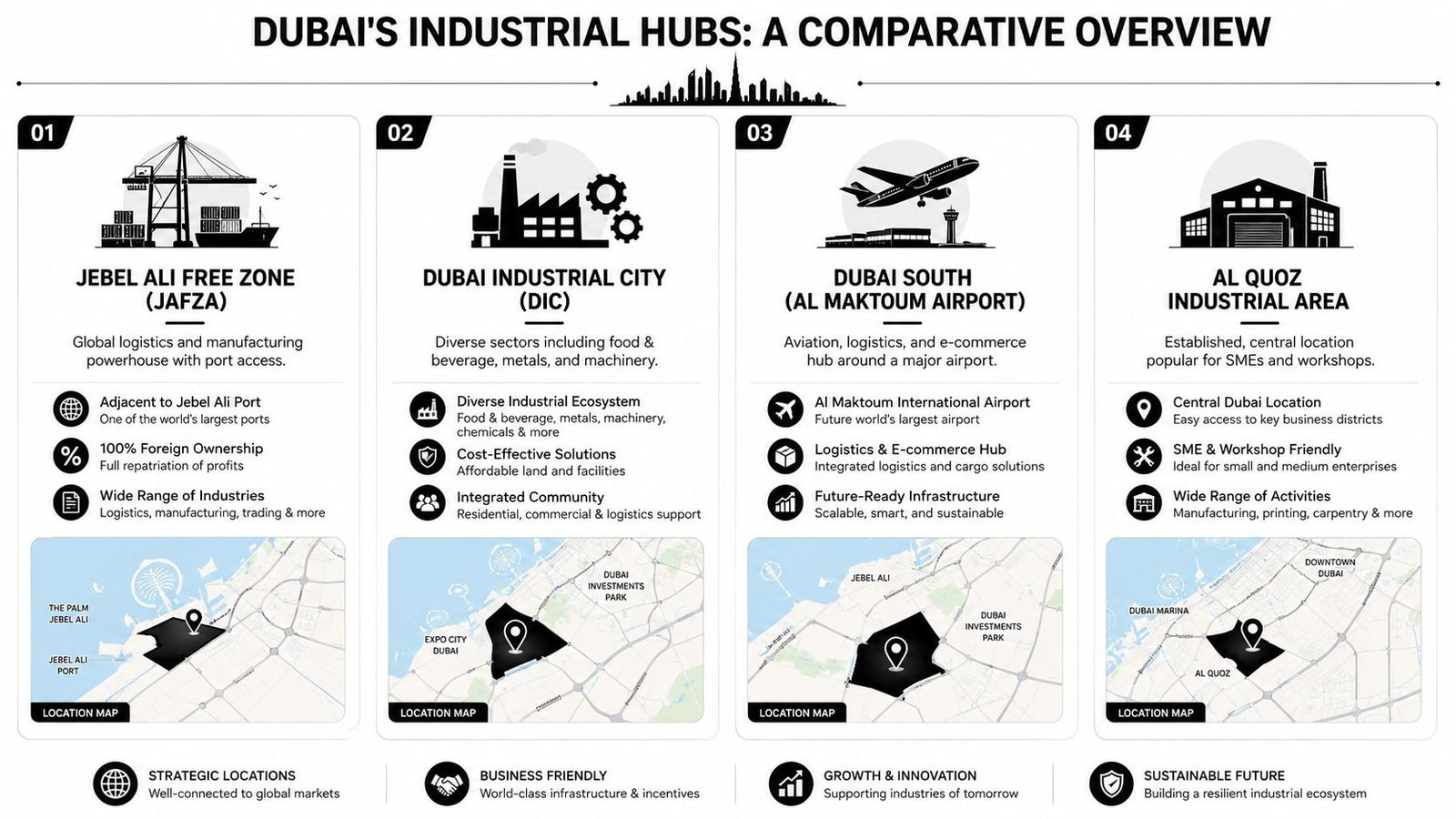
A lot of guides group industrial areas by size or popularity. Operators should compare them by operational fit. The practical questions are simpler. Do you need direct access to Dubai customers, fast port clearance, airport-driven fulfilment, or a site that can support heavier industrial utilities and authority approvals?
What is Al Quoz best for
Al Quoz is one of the few industrial areas that still makes sense for businesses whose work is tied to the city itself. Workshops, fit-out companies, service-led storage, last-mile support operations, and suppliers with daily site visits across Dubai usually value Al Quoz for one reason. It cuts road time to customers.
According to Wikipedia's list of Dubai industrial areas, Al Quoz is the emirate's largest industrial area by land size, at 1,838 hectares, compared with 661 hectares for Ras Al Khor Industrial Area. That scale matters less than people assume. A key issue is that centrally located industrial stock rarely stays cheap once e-commerce, trade services, and urban logistics all compete for the same units.
Al Quoz usually works best under a mainland logic. If your revenue comes from businesses and customers inside Dubai, that matters more than the headline size of the district.
Why do firms choose Jebel Ali Free Zone
Jebel Ali Free Zone, or JAFZA, is built for companies that move goods through Jebel Ali Port as a core part of the business, not as an occasional convenience. Importers, re-export traders, industrial suppliers, and manufacturers sourcing raw materials by sea usually shortlist JAFZA first because the port link reduces handling steps and transit risk.
In practice, JAFZA suits operators with regional distribution models, bonded storage needs, or production tied to import-export flows. It is less forgiving for businesses that expect a free zone industrial licence to function like a mainland trading and selling platform inside the UAE.
That distinction gets missed often. A company can have an efficient facility in JAFZA and still face extra structuring work if its real target market is local UAE buyers.
How is Dubai Industrial City different
Dubai Industrial City, or DIC, is better understood as an industrial platform than a simple warehouse cluster. It attracts manufacturers that need a more controlled environment for utilities, sector placement, building modifications, and production compliance.
According to this profile of Dubai's industrial zones, DIC is planned across 55 sq. km and is divided into six industrial sectors covering food and beverage, base metals, transport equipment, machinery, chemicals, and mineral products. The same source notes that facility changes, including plant construction and mezzanine additions, need permit approval and must fit the area's infrastructure controls.
That has real consequences on the ground. DIC can be a better fit than a general warehouse district if your operation needs power planning, production-specific layouts, or regulated alterations. It can also feel slower and more restrictive for businesses that only need straightforward storage and dispatch.
When does Dubai South make sense
Dubai South is the stronger choice for operators tied to air freight, aviation supply chains, and fast-turn fulfilment. If inventory value is high, delivery windows are tight, or cargo timing matters more than sea freight economics, its airport proximity can justify the cost.
The trade-off is simple. Airport-linked industrial space suits speed-driven models. Businesses built around local distribution, heavy trucking, or port-led import cycles often find that the location premium is hard to justify.
For that reason, Dubai South tends to make more sense for e-commerce fulfilment, specialist logistics, and aviation-adjacent warehousing than for every general industrial user.
| Industrial Area | Jurisdiction | Best For | Key Trade-Off |
|---|---|---|---|
| Al Quoz | Mainland | Urban workshops, central warehousing, local distribution | Better city access, but less suited to port or airport-led supply chains |
| JAFZA | Free Zone | Port-led trade, re-export, import-export manufacturing | Strong sea logistics, but free zone licensing can limit how you access the UAE market |
| DIC | Free Zone industrial park | Structured manufacturing and sector-specific production | Better industrial planning, but more approval and facility-fit constraints |
| Dubai South | Free Zone district | Air cargo, e-commerce, aviation-linked warehousing | Faster airport logistics, but the premium only pays off for time-sensitive operations |
The Mainland vs Free Zone Licensing Trap
The biggest mistake in industrial setup isn't choosing the wrong road network. It's choosing a licence that doesn't match how you plan to sell.
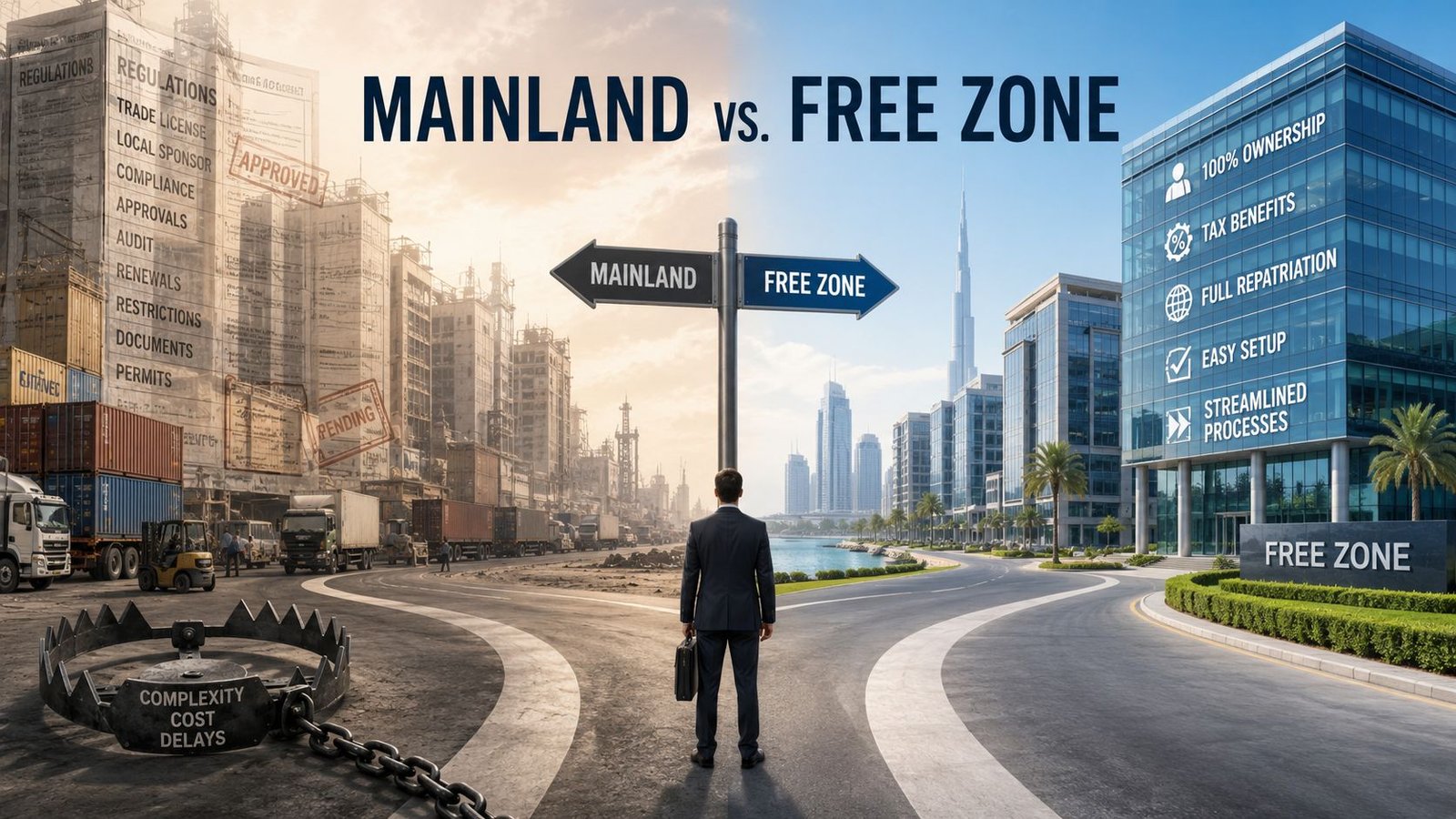
Can you sell directly into Dubai from a Free Zone
Sometimes yes, sometimes not in the way founders expect. That's where the trap sits.
A Free Zone industrial licence can work well for export, regional trading, storage, and manufacturing aimed outside the local market. But this review of industrial areas in Dubai points out a problem many guides skip: activities like light manufacturing often require specific mainland commercial licences to access the local UAE market, and a Free Zone industrial licence may restrict direct B2C sales in Dubai.
That catches businesses in ordinary situations. A manufacturer in a Free Zone might assume it can produce goods and sell directly to Dubai supermarkets, garages, or walk-in buyers. The legal path can be narrower than that assumption.
Common misunderstanding: “I'm in Dubai, so I can sell anywhere in Dubai.” Jurisdiction doesn't work that way.
When is Mainland the safer choice
Mainland usually makes more sense when your buyers are inside Dubai or across the UAE, and especially when your sales process is local, recurring, or customer-facing. A central workshop in Al Quoz with a mainland licence is often easier to align with local supply patterns than a Free Zone setup that then needs an extra structure for domestic market access.
This doesn't mean Free Zones are a bad option. It means they're a good option for the right model. If your business is built around export efficiency, bonded logistics, or regional distribution, Free Zone logic is often clean and sensible.
If your revenue depends on direct domestic trade, local retail-style supply, or regular delivery to UAE-based clients, Mainland often removes friction.
What catches founders out in practice
The issue usually appears after the company is formed, not before. The founder has the licence, the warehouse, and sometimes even inventory on the shelf. Then the first local sales conversation reveals a gap between what the business wants to do and what the licence structure comfortably allows.
Typical pressure points include:
- Activity mismatch: The company chose a broad industrial label, but the intended activity needs a more specific commercial or manufacturing permission.
- Sales channel confusion: The founder planned direct local sales, but the licence is better suited to export or business-to-business structures.
- Extra admin load: A workaround may require a mainland branch, added approvals, or more ongoing public relations officer support. In the UAE, a public relations officer, or PRO, service handles government paperwork, immigration processing, and authority submissions.
A short explainer helps when this distinction still feels abstract.
The practical test is blunt. Before choosing a zone, ask one question in plain language: Who will I invoice, where are they located, and does this licence let me do that cleanly? If the answer is fuzzy, stop there and fix it before signing anything.
Budgeting for Your Industrial Operations
Industrial budgets fail at the licensing stage long before rent becomes the problem. Founders compare warehouse rates across Al Quoz, JAFZA, Dubai Industrial City, or DIP, then discover later that the chosen jurisdiction adds selling restrictions, customs steps, extra approvals, or staffing costs that were never priced in.
That is why the budget has to follow the operating model. A mainland industrial setup and a free zone industrial setup can occupy similar space and still carry very different costs once goods start moving and invoices start going out.
What should you budget beyond rent
Start by costing the legal structure with the facility, not after it. The licence, lease registration, establishment card, visa file, and activity approvals are part of the same decision. If the business will manufacture, assemble, store regulated goods, or distribute inside the UAE, each of those points can change the approval path and the running admin load.
The missed cost is usually not the headline fee. It is the workaround. A free zone unit can look efficient at setup stage, then become expensive if the company needs a mainland distributor, a branch, repeated customs clearing, or extra transport legs to serve UAE customers. A mainland setup can remove some of that friction, but it may come with different approval requirements, municipal processes, and location compromises.
Then price the site as an operating asset, not just a square-foot figure. Dubai Electricity and Water Authority, or DEWA, is the utility authority that handles power and water services in Dubai. Industrial occupiers also need to budget for power load, fit-out, loading configuration, internal modifications, fire and life safety compliance, waste handling, and any authority sign-off tied to machinery or storage type.

Market pressure matters too. Al Quoz is rarely “cheap” once a business needs central Dubai access, faster last-mile reach, and easier staff commuting. That cost profile is part of why industrial space there stays in demand, as noted earlier. Paying more for the right location can be cheaper than saving on rent and absorbing delivery delays every week.
How does location change your operating cost
Location changes four cost lines at once:
- Setup costs: Company formation, licence issuance, immigration file opening, legal documents, and activity approvals.
- Facility costs: Rent, deposits, fit-out, racking, utility connection, loading areas, signage, and compliance works.
- Operating costs: Visas, staff transport, utilities, maintenance, waste removal, inspections, and annual renewals.
- Movement costs: Port transfer, airport access, truck routing, customs handling, and delivery time to UAE customers.
I usually tell founders to test the budget against one blunt question. Where will the goods move after they land or leave production? If the answer includes repeated transfers between a free zone, a mainland customer, and a third-party warehouse, the lower starting rent often stops looking cheap.
A warehouse that matches your licence, customer base, and transport pattern usually costs less over a year than a lower-rent unit that creates weekly workarounds.
Budgeting for industrial areas in Dubai works best when it is built around permissions and movement of goods, not just lease cost. That is the difference between a site that supports growth and one that drains time, margin, and management attention.
How to Choose the Right Industrial Area
Choose the wrong jurisdiction first, and the rest of the site search becomes wasted effort. In Dubai industrial setup, the primary filter is not rent or warehouse size. It is whether the licence lets you sell, store, process, and deliver goods the way your business operates.
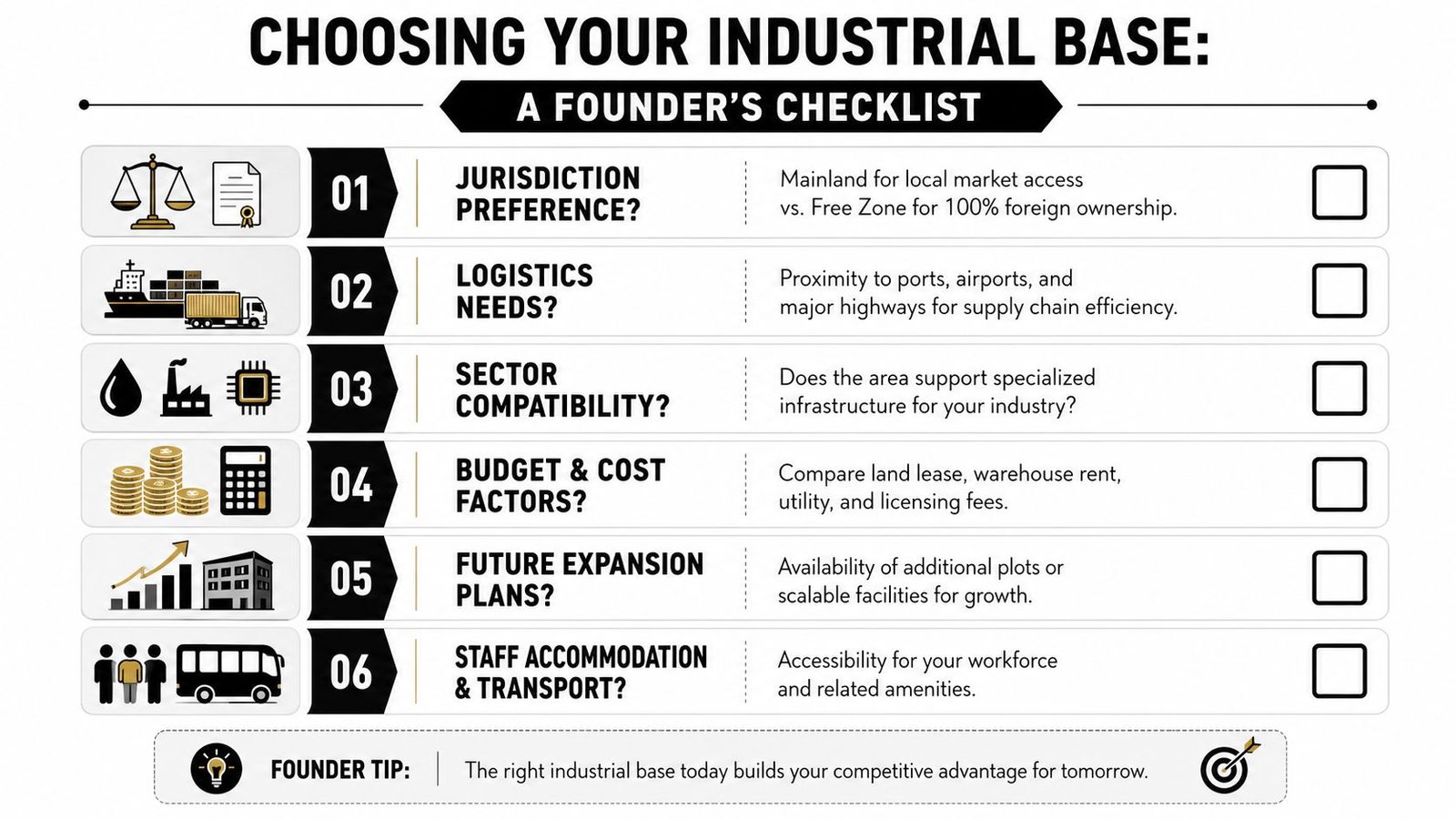
Which questions narrow the shortlist fastest
I usually start with one blunt question. Are you serving the UAE market directly, or building an import-export operation around a Free Zone?
That answer removes a large part of the market immediately. A Free Zone unit can look efficient on paper, but if your revenue depends on routine mainland sales, repeated customs steps, third-party distribution structures, or extra transfer arrangements can turn a cheap warehouse into an expensive operating model. If your business is export-led, the same Free Zone setup may be the cleaner option.
Then check these four points:
Where will invoices be raised and goods be delivered? If the buyer is in mainland UAE, confirm the jurisdiction supports that route without creating weekly workarounds.
What activity must the licence cover? Trading, manufacturing, assembly, packaging, and storage are treated differently by authorities. If the activity wording is too narrow, routine work can fall outside the licence.
Which transport link matters most day to day? Air cargo businesses usually prioritise Dubai South. Port-led importers often focus on areas with easier Jebel Ali access. Last-mile industrial supply businesses usually care more about truck time into Dubai and the Northern Emirates than headline rent.
What does the unit need approval to handle? Power load, ventilation, waste handling, staff accommodation rules, racking height, loading access, and internal modifications can all limit what you can do inside the facility.
A practical example helps here. A light assembly company shipping regionally may work well in a Free Zone near airport or port infrastructure. A building materials trader selling daily into the UAE market often runs better from a mainland industrial area, even if the starting rent is higher.
What does a practical decision process look like
A good selection process is usually short and strict.
- Filter by jurisdiction first. Mainland and Free Zone are not just registration choices. They shape customer access, customs handling, and operating permissions.
- Cut any area that does not fit the actual activity. Do not rely on broad descriptions from agents. Match the licence wording to the actual business plan.
- Shortlist by movement of goods. Measure the route from supplier to warehouse to customer, not just the map pin.
- Inspect the unit as an operator. Check turning radius, dock use, floor load, fire compliance, power supply, staff entry, and room for fit-out.
- Confirm authority approvals before signing. If a zone or landlord restricts alterations, equipment, or industrial use, the problem appears after commitment, not before.
Many founders lose time when they choose an industrial area by convenience, then discover the harder problem is not location. It is that the licence, facility use, and sales route do not line up.
According to the Dubai Statistics Center's overview of the emirate's economy and trade activity, Dubai's industrial and logistics base depends on constant goods movement across local and international markets, which is exactly why licence scope and access permissions matter so much in practice. If your operation depends on frequent UAE distribution, choose a structure that supports that pattern from day one. You can review the broader context in the Dubai Statistics Center economic reports and data portal.
The right industrial base should feel operationally dull. Goods come in, approvals stay in line, trucks move on schedule, and finance does not have to explain avoidable transfer costs every month.
Starting Your Industrial Company Formation
Formation starts well before the first application goes in. In industrial setups, the primary risk is filing the company correctly on paper but discovering the licence, unit, and operating model do not match once money is committed.
After you choose the area, the process usually begins with trade name reservation and initial approval. Then come the legal documents, the lease or facility agreement, and the final submission to the issuing authority.
The authority matters because the permissions are different in practice. A mainland industrial licence is built for direct access to the UAE market, but it often comes with broader external approvals and closer scrutiny of the actual activity at the site. A Free Zone licence can be faster inside the zone's own system, but speed at incorporation does not solve market access limits if your plan includes regular onshore sales, local distribution, or third-party warehousing outside the zone.
That is the licensing trap many founders miss. They treat formation as administration, even though it is really an operating model decision.
If visas are part of the setup, the immigration file and establishment card usually follow after licensing. Then come entry permits, status changes, medical testing, Emirates ID processing, and residence stamping where applicable. That sequence is familiar. Industrial businesses still face extra checks because the premises and the activity are often tied together more tightly than in a standard office-based company.
The delays are usually predictable:
- Activity wording that is too broad, too narrow, or inconsistent with the actual business
- Lease documents that do not support the licensed use of the unit
- Technical or municipal approvals that were assumed, but not confirmed
- Fit-out or equipment plans that trigger extra permissions after the lease is signed
- Visa timing problems when supervisors, engineers, or machine operators need to start on a fixed schedule
I see the same pattern repeatedly. A founder secures a good unit, pays a deposit, and only then learns the licence does not comfortably cover light manufacturing, repacking, storage of certain goods, or direct UAE sales. Fixing that after signing costs more than checking it before submission.
Dubai's industrial system is mature and rules-based, which helps serious operators and frustrates rushed ones. The setup goes smoothly when the licence scope matches the business plan, the premises are approved for the intended use, and the sales route is clear from day one. The Government of Dubai's Invest in Dubai business setup portal is a useful reference for the official formation path, but industrial applicants still need to verify the practical approvals tied to the unit and the activity.
For that reason, the sensible step is to review the full formation path before paying deposits, ordering equipment, or promising delivery dates to customers. That check is not paperwork for its own sake. It is what keeps the company you register aligned with the business you intend to run.
Not sure which industrial area in Dubai fits your licence, market access, and operating model? Book a free strategy call with Inpro Corporate Services L.L.C. and get a clear view of your UAE setup options before you commit.