


Yes, a scrap business in Dubai is legal and active, and the practical entry path is a Mainland DED trade licence plus a prior Dubai Municipality Waste Management Department permit. In practice, you should plan for 4 to 10 weeks of setup and a first-year cost stack of AED 120,000 to AED 350,000, depending on yard size and activity mix.
If you're looking at this from a desk in Dubai, Sharjah, Abu Dhabi, or overseas, you're probably already seeing the same thing from different angles. There's waste moving through the city every day, buyers asking for clean material, and a licensing process that looks simple until you hit the Municipality, activity code, vehicle, and site-approval layers.
Table of Contents
- Why Dubai Is a Real Market for Scrap in 2026
- Mainland, Free Zone, or Offshore for a Scrap Trader
- Licences, Activity Codes, and the Dubai Municipality Permit
- Health, Safety, and Environmental Compliance
- Visas, Banking, and Tax Registration
- Operations, Equipment, and Sourcing the First Loads
- Realistic Costs, Timeline, and a 90-Day Execution Plan
Why Dubai Is a Real Market for Scrap in 2026
Dubai is not a speculative place to build a scrap business in Dubai. One industry source says the emirate generates over 22 million tons of waste every year, and the UAE aims to divert 75% of waste away from landfills by 2030 (Rizmona's scrap metal recycling overview). That policy direction matters because it keeps scrap moving through formal channels instead of leaving it stuck in informal handling.
Dubai's scrap metal flow is also large enough to support real trading behaviour, not just one-off buying and selling. The same source says Dubai produces about 200 tonnes of scrap metal daily and recycles 85% of its metal waste, which tells you there's both supply and an organised downstream market already in place (Rizmona's scrap metal recycling overview).
What that means for a founder
A scrap trader in Dubai is entering a regulated value chain tied to construction, demolition, industrial offcuts, and recycling demand. That's different from chasing loose material in an unstructured market.
Practical rule: pick your niche before you pick your jurisdiction. Ferrous metal, non-ferrous metal, e-scrap, and vehicle-related scrap all come with different buyer expectations and approval paths.
That distinction matters because the business model drives the licence, the warehouse, the staffing, and the compliance load. A trader moving clean metal through a yard doesn't face the same burden as a business that treats or disposes of waste.
Why the market is attractive, but not simple
The upside in Dubai comes from scale, location, and policy. The downside is that the system is formal, and the paperwork needs to match the exact activity you want to run.
For founders coming from India, Pakistan, the wider UAE, or Europe, that often comes as a surprise. The opportunity is real, but the winning operators are the ones who align their licence with the actual material flow, the actual customers, and the actual authority approvals they'll need later.
| Metric | Value |
|---|---|
| Dubai annual waste generation | Over 22 million tons |
| UAE landfill diversion target | 75% by 2030 |
| Dubai scrap metal flow | About 200 tonnes daily |
| Dubai metal waste recycling rate | 85% |
Mainland, Free Zone, or Offshore for a Scrap Trader
For a scrap business in Dubai, the first hard choice is the operating structure. Mainland licensing through the Department of Economy and Tourism gives direct access to the UAE market, while Free Zones are usually better suited to import and export flows (VJM Global).
Which structure fits a local trader
A trader who wants to buy from Dubai contractors, sell to UAE recyclers, or work with local industrial buyers usually fits Mainland better. It also makes more sense if the plan includes local demolition work or municipal supply chains.
A Free Zone is stronger when the business is mainly cross-border, with containers moving in and out through a port-based setup. Offshore is usually a holding structure, not a practical trading base for a yard that must buy, sort, and dispatch material.
What the licence sequence looks like
The sequence is fairly consistent. You reserve the trade name, submit the application, get initial approval, sign the MOA, which is the Memorandum of Association, if you are forming an LLC, pay the fees, then secure the licence and facility approvals.
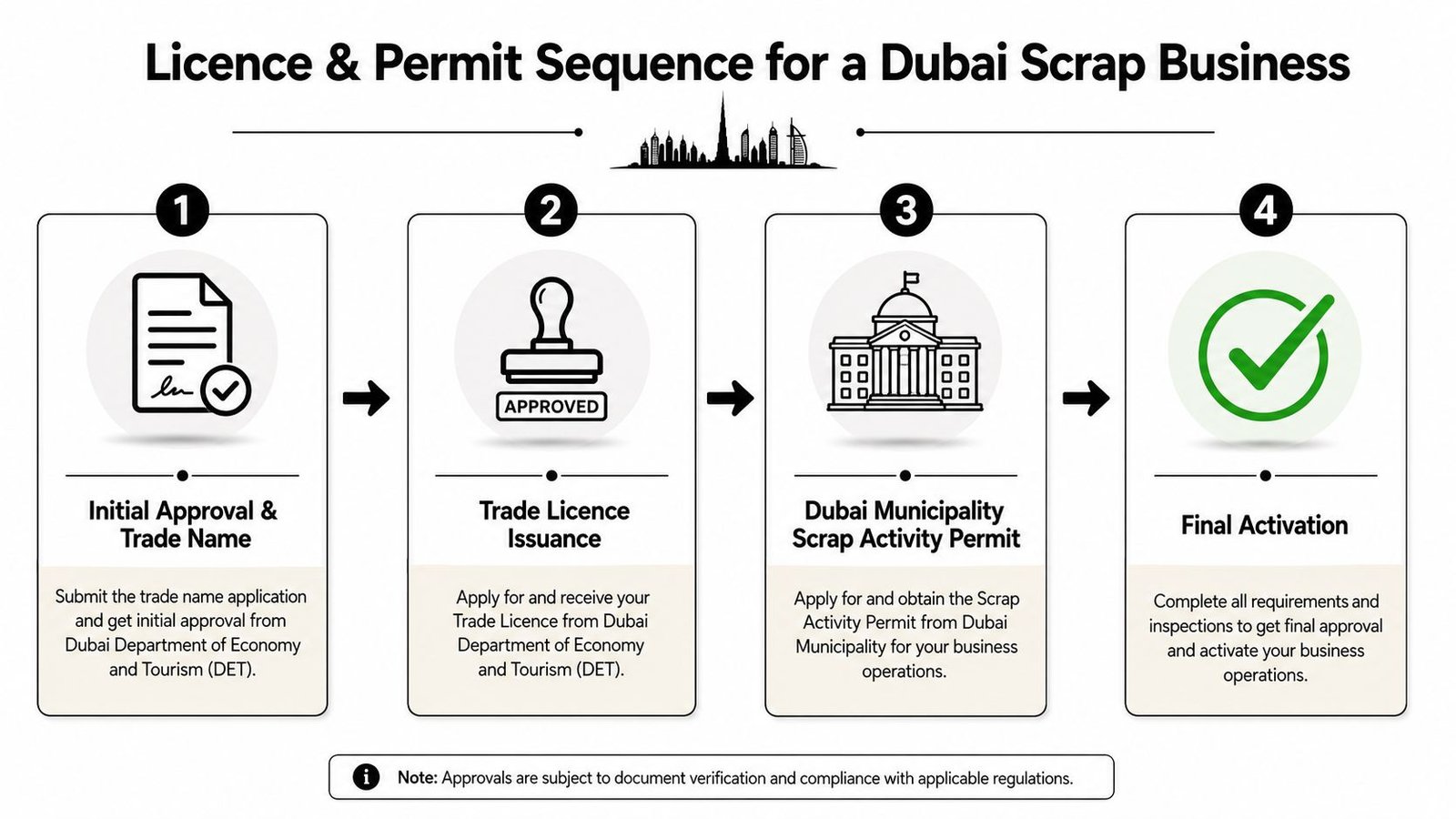
A Free Zone can still work well as an export platform, but it does not remove operational approvals. The wrong jurisdiction can leave a founder paying for a licence that does not match how the material will move.
The better question is which setup lets you buy, store, and sell the material without friction later. For most local scrap operations in Dubai and the wider United Arab Emirates, Mainland is the default starting point.
Licences, Activity Codes, and the Dubai Municipality Permit
A scrap yard in Dubai does not start operating on a general trade licence alone. The waste-trading guidance from Dubai Municipality says the business needs a prior permit from the Technical Support and Studies Section of the Waste Management Department, and it also needs approval from Dubai's Department of Economic Development before operations begin, as set out in the Dubai Municipality waste-trading permit guidelines.
What has to happen first
The commercial licence still sits at the front of the process, but the Municipality permit is a real checkpoint, not a box-ticking exercise. You also need a Dubai office and a working contact number, plus the relevant waste-collection or processing activity approvals, before the file can move cleanly through review.
For a clean Mainland application, the usual document stack is straightforward. Prepare passport copies, Emirates ID where available, trade name reservation, initial approval, lease or Ejari for the office or yard, and any No Objection letters if a shareholder is already tied to another UAE visa. The practical aim is to arrive with a complete file, because one missing supporting document can stall the entire sequence.
Which approvals change by activity code
The activity code matters more than many founders expect. Meydan Free Zone says activity 4669.75, which covers scrap and metal waste trading, needs Dubai Municipality approval after the licence is issued, while activity 4669.77 for aircraft scrap and used spare parts needs Dubai Civil Aviation Authority approval before licensing (Meydan Free Zone).
That creates a real trade-off at setup time. Two businesses that both sit under “scrap” can face very different approval paths, document requests, and lead times. Ordinary scrap metal and aviation-related scrap do not belong in the same regulatory lane, and a broad activity code can create friction when the file reaches review.
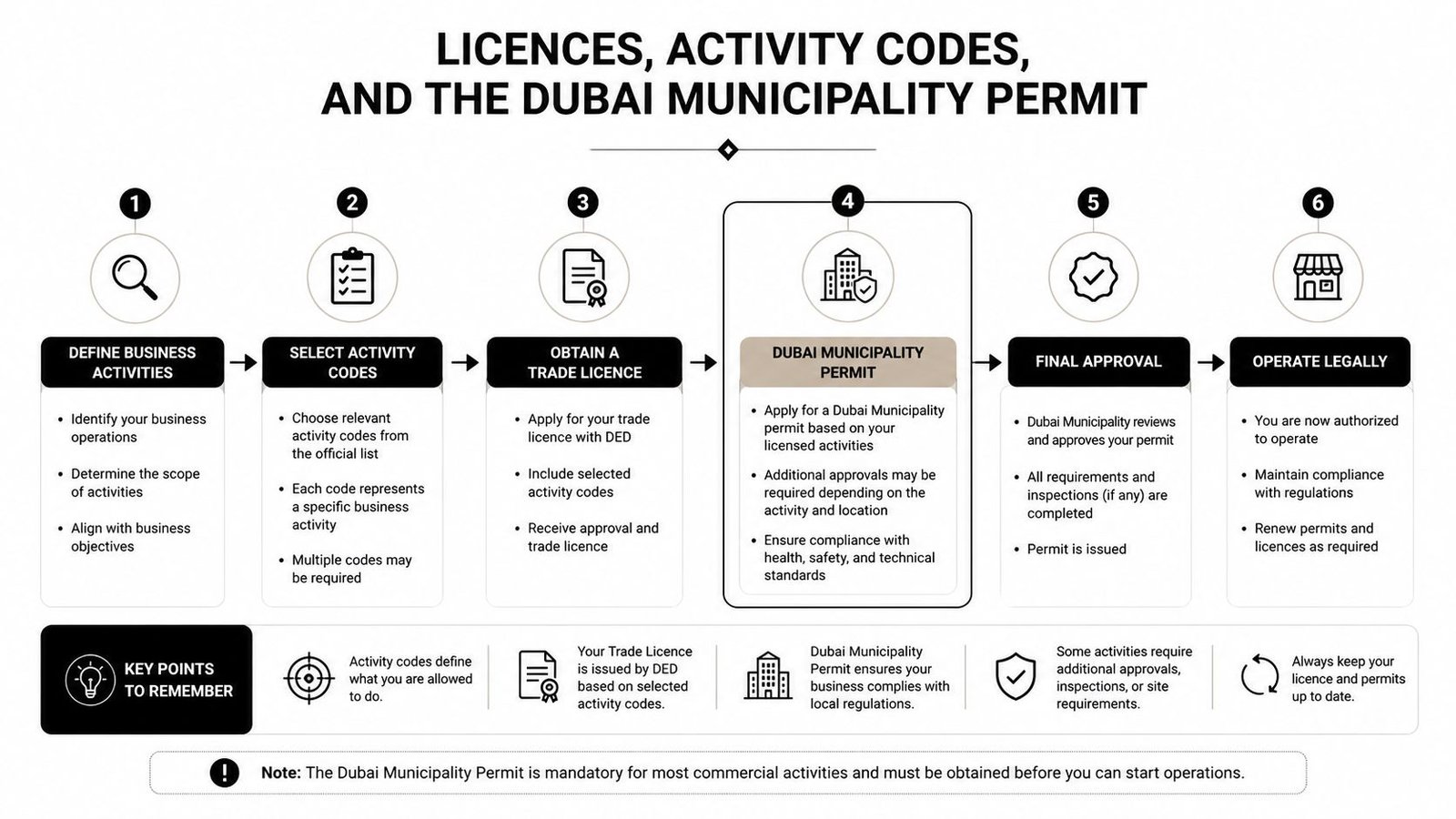
Keep the activity code narrow. A vague licence is one of the fastest ways to create delays when Municipality approval is reviewed.
A clean Mainland application often takes 4 to 10 weeks from filing to operational readiness when the file is complete and the site is lined up properly. The cost stack also matters here, because the founder is usually paying for the licence, the Municipality permit, office or yard lease commitments, and any specialist approvals tied to the chosen activity code. The sequence is not hard, but it is sequential, and trying to jump ahead usually creates rework.
Health, Safety, and Environmental Compliance
The licence is only the starting point. Once a scrap business in Dubai begins operating, the main burden sits in how the site, vehicles, and waste-handling controls fit Dubai's 2026 framework for collection and transport, trading, and treatment and recycling. Those categories are not treated the same, so the compliance file has to match the exact activity, not just the word “scrap.”
What applies to trading versus processing
A trader who only buys and sells scrap carries a lighter compliance load than a business that treats, processes, or disposes of waste. Once a site moves into treatment or disposal, the file usually needs DECCA environmental authorisation and an Environmental Impact Assessment, the formal review used to assess environmental effects before operations begin.
Vehicle-based operators face another layer. RASID-compliant GPS and sensors need to be fitted on each vehicle before it goes live, so this is a hardware, monitoring, and reporting issue as much as a paper file.
What the yard must show on site
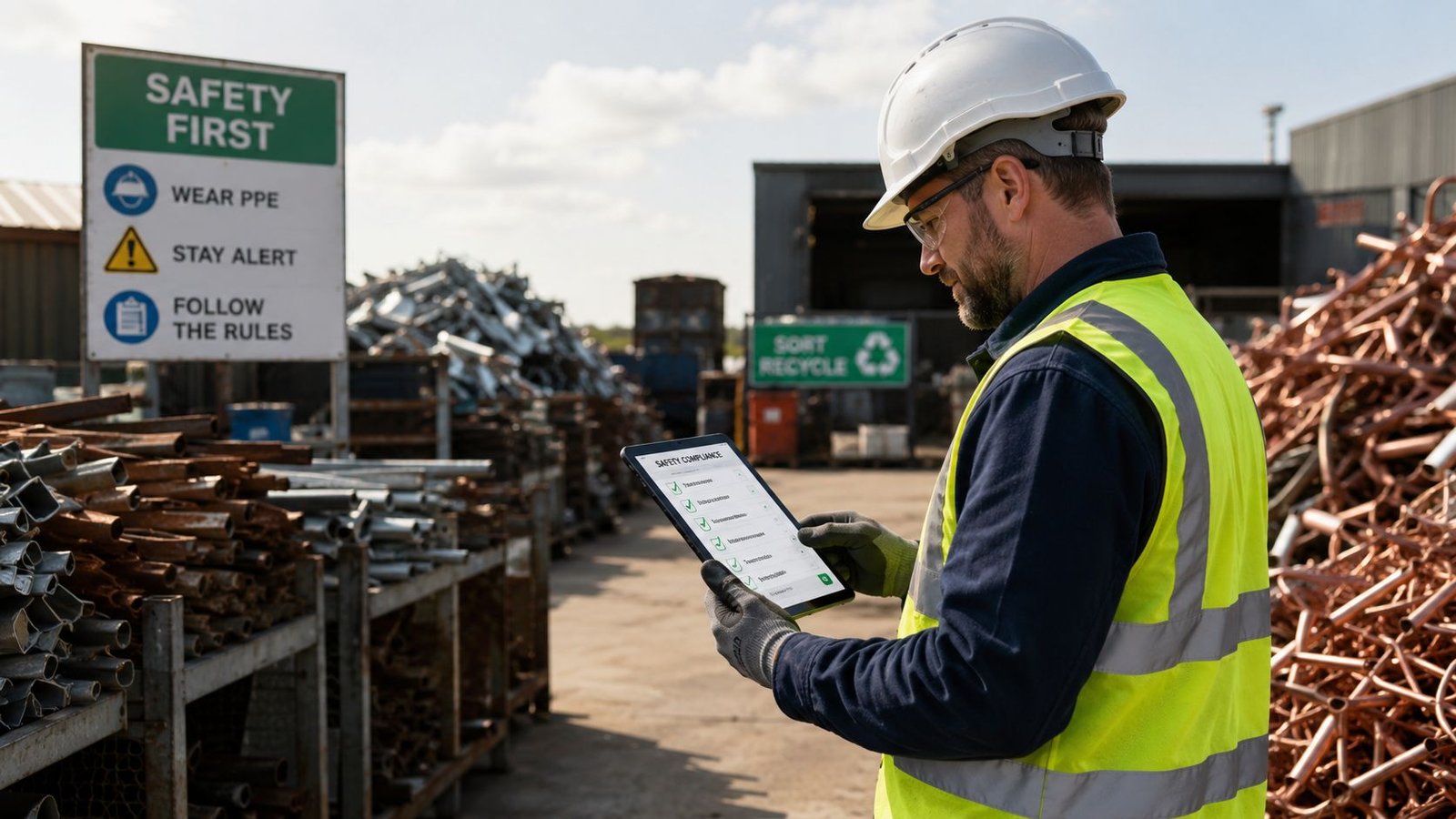
The yard still has to stand up to an inspection and make sense to suppliers. Fire suppression, spill containment, clear storage segregation, and PPE for sorters are standard expectations, not optional extras.
The layout matters too. Different scrap grades should be kept in separate bays so the site does not mix material, damage quality, or trigger avoidable disputes when buyers check the load.
A business that cannot explain where material is stored, how it is weighed, and how vehicles are tracked will spend a lot of time answering follow-up questions from authorities and counterparties.
That is why the best operators treat compliance as part of the commercial model, not as a side file. Clean controls reduce friction, support payment confidence, and make repeat orders easier to win.
For processing operators, the environmental layer belongs in the main budget from day one. For pure traders, it still affects how material moves, how vehicles are monitored, and how the yard is organised. A practical setup follows the rules, keeps the file clean, and gives buyers and inspectors fewer reasons to slow the business down.
Visas, Banking, and Tax Registration
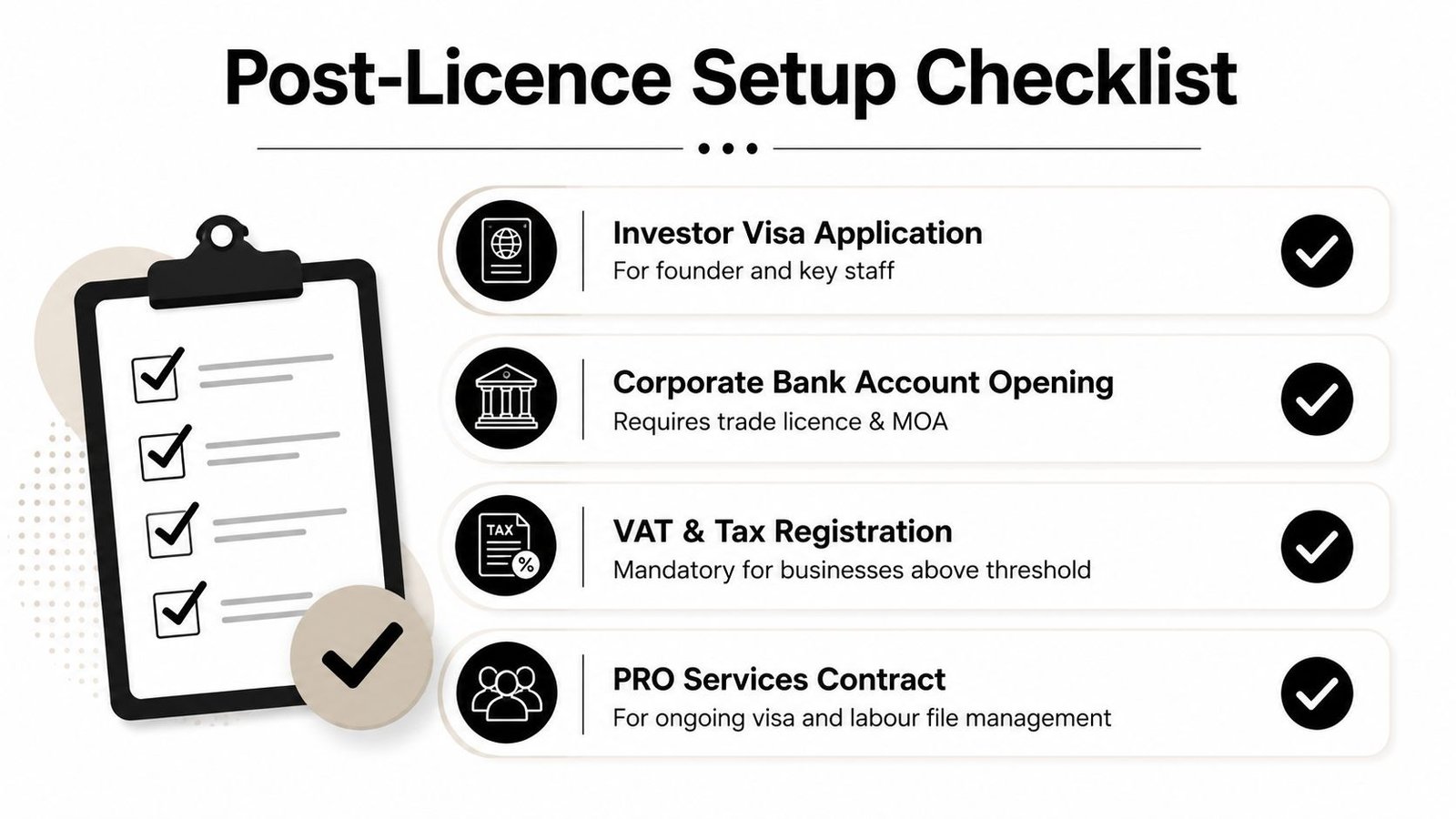
A licence alone doesn't let a scrap business in Dubai trade. The founder usually needs an Investor Visa, which is a residence visa linked to ownership, and staff need work and residence processing through the usual UAE channels. For many operators, this is the part that creates the most stress because it sits between formation and actual trading.
What the founder and staff need
The founder's visa file usually sits alongside the company setup file, then moves through medical testing, Emirates ID, and biometrics before final residence stamping. Staff visas follow a different route, but the same logic applies, the company must already be properly formed and active before labour processing moves cleanly.
The practical point is simple. Don't buy yard equipment, sign a big lease, or import stock before your immigration file is ready to support the people who will run the business.
The embedded video below is a useful visual check on the post-licence sequence.
What banks and tax authorities expect
Corporate banking in the UAE is document-heavy for a reason. Banks usually want the trade licence, the MOA, board or shareholder authority where relevant, and a clear explanation of how scrap will be sourced, held, and sold. Scrap often gets enhanced due diligence because the business moves physical goods and can have complex supplier chains.
Tax registration should also be active from the start. The Federal Tax Authority handles Corporate Tax registration, and VAT registration becomes mandatory once taxable supplies cross AED 375,000. That threshold matters because scrap businesses often move from small buying cycles to fast-moving inventory faster than founders expect.
Banks are not asking for a polished story, they want a believable one. If your source of scrap, storage plan, and buyer market don't line up, the account opening process slows down.
For founders expanding from the wider United Arab Emirates or coming in from abroad, this is also where good PRO support saves time. PRO means Public Relations Officer support, the document and government-services layer that keeps visa files, approvals, and renewals moving without missed steps.
Operations, Equipment, and Sourcing the First Loads
A functioning yard is more than a licence and a gate. The site needs to match the model, whether that's an industrial zone, a warehouse yard, or a Free Zone facility built for storage and dispatch.
What a workable yard actually needs
At a minimum, you need a weighing setup, sorting bays, safe storage space, loading access, and enough room for vehicles to move without creating bottlenecks. Calibrated scales matter because scrap is priced by weight, and a yard that cannot measure accurately will lose money quickly.
The basic equipment stack usually includes platform scales or a weighbridge, cutting and sorting tools, forklifts or crane access, PPE, and basic fire and spill controls. Processing businesses add more machinery, but a pure trader still needs enough handling equipment to move stock safely and quickly.
Where the first material usually comes from
The first loads usually come from construction and demolition sites, industrial offcuts, manufacturing plants, vehicle dismantling, and established waste or scrap aggregators. These suppliers prefer working with licensed buyers because the paperwork is easier, the payment process is cleaner, and the reputational risk is lower.
Do not wait for a perfect yard before speaking to suppliers. Good operators line up offtake and inbound sources in parallel, then close the licensing gap around those relationships.
Pricing usually follows the London Metal Exchange for benchmark metals and local smelter or recycler demand for actual purchase behaviour. The trading margin sits in the spread, so a clean weighing process and disciplined sorting matter as much as the headline metal price.
Logistics also shape the business day to day. You'll need vehicle licensing, route permissions where required, and insurance that covers both the truck and the yard operation. Serious suppliers look closely at those details before they hand over a load.
Realistic Costs, Timeline, and a 90-Day Execution Plan
A lot of online content stops at headline licence numbers, but that's not how a scrap setup gets funded. One source notes that existing content often quotes only AED 10,000 to 30,000 or package pricing starting around AED 14,900, while leaving out the full cost stack, including warehouse or yard location, transport permits, weighing and sorting equipment, safety systems, staffing, and compliance overhead (YouTube overview on scrap setup costs).
What the money usually goes on
A real first-year budget normally spreads across several buckets, licence and Municipality permit, site rent and Ejari, equipment, transport and RASID fitment, visas and PRO work, insurance, and working capital for the first buying cycle. The cost pressure usually comes from the site and equipment, not just the paper licence.
Here's the practical lesson. If the business only has money for the licence, it does not yet have money for operations.
What to do in the first 90 days
A realistic execution rhythm looks like this. Weeks 1 to 2 are for trade name, initial approvals, and deciding the exact activity code. Weeks 3 to 6 are for the Municipality permit, any activity-code-specific approvals, and the site file.
Weeks 6 to 8 usually go into visas and banking, while weeks 8 to 10 are for fit-out, equipment, and RASID-related vehicle compliance where needed. Trading often starts around week 10 to 12 if the file stays clean.
A workable 90-day checklist looks like this:
- Lock the activity. Decide whether you are trading, collecting, or processing, then keep the scope narrow.
- Secure the site. Match the yard or office to the licence, not the other way around.
- Prepare the file. Keep identity documents, lease papers, and approvals ready before filing.
- Set up operations. Fit the yard, line up vehicles, and confirm supplier and buyer contacts.
If you want the process handled with fewer back-and-forths, Inpro Corporate Services L.L.C. can help you structure the licence, approvals, visas, and banking steps around the exact scrap activity you plan to run in the UAE. Book a strategy call with the inpro.me team if you want a clear setup path before you spend on a yard, equipment, or permits.