

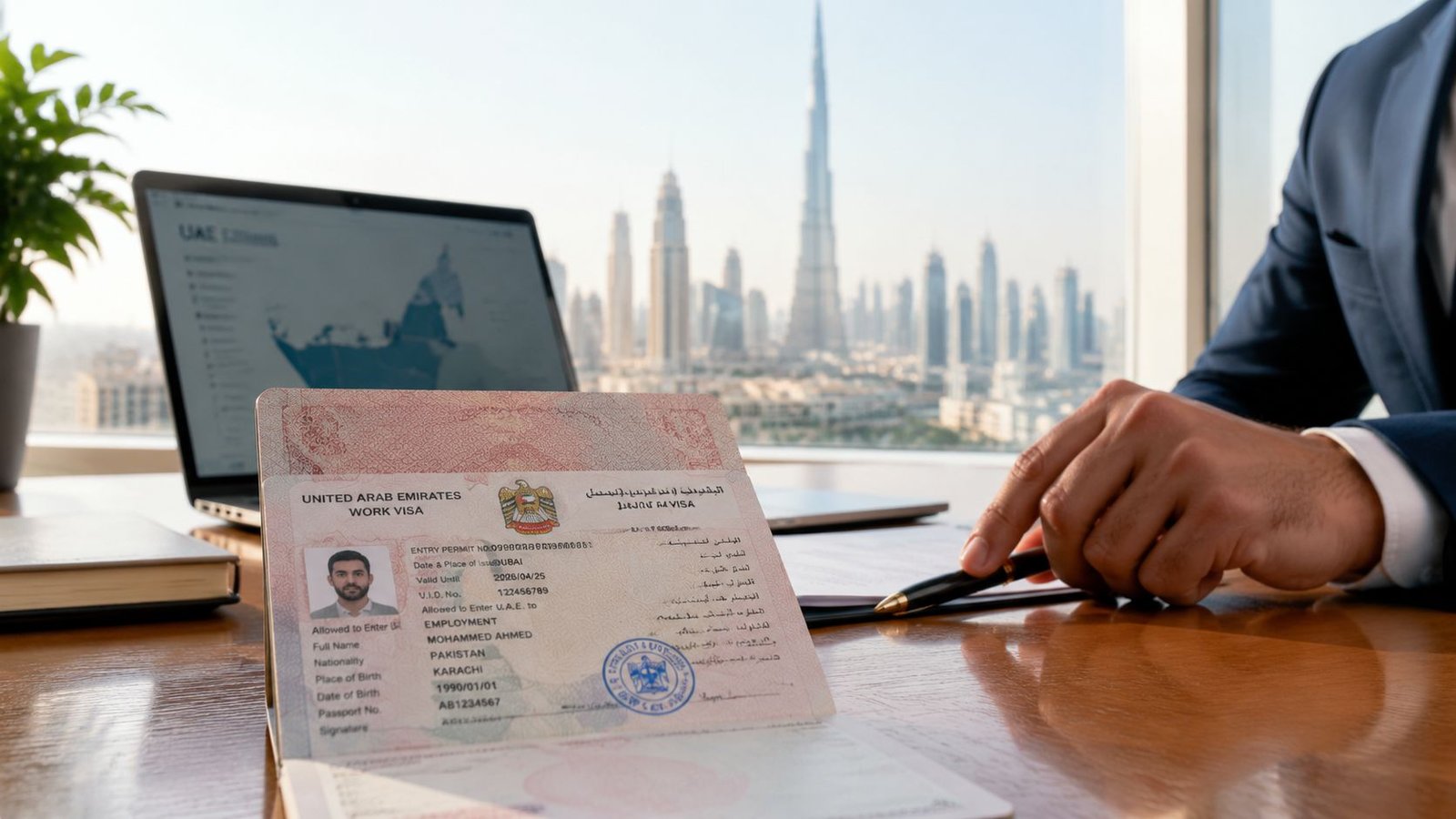
If you've accepted a job in the UAE and are staring at a list of unfamiliar approvals, the process is more organised than it first appears. For a standard employment visa, your employer applies for the work permit and manages the residence process, while you provide documents and attend the medical fitness and Emirates ID appointments.
Table of Contents
- How to Get UAE Work Visa and What It Really Involves
- Choosing the Right Work Visa Route for the UAE
- The Employer Led Process From Work Permit to Residence Visa
- Documents and Employer Requirements You Need Before You Apply
- Timelines Costs and the New Work Bundle System
- Common Pitfalls and Practical Tips for a Smooth Approval
How to Get UAE Work Visa and What It Really Involves
A UAE work visa is an employer-led residence route that allows an employee to live and work legally in the United Arab Emirates. It normally sits alongside a work permit, which confirms that the employer can hire the person for the stated role.
MOHRE, the Ministry of Human Resources and Emiratisation, handles the labour-side approval for most mainland private-sector employment. The residence side is handled by the immigration authority for the relevant emirate. In Dubai, that authority is GDRFA, the General Directorate of Residency and Foreigners Affairs.
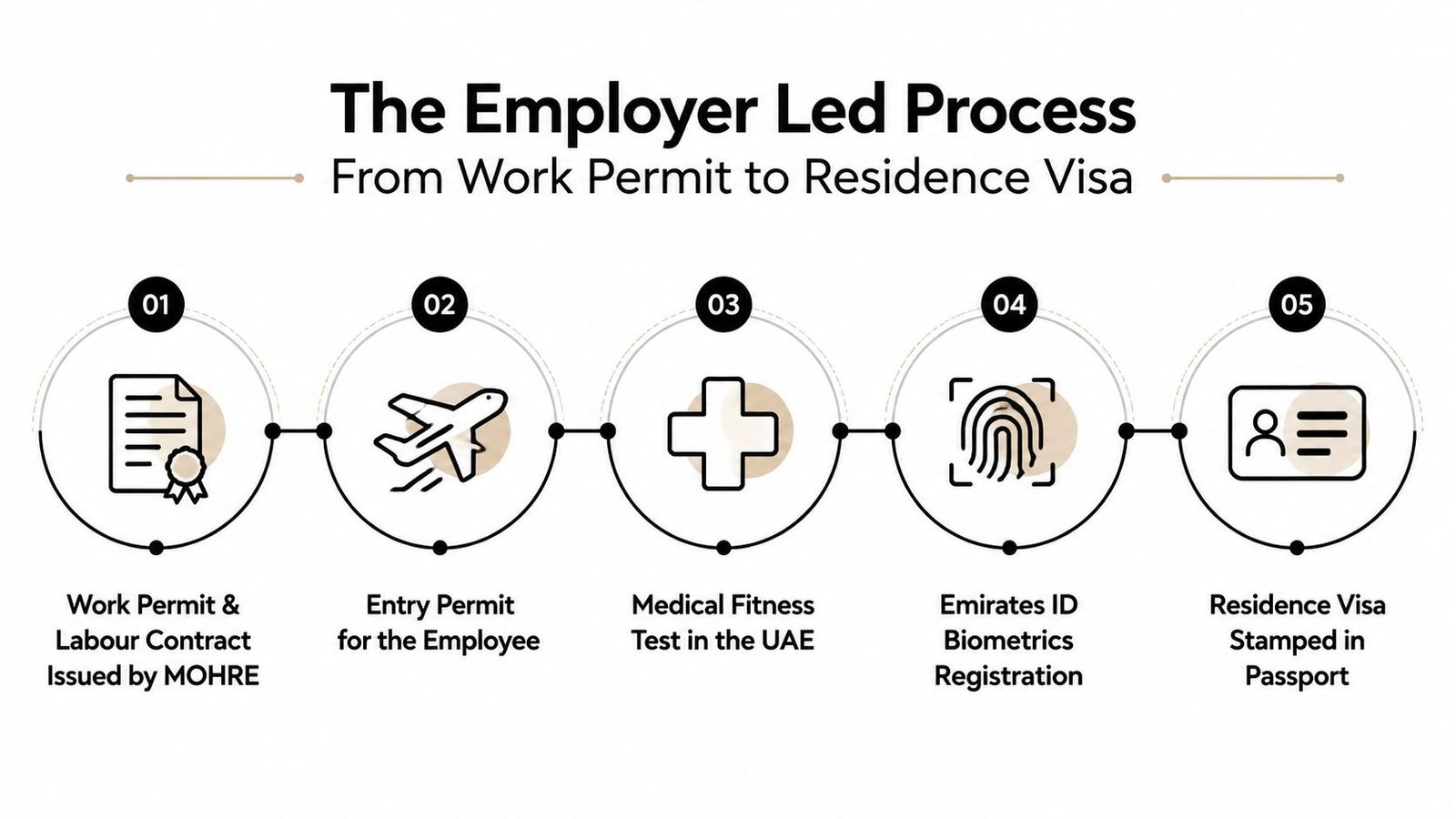
The usual sequence is:
- Employment approval: The employer applies for the work permit and registers the labour contract.
- Entry permission: The residency authority issues an entry permit so the employee can enter or change status in the UAE.
- Medical fitness: The employee completes the required medical examination in the United Arab Emirates.
- Identity registration: The employee provides biometrics for the Emirates ID.
- Residence issuance: The residence visa is stamped in the passport or issued digitally.
The employer generally manages the government applications and pays the relevant processing charges. The employee still has responsibilities. A passport, photographs, qualification documents where required, accurate personal details, and attendance at appointments must be ready at the right time.
Practical rule: Treat the visa as a linked workflow, not as one application. A delay in the employment contract, medical result, biometrics appointment, or immigration file can hold up the next stage.
The UAE government distinguishes the standard work visa from self-sponsored routes. The Green Visa is a separate self-sponsorship route for skilled workers, while the standard work visa is used by employees in government and private-sector roles. The UAE government's official working-in-the-UAE visa guidance was updated on 7 August 2026 and remains the primary reference for this pathway.
The practical approach is simple: first confirm the sponsor and route, then check the employer's licence and labour file, prepare the documents, and keep the entry-permit deadline visible. The same broad logic applies in Dubai, Abu Dhabi, Sharjah and other emirates, although the portal and authority can differ.
Choosing the Right Work Visa Route for the UAE
The correct route depends first on who will sponsor you. A founder hiring an employee, a professional joining a Dubai company, a freelancer, and a specialist seeking long-term residence may all use different channels.
A mainland company is licensed to trade across the UAE market under the relevant emirate's economic authority. In Dubai, people often refer to the Department of Economy and Tourism, or DET, as the authority associated with mainland commercial licensing. Mainland employers normally use MOHRE for employment permits.
A free zone is a designated business area with its own licensing authority and administrative framework. A free-zone employer usually processes employee permits through that free zone rather than through the mainland employment route. The exact documents and sequence depend on the authority, such as a Dubai, Abu Dhabi or Sharjah free zone.
A self-sponsored route removes the ordinary employer-sponsor relationship. The Green Visa is designed as a separate route for eligible skilled workers, while investor and specialist routes depend on their own qualifying conditions. A Golden Visa applicant, for example, must meet the relevant category and evidence requirements rather than only having a UAE job offer.
| Route | Sponsor | Best For | Key Requirement |
|---|---|---|---|
| Mainland employment | UAE mainland employer | Companies serving the wider UAE market and their staff | Employer approval, valid licence and labour compliance |
| Free-zone employment | Relevant free-zone authority and employer | Businesses established in a UAE free zone | Free-zone employment file and authority requirements |
| Green Visa | Applicant | Eligible skilled workers and other qualifying categories | Self-sponsorship eligibility and supporting evidence |
| Golden Visa | Applicant or qualifying authority route | Eligible specialists, investors and other approved categories | Category-specific evidence, including salary evidence where applicable |
The main trade-off is control versus dependence. An employment visa is usually the clearest route for a staff member because the employer handles the workflow, but the residence status is tied to that employment relationship. A self-sponsored route can provide more independence, but the applicant must prove eligibility and maintain the required evidence.
A founder should decide whether the company needs mainland or free-zone hiring capacity before offering roles. An HR team should confirm the establishment file and quota before promising a joining date. A freelancer or specialist should avoid assuming that a standard job visa is the only option.
The supporting video below gives a visual overview of the employer-led sequence.
The Employer Led Process From Work Permit to Residence Visa
The work permit comes before the residence visa. For a mainland employer, the application normally starts with MOHRE, while a free-zone employer follows the relevant free-zone authority's employment process.
The employer submits the job details, employee information and labour documentation. MOHRE may review the role, salary, quota and the employer's compliance position. Once the labour approval and contract arrangements are in place, the immigration authority can issue the employee's entry permit.
An entry permit is the document that allows the employee to enter the UAE for the approved purpose or complete an in-country status change. The process guide from Henry Club's UAE work visa overview describes the standard workflow as commonly involving 5–8 stages, depending on whether the applicant is inside or outside the United Arab Emirates.
The entry permit is generally valid for 60 days, as described in the 2026 UAE work visa process guidance from Wego. That period is not a suggestion. The employer and employee must coordinate the medical, identity and residence stages before the window expires.
Once the employee enters the UAE, or once the status change is approved for someone already inside the country, the medical fitness examination follows. Medical fitness is mandatory before residence completion. The employee should book the appointment promptly and bring the required identification documents.
The next appointment is Emirates ID biometrics. The Emirates ID is the UAE identity card issued by the Federal Authority for Identity, Citizenship, Customs and Port Security. Biometrics usually means fingerprints and other identity registration details. A missed appointment can interrupt the linked workflow even when the medical result is already complete.
GDRFA fits into the immigration side of the process in Dubai. Abu Dhabi and other emirates use their own residency authorities and channels, so the employer must submit through the correct jurisdiction.
The final stage is residence issuance. Depending on the current system and authority, the residence may be issued digitally rather than represented by a physical passport stamp. The employee should check the approved digital record and Emirates ID application status before treating the process as complete.
Mainland and free-zone workflows differ mainly in the first approval layer. After the relevant employment approval, both routes still require careful coordination between entry permission, medical fitness, identity registration and residence issuance.
Documents and Employer Requirements You Need Before You Apply
Most avoidable delays begin before submission. The employee has a document problem, the employer's establishment file is restricted, or the job information in the offer letter doesn't match the information entered into the government system.
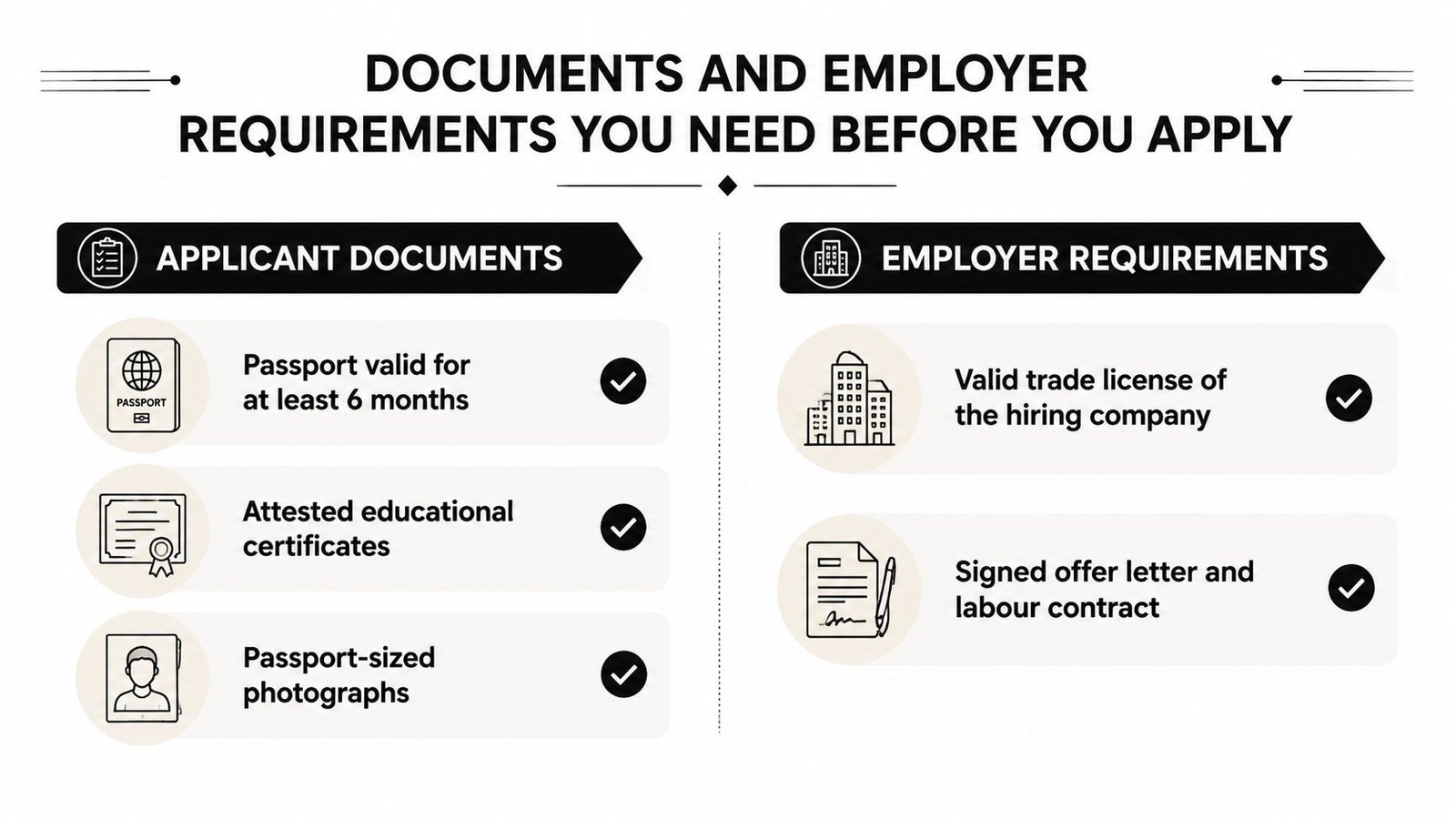
What documents does the applicant need
The applicant normally prepares a clear passport copy, passport-sized photographs and qualification documents where the role requires them. The passport should have at least six months of validity, as shown in the required-document checklist provided for this process.
Educational certificates may need attestation. Attestation is the official confirmation that a document was issued by the stated institution and can be accepted for use in the UAE. The exact chain depends on the issuing country and document type, so HR should check this before the employee travels or before the permit application is filed.
Personal information must match across the passport, offer letter, labour contract and application. Differences in spelling, date of birth or passport number can trigger a correction request. A professional applicant shouldn't assume that a scanned certificate is enough when the role or authority requires an attested original.
What must the employer have ready
The employer generally needs a valid trade licence, an active establishment file and sufficient hiring capacity. The company must also avoid blocking fines or labour restrictions that prevent a new permit from being approved.
MOHRE compliance checks can include the job title, salary, quota and Wage Protection System, commonly called WPS. WPS is the UAE payroll monitoring framework used to help confirm that employees receive wages through approved channels. Independent 2026 guidance on Dubai employment visa processing identifies these employer-side checks as factors that can affect permit approval.
Before submission: Compare the trade licence activity, proposed job title, employment contract, salary details and establishment record. Fixing a mismatch before filing is faster than correcting it inside a live application.
How should HR organise the file
Create one controlled folder for each employee, with the passport copy, photograph, qualification evidence, signed offer and contract details. Use the same spelling and document version in every submission. Founders who are hiring their first employee should confirm the company's labour file and quota before setting a joining date.
The employer should also identify whether the employee is outside the UAE or already in the country. That fact changes the entry and status-change handling, even though the later medical and Emirates ID stages remain part of the residence workflow.
Timelines Costs and the New Work Bundle System
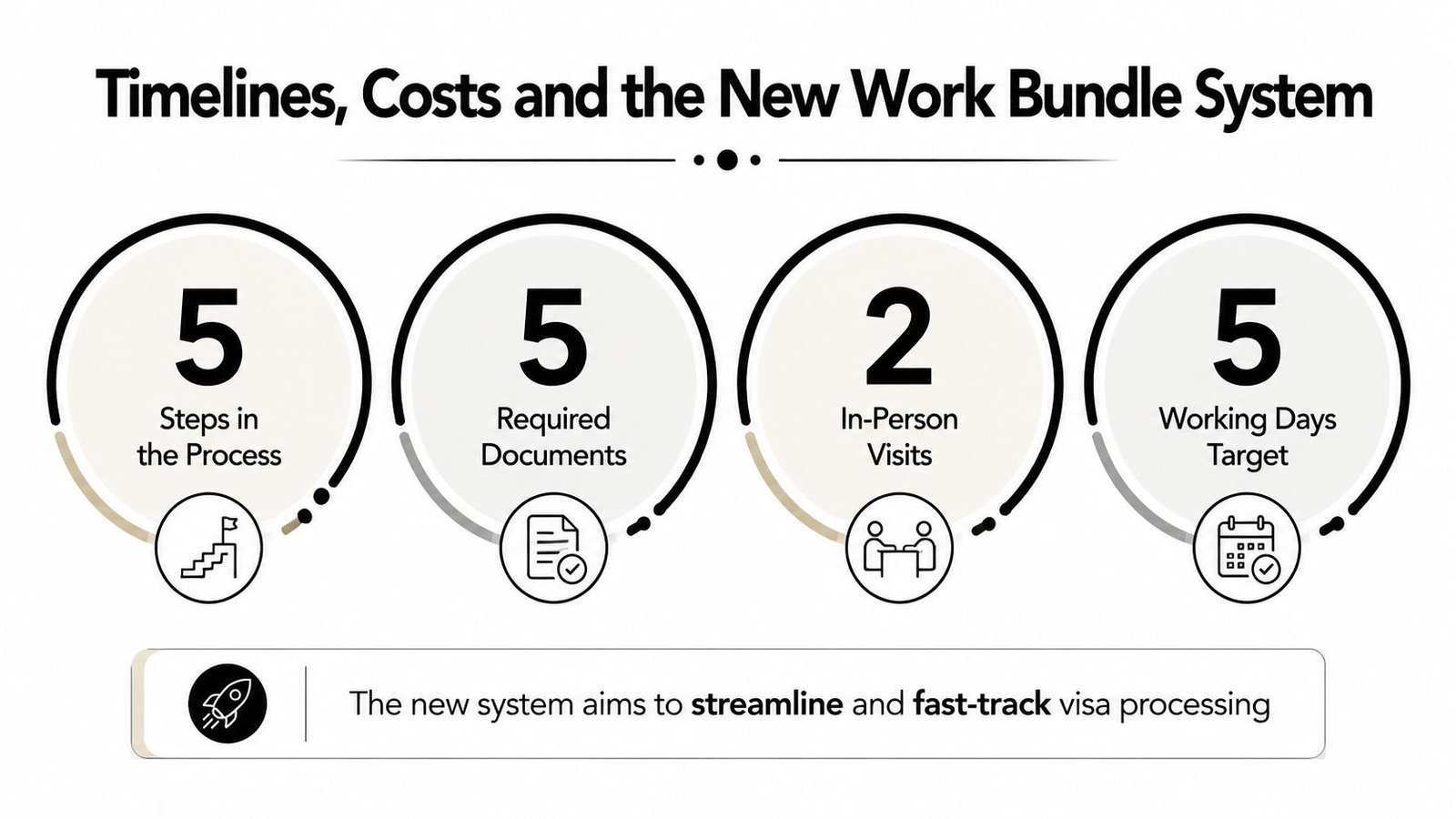
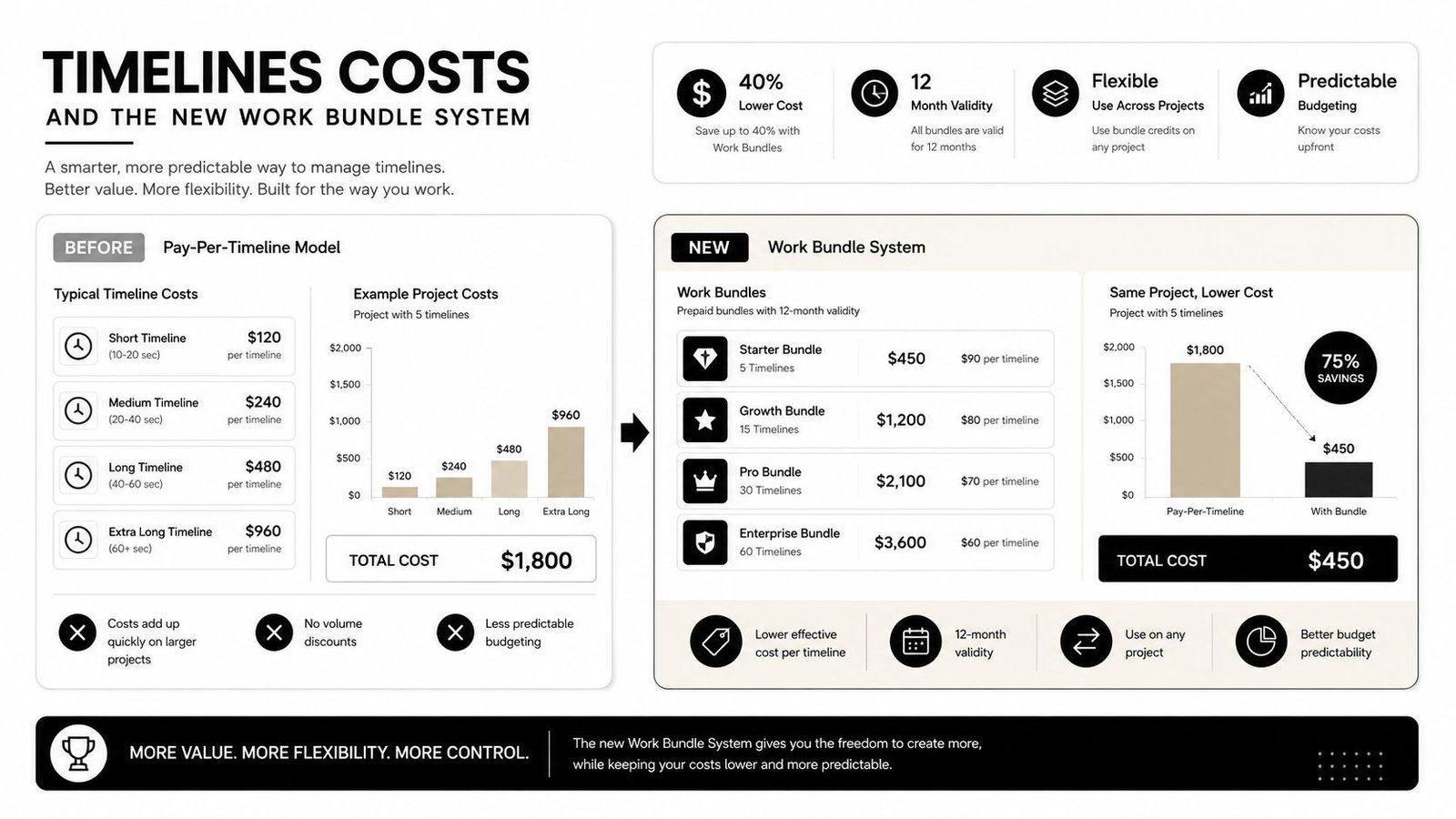
A Work Bundle application can appear straightforward to an employer, yet the result depends on several linked systems accepting the same information in sequence. Current UAE work visa process guidance describes a workflow built around five steps, five documents, two in-person visits and a five-working-day target. Treat that target as a planning reference, not a guaranteed completion date.
The employer must coordinate the contract, passport details, medical examination, residence record and Emirates ID application. A missing document, inconsistent spelling or unavailable appointment can stop the next system from progressing. The delay usually occurs between stages, rather than in the final residence issuance itself.
The entry permit creates the main deadline. It is generally valid for 60 days, so an employee who has entered the UAE should arrange the medical examination and biometrics promptly. If the permit is nearing expiry, the employer or authorised representative should ask the relevant immigration authority whether correction, extension or replacement is available.
Costs are spread across the workflow:
- Work permit: Labour-side processing and employment approval.
- Entry permit: Immigration permission to enter or change status.
- Medical fitness: Examination required to complete residence processing.
- Emirates ID: Identity application and biometric registration.
- Residence issuance: Final immigration record and related issuance charges.
The total depends on the route, authority, employer category and applicant's circumstances. A mainland employee in Dubai may not have the same government or service charges as a free-zone employee in Abu Dhabi. Request a current, itemised quotation instead of relying on an old online fee list.
The operational bottleneck has shifted from paper collection to readiness between connected platforms such as Work Bundle and Salama. The contract may be accepted while the medical result is pending, or the medical record may be complete while the Emirates ID appointment is unavailable. HR should therefore track the status and next action for every stage.
Dubai's processing volume makes that control important. In the first half of 2026, its immigration authority issued 1,051,978 new residence permits, renewed 910,552 residence permits, processed 5,078,078 entry-permit transactions and granted about 66,000 Golden Visas, according to Dubai immigration reporting on H1 2026 activity. The same reporting cycle records nearly 9.7 million new work permits and employment contract renewals processed in 2025.
GDRFA Dubai reported more than 521,000 Work Bundle transactions in H1 2026, as covered by ARN News Centre's coverage of UAE entry and residency processing. For HR, the practical rule is simple: monitor each application status and deadline, not only the final visa result.
Common Pitfalls and Practical Tips for a Smooth Approval
The linked nature of the process means a small issue can appear to be a general visa delay. Usually, the useful question is, which stage is waiting for which action?
How does a delay affect your entry permit
An entry permit that is approaching its validity limit needs immediate attention from the sponsor or authorised representative. Don't assume that an employee can remain in the UAE while the application sits untouched. Ask the immigration channel handling the file whether the permit can be corrected, extended or replaced, and keep written confirmation of the next action.
What happens if the medical result is delayed
A medical retest or pending result can hold up residence completion and Emirates ID sequencing. The employee should follow the centre's instructions and give the employer the appointment reference or result status. The employer should avoid submitting conflicting information while the medical record is still being updated.
How can biometric appointments cause problems
A missed Emirates ID biometrics appointment can leave the residence file incomplete. Reschedule through the approved channel as soon as possible and check whether the application deadline has changed. The employer should track the appointment separately from the labour permit because the systems don't remove the need for human follow-up.
Why do quota and salary mismatches lead to rework
A company may have a valid trade licence but still face a labour-file restriction, quota issue or compliance block. The proposed job title and salary should match the approved employment records and contract. WPS compliance can also affect the employer's ability to progress new permits, so payroll issues should be reviewed before recruitment starts.
Who qualifies for a salary-based Golden Visa route
For skilled professionals using the salary-based Golden Visa route, the basic monthly salary requirement is AED 30,000, with allowances excluded, according to 2026 Golden Visa salary guidance. Supporting evidence can include a MOHRE-attested employment contract, salary proof and bank statements showing consistent salary credits.
The distinction matters for senior professionals in Dubai, Abu Dhabi or another emirate. Total compensation may look high, but the qualifying test focuses on basic pay. A separate report on the stricter 2026 Golden Visa salary test states that scientists and specialists must show the AED 30,000 basic salary for the past two years, with allowances no longer counting towards the threshold.
The safest approach is to confirm the route before the employer files anything, prepare the documents as one controlled set, and track the deadline after the entry permit is issued. That discipline works whether you're a founder hiring in Sharjah, an HR manager relocating staff to Dubai, or a professional moving to Abu Dhabi.
Inpro Corporate Services L.L.C. helps founders, HR teams and international professionals manage UAE company formation, employment visas, investor visas, Golden Visa applications, document attestation and related government workflows. Visit Inpro Corporate Services L.L.C. to discuss the right United Arab Emirates visa route and get practical support with your application sequence.