

By the end of June 2025, the UAE had surpassed 999,000 active business licences, reaching the symbolic one-million threshold in the first half of the year, up from about 950,000 at the end of 2024, according to reported UAE business licence figures. A business licence in the United Arab Emirates is the legal foundation for your company, defining its activities, jurisdiction, ownership structure, and access to customers, staff visas, and premises.
The choice is no longer a simple Mainland-versus-Free-Zone decision. Dubai's 2025 framework gives eligible free zone companies controlled routes into mainland activity, while Abu Dhabi's licensing figures show strong growth across new, renewed, and active licences. The right setup depends on what you'll sell, where your customers are, how you'll employ people, and how much regulatory administration you're prepared to manage.
Table of Contents
- Understanding the UAE Business License Landscape in 2026
- Types of Business Licences Available in the UAE
- Mainland vs Free Zone vs Offshore Jurisdiction Comparison
- The Business License Application Process Step by Step
- Business License Costs and Renewal Pricing Explained
- How Free Zone Companies Can Now Access the Mainland Market
- Common Compliance Pitfalls and How to Avoid Them
- Making Your Decision and Getting Started
Understanding the UAE Business License Landscape in 2026
A UAE business licence is the government authorisation that allows a person or legal entity to perform specified commercial, professional, industrial, or freelance activities. It defines what the company may invoice for, which authority supervises it, where it can operate, and which approvals must be secured before trading. Treating it as a certificate for the company file creates problems later.
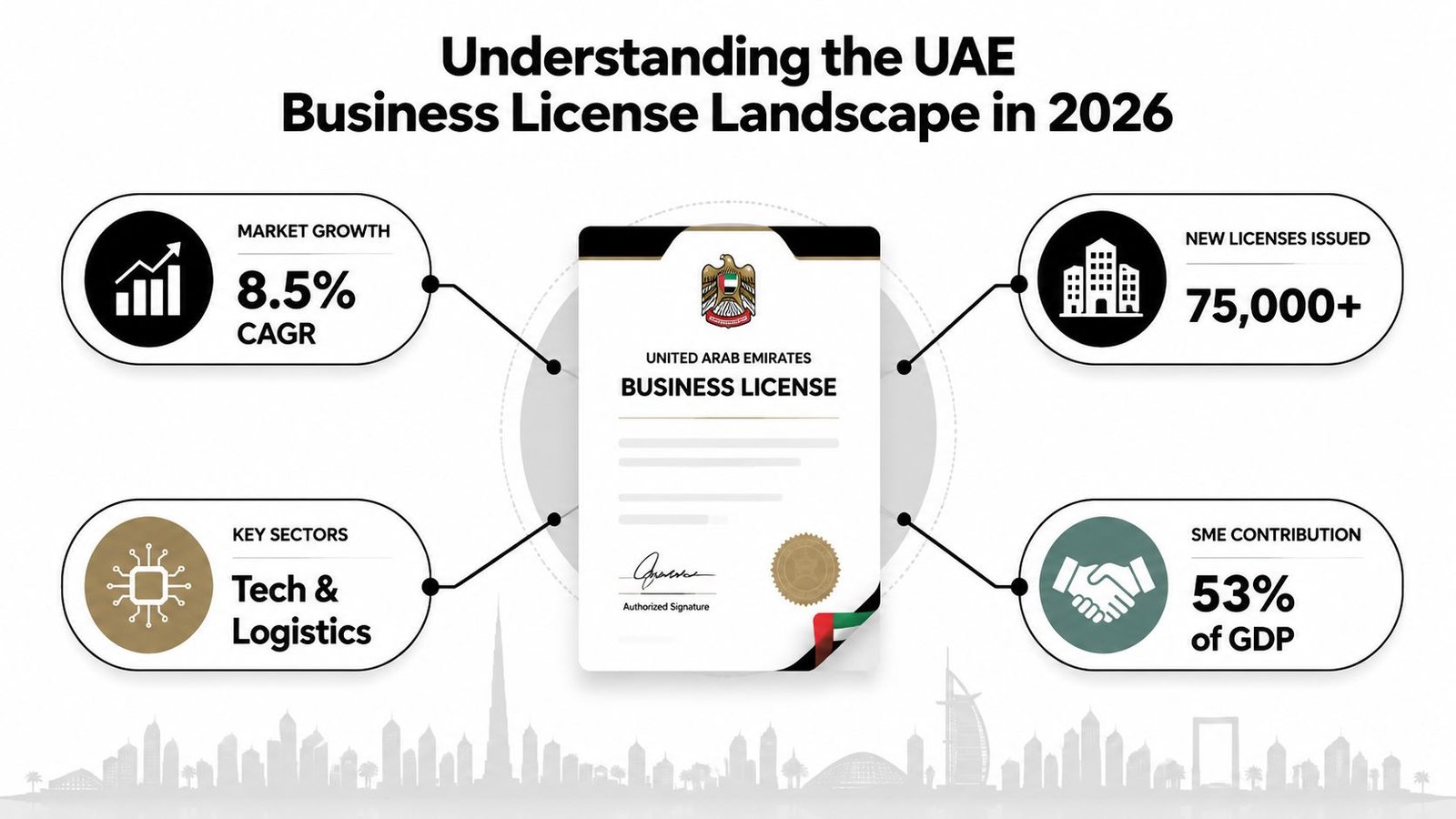
The UAE recorded more than 999,000 active licences by the end of June 2025, compared with about 950,000 at the end of 2024, representing roughly 5% growth in six months, according to the UAE licensing report. That scale matters to founders choosing a long-term base. It indicates a mature commercial market with a substantial population of registered entities, established authorities, and continuing demand for compliant business structures.
What does a UAE business licence control?
Your licence brings several operational decisions into one legal structure:
- Activity scope: Approved activity codes define what your company may legally sell or provide. A licence that sounds suitable may still exclude a regulated or more specific service.
- Jurisdiction: A Mainland licence, Free Zone licence, or Offshore registration creates different operating boundaries and market-access options.
- Ownership: Ownership rules depend on the structure and activity. UAE free zones offer up to 100% foreign ownership, as confirmed by the Ministry of Economy and Tourism's free zone guidance.
- Immigration capacity: The entity's premises and licence structure affect applications for investor and employee residence visas.
- Ongoing compliance: Renewals, tenancy records, labour administration, tax registrations, and activity restrictions continue after issuance.
The Department of Economy and Tourism, commonly called DET, handles mainland business licensing in Dubai. Other emirates operate through their own economic departments or registration authorities. A free zone authority registers and licences companies inside a particular economic zone, such as the Dubai Development Authority or a specialised zone authority.
Why does the 2026 licensing framework require a more careful approach?
The old Mainland-versus-Free-Zone question is now too narrow. A software consultancy serving overseas clients may fit a free zone structure, while a retailer selling directly to UAE consumers may need mainland access. A free zone company later taking on Dubai mainland work may have a permit or branch route available, rather than having to replace its original entity.
That change creates a practical compliance decision. Before incorporating, confirm the intended activities, customer locations, premises, staffing needs, and whether mainland work will require an additional approval. The cheapest initial licence can become expensive if the company must restructure after signing contracts.
Abu Dhabi's 2024 results reinforce the market's continuing activity. The Abu Dhabi Registration Authority reported a 16% increase in new economic licences, a 27% rise in renewed licences, and a 9% increase in active licences compared with 2023. New formation and licence continuity are separate issues, so founders should assess both when selecting a base.
Practical rule: Choose the licence around the activity and customer location first. Treat cost as a decision factor, not the decision itself.
Types of Business Licences Available in the UAE
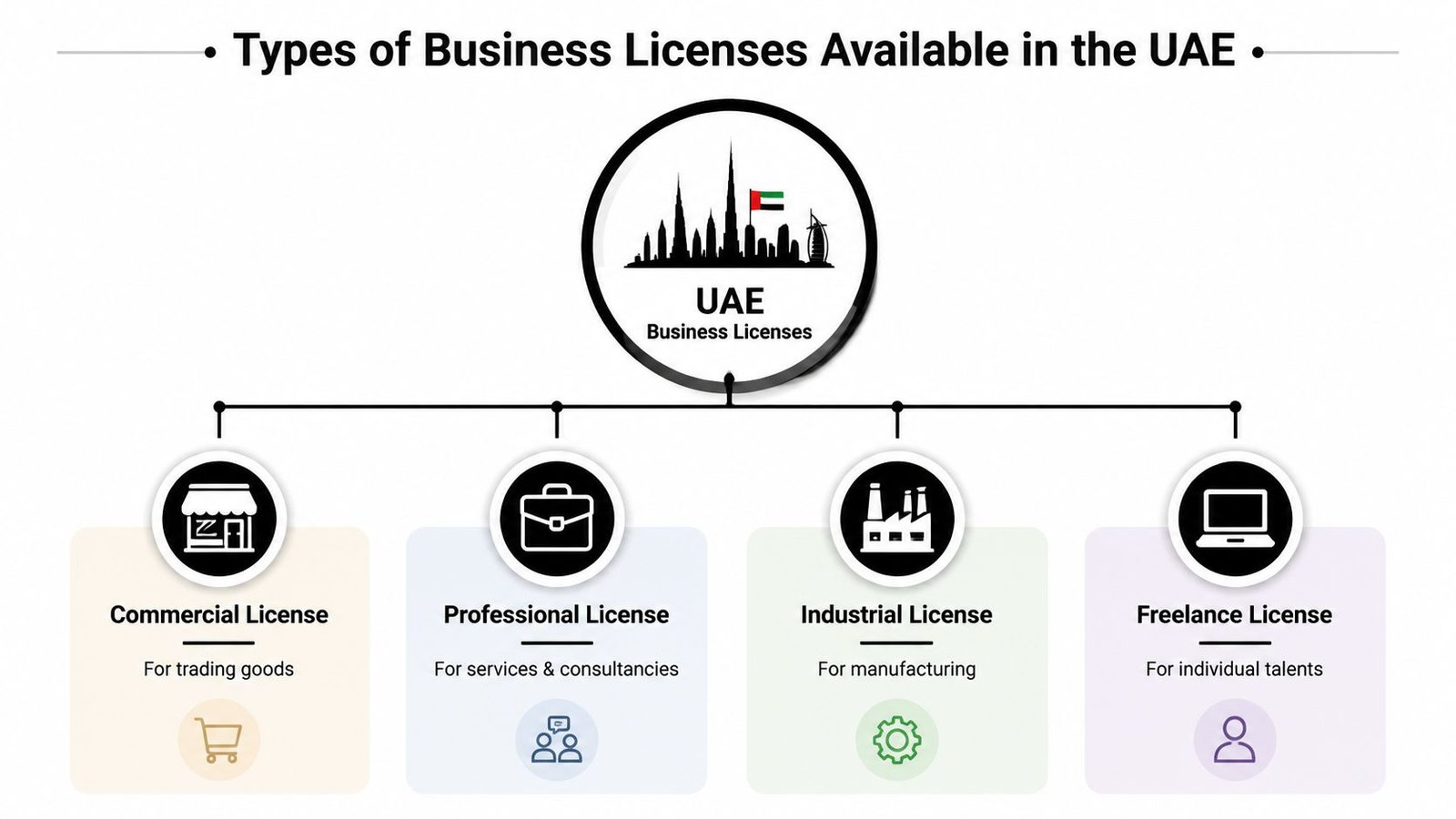
The licence category should follow the work the business will perform. The four categories founders most often assess are commercial, professional, industrial, and freelance licences. Choosing the cheapest option with an inaccurate activity can create problems with banking, contracts, invoicing, customs, or sector approvals.
What is a commercial licence?
A commercial licence authorises trading goods or carrying out specified commercial activities. Importers, exporters, distributors, retailers, and many e-commerce businesses usually examine this category.
A Dubai online store selling consumer products may need activities that reflect its trading model, rather than a generic “online business” description. An activity that sounds close may still be too broad. Suppliers, banks, customs channels, or regulators can require a more precise description before the company can operate as planned.
What is a professional licence?
A professional licence authorises service-based work delivered through professional expertise. Consultants, designers, software specialists, marketing providers, and business advisers commonly consider this route.
A two-person technology consultancy should confirm whether its proposed activity is professional, commercial, or subject to sector approval. The licence choice can also affect ownership and whether a local service-agent arrangement applies in the selected jurisdiction. Resolve that point before preparing incorporation documents.
What is an industrial licence?
An industrial licence authorises manufacturing, processing, production, or related industrial operations. Incorporation is only one part of the setup. The company may also need suitable premises, equipment information, environmental review, and approvals from relevant authorities.
A small manufacturing unit in Sharjah or Abu Dhabi should not select an industrial activity solely from the product name. The authority may examine the production process, facility, storage requirements, and import or export arrangements. Those details can determine whether the proposed activity and premises are acceptable.
What is a freelance licence?
A freelance licence provides a regulated route for an individual to perform approved activities without forming a full company in the usual manner. It can suit a graphic designer, writer, photographer, developer, or independent adviser, although eligibility and activity lists differ between authorities.
In Abu Dhabi, the ADRA freelancer licence requirements state that the business must be established as a sole proprietorship, with the applicant selecting the relevant activity and licence type. Dubai Development Authority guidance indicates that registration can require a passport copy, a residence visa page where applicable, and either a self-declaration form or a no-objection certificate from an external authority, depending on the category.
The Dubai Development Authority registration guidance shows why freelancers should treat the application as a document-led compliance process, not an online payment. Check the activity, supporting documents, and eligibility before relying on the licence for client contracts or visa planning.
Mainland vs Free Zone vs Offshore Jurisdiction Comparison
The jurisdiction determines where the company can operate legally, contract with customers, employ staff, and maintain premises. Mainland companies are licensed through the relevant emirate-level economic authority, such as Dubai's Department of Economy and Tourism. Free Zone companies are licensed by a designated zone authority. Offshore structures are generally intended for holding or international purposes, not ordinary UAE trading.
| Criteria | Mainland | Free Zone | Offshore |
|---|---|---|---|
| Foreign ownership | Ownership depends on the activity and applicable rules. Many activities allow foreign ownership, but the exact position should be checked before incorporation. | Free zones commonly permit 100% foreign ownership, subject to the relevant authority's rules and licence conditions. | Designed for holding and international ownership arrangements, with no assumption that the entity can conduct local operating activity. |
| Market access | Direct UAE mainland trading and contracting is the clearest fit, including local customers and potential government work, subject to tender and activity requirements. | Operations are governed by the zone licence. Mainland sales may require a separate approved route, such as a local distributor, branch, or permit. | Offshore entities generally cannot conduct ordinary operating business within the UAE market. |
| Visas | Visa capacity depends on the licence, approved premises, and authority requirements. | Visa options depend on the zone, office arrangement, and licence category. | Offshore structures generally are not chosen as operating employers for UAE residence visas. |
| Tax treatment | Corporate Tax and Value Added Tax, known as VAT, depend on the entity's activities, registration position, and taxable transactions. | A free zone does not remove the need to assess Corporate Tax or VAT. Records and activity segmentation matter where mainland and free zone operations meet. | Tax treatment depends on the structure, transactions, and applicable rules. Specialist advice is needed before using an offshore entity. |
| Office requirements | A compliant office or tenancy arrangement may be needed for the activity and licence. | Requirements vary by zone, from flexi arrangements to dedicated premises. | A physical UAE operating office is not normally the purpose of an offshore structure. |
The old Mainland-versus-Free-Zone distinction is less complete than it was. Regulatory changes in 2025 and 2026 have created additional routes for some free-zone companies to carry out mainland work, including Dubai's temporary mainland permits for eligible free-zone entities. The permit does not automatically convert the company into a mainland business. Confirm the eligible activity, duration, premises, approvals, and renewal or expiry obligations before signing local contracts.
Which jurisdiction fits which business?
Choose Mainland when revenue depends on UAE consumers, local contracts, physical retail, or government-facing work. It is usually the cleaner structure for activities that require a UAE operating address or unrestricted local contracting.
Choose Free Zone when the team serves international clients, needs a zone-based setup, or values a defined registration environment. The lower operating footprint can be useful, but the licence scope and mainland access route must match the actual sales model.
An Offshore entity can suit a holding company or asset ownership plan where there is no need for local operations. It is not a shortcut for selling services inside Dubai, Abu Dhabi, or Sharjah, opening an operating office, or arranging UAE employment visas.
The practical question is not “Which option is cheapest?” Ask what activity the entity must perform, where it must perform it, and whether customers or regulators require mainland access. Then verify the relevant permit and compliance deadlines before incorporation.
The Business License Application Process Step by Step
Treat licensing as a dependency chain, not a single form. The usual sequence covers activity selection, name reservation, initial approval, document preparation, external permissions where required, payment, and final issuance. A delay at one stage can hold up the stages that follow.
What happens before the application is submitted?
Define the activity in operational terms before choosing a licence. “Technology company” is too broad. Specify whether the business will provide software development, software consultancy, online trading, data services, or another activity, then confirm that the selected authority accepts it.
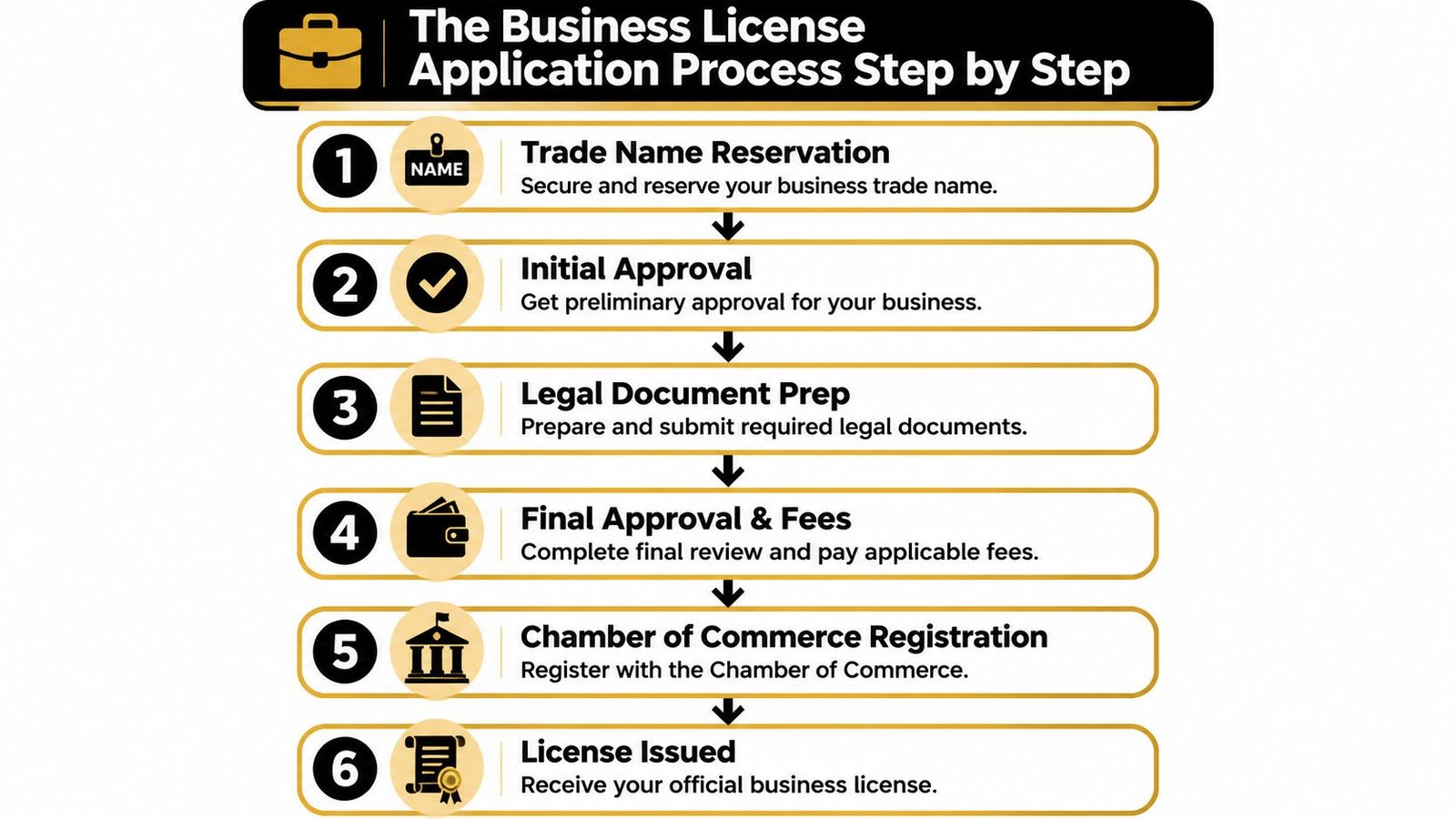
The application generally follows these steps:
- Reserve the trade name: The name must comply with authority rules and avoid existing registrations or restricted terms.
- Secure initial approval: This confirms that the authority can proceed with the proposed entity and activity. The Dubai Department of Economy and Tourism business licensing channel handles mainland licensing in Dubai.
- Prepare legal documents: Depending on the structure, the file may include passport copies, visa pages, incorporation documents, a business plan summary, a tenancy contract, and no-objection documentation.
- Obtain external approvals: Healthcare, education, financial services, food, transport, and other regulated activities may require permission from a specialist authority.
- Submit and pay: The authority reviews the application and provides the applicable payment instructions and charges.
- Receive the licence: The final document confirms the approved entity, jurisdiction, and activities.
How does Mainland differ from Free Zone processing?
Dubai mainland applications run through the DET licensing channel. Free zone applications use the relevant zone authority and may require initial approval before licence issuance. Confirm the authority's current sequence before preparing the final file, because requirements differ by jurisdiction and activity.
External approvals can determine the timeline. A straightforward service activity may move quickly, while a regulated activity can pause until the specialist authority accepts the documents and operating plan. The same issue applies when a free-zone company seeks a temporary mainland route. Check the permit conditions, expiry obligations, and any required approvals before relying on that route.
Keep every submission consistent. Names, passport details, proposed activities, ownership information, and office details should match across the application, constitutional documents, tenancy records, and approval requests. Inconsistencies often trigger clarification requests and preventable delays.
Business License Costs and Renewal Pricing Explained
A founder's budget should separate licence issuance, registration and government charges, premises, visa processing, and ongoing administration. The licence fee is only one part of the operating cost, and the cheapest first-year quote can become expensive if it excludes office requirements, activity amendments, or employee administration.
What published renewal prices can you verify?
Dubai Development Authority describes renewal as a service-request process involving application completion and fee payment, rather than an automatic extension. Its published DMCC charges provide a concrete reference for a trading and service licence:
| Renewal term | Published charge |
|---|---|
| One year | AED 20,265 |
| Two years | AED 40,530 |
| Three years | AED 60,795 |
| Five years | AED 101,325 |
These figures come from the Dubai Development Authority commercial licence renewal guidance. They show how a longer renewal term changes the total amount payable, but they shouldn't be treated as a universal UAE price. Mainland fees and free zone packages vary by emirate, authority, activity, office arrangement, and company structure.
Which costs catch founders off guard?
Premises are often the first surprise. A free zone may offer a flexi-desk arrangement for an eligible activity, while a mainland company may need a tenancy arrangement that suits its activity and visa requirements. Industrial, retail, and customer-facing businesses face different premises expectations from remote professional firms.
Visas create a second layer of cost. Investor and employee applications can involve government charges, medical fitness testing, Emirates Identity Card processing, insurance, and document preparation. The number of available visa slots can also depend on the office arrangement and licence type.
Changes after issuance add administration. Activity amendments, branch additions, partner changes, document attestations, and external approvals can each create separate work and fees. Ask for an itemised quotation that identifies what is included, what is optional, and what happens when the business changes direction.
A sensible budget includes the first renewal before the company signs its first major contract. Licence continuity protects banking, visas, invoicing, and day-to-day operations.
How Free Zone Companies Can Now Access the Mainland Market
The old assumption was simple: a free zone company stayed inside its zone, and a mainland company served the wider UAE market. Dubai's 2025 framework creates more room between those two positions. Eligible free zone entities can access mainland activity through a branch licence, dual-licence structure, or temporary permit, subject to approval and scope.
What are the three mainland access routes?
A branch licence allows the free zone company to establish a regulated mainland presence, with a published fee of AED 10,000 per year under the framework described by Reed Smith's analysis of Dubai's Executive Council Resolution.
A dual-licence structure keeps the original free zone entity while adding a mainland authorisation where the activity and authority permit it. This can suit a company that wants to preserve its free zone headquarters while adding a controlled Dubai operating channel.
A temporary permit can be valid for up to six months, with an AED 5,000 issue or renewal fee, according to the legal update on Dubai's free zone mainland access. It can be useful for testing limited onshore work without immediately changing the company's full structure.
What should existing free zone companies do?
Dubai created a one-year regularisation window from 3 March 2025, with a possible one-time extension, for free zone companies already conducting mainland business, as explained in Reed Smith's regulatory commentary. A company that has been serving mainland customers informally should review its position rather than assume that invoices or customer consent make the activity compliant.
Eligibility isn't automatic. The activity must qualify, the permit or licence must match the actual work, and the company may need separate records for the mainland pathway. Tax and VAT treatment should also be modelled carefully, particularly where income, expenses, contracts, staff, and premises span both structures.
The new framework reduces structural friction. It doesn't turn an unapproved mainland activity into an approved one.
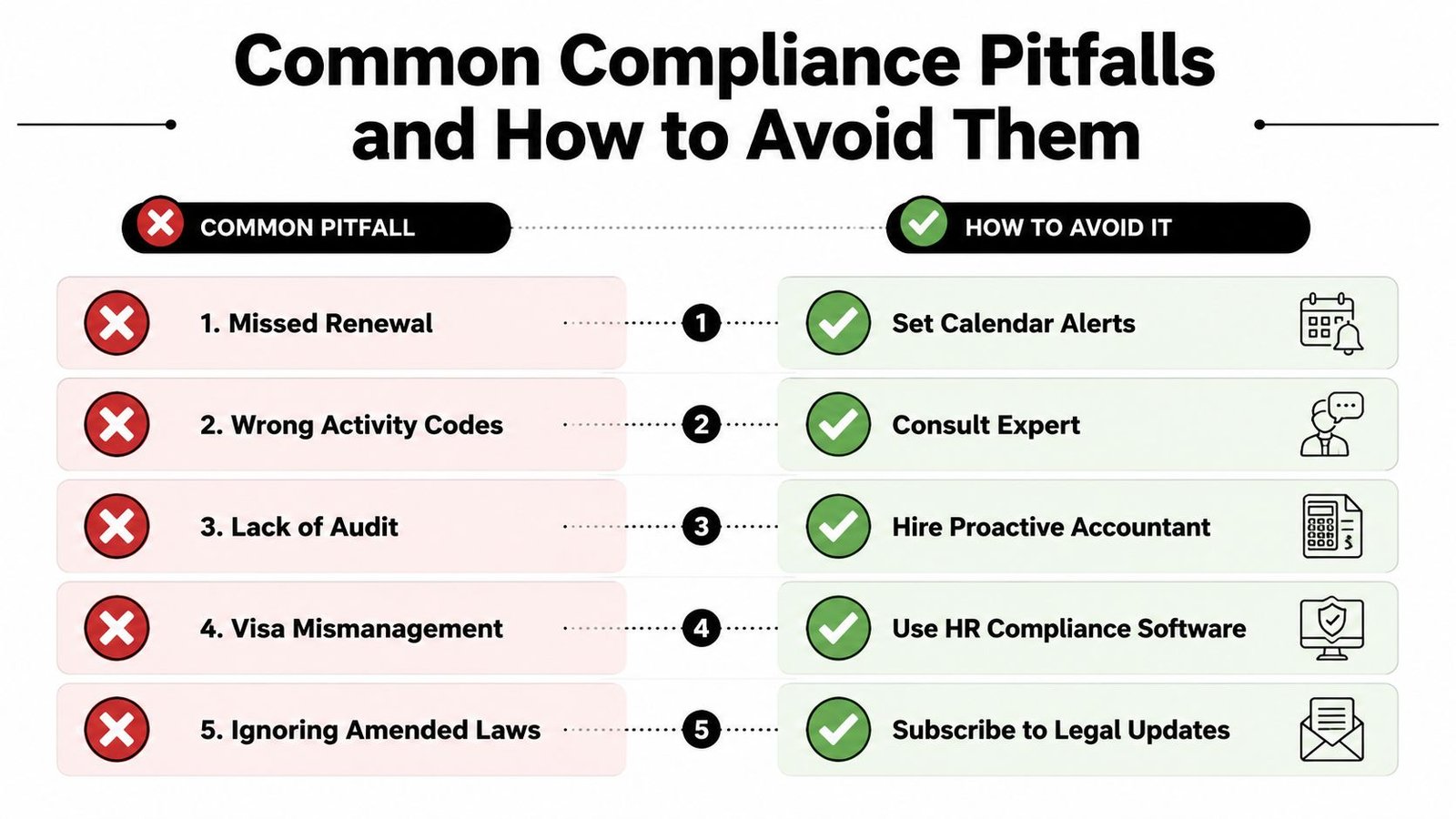
Common Compliance Pitfalls and How to Avoid Them
Licence issuance is the beginning of compliance, not the end. The most reliable approach is to assign each obligation to a person, record the due date, and keep evidence of submission or payment.
Which mistakes create the most disruption?
- Missed renewals: A business that lets its licence lapse can face penalties, blocked services, visa complications, or interruption to trading. Set calendar alerts well ahead of expiry and confirm the renewal requirements with the licensing authority.
- Wrong activity codes: Selling or invoicing outside the approved activity can create a mismatch between the company's licence, contracts, bank activity, and actual operations. Review the activity list before launching a new product or service.
- Unmanaged VAT duties: The commonly cited mandatory VAT registration threshold is AED 375,000. Before relying on that threshold, obtain current tax advice and track taxable supplies through proper accounting records.
- Weak PRO administration: A PRO, or Public Relations Officer, is the person or service that handles government liaison work, including visa applications, document attestation, labour administration, and regulatory filings. Employee residence renewals, labour contracts, and government records need active management through the relevant channels, including the Ministry of Human Resources and Emiratisation, known as MOHRE.
- Ignoring premises and substance requirements: A free zone address, flexi-desk, or office arrangement must match the authority's rules and the company's actual needs. Corporate Tax compliance can also require careful records showing how the business operates and where its management and resources sit.
How should a founder organise the compliance calendar?
Use a simple ownership model:
- Monthly: Review employee visa status, labour records, invoices, banking activity, and licence activity alignment.
- Quarterly: Review tax records, contracts, expenses, and any activity that may require a new approval.
- Annually: Renew the licence, confirm premises documents, review insurance and corporate records, and reassess whether the jurisdiction still fits.
The exact deadlines vary by authority and company profile. A written calendar is still better than relying on memory or a renewal reminder sent to an old email address.
Making Your Decision and Getting Started
A solo consultant may start by comparing a freelance licence in Abu Dhabi or Dubai with a professional company licence. An international founder serving global clients may prefer a free zone, while a retailer, local service provider, or government contractor will usually assess mainland access first. An investor or holding company should examine an offshore structure only where there's no need for ordinary UAE operating activity.
The best decision balances activity, customer location, ownership, premises, visas, tax administration, and expansion plans. If Dubai mainland work may become part of the plan, assess the newer permit and branch routes before forming a free zone company on assumptions taken from older guides.
A careful comparison at the start can prevent amendments, duplicated structures, and compliance corrections later. Clear documents and a realistic renewal plan matter as much as the initial licence choice.
Inpro Corporate Services L.L.C. helps founders compare Mainland, Free Zone, and Offshore structures, arrange UAE business licensing, manage PRO and visa administration, and organise tax and VAT registration support. Visit Inpro Corporate Services L.L.C. to compare your options, estimate setup costs, and book a practical strategy call for your UAE business.