

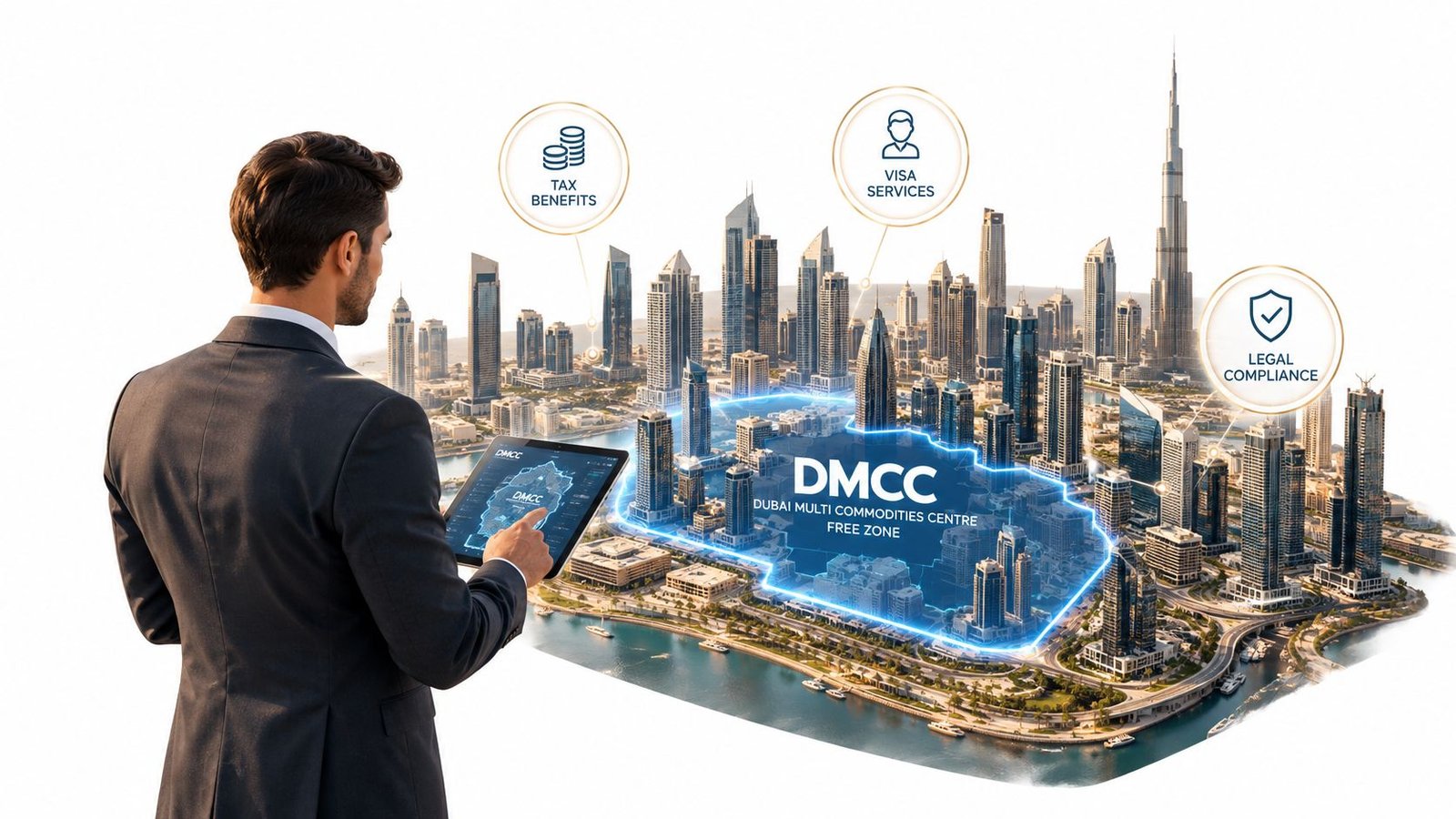
Yes. DMCC is a legally defined free zone in Dubai, established under Dubai Law No. (3) of 2020. Its status gives eligible businesses access to a 0% UAE Corporate Tax rate on qualifying income, while non-qualifying income can be taxed at 9%.
That answer sounds simple, but it creates a practical question for every founder: does your planned activity, licence, office arrangement, staffing, and customer base fit the rules behind the tax treatment? In 2026, DMCC isn't a paper shortcut to zero tax. It's a regulated jurisdiction whose legal perimeter and qualifying-income rules should shape your company from the start.
Table of Contents
- The Legal Reality of DMCC as a Free Zone
- How the Zero Percent Tax Promise Actually Works
- Comparing DMCC to Mainland and Other Jurisdictions
- The Step by Step Setup Process and Timelines
- Common Pitfalls and How to Avoid Them
- Securing Your UAE Setup with Expert Guidance
The Legal Reality of DMCC as a Free Zone
DMCC is the Dubai Multi Commodities Centre, a geographically designated business jurisdiction in the United Arab Emirates. It was established as a free zone under Law No. (3) of 2020, and businesses operating inside it must hold a licence issued by the DMCC Authority. The legal position is set out on the DMCC official website.
So, is DMCC a free zone? Yes, in the legal and operational sense, not merely as a marketing label. A company incorporated in DMCC operates within a separate licensing perimeter from mainland Dubai. For activities conducted inside the zone, DMCC entities aren't governed by Dubai Municipality or Dubai's Department of Economic Development, commonly called DED, in the same way as mainland businesses.
What does the separate legal perimeter mean?
A free zone is a defined area with its own business licensing authority and administrative framework. In DMCC, the Authority reviews the proposed activity, approves the company name and structure, issues the commercial licence, and controls the relevant registered-office requirements.
No person or entity may conduct an activity inside DMCC unless the DMCC Authority has licensed it. That requirement affects how you describe your business, which activities you select, what evidence you keep, and where you carry out the work.
Practical rule: Treat the licence activity as a description of your real business, not as a broad label chosen only to reduce setup friction.
This distinction matters when a founder compares DMCC with mainland Dubai, a free zone in Sharjah, or another UAE jurisdiction. A mainland company generally deals with mainland licensing authorities for its permitted activities. A DMCC company deals with the DMCC Authority for activities inside the free zone, while immigration, tax, banking, customs, and other federal or emirate-level obligations can still apply.
Does DMCC have the scale to support an established business?
DMCC's scale is one reason founders and international groups consider it for trade, professional services, holding structures, and regional operations. The centre was established in 2002, and it had surpassed 25,000 registered companies by 2024, with 2,048 new company registrations in 2024, according to DMCC's official overview.
DMCC also reports that it contributes 15% of Dubai's annual foreign direct investment and 7% of Dubai's GDP, figures published in the same official overview. Those figures don't remove the need for careful structuring, but they show that DMCC is a substantial part of Dubai's commercial system rather than a small registration venue.
The useful conclusion is precise. DMCC is a free zone, but a DMCC licence doesn't authorise every activity everywhere in the UAE. Your company remains tied to the approved activity, the zone's rules, and the wider UAE compliance framework.
How the Zero Percent Tax Promise Actually Works
The 0% Corporate Tax rate isn't automatic because a company has a DMCC address. DMCC is recognised as a qualified free zone under Federal Decree-Law No. 47 of 2022 and its amendments, but the 0% rate applies to qualifying income when the company meets the relevant conditions. Income that doesn't qualify can be subject to 9% Corporate Tax, as explained in DMCC's business guidance.
The first decision is therefore not “How do I get a zero-tax company?” It is “What will this company do, and which income will that activity generate?”
What is qualifying income?
Qualifying income is income that falls within the categories and conditions recognised under the UAE Corporate Tax framework for a qualified free-zone business. DMCC identifies relevant categories that include:
- Qualifying commodities trading: Activities involving commodities that meet the applicable conditions.
- Holding shares and securities: Holding investments within the permitted framework.
- Logistics: Services connected with qualifying logistics operations.
- Treasury and financing: Certain intra-group treasury and financing activities.
- Fund management: Eligible fund-management services.
- Headquarter services: Services provided to related parties within the permitted structure.
The exact treatment depends on the activity, the transaction, the customer, the records, and the applicable decisions. A service company shouldn't assume that every invoice issued from DMCC produces qualifying income just because the business is registered there.
How does substance affect the tax result?
Substance means the company needs genuine operations that support its claimed activity. That can include appropriate premises, people, expenditure, management, records, and decision-making connected with the business. The details depend on the structure, but the practical message is consistent: a company that exists only on paper is harder to defend as an operating qualified free-zone business.
Your licence design, contracts, invoices, accounting records, staff arrangements, and office setup should tell the same story. If the licence says one thing while the company earns income from a different activity, the tax position becomes exposed.
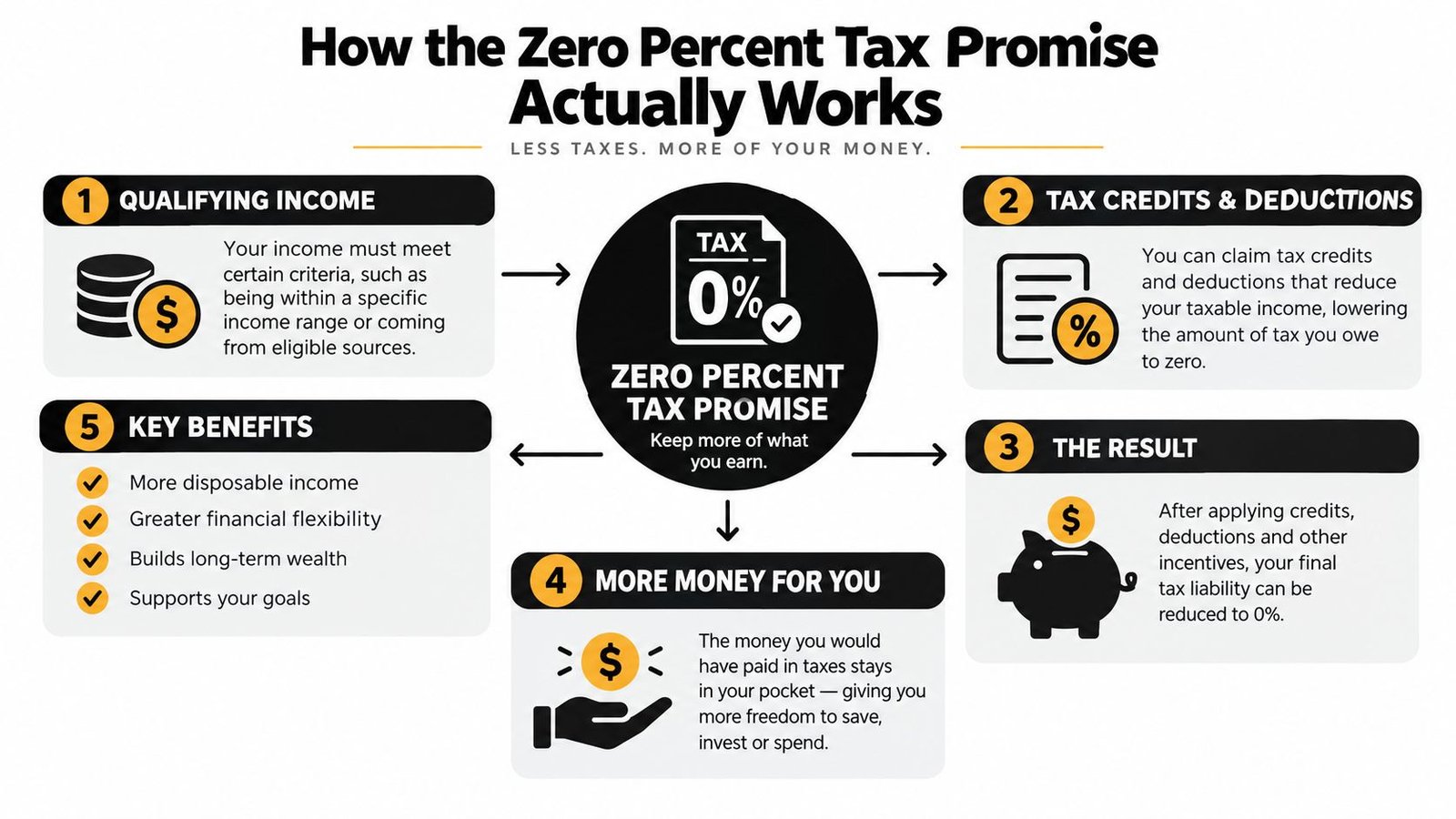
The strongest zero-tax structure is the one that would still make commercial sense if the tax benefit disappeared.
What happens to non-qualifying income?
Non-qualifying income can fall outside the 0% treatment and be taxed at 9%. The risk isn't limited to choosing the wrong activity during incorporation. A company can also create problems through the way it contracts, invoices, serves customers, moves staff, records revenue, or mixes qualifying and non-qualifying activities.
For that reason, founders should separate revenue streams in their accounting system and review contracts before signing them. A tax adviser can assess whether a proposed transaction fits the qualifying categories, while a formation adviser can check whether the licence and office arrangement support the intended operation. Formation and tax planning should happen together, not in separate conversations after incorporation.
Comparing DMCC to Mainland and Other Jurisdictions
The right jurisdiction depends on where your customers are, how you deliver the service, whether you need premises, and how much operational substance your model requires. DMCC may suit an international trading or B2B services business, while mainland Dubai may be more practical for a company selling directly to customers across the UAE.
Who qualifies for 100% foreign ownership?
DMCC is a free-zone option for foreign founders who want ownership within a Dubai jurisdiction. Other UAE free zones in Sharjah and the northern emirates also commonly attract international owners, but the licence categories, premises rules, visa arrangements, authority procedures, and commercial ecosystems differ.
Mainland ownership rules depend on the activity and the applicable UAE framework. Many activities can be owned by foreign investors, but you shouldn't assume that the rule is identical across every sector or emirate. A mainland licence may still be the better choice when the company needs unrestricted commercial activity across Dubai or direct local contracting.
How does market access differ?
A free-zone company can serve international clients and conduct permitted business within its licensed scope. Direct sales into the UAE mainland may require additional arrangements, approvals, distributors, or a mainland presence, depending on the product and activity.
Mainland Dubai generally offers a more direct route for businesses whose core customers are local consumers, local contractors, or government and semi-government buyers. DMCC can be a stronger fit when the business is structured around international trade, regional B2B services, commodities, or a holding and headquarters function.
What should you compare before choosing?
| Feature | DMCC Free Zone | Mainland Dubai | Northern Emirates Zones |
|---|---|---|---|
| Ownership | Foreign ownership available within the free-zone structure | Depends on the activity and applicable mainland rules | Often suitable for foreign ownership, subject to the chosen authority and activity |
| Primary licensing authority | DMCC Authority | Relevant Dubai mainland authority | The selected free-zone authority in Sharjah or a northern emirate |
| Market focus | International trade, B2B services, commodities, and regional operations | Direct UAE market activity and local contracting | International, regional, or cost-sensitive models, depending on the zone |
| Physical presence | Registered premises and zone requirements apply | Premises requirements depend on the activity | Requirements vary by authority and licence type |
| Tax position | 0% on qualifying income if conditions are met, with 9% applying to non-qualifying income | UAE Corporate Tax rules apply to the taxable business | Qualified free-zone treatment depends on the authority and the company's activities |
| Best starting question | Does the activity and income fit DMCC's structure? | Do we need direct mainland market access? | Does the lower-complexity setup fit our real operating needs? |
The table is a screening tool, not a substitute for activity-level advice. A founder choosing a jurisdiction only because the first licence quote looks cheaper can create later costs through office changes, amended activities, extra approvals, or a second entity.
For a visual explanation of the distinction, this video provides another way to think about free-zone and mainland setup choices:
The Step by Step Setup Process and Timelines
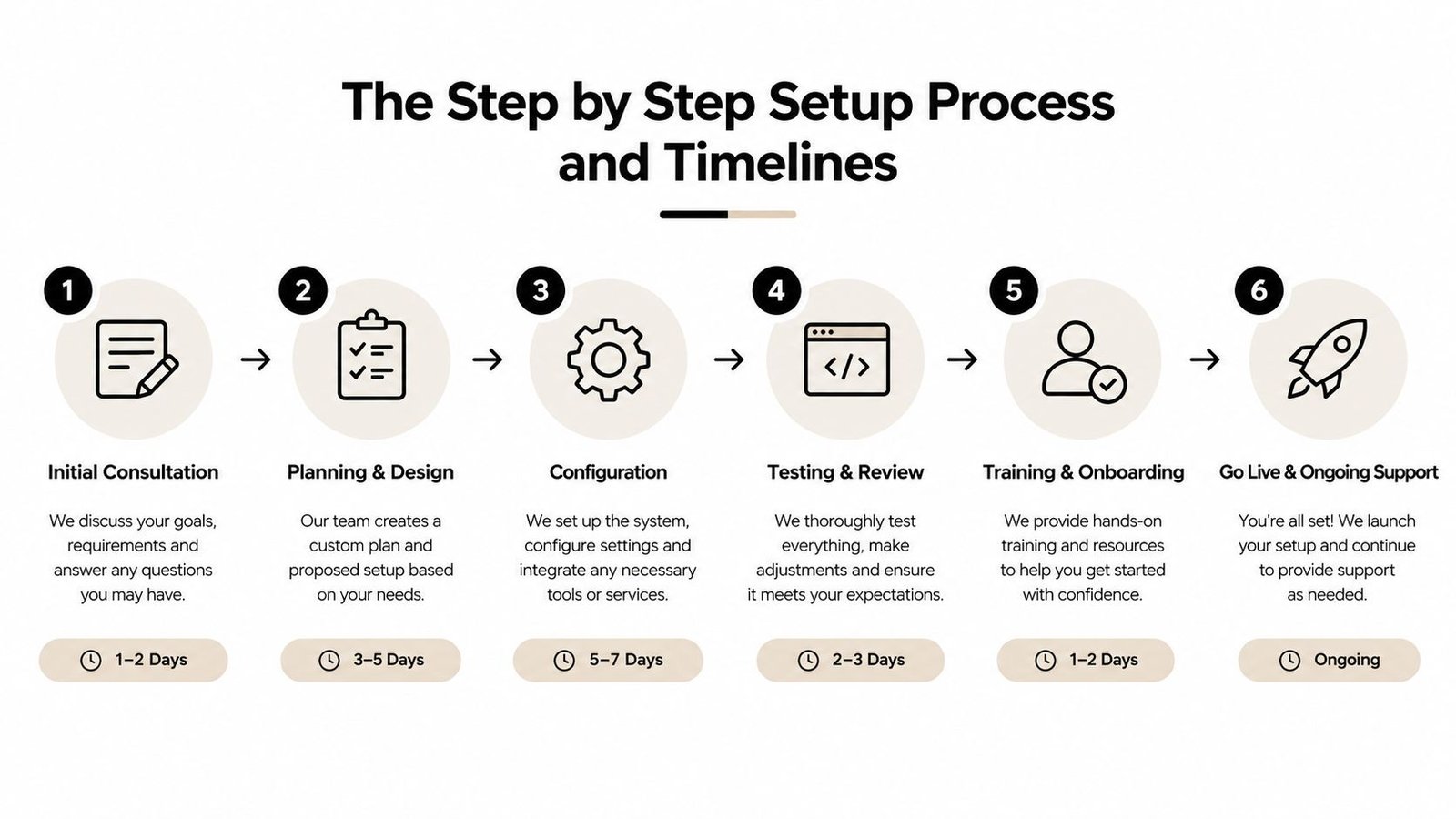
DMCC setup becomes less stressful when you treat it as a sequence of decisions rather than a single application. The Authority needs to understand who owns the company, what it will do, where it will operate, and whether the proposed name and documents meet its requirements.
What should you decide first?
Start with the commercial model. Write down the services or goods, target customers, expected transaction flows, ownership, directors or managers, and whether staff will work from the UAE. Then match that description to the available DMCC activities and entity type.
The usual preparation includes:
- Shareholder identification: Passport copies and, where relevant, UAE residence documents.
- Address evidence: Proof of address for individual shareholders when requested.
- Corporate documents: Incorporation certificates, constitutional documents, board resolutions, and authorised-signatory documents for corporate shareholders.
- Business description: A clear explanation of the activity, customer base, and expected operations.
- Office selection: A DMCC-compliant workspace appropriate to the company and its expected visa needs.
Corporate shareholder documents may need notarisation, legalisation, or attestation, depending on their origin and the Authority's requirements. Missing or inconsistent documents are a common source of delay.
What happens after the application?
The process normally moves through name and activity review, shareholder verification, document approval, office selection, payment, and licence issuance. Once the licence is issued, the company can proceed with its establishment card and immigration files, subject to the relevant approvals.
Investor and employee visas require separate immigration steps. These can include entry permission, medical fitness testing, Emirates identity registration, and residence processing. The exact route depends on whether the applicant is already in the UAE and which immigration channel applies.
How can you avoid operational delays?
Prepare banking information while the licence application is moving forward. A UAE bank will usually want to understand the company's activity, ownership, source of funds, expected transactions, customer geography, and commercial rationale. Incorporation doesn't guarantee account approval.
Keep one folder containing the approved business description, signed contracts, invoices or draft invoices, shareholder evidence, source-of-funds records, and office documents. Consistency across the DMCC application, immigration file, bank application, and accounting records makes questions easier to answer.
The first ninety days should include more than licence and visa work. Set up accounting, agree on tax responsibilities, document approval controls, and confirm how the company will evidence its activity and substance. That preparation protects the business after the initial paperwork is complete.
Common Pitfalls and How to Avoid Them
The most expensive DMCC mistakes usually begin with a reasonable-sounding assumption: the free-zone address will solve the tax, banking, and market-access questions at the same time. It won't. Each issue has its own rules, and a company must satisfy them together.
Why is a paper company a problem?
A paper company has little or no operational connection with the activity it claims to conduct. It may have a licence and an address, but no credible records, management, expenditure, contracts, or delivery process behind the revenue.
That structure can weaken the argument for qualifying-income treatment and create questions during banking or tax reviews. Build evidence from day one: retain contracts, invoices, board decisions, accounting entries, payroll or contractor records, and proof of service delivery.
Why do bank applications take careful preparation?
Banks assess risk, not just incorporation documents. A clean company file can still prompt questions about the owners, source of wealth, source of funds, expected payments, customer locations, suppliers, and the reason for choosing DMCC.
Don't submit a generic business plan that conflicts with the licence activity. Give the bank a specific explanation of what the company sells, who pays it, how money moves, and which countries are involved.
A bank account application should describe the business you actually intend to run, not the business you think will receive the fastest approval.
What is the mainland-income and de minimis risk?
The de minimis rule is a limited tolerance within the UAE Corporate Tax framework for certain non-qualifying income. It isn't a general permission to conduct unlimited mainland business while retaining the 0% treatment.
The calculation and conditions require professional review, especially when a company has mixed revenue, related-party transactions, or customers and activities across different UAE jurisdictions. Keep qualifying and non-qualifying income clearly separated, and ask for advice before a new revenue stream becomes material.
Other practical failures include selecting too many unrelated activities, choosing an office that doesn't support the planned team, missing renewal or accounting deadlines, and assuming a visa quota will match hiring plans. Review the commercial model before incorporation, not after the first compliance problem.
Securing Your UAE Setup with Expert Guidance
DMCC can be a strong choice for founders building an international trading, commodities, professional-services, holding, or regional headquarters business. Its legal identity as a free zone, established licensing authority, and recognition under the UAE Corporate Tax framework give it a clear place in the UAE market.
The benefit depends on alignment. The licence must match the activity, the income must be tested against the qualifying rules, and the company needs enough real operation and documentation to support its position. If your customers are mainly in Dubai or elsewhere in the UAE, compare mainland access before deciding. If your business is international, test the banking, office, staffing, and substance requirements before assuming a simple free-zone package will work.
Inpro can help founders compare mainland and free-zone options, prepare formation documents, manage investor and employee visa workflows, support corporate banking applications, and organise accounting and tax compliance. The right adviser should give you a clear structure and realistic obligations, not just a registration quote.
Visit Inpro to compare your DMCC and UAE setup options with support for licensing, visas, banking, and ongoing compliance. Book a strategy discussion before you incorporate so your activity, ownership, office, and tax position are designed together.