

Your Gateway to the UAE Market Starts with the Right Bank
You've registered the company, collected the licence documents, and you're ready to invoice clients or pay suppliers. Then the banking step slows everything down. Founders often assume the hard part was incorporation. In the UAE, that's often not true.
Corporate banking here isn't just about picking a familiar bank name. The account that works for a DMCC software startup may be a poor fit for a Mainland retail business, and an offshore holding structure faces a very different review process again. That's why “best business bank accounts” in the UAE are rarely best in the abstract. They're best when they match your jurisdiction, ownership profile, transaction pattern, and compliance story.
That practical lens matters in a market as internationally connected as the UAE. The banking system has grown around the country's role as a regional business hub, and total bank assets have surpassed AED 4 trillion in recent years, reflecting the scale of demand for business accounts, payments, and treasury services in the market, as noted by GetHoldings on UAE business bank accounts.
If you're comparing options right now, start with structure first, not branding first. The right choice usually comes down to approval odds, operating ease, and whether the account can support how your business moves money across Dubai, Abu Dhabi, and beyond.
Table of Contents
- 1. UAE Free Zone Business Bank Accounts
- 2. UAE Mainland Business Bank Accounts
- 3. Islamic Sharia-Compliant Business Bank Accounts
- 4. Digital-First and Fintech Business Bank Accounts
- 5. Offshore and Investment Holding Company Bank Accounts
- 6. Government-Linked and Enterprise-Grade Banking Solutions
- 7. Startup Accelerator and Growth-Stage Bank Accounts
- 8. Integrated Corporate Services Bank Accounts
- 8-Point Comparison of Business Bank Account Types
- Simplify Your Setup and Start Banking Faster with Inpro
1. UAE Free Zone Business Bank Accounts
A founder sets up in DMCC on Monday, submits a bank application on Tuesday, and expects the account to be live by the end of the week. Then compliance asks a simple question: what exactly will this company do, who will pay it, and why does the licence description only partly match the revenue model? That is the point where Free Zone banking either stays straightforward or starts dragging out.
Free Zone companies are often the right starting structure for international founders, but they should not be treated as one banking category. A consulting firm in IFZA, a software company in DMCC, and a trading business in JAFZA may all be Free Zone entities on paper. In practice, banks assess them very differently because the underlying activity, payment pattern, and document trail are different.
That distinction matters more than bank branding.
A small digital business usually cares about fast onboarding, reliable online banking, and multi-currency receipts. A trading company usually needs a bank that is comfortable reviewing supplier contracts, shipment logic, and larger cross-border transfers. The better account depends on the company structure and the commercial story behind it, not on which bank appears first in a generic ranking.
Why Free Zone applications succeed or stall
Banks are usually comfortable with Free Zone entities when the file is easy to verify. The licence activity should match the invoices. The ownership chain should be clear. The expected flow of funds should make commercial sense from day one.
Where founders get stuck is not paperwork alone. It is commercial ambiguity. I see this often with companies that are legally formed but poorly presented to the bank. The documents are complete, yet the business case is still hard to understand.
A Free Zone founder gets better results by answering four practical questions early:
- What is the exact business activity? Use plain language that matches the licence and the revenue model.
- Who pays the company? Identify client geography, client type, and expected payment routes.
- Why was this Free Zone chosen? Banks often want to see a sensible link between the business and the jurisdiction.
- What will the account be used for? Day-to-day collections, payroll, software subscriptions, trade payments, or investor funds all create different review paths.
What works well in practice
For a SaaS or services company, the strongest option is often the bank that handles straightforward international receipts cleanly and gives founders good visibility over compliance requests. Prestige has limited value if the account review becomes repetitive every time a new client pays from a different country.
For a Free Zone trading business, I usually advise founders to accept a slower application if the bank is better at handling trade documents and larger payment reviews. That trade-off is often worth it. A faster account can become a poor fit later if ordinary supplier payments keep getting held for extra explanation.
Integrated setup support can also improve the outcome. Founders who form the company and prepare the banking file through one provider, such as Inpro, usually avoid the common mismatch between licence wording, corporate documents, and the account application. That does not guarantee approval, but it does reduce preventable friction.
A few decisions improve approval odds and make the account more usable after opening:
- Match the licence to the actual business model. A consultancy licence paired with software subscription revenue will trigger questions.
- Prepare a clear funds-flow summary. Show where money comes from, where it goes, and which countries are involved.
- Keep entity boundaries clean. If the owners also run a Mainland or overseas company, contracts and invoices should stay clearly separated.
- Choose for operational fit. Good app design helps, but a bank that understands your shareholder profile and transaction pattern is usually the safer long-term choice.
Free Zone banking works best for founders who choose the account type around the company they built, not the company name printed on the licence.
2. UAE Mainland Business Bank Accounts
Mainland companies usually have the widest day-to-day operating scope in the UAE. If you run a restaurant, clinic, shop, contracting business, or local professional services firm, Mainland banking usually gives you the most natural fit with local counterparties, payroll flows, and government-facing operations.
That doesn't mean every Mainland company gets approved quickly. Banks still review ownership, activity, office substance, and expected turnover pattern carefully. The difference is that many Mainland businesses present a model banks recognise immediately, especially when revenues are local and the operating footprint is visible.
Why Mainland companies get broader banking fit
A retail business in Dubai with a lease, payment terminals, supplier agreements, and staff visas is easier for a bank to understand than a complex cross-border holding chain. Same for a manufacturing or logistics company with a physical facility and documented vendor flows.
This is one reason local banking comparisons often focus less on yield and more on service depth. For UAE operating companies, accounts are often built around onboarding, branch access, multi-currency support, and cash-management capability rather than consumer-style return features, as discussed in Airwallex's review of business banking priorities in the UAE market.
Where Mainland applicants get delayed
Mainland founders usually run into trouble when they treat the account as a final admin step instead of part of the formation process. If the shareholder documents, tenancy details, and business narrative don't line up from the beginning, the bank review stretches.
Practical rule: Start the bank file at the same time as licence setup, not after it.
A consultancy in Abu Dhabi with clear client contracts and proper invoicing logic can move faster than a company with better branding but weaker documentation. The same applies to hospitality and retail operators. Banks want to see that the business can explain where funds come from, how payments move, and who ultimately controls the company.
- Bring operating proof: Lease, supplier drafts, service agreements, and owner IDs should tell one consistent story.
- Plan for transaction monitoring: If you expect regular inbound and outbound transfers, say so clearly at onboarding.
- Use local credibility well: Mainland substance helps, but only if your documents are current and aligned.
3. Islamic Sharia-Compliant Business Bank Accounts
For some founders, Sharia-compliant banking is a preference. For others, it's an essential requirement. Either way, the right account isn't a conventional business account with Islamic branding attached. The structure matters, and so does the way financing products are built around the operating model.
A halal food company, healthcare operator, or family-owned trading business may choose Islamic business banking because it fits internal policy, investor expectations, or board governance. In those cases, product design matters more than surface-level convenience.
When Sharia-compliant banking is the right fit
The strongest use case is where the company wants consistency between business operations and financial structure. If you're financing inventory, expansion, or equipment in a way that needs to align with Sharia principles, that should shape the account choice from the start.
What often works well is pairing a straightforward operating account with a bank that can also support trade or asset-based facilities under Islamic structures. That creates continuity. It also reduces the chance that the company opens one account for daily use, then has to move later because the financing side doesn't fit.
How to assess the structure properly
A common mistake is choosing purely on familiarity. A founder knows the bank name, assumes the account will fit, and only later discovers that approval, documentation, or financing options don't match the business.
Use a simple screen before applying:
- Check operating compatibility: If your business uses import cycles, staged payments, or inventory purchase finance, ask how those flows are handled.
- Review supporting services: Some businesses benefit from linked Takaful or zakat-related support, especially when governance teams want consistent administration.
- Ask about decision-making speed: Islamic products can be excellent, but the review path may still depend on business complexity and documentation quality.
A Sharia-compliant account is strongest when the operating account, finance structure, and compliance file all point in the same direction.
4. Digital-First and Fintech Business Bank Accounts
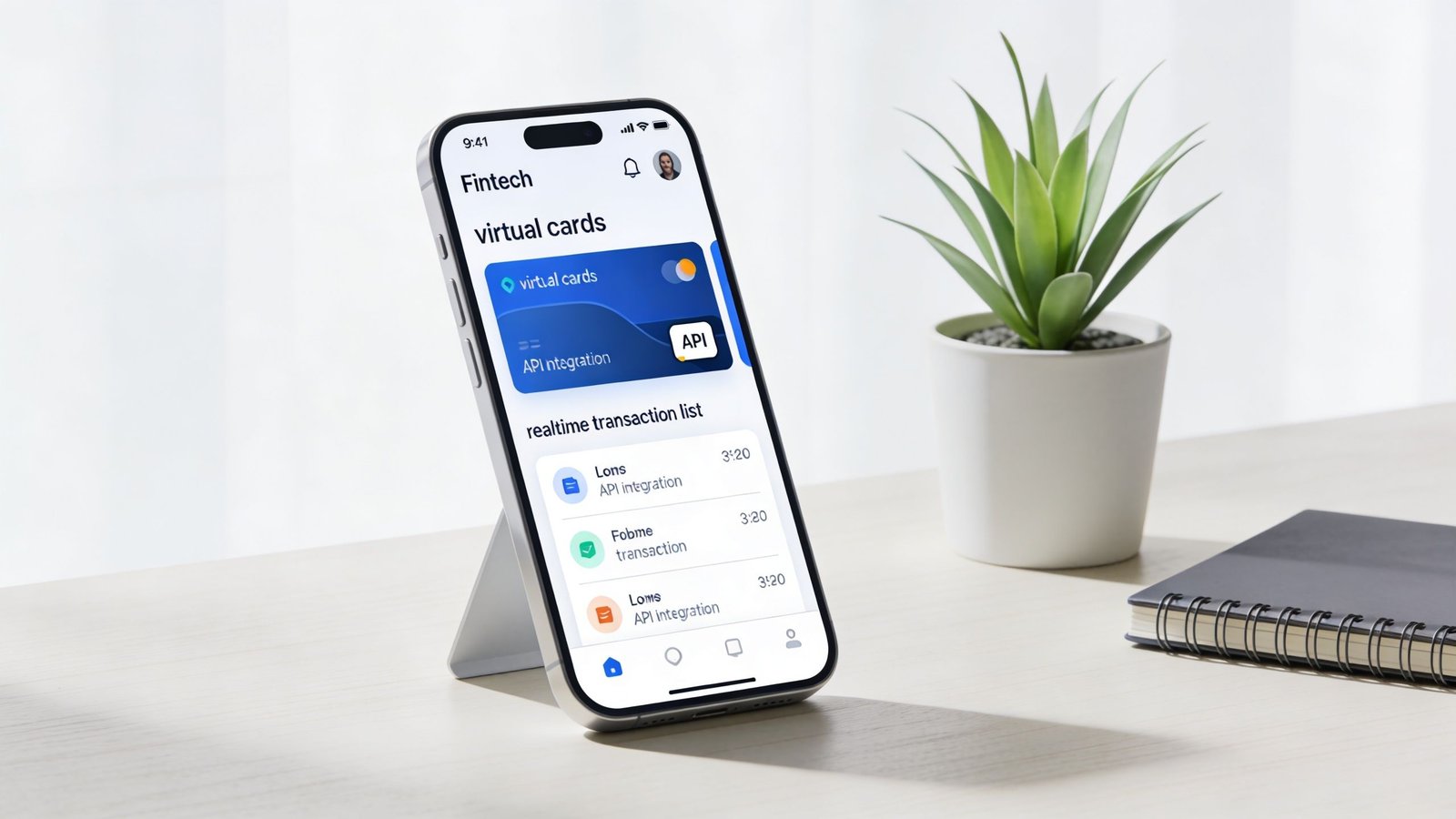
A Dubai founder launches a software company on Monday, invoices clients by Friday, and expects the account to keep pace with card controls, payment alerts, and clean reconciliations from day one. In that setup, a digital-first account can suit the business better than a traditional branch-led relationship.
The fit depends less on brand name and more on how the company operates. This category works best for businesses with digital collections, recurring payments, distributed teams, and low need for cash handling. It works far less well for companies that still depend on deposits, trade documents, or frequent in-person support.
That distinction matters in the UAE because founders often choose a fintech-style account for speed, then realise the company structure or transaction profile needs a bank with broader compliance tolerance and service depth.
Where digital-first accounts make sense
Digital-first business accounts are strongest when the company is light on operational complexity and heavy on transaction visibility. Startups, online service firms, e-commerce operators, agencies, and SaaS businesses usually care more about approval flows, card controls, user permissions, and integrations than branch access.
The practical upside is clear. Finance teams can issue virtual cards quickly, monitor spend in real time, and keep reconciliation cleaner as transaction volume grows. For founder-led businesses, that saves time every week.
Where they fall short
The trade-off is coverage.
If the business handles regular cash, needs trade finance, expects relationship-manager intervention, or has a layered ownership structure, digital-only options can become restrictive. Support may be slower in edge cases. Compliance reviews may also tighten once the account activity becomes more complex than the original onboarding profile suggested.
I usually advise clients to test one question before applying. How does money enter and leave the business in a normal week? That answer tells you more than the app interface ever will.
- Good fit: SaaS subscriptions, online agencies, platform payouts, remote team spending
- Poor fit: Cash-heavy retail, import-export operations, complex group structures
- Key decision point: Choose digital-first if the operating model is digital-first, not just because the onboarding looks faster
For founders who want banking set up as part of a broader company launch process, an integrated corporate services route may be more practical than applying to multiple providers one by one. That option makes more sense when account opening, licensing, and documentation need to be coordinated from the start.
5. Offshore and Investment Holding Company Bank Accounts
Holding companies and offshore-linked structures are where banking gets selective fast. Many founders assume a passive company should be easier to bank because it has fewer day-to-day transactions. In reality, banks often scrutinise these structures more closely because the ownership chain, source of funds, and purpose of the entity can be harder to assess.
That's why this category shouldn't be chosen by headline features alone. The best business bank accounts for a holding company are the ones most likely to accept the structure and maintain the relationship over time.
Why holding structures face stricter review
In the UAE, the primary bottleneck is often legal form and jurisdiction. Mainland, Free Zone, and Offshore entities can face different KYC and UBO review expectations, and offshore structures or layered foreign ownership often attract stricter scrutiny. Source of funds, expected transaction profile, and beneficial ownership transparency now sit at the centre of many banking decisions, as explained in Xero's discussion of UAE banking approval friction.
That's the point many comparison articles miss. The issue isn't only fees. It's whether the structure fits the bank's compliance appetite.
What banks want to understand
A family office, investment SPV, or regional treasury vehicle needs to show why the entity exists, who controls it, and how money moves through it. If intercompany payments, dividends, asset acquisitions, or portfolio flows are expected, banks want a coherent explanation supported by documents.
- Document ownership clearly: Don't assume a group chart alone is enough.
- Explain the purpose: “Holding investments” is too vague for many applications.
- Show fund origin: Capital provenance matters more in this category than polished presentation.
The more distance there is between the trading activity and the account, the more clearly the founder has to explain the structure.
6. Government-Linked and Enterprise-Grade Banking Solutions
Some businesses don't need a simple operating account. They need a banking partner that can handle tender-related payments, large supplier cycles, approval hierarchies, and formal treasury processes. That's where enterprise-grade and government-linked banking becomes the right category.
This usually suits construction groups, defence-adjacent suppliers, technology contractors, infrastructure vendors, and larger logistics operators. These companies care less about onboarding speed alone and more about service reliability, internal controls, and relationship coverage.
Enterprise banking is about process depth
A government contractor often needs account structures that support multiple approvers, predictable payment administration, and a bank team that understands procurement-related workflows. A standard SME account might technically work, but it often becomes restrictive once contract execution starts.
The strongest enterprise setups usually come from banks that can support both operational banking and relationship-led service. That includes account governance, documentation handling, and support for larger corporate payment flows.
Who should choose this route
Not every scaling company needs enterprise banking yet. A small professional services firm can usually wait. A company entering federal procurement or large project delivery shouldn't.
- Choose enterprise-grade banking if your business has layered approvals, large-value supplier payments, or public sector counterparties.
- Wait if your company is still proving product-market fit and has a simple payment pattern.
- Escalate early if upcoming tenders or contracts will require stronger account controls than your current setup can provide.
For this category, relationship management matters. When issues arise, the difference between a basic product and an enterprise-ready one is whether the bank can solve a real operational problem quickly.
7. Startup Accelerator and Growth-Stage Bank Accounts

Early-stage founders usually ask the wrong opening question. They ask which bank has the lowest friction today. The better question is which account still works after the first team hire, the first investor due diligence request, and the first jump in transaction volume.
That's what separates decent startup accounts from useful ones. A growth-stage business needs flexibility. It may start in a Free Zone with a lean operating model, then add payroll, cross-border collections, spending controls, and more formal reporting within a short period.
What early-stage founders should optimise for
The right startup account should be easy to understand internally. Founders need clean statements, sensible user permissions, straightforward expense visibility, and a bank or platform that doesn't become obstructive as the company matures.
Accelerator-linked pathways can help when they improve introductions or document readiness. But founders shouldn't overvalue branding. An account is only good if it supports day-to-day execution. Seed-stage fintech, SaaS, and e-commerce businesses usually benefit most from speed, digital usability, and clear compliance expectations.
A good startup account should support change
A startup rarely stays in its original shape. New shareholders come in. Revenue channels shift. The business may expand from one emirate to several, or add overseas customer and contractor flows.
"Pick the account you can still defend to finance, ops, and investors a year from now."
A practical shortlist should favour accounts that handle growth without forcing a full rebuild. That means looking beyond application convenience and asking whether the provider can support a more complex operating pattern later.
8. Integrated Corporate Services Bank Accounts
A common banking failure looks like this. The company is incorporated, the licence is issued, the founder is ready to invoice, and the bank asks for clarifications that should have been settled weeks earlier. Business activity wording is too broad. Shareholder documents do not match across the file. Visa status, office arrangement, and expected transaction profile have been prepared separately, so the application reads like three different businesses.
That is where an integrated corporate services route earns its place. For certain founders, the best business bank account category is not defined by a bank name first. It is defined by how the company is being set up and how much coordination the case needs. If banking, company formation, visa processing, tax registration, attestations, and KYC preparation are all happening at once, handling them as one workstream usually leads to a cleaner application.
Why integrated setup improves banking outcomes
Banks review more than the account form. They look at the full operating picture. Licence activity, incorporation documents, shareholder profile, source of funds, office setup, and the commercial story all need to align.
In practice, many applications slow down at this stage.
A founder may use one party for incorporation, another for PRO work, and a third for banking introductions. Each party works from a slightly different assumption. The result is predictable. Extra clarification requests, revised documents, and avoidable delays. An integrated provider reduces that mismatch by building the file with the bank review in mind from the start.
This approach is especially useful across company structures. A Free Zone startup with overseas shareholders has different banking pressure points than a Mainland SME adding local payroll, or a holding company that needs a clear ownership trail. Grouping this account type by business need, rather than by bank brand, is the right way to assess it.
To see how this works in practice, this overview gives a quick look at the process:
When this route makes the most sense
Integrated corporate services bank accounts suit founders who need execution, not just introductions. The value is strongest when internal admin capacity is limited and timing matters.
It is a practical fit for:
- International founders setting up in the UAE: One coordinated process reduces document inconsistency and saves founder time.
- SMEs expanding from Free Zone to Mainland operations: Banking is only one part of the change. Payroll setup, tax registration, and licence alignment often matter just as much.
- Holding structures and investor-led setups: These cases usually need tighter document control and a clearer explanation of ownership and funds flow.
- Platform partners and ecosystem operators: A bundled formation and banking path creates a more orderly client journey than sending users to separate providers.
The trade-off is straightforward. Integrated support is rarely the cheapest route on paper. But for founders with cross-border ownership, layered documentation, or a tight launch timeline, it often costs less than repeated bank queries, stalled onboarding, and time lost fixing preventable errors later.
8-Point Comparison of Business Bank Account Types
| Option | Implementation Complexity (🔄) | Resource Requirements (⚡) | Expected Outcomes (📊) | Ideal Use Cases | Key Advantages (⭐ / 💡) |
|---|---|---|---|---|---|
| UAE Free Zone Business Bank Accounts | Medium, requires Free Zone company registration and registered office | Moderate, Free Zone license, bank KYC, visa fees; multi‑currency needs | Tax‑efficient cross‑border operations; faster approvals; strong FX support | International trading, e‑commerce, regional HQ, SaaS billing | 100% foreign ownership; corporate tax exemption; multi‑currency. 💡Pick banks with fintech/API |
| UAE Mainland Business Bank Accounts | High, local partner (51%) or investor criteria; extensive compliance | High, local partner, full KYC, audits, VAT when thresholds met | Unrestricted UAE market access; government payment integration; loan eligibility | Retail, hospitality, services, manufacturing, local B2C/B2B | Full mainland operations; access to credit and gov systems. 💡Coordinate bank opening with company formation |
| Islamic Sharia‑Compliant Business Bank Accounts | Medium, Sharia compliance checks and documentation | Moderate, Islamic product approval, Sharia advisors, specific docs | Riba‑free financing; profit‑sharing models; ethical/faith‑aligned appeal | Halal F&B, healthcare, import/export using Murabaha, faith‑aligned firms | Sharia‑compliant financing and investment options. 💡Work with Islamic banking advisors |
| Digital‑First and Fintech Business Bank Accounts | Low–Medium, digital onboarding; API integration work | Low, technical integration skills; minimal physical infrastructure | Very fast onboarding (3–7 days); real‑time visibility; lower fees ⚡ | SaaS, e‑commerce, fintech startups, digital‑native companies | APIs, virtual cards, automated accounting and low fees. 💡Test sandbox & webhooks pre‑launch |
| Offshore & Investment Holding Company Bank Accounts | High, complex legal/tax structuring and BO verification | High, large minimum balances, tax/legal advisors, extensive documentation | Asset protection; centralized treasury; preferential wealth services | Family offices, multinational treasury centers, private equity, HNWIs | High‑value processing; wealth & investment management. 💡Engage international tax counsel early |
| Government‑Linked & Enterprise‑Grade Banking Solutions | High, strict vetting and federal procurement compliance | High, certifications, minimum volumes, detailed reporting | Preferred access to government contracts; large‑scale financing; supply‑chain support | Government contractors, large infrastructure and defense suppliers | Direct gov payment integration; preferential financing for large projects. 💡Maintain vendor certifications |
| Startup Accelerator & Growth‑Stage Bank Accounts | Low, streamlined KYC for accelerator‑backed companies | Low, reduced minimums, fee waivers, startup tools | Rapid, low‑cost setup; access to venture debt and startup services | Early‑stage startups, accelerator/VC‑backed teams | Low balances, integrated payroll & startup services. 💡Plan banking transition as you scale |
| Integrated Corporate Services Bank Accounts (Formation Partner Programs) | Low–Medium, provider coordinates formation + banking workflows | Moderate, service fees; dependent on provider's bank partners | Expedited approvals; single‑point compliance and onboarding; predictable pricing | International founders prioritizing speed, non‑UAE founders, platforms embedding formation | One‑stop formation + banking; transparent pricing and ongoing support. 💡Provide complete docs upfront |
Simplify Your Setup and Start Banking Faster with Inpro
A founder gets the licence issued, signs the office lease, and expects banking to be the easy part. Then the bank asks for a clearer business model, shareholder background, expected transaction profile, and proof that the company structure fits the activity. That delay is common in the UAE, especially for new foreign-owned companies.
The practical way to choose from the best business bank accounts is to start with the business itself. Free Zone companies, Mainland trading firms, holding structures, funded startups, and larger enterprise groups do not face the same review process or the same banking options. Comparing banks by name alone misses the fundamental question, which is whether that account type suits your licence, ownership setup, and day-to-day operating needs.
In my experience, banking moves faster when setup and account preparation are handled together.
Problems usually come from avoidable gaps. The activity on the licence does not match the commercial story. Shareholder documents are incomplete. The bank being approached is cautious about the jurisdiction, ownership mix, or expected transaction flow. Some founders also choose based on app features or brand recognition and ignore the bank's actual appetite for their company profile.
A better route is to coordinate formation, compliance, and banking from the start. That means getting the ownership file, licence scope, visa position, source of funds documents, and transaction narrative aligned before the application reaches the bank. No serious adviser should promise approval, because the final decision always sits with the bank. But a properly prepared file gives the relationship team and compliance unit far fewer reasons to stop the process.
Inpro Corporate Services L.L.C. handles that coordination as part of a wider company setup service. The firm supports company formation, licensing, visa and PRO work, banking assistance, and ongoing compliance in one process. For overseas founders and time-sensitive UAE launches, that usually means fewer document loops, fewer avoidable rejections, and a clearer route from incorporation to an active operating account.
If the goal is to start trading quickly, the target is not just any account. It is the right account category for the company structure, with the right paperwork prepared in the right order.
If you want a faster, more coordinated path to company formation and corporate banking, speak with Inpro Corporate Services L.L.C. The team helps founders, SMEs, investors, and platform partners set up in the UAE with aligned licensing, compliance, visa, and bank account support so the business can get operational without unnecessary delays.