

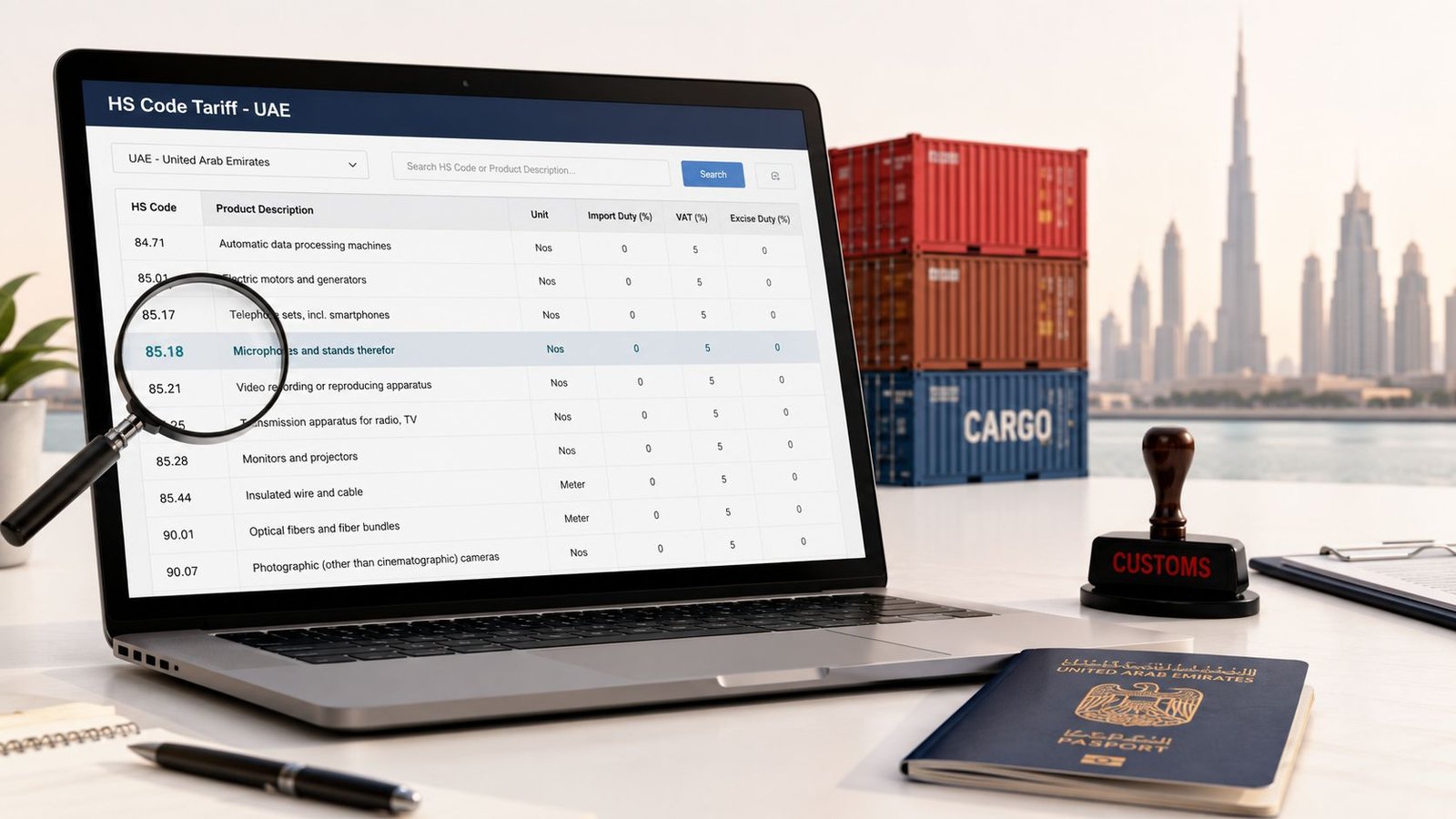
If you're preparing an invoice or import declaration for Dubai and you're unsure which code to use, the answer is simple: Dubai Customs HS codes are the product classification codes that determine how your goods are treated at customs, and for many UAE mainland imports that now means using the new 12-digit format correctly or risking delays. If you're a founder, trader, or operations lead bringing goods into the United Arab Emirates, getting this right before shipment is easier than fixing it after the cargo lands.
Table of Contents
- Introduction to Dubai Customs HS Codes
- HS Code Structure and Implementation Timeline
- How Customs Duty and VAT Depend on HS Codes
- Official Tools and Resources for HS Code Lookup
- Step-By-Step HS Classification Workflow
- Common HS Code Examples with Duty and VAT
- Common Classification Pitfalls and Avoidance Tips
- How Inpro Assists with Classification and Clearance
- Quick Reference HS Code Lookup Checklist
- Related Resources and Further Reading
Introduction to Dubai Customs HS Codes
A shipment lands in Jebel Ali with a perfectly good commercial invoice, but the product line says “smart device accessories.” That wording may work for a sales team. It does not work for customs. Dubai Customs needs a classification that matches the product's actual material, function, and use, because that code drives clearance, duty, VAT treatment, and any control checks attached to the item.
What are HS codes
HS codes are the classification numbers customs authorities use to identify goods in a standard way. In day-to-day import work, they answer a basic question: what is this product in customs terms?
That sounds simple until you start shipping mixed goods. A charger, a power bank, and an adapter can sit in the same carton and still fall under different classifications depending on their technical features. The same issue comes up with garments, food products, auto parts, cosmetics, and machinery spares. Product names from catalogues are often too broad. Customs needs the trade description behind the label.
For UAE importers, this matters even more now because the classification system is becoming more detailed under the new 12-digit structure. If you only know the old 6-digit or 8-digit reference and stop there, you can miss the exact code needed for mainland declarations.
How does Dubai Customs use them
Dubai Customs uses HS codes to decide how a shipment should be treated at declaration stage. The code affects duty assessment, VAT treatment, permit requirements, and whether the goods are likely to be reviewed more closely.
A small wording mistake can create practical delays. I see this often with products described too generally, such as “parts,” “equipment,” or “accessories.” Those descriptions do not tell customs whether the item is a finished product, a component, a controlled item, or a product with a specific national subdivision under the UAE system.
Use the code that fits the goods as customs will examine them on paper and, if needed, on inspection. That is the standard that matters.
Where can I find the official tariff
The formal tariff position comes from Dubai Customs and the federal customs framework used across the UAE. You will also see references to ICP, the Federal Authority for Identity, Citizenship, Customs and Port Security, because federal channels support tariff and customs service access.
As noted in the Dubai Customs Integrated Tariff guide, the UAE has moved beyond the older 8-digit working model toward a more detailed 12-digit format for relevant mainland imports, while free zone movements follow a different treatment in practice. That distinction catches many first-time importers off guard.
The safest approach is to classify before the goods ship. If you wait until the cargo is already moving, every correction becomes slower, more expensive, and harder to explain to suppliers, freight partners, and customs brokers.
HS Code Structure and Implementation Timeline
A common problem shows up just before shipment. The supplier has printed an 8 digit code on the invoice, the broker asks for 12 digits, and the importer is not sure whether the cargo can still clear. That confusion usually comes from mixing three different layers of classification.
What does the 12-digit structure mean
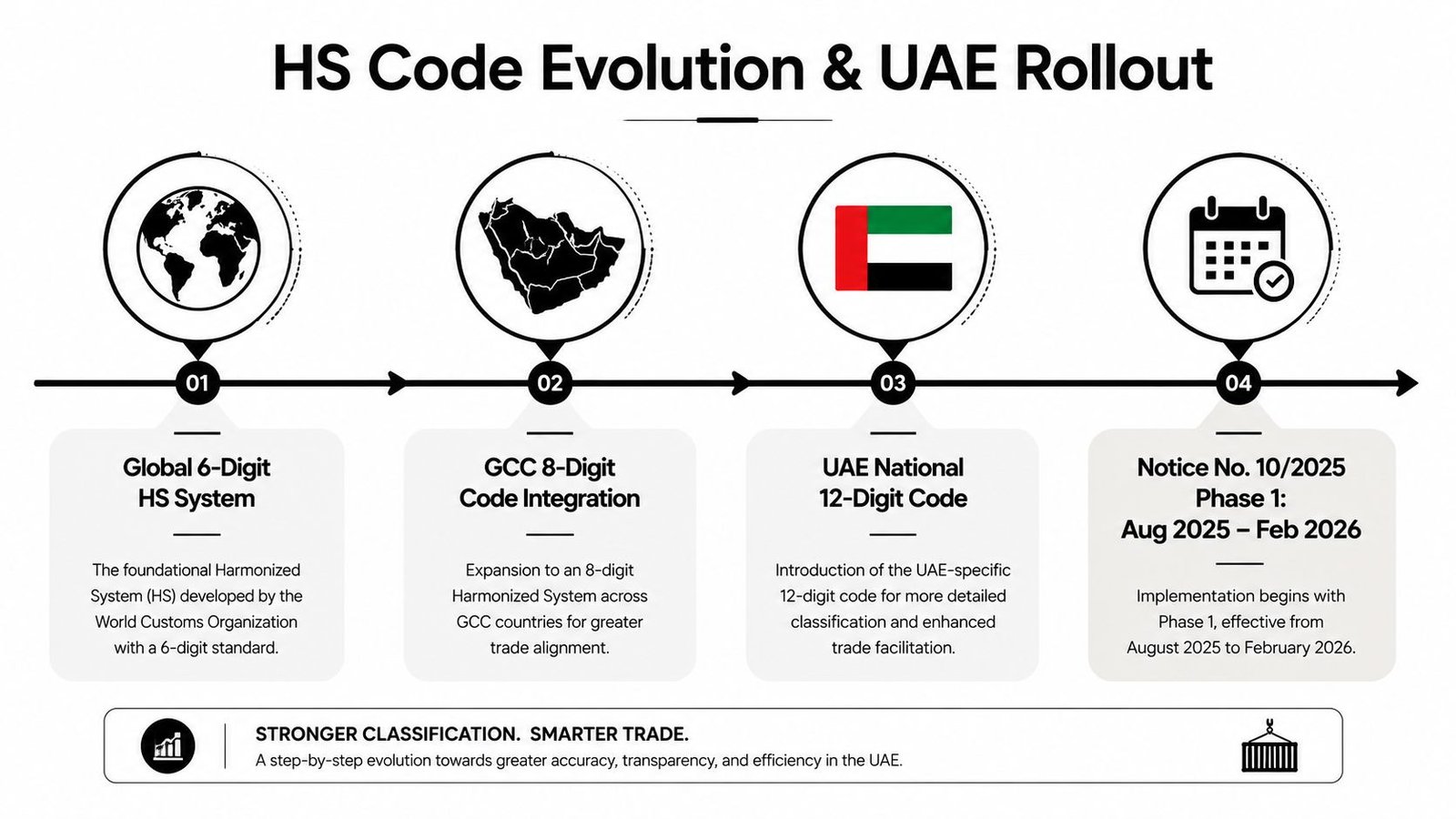
The UAE system now goes beyond the standard global format for certain declarations. In practice, the code builds in layers:
- First 6 digits: the international HS heading and subheading used worldwide
- Next 2 digits: the GCC tariff extension
- Last 4 digits: the UAE national subdivision used for more specific local treatment
That last part matters. It is where traders often find the difference between two products that look similar commercially but are not treated the same way in customs entry systems.
For example, a business importing kitchen appliances from Europe may already know the correct 6 digit HS base. That is not always enough for a mainland declaration in the UAE. The declaration may still need the full 12 digit version so customs can identify the exact national tariff line, permit logic, or reporting requirement tied to that item.
How did the rollout happen
The rollout was phased, which is why many importers have seen both 8 digit and 12 digit references during the transition period.
- Phase 1 ran from August 2025 to February 2026 for certain GCC related movements. During that stage, some declarations could still be processed while businesses updated their systems and product data.
- Phase 2 applied from February 2026 for specific movements between free zones and the local market, where 12 digit use became more important in day to day filing.
- Phase 3 is scheduled to start on 1 August 2026 for rest of world imports into the UAE mainland. For those flows, traders should prepare on the basis that 12 digit coding will be the required standard.
That future date matters because today is still before it. Importers who wait until the last week usually run into avoidable document corrections.
What should traders do at each phase
Treat the implementation as a master data project, not just a customs filing issue. If the ERP, invoice template, and broker instructions still carry only 8 digits, the declaration team ends up fixing the same product repeatedly.
Use this working checklist:
- Map each trade flow separately. Mainland import, free zone transfer, and re-export do not always follow the same code requirement.
- Check where the goods are entering. A shipment into Jebel Ali Free Zone is not handled the same way as a shipment entering the UAE mainland for local sale.
- Expand product records to 12 digits where required. Do this before the next purchase order cycle, not after the cargo lands.
- Match the description to the code. A 12 digit code will not help if the invoice still says only “parts” or “accessories.”
- Test with your broker early. One sample declaration often exposes format issues faster than a long email chain.
The trade-off is simple. Early reclassification takes time now, but late correction costs more in storage, document amendments, and internal rework.
If your goods are heading to the UAE mainland, prepare them on a 12 digit basis. If the movement stays within a free zone structure or follows a special flow, verify the exact declaration requirement before changing every template at once.
How Customs Duty and VAT Depend on HS Codes
A shipment lands in Dubai with three product lines on one invoice. Laptop stands, printed instruction booklets, and a small batch of tobacco-related accessories. If all three lines are pushed through under a rough “general merchandise” description, the tax result is likely wrong before the declaration is even submitted.
HS classification drives the tax treatment line by line. Under the UAE's 12-digit system, customs does not read only the commercial description and invoice value. Officers assess the declared code, the product description, the customs value, and whether that code carries standard duty, relief, or a higher rate for that product type.
For many mainland imports, the starting point is standard customs duty and import VAT. The sequence matters. Duty is assessed on the customs value, usually based on CIF, then VAT is calculated on the taxable import base after that. CIF means Cost, Insurance, and Freight, so the tax calculation is tied to the landed value, not just the supplier's unit price.
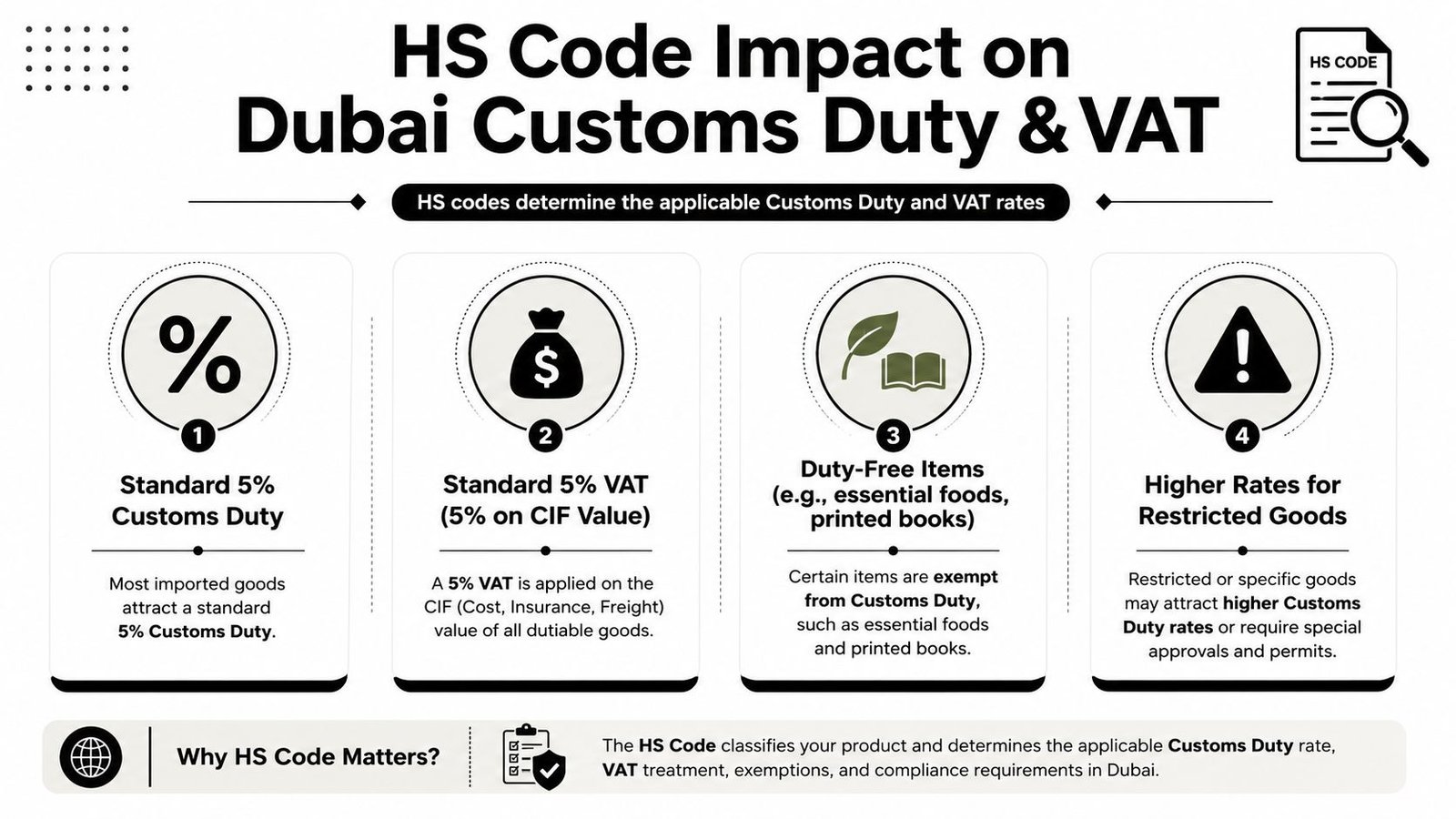
The practical issue is not the headline rate. It is whether the 12-digit code places the goods in the correct tariff line in the first place.
Some goods fall under standard treatment. Others do not. Printed books may be treated differently from office equipment. Tobacco products and similar regulated categories may attract higher charges and closer review. The code can also trigger permit checks, restriction flags, or a valuation query if the description does not fit the tariff line.
A simple example helps. If an entrepreneur imports branded gift boxes containing a notebook, a printed catalog, and a small electronic accessory, customs will not always accept one blended classification for convenience. Each line may need its own code, and each code can carry a different duty result even though the goods arrived in one carton.
Use this lens when reviewing a declaration:
| Tax question | What customs checks |
|---|---|
| Does standard duty apply | The exact 12-digit tariff line for that product |
| Is there any exemption or special treatment | The classification and the nature of the goods |
| How is VAT calculated | The customs value and the final import treatment |
| Will the declaration be challenged | Whether the code, value, and product description match |
The trade-off is straightforward. A broad code can look faster at purchase order stage, but it creates risk at clearance stage. A precise code takes more work upfront, especially for mixed shipments, yet it reduces amendments, duty disputes, and delays once cargo is under customs control.
The safest habit is to classify before the invoice is finalized, not after the goods arrive. Under the 12-digit rollout, that discipline matters more because small differences in product function, material, or intended use can change the tariff line and the tax outcome.
Official Tools and Resources for HS Code Lookup
Which official tools should you use
A common mistake happens before the shipment even leaves origin. The importer types a brand name or a marketplace title into a generic search bar, finds a broad code that looks close enough, and carries that code into the invoice and declaration. Under the UAE 12-digit system, that shortcut causes problems quickly.
Start with the official tools, and use each one for a specific job. The Central Customs Tariff System on the ICP portal is the formal reference for checking the tariff path and confirming the final 12-digit line used in the UAE. Al Munasiq, the Dubai Customs classification support tool, is useful earlier in the process when you only have a product description, data sheet, or image and need to narrow the options before final review.
The trade-off is practical. The ICP tariff search is slower if your product description is weak, but it gives you the clearest view of the official structure. Al Munasiq is faster for first-pass research, especially for newer consumer products, branded goods, and items described in commercial language rather than customs language.
Use them like this:
- ICP tariff search for confirming the official heading, subheading, and UAE-level tariff line
- Al Munasiq for shortlisting likely matches from product descriptions, specifications, or images
- Internal SKU and item master records for consistency across repeat imports, after the official code has been checked
A simple example helps. If an importer brings in a smartwatch marketed as a fitness device, a keyword search may pull results under wearable electronics, communication devices, or sports equipment accessories depending on how the item is described. The official tariff search helps test which classification path fits the product's main function. A suggestion tool helps you get to the likely range faster, but it should not be the final decision on a borderline item.
When should you stop searching and ask for a ruling
Stop at the point where two codes remain plausible and the difference matters. That usually happens with composite goods, multi-function devices, technical machinery parts, chemical products, or items sold in sets.
In those cases, the safer route is an official Binding Ruling through Mirsal 2. That is the right step when the classification affects duty treatment, permit controls, or the risk of a customs challenge. It also helps when your supplier description is too commercial to support a clean tariff decision.
Dubai Customs tariff support can also help traders resolve classification doubts before documents are finalized. That timing matters. Fixing a code before invoicing is far easier than amending a declaration after goods are under review.
A good operating rule is simple. Use search tools to narrow the field. Use a ruling when the product is technical, mixed, or commercially sensitive enough that the wrong 12-digit code could change the import result.
Step-By-Step HS Classification Workflow
A typical mistake looks like this. A supplier invoice says “smart wearable,” the shipment lands in Dubai, and the declaration stalls because the product could sit under more than one heading. The delay does not start at the port. It starts earlier, when the product file is too thin to support a clean 12-digit UAE classification.
The safer approach is a staged review that starts with the product itself and ends with the exact UAE national line. That order matters because the new 12-digit structure adds local detail that a broad 6-digit match will not cover.
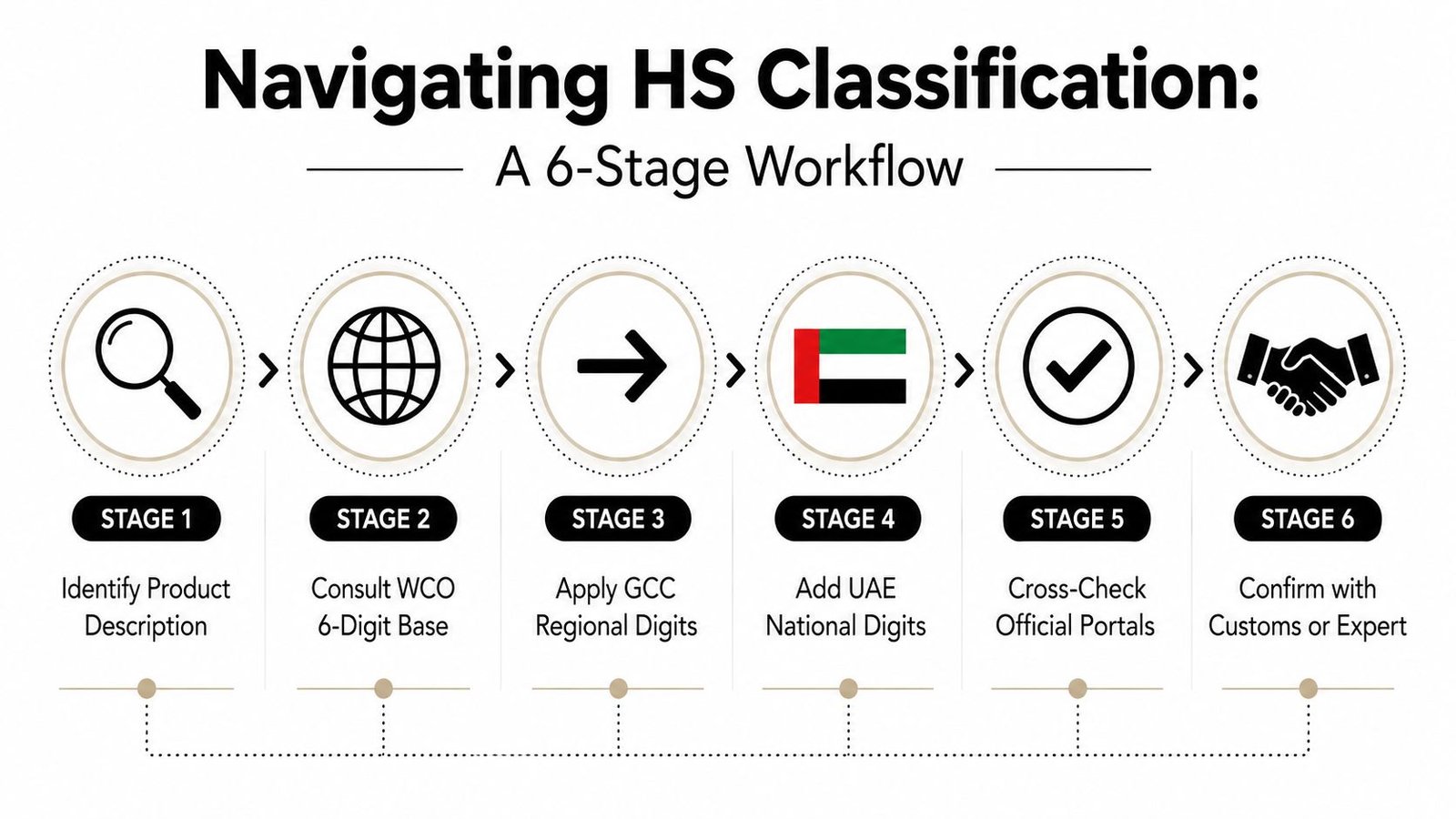
What is a practical six-stage workflow
Define the product in customs terms
Start with a usable description. Record the material, principal function, how the item is presented, and whether it is a complete good, part, accessory, or unfinished article. “Phone accessory” is too vague. “Silicone protective case for a mobile phone” gives customs something they can test against the tariff wording.Set the likely 6-digit HS heading and subheading
This is the global base. At this point, focus on what the product is by tariff logic, not by marketing language. For example, a kitchen machine sold with several attachments may still classify by its principal function rather than by the attachment list on the box.Check the GCC tariff split
After the 6-digit base is sound, review the regional subdivision used across the Gulf tariff structure. This step often separates goods that seem similar in ordinary trade language but receive different treatment once material, use, or product type is examined more closely.Select the UAE 12-digit national line
Many filings often go wrong with this selection. The final digits can turn on details such as composition, technical standard, or specific end-use. Importers who stop at a broad code often get through an online search but still fail declaration review because the UAE line expects a narrower match.Test the wording against the actual product file
Read the tariff description line by line and compare it with your documents. If the tariff says “of plastic,” “for industrial use,” or “parts,” your file must support those terms. If it does not, reconsider the code before the goods are declared.Escalate uncertain cases before filing
If two classifications still remain realistic, do not guess. Get clarification through the proper customs channel before the invoice and declaration lock in the code. This matters most for composite goods, technical equipment, chemicals, and products that may trigger a different duty rate, permit requirement, or inspection path.
One good rule saves time. If the code depends on a feature you cannot prove on paper, the classification is not ready yet.
What documents make classification easier
Classification quality depends on document quality. A short invoice description and one product photo rarely support a defensible 12-digit code, especially under the phased UAE rollout where national detail matters more than many traders expect.
Build a basic product file before anyone prepares the declaration:
- Technical data sheet showing material, composition, and function
- Clear product images of the item and packaging
- Catalogue, brochure, or user manual for specialised or multi-function goods
- Bill of materials or composition breakdown for mixed-material products
- Supplier confirmation stating whether the item is a finished product, spare part, kit, or accessory
- Intended use statement where end-use affects classification
A simple import example shows why this matters. If a trader imports a stainless steel insulated bottle with a built-in temperature display on the lid, customs will still ask the same core questions. Is the principal character a vacuum flask, a household container, or an electronic article? The answer depends on function, construction, and how the product is presented, not on the sales name alone.
That is also why a quick-reference checklist helps. Before choosing a 12-digit code, confirm five points: the material matches, the main function matches, the item is correctly treated as a finished good or part, the tariff wording fits what an inspecting officer will see, and the code does not create an unexpected duty, VAT, or control issue.
Common HS Code Examples with Duty and VAT
A trader clearing a mixed shipment into Dubai often asks one simple question first. What will customs duty and VAT look like on these goods? The practical answer starts with the 12-digit HS code, because the first six digits may place the product in a global heading, while the UAE extension can still change how the item is treated at declaration stage.
Examples help if they are used properly. They show the questions customs will ask and the kind of product detail that changes the result. They do not replace classification of the actual item in front of the officer.
The table below uses common import scenarios rather than broad retail labels. Where the exact 12-digit code depends on construction, composition, or use, that is stated clearly instead of forcing a code that may be wrong.
| Good Type | HS Code | Duty Rate | VAT Rate |
|---|---|---|---|
| Smartphones and similar consumer electronics | Depends on the exact device, communication function, and specification under the UAE 12-digit line | Often standard 5% customs duty where no exemption or special treatment applies | Standard 5% import VAT where applicable |
| Men's or women's apparel | Depends on garment type, fabric, knit or woven construction, and wearer category | Often standard 5% customs duty where no exemption applies | Standard 5% import VAT where applicable |
| Machinery parts | Depends on whether the item qualifies as a part, accessory, or separate machine article | Duty treatment depends on the exact tariff line | Standard 5% import VAT where applicable, subject to import treatment |
| Printed books | Depends on whether the goods are books, manuals, catalogues, or promotional printed matter | Often duty-free if the item genuinely falls within the printed book tariff line | VAT treatment depends on the import treatment and the nature of the publication |
| Food items | Depends on the specific food category and whether it falls under a line that receives favourable treatment | Some lines are duty-free, while others attract standard customs duty | VAT treatment depends on the product category and import treatment |
| Lithium batteries | Depends on chemistry, whether they are standalone or packed with equipment, and the intended use | Duty treatment depends on the exact tariff line | Standard 5% import VAT often applies, subject to the declared treatment |
Two examples show why the UAE 12-digit rollout matters in day-to-day work.
A cotton T-shirt and a polyester sports top may look interchangeable on a sales invoice. They are not. Fabric, garment type, and wearer category can all affect the correct tariff line. The same issue comes up with machinery parts. A replacement gear sold for one machine may still classify as a general-use article if it does not meet the tariff wording for a machine part.
Lithium batteries create another common problem. A standalone lithium-ion battery, a battery packed with a power tool, and a battery installed inside medical equipment may each need a different classification approach. Duty is only one part of the risk. The code can also affect supporting document checks and how quickly the goods are released.
Use this table as a working reference. Then verify the 12-digit line against the product file, invoice wording, and how the goods are presented at import. That extra check usually saves more time than fixing a customs query after arrival.
Common Classification Pitfalls and Avoidance Tips
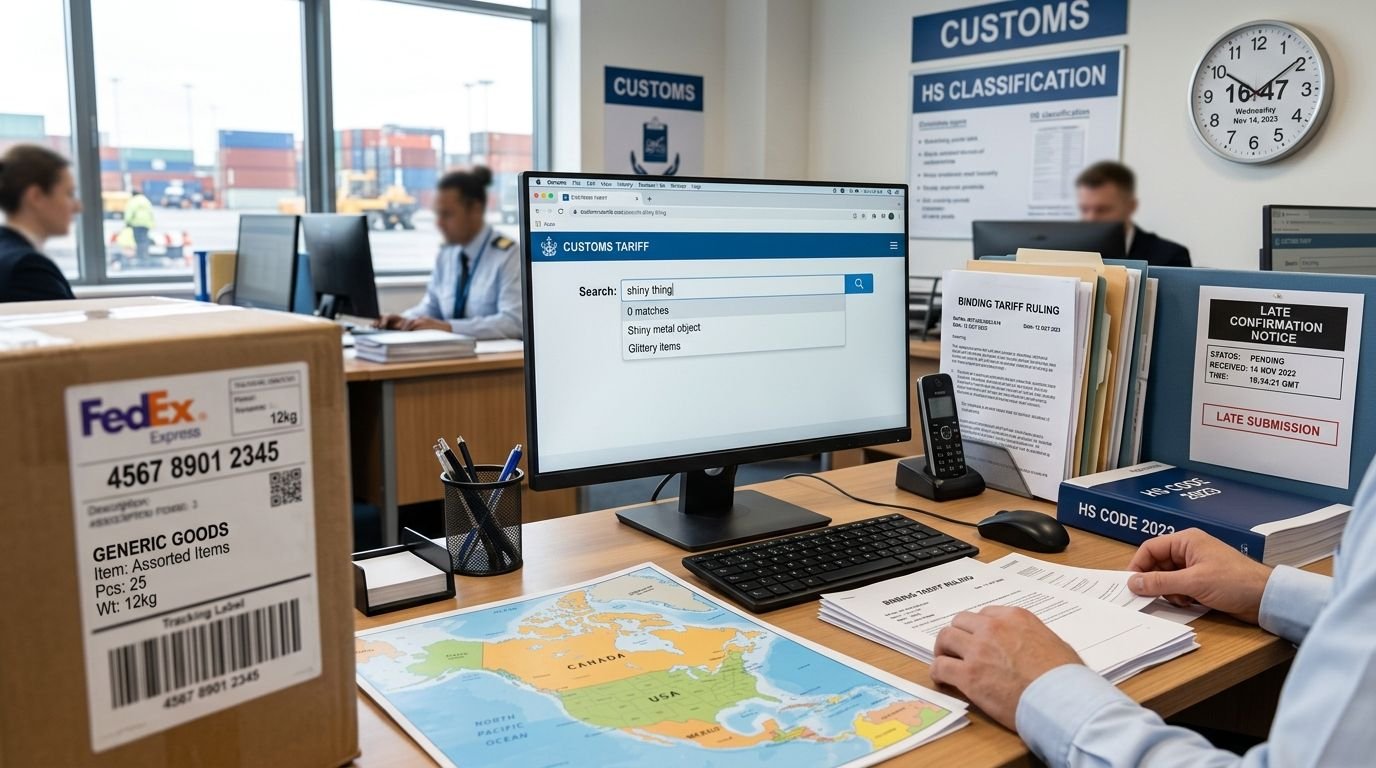
Which mistakes cause the most trouble
A shipment arrives in Dubai with the right quantity, the right value, and the right commercial documents. It still gets queried because the code on the declaration does not match the product description or the 12-digit UAE tariff line. That is a common pattern in real clearance work.
The problem usually starts before the goods move. Supplier invoices use sales language. Product teams describe items for buyers, not for customs. Then someone picks a code at the last minute from the first six digits that look close enough, without checking the UAE extension or the legal wording of the heading.
The repeat errors are usually these:
- Using descriptions that are too broad. Terms like “accessories,” “equipment,” “kit,” or “parts” do not give customs enough to work with.
- Stopping at the global HS level. Under the UAE 12-digit system, the first six digits may be correct while the national subdivision is still wrong.
- Classifying by product name instead of product characteristics. A sales label rarely answers the customs questions that matter, such as material, function, composition, or intended use.
- Treating mixed or technical goods as obvious. Multi-function devices, sets, replacement components, and goods sold with accessories often need a closer reading of the tariff notes.
- Leaving classification until after invoicing. Once the invoice, packing list, and declaration are prepared, any change creates document mismatches and delay.
I see one mistake more than any other. Traders assume a code is acceptable if the duty outcome looks the same. Customs still checks whether the tariff line fits the goods as presented. A wrong code with the same duty rate can still trigger a query, a correction request, or a hold.
How can you reduce the risk before shipment
Good classification is a file-building exercise. The businesses that handle the UAE 12-digit rollout well do not rely on memory or supplier guesses. They keep a short product record for each item and confirm the code before the documents are issued.
Use this pre-shipment check:
- Start with the product itself. Confirm what it is, what it is made of, how it works, and whether it is finished goods, a part, or a set.
- Match the tariff wording exactly. If the tariff line refers to a specific material, use it only where the product matches that material.
- Check the full 12 digits. Do not stop at the chapter, heading, or six-digit HS code. The UAE subdivision can change the declaration outcome.
- Review how the goods are presented at import. The same item may classify differently if it is imported separately, packed with another product, or installed inside equipment.
- Keep support on file. Datasheets, photos, catalog pages, technical specs, and composition details make it much easier to defend the code if customs asks.
- Resolve doubt before shipment. If the item is technical, unusual, or commercially sensitive, settle the classification before the cargo is moving.
A simple example shows the trade-off. Importers often describe a component as a “machine part” because that is how the supplier sells it. If the tariff wording does not support classification as a machine-specific part, customs may treat it as a general-use article instead. The safer approach is to check the legal notes and product function early, even if that takes an extra day before invoicing. That extra day is usually cheaper than a hold at the port.
If you want to see a short explainer on the topic, this overview gives a useful visual refresher before you file anything:
How Inpro Assists with Classification and Clearance
When does outside help make sense
Some businesses can handle straightforward classifications in-house. Others can't justify the time, especially when the shipment includes mixed product types, free zone movements, or a need for binding rulings. That's where a specialist can reduce risk by checking the product file before the declaration reaches customs.
Inpro Corporate Services L.L.C. can support the process around classification and customs readiness in a practical sequence. That may include reviewing product descriptions, organising supporting documents, helping prepare Binding Ruling submissions through Mirsal 2, and coordinating the wider PRO process that often sits around imports, licensing, and company documentation in the UAE.
This is usually most useful for three groups:
- New founders importing stock into the UAE mainland for the first time.
- International companies expanding from a free zone into local market sales.
- Operations teams that need one point of coordination between the supplier, broker, and internal finance staff.
What tends to work well is early involvement, before invoices and declarations are locked. What tends to work poorly is asking for a rescue after the shipment has already been queried.
Quick Reference HS Code Lookup Checklist
What should you check before invoicing or shipping
Use this list as a final desk check before you approve the invoice, submit declaration data, or release goods from a supplier. It's built for busy teams that need one clean pass through the essentials.
- Verify the product description. Make sure the wording reflects material, function, and whether the item is finished or a part.
- Check the WCO base code. Start with the global 6-digit logic before trying to force the UAE extension.
- Apply the GCC regional digits. Confirm the regional tariff branch fits the goods.
- Review the UAE subdivision. The final national detail is where many errors appear.
- Confirm in the ICP portal. Treat this as your formal cross-check.
- Use Al Munasiq if the wording is unclear. It can help when a product name is vague or image-based search is easier.
- Review whether a Binding Ruling is needed. If more than one code still looks plausible, stop guessing.
- Note the duty and VAT impact. Your finance team should understand the likely import treatment before shipment.
- Document the approved result. Store the code with the product sheet so the next shipment doesn't start from zero.
Keep one approved classification file per product. That habit saves time and reduces repeat errors across invoices, declarations, and internal stock records.
Related Resources and Further Reading
Which references are worth keeping open
A small set of reliable references is better than a long list of blog posts. For Dubai Customs HS codes, keep official tools and a few practical references bookmarked.
Official and quasi-official references
- Dubai Customs Integrated Customs Tariff guide for tariff structure, implementation notes, and free zone treatment.
- UAE customs alert on the 12-digit migration for the mainland transition date and legal framework.
- Dubai e-commerce customs guidance covering Al Munasiq, ICP, and Mirsal 2 for a practical view of the official lookup tools and support channels.
Useful specialist references
- AE-region HS code guidance on technical validation criteria for product matching checks.
- Jebel Ali analysis on mismatch-related delays and penalties for a realistic look at what goes wrong in practice.
- UAE import and export compliance overview for duty and VAT treatment examples.
Not sure where to start? Inpro Corporate Services L.L.C. can help you sort out the practical side of UAE setup, PRO work, and import-related compliance so you can move faster with fewer surprises.