

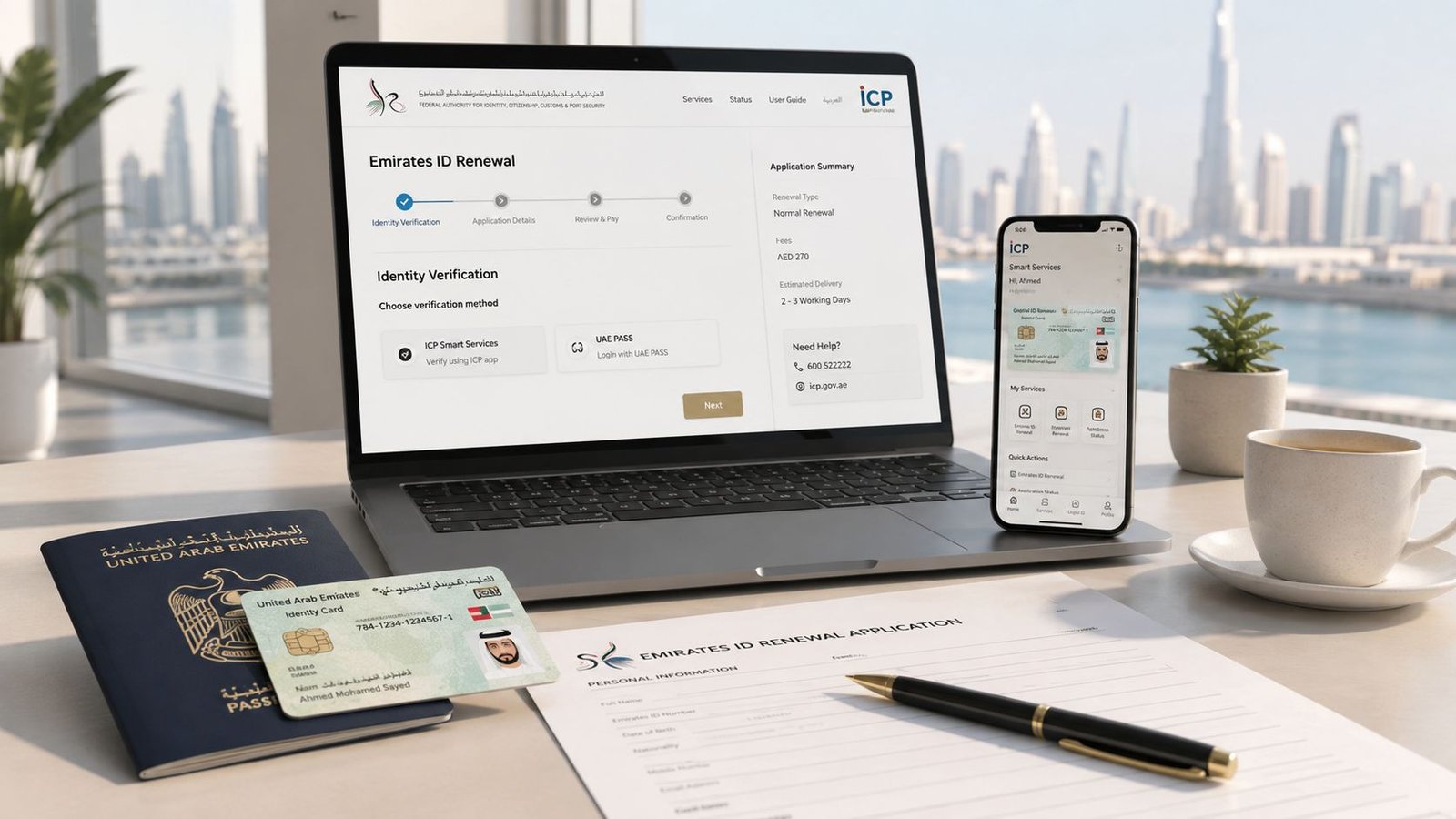
Renewing an Emirates ID means submitting an online application through the ICP platform, or through a typing centre after your residence visa has been renewed or is formally in process, then completing biometrics if ICP requests them before the new card is printed and delivered. For expat residents, the renewal request can't move ahead until the visa step is done, so the visa and ID have to be managed as one workflow, not two separate tasks.
If you're an HR manager, founder, or PRO handling staff files in the UAE, that sequence is where most delays start. The process itself is straightforward once the dependency is clear, but the timing, biometrics, and expiry rules can catch teams off guard in Dubai, Abu Dhabi, Sharjah, and free zones across the United Arab Emirates.
Table of Contents
- Understanding the Emirates ID and Its Importance
- Preparing for Your Emirates ID Renewal
- Your Renewal Application Options
- Renewal Fees Timelines and Late Penalties
- Handling Special Renewal Scenarios
- Streamlining Renewals and Common Questions
Understanding the Emirates ID and Its Importance
The Emirates ID is the UAE's primary identity card, and for residents it functions as far more than a plastic card in a wallet. It is the document people use across routine government and private-sector touchpoints, so a missed renewal can interrupt more than one admin process at once.
What the Emirates ID actually does
The Federal Authority for Identity, Citizenship, Customs and Port Security (ICP) is the government body that handles Emirates ID services, including renewal, payment, and status tracking. ICP's renewal service is available 24/7 through its website and mobile app, which means the UAE has built this as a digital-first process rather than a paper-heavy one (ICP service details).
For a new HR manager, that matters because the ID is tied to the employee record, not just the person. In day-to-day terms, it affects access to bank onboarding, healthcare registration, and many government workflows across the United Arab Emirates.
Practical rule: if an employee's visa is in motion, the Emirates ID should be treated as part of the same case file, not a separate follow-up task.
Why renewal timing matters
The renewal process is time-sensitive because the card has a formal expiry cycle, and the system tracks status stages such as Under Printing, Ready for Collection, and Dispatched via Post through ICP tools (ICP service details). That makes it easier to monitor, but it also means there's little room for casual delay once the visa side has been settled.
For employers, the main concern is continuity. A valid Emirates ID supports smoother movement between visa processing, payroll administration, and routine compliance, especially when staff move between Dubai, Abu Dhabi, and mainland or free zone entities. The card is small, but the workflow around it is not.
Preparing for Your Emirates ID Renewal
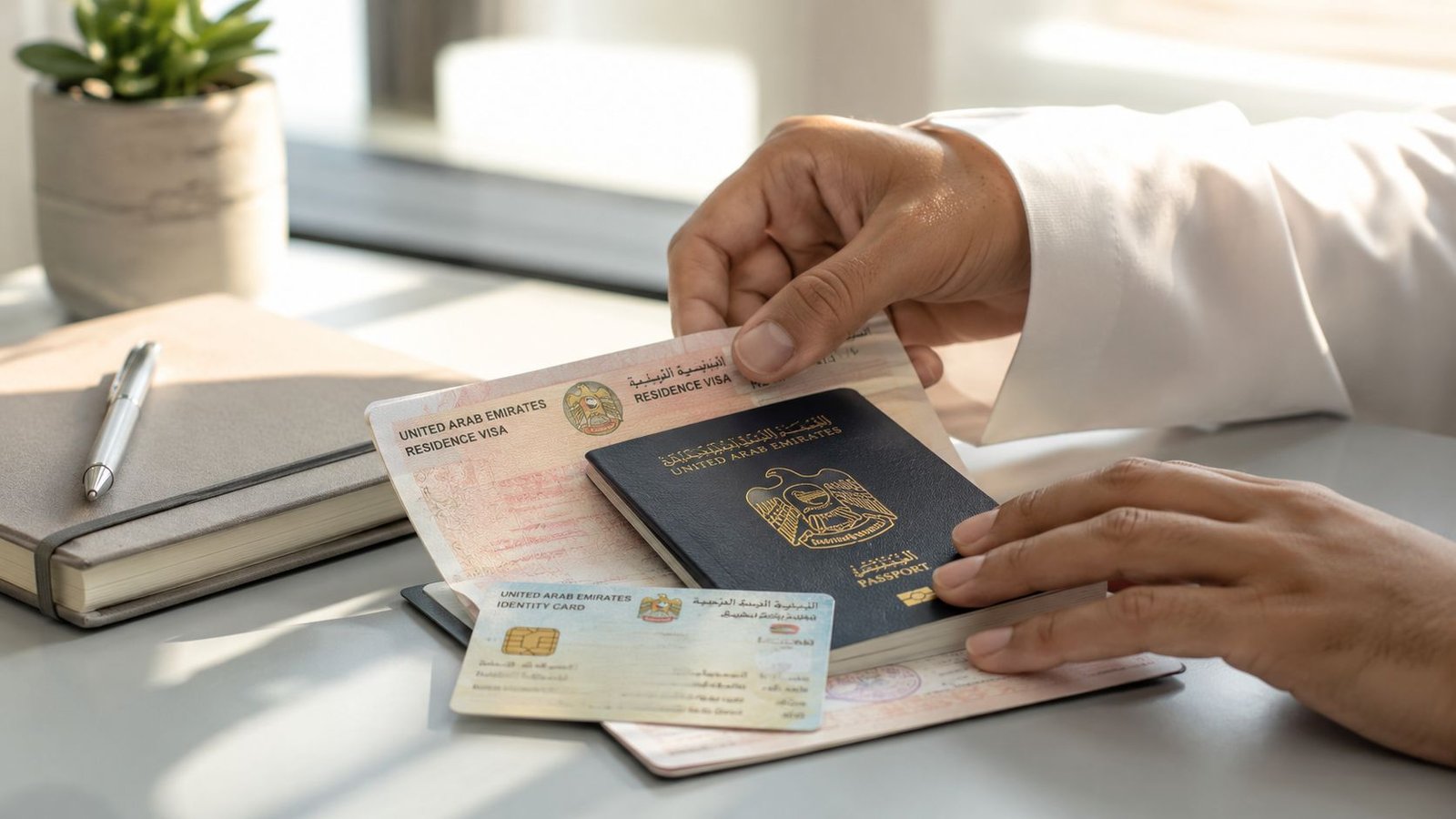
A renewal file fails fastest when the visa and ID steps are out of sequence. For expat residents, the Emirates ID renewal request can move only after the residence visa has been renewed or formally marked as in progress, and applicants aged 15+ must have current biometrics on file. Children under 15 are exempt from biometrics, but they still need the rest of the file handled correctly (UAE Expert Hub).
What to have ready before you apply
Before submission, keep the current Emirates ID, the passport, and a compliant personal photo ready. For an expat employee, the visa renewal status must already appear in the file, because the ID request depends on it. If the two records are not aligned, the application often stops before it gets properly under way.
Biometrics can be the other blocker. For residents 15 and above, ICP may ask for fingerprints, a facial photo, and a digital signature if its records are not current. Children under 15 are handled differently, but they still need a photo, so families should not treat a child renewal as automatic just because the biometric step is lighter.
Keep the visa file clean first. Most “ID renewal problems” are really visa sequencing problems.
What HR teams usually miss
HR teams often prepare the employee file before the residency visa renewal is logged, then spend time trying to work out why the Emirates ID request does not move. The sequence matters more than the volume of paperwork. For expats, the residence visa should be renewed through the General Directorate of Residency and Foreigners Affairs, or GDRFA, before or at the same time as the ID renewal, because the ID duration follows the visa duration (Wego).
That rule is practical, not theoretical. If a staff member is changing roles, changing sponsor, or moving from an employee visa to another residence category, resolve the visa file first. Only then should anyone expect the ID renewal to go through without delays. Internal coordination avoids unnecessary back-and-forth and keeps the case moving.
A simple pre-submission checklist
- Passport validity and copy: Make sure the passport details in the file match the visa and ID record.
- Current Emirates ID: Use the existing card details as the base for renewal.
- Photo readiness: Have a recent photo ready in the required format.
- Visa status: Confirm the residence visa is renewed or officially in process.
- Biometric status: Check whether the applicant needs an updated fingerprint or facial capture.
- For minors: Prepare the child's photo even if biometrics are not required.
If one part is missing, fix the file first. Submitting early and correcting later usually takes longer, especially when the visa record and the Emirates ID request do not match.
Your Renewal Application Options
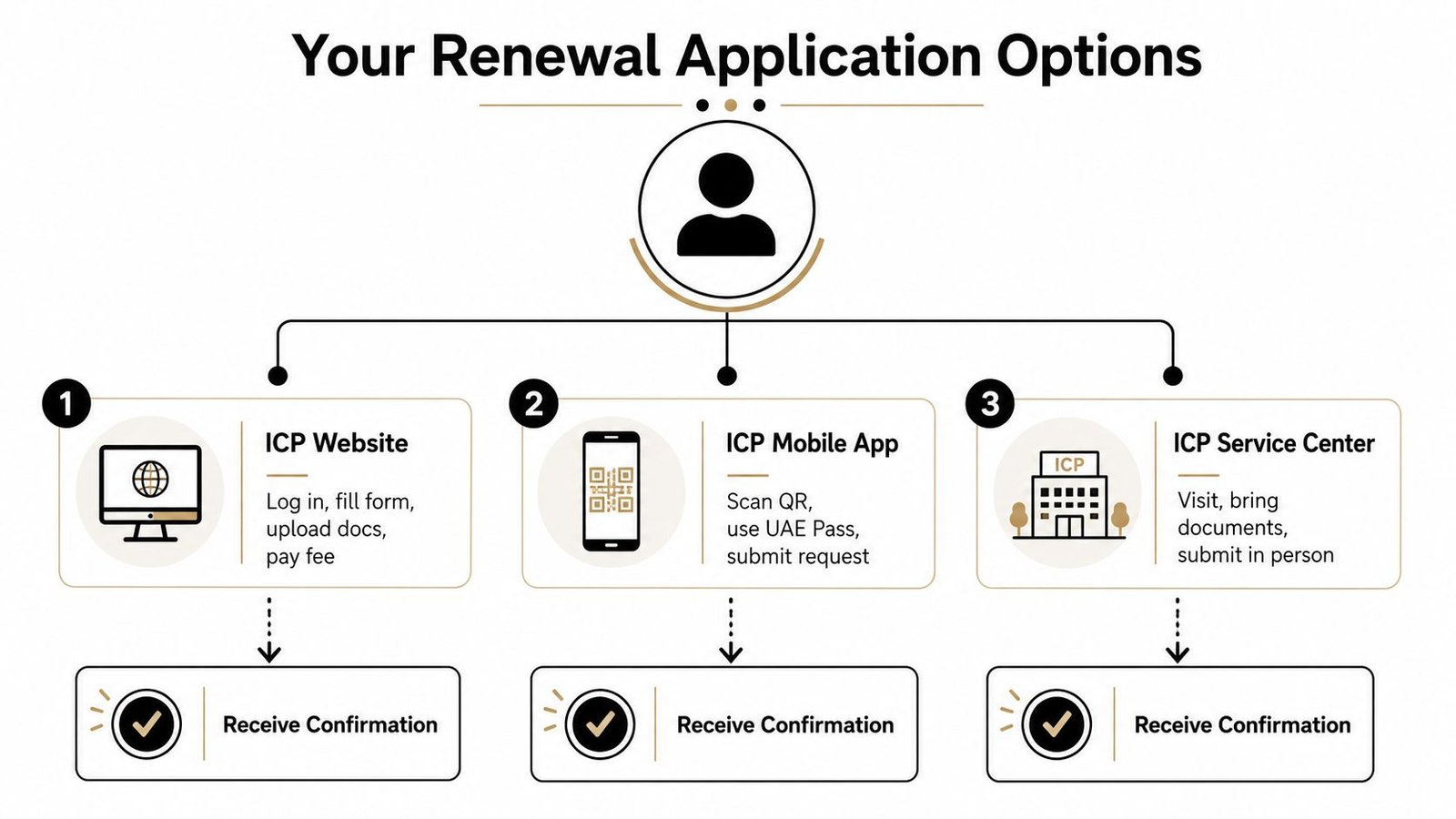
A renewal file usually moves fastest when the HR team chooses the right channel for the case. The Emirates ID renewal service is available through the ICP website and mobile app, with application submission, payment, and status tracking handled in the same digital flow (ICP service details). For a business team, the practical choice is between self-service online, mobile submission, and in-person support at a typing centre.
Which channel suits which situation
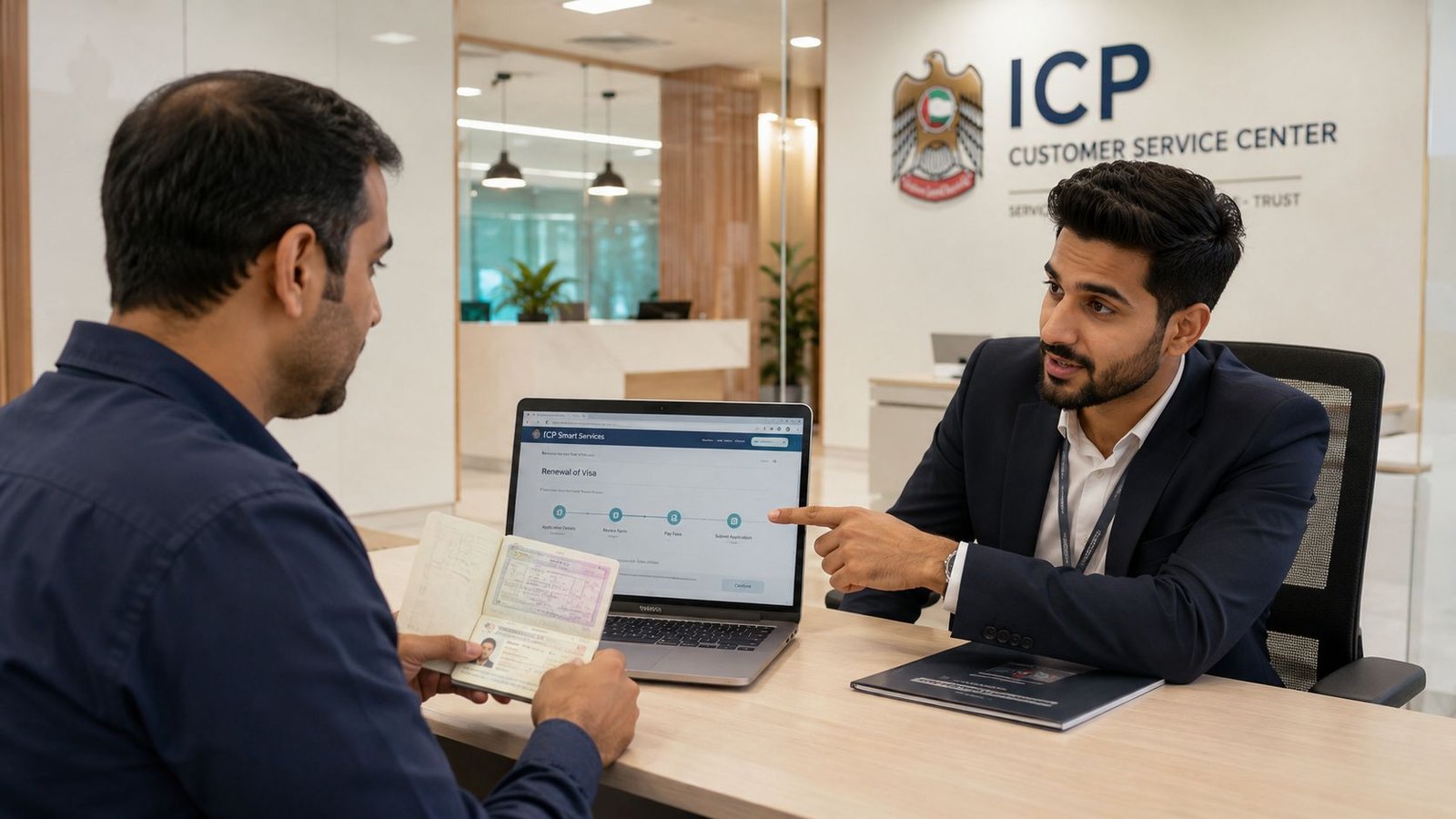
The ICP website fits cases where the team wants full control over the submission and can manage the form carefully. The ICP mobile app suits applicants who prefer to file from a phone and keep the case close at hand. A typing centre is better when the file has unusual details, the internal team wants an operator to enter the data, or the renewal sits alongside a more sensitive visa update.
The trade-off is straightforward. Digital filing gives speed and direct visibility, while a typing centre reduces the risk of data-entry mistakes and back-and-forth on incomplete files. For a clean employee renewal, the website or app is usually enough. For an HR manager handling dependents, name variations, or a file that needs extra checking, the in-person route can be the safer choice.
How the online ICP process usually works
Start by signing in through the ICP channel your team already uses, then open the renewal service and confirm the applicant's identity details. The form must match the passport, visa, and current ID record exactly. Small differences in spelling, passport number, or date fields are a common reason for rejection or delay.
Then upload the required documents and review the application before payment. The payment and tracking functions sit in the same workflow, so the task does not end once the form is completed. After the request is accepted, the team can monitor the status in ICP until the card moves through printing and dispatch.
What works and what doesn't
A clean file, one owner, and a final review before submission usually works. A file where the employee, HR generalist, and external consultant all make partial edits usually does not. That creates inconsistency, and inconsistency slows the case down.
Operational advice: assign one person to submit and one person to verify, not five people to “help”.
The digital route is usually the fastest option when the application is simple. A typing centre is often the better choice when the file includes a dependent, a document mismatch, or an expired biometric record, because the staff there handle these cases every day.
Renewal Fees Timelines and Late Penalties
A renewal file is easy to budget only if the visa side is already under control. For founders and HR managers, the cost question is not just the ID fee, it is whether the residence visa renewal is ready, because the Emirates ID renewal follows that record and breaks down when the two are out of sync.
| Emirates ID Renewal Fees by Validity Period (2026) | Fee (AED) |
|---|---|
| 1 year | 190 |
| 2 years | 390 |
| 3 years | 490 |
| 5 years | 780 |
| 10 years | 1,250 |
The published fee bands make the price side predictable, but they still leave a planning choice on the table. Longer validity carries a much higher fee, so the decision is usually tied to the company's visa strategy, not just to card replacement (Bayut).
How to think about the cost structure
The fee table only helps if the underlying immigration record is ready to support the request. For staff on standard employment visas, the card generally follows the visa duration, so the renewal cost should be reviewed together with the residence-visa timeline rather than as an isolated admin task.
Processing is usually quick once the application is accepted. Independent UAE guidance says applicants typically receive the renewed card within 5–7 working days or 7–10 working days, depending on the route and whether biometrics are needed, and another source notes that some renewals can finish in a few hours when no new biometrics are required (DubaiSouthBH, Noble Core Ventures). For HR teams, the practical point is that speed depends on file readiness, not on a single fixed deadline.
The penalty rule that changes behaviour
ICP allows a 30-day grace period after the Emirates ID expires. After that, a late fine of AED 20 per day applies, capped at AED 1,000. For an HR department, that turns delay into a measurable cost, especially when the file is already waiting on visa renewal.
Treat the grace period as a buffer, not a planning window. If the ID is close to expiry and the residence visa has not been renewed, the bigger risk is often not the fine itself. The renewal request may also be blocked, which means the team loses time before the case even reaches processing.
What usually causes cost overruns
- Late visa renewal: The ID application cannot move until the visa side is ready.
- Missed biometric re-checks: A fresh appointment can slow the case.
- Poor file coordination: Mixed-up data creates rework.
- Ignoring the grace period: The daily fine starts after day 30, not after someone notices the card has expired.
A clean renewal costs less than a delayed one, and the difference usually shows up in staff time as much as in direct fees. The common failure point is simple, the visa and ID files are handled as separate tasks when they should be treated as one linked compliance step.
Handling Special Renewal Scenarios
A standard renewal is simple. Real cases are not. HR teams usually see the difficult files when an employee is travelling, a dependent's card is close to expiry, or the residence category has changed and the visa record no longer matches the old renewal path.
When the card belongs to a dependent
If the renewal is for a spouse or child, the same visa-ID dependency still applies. The difference is coordination. Family files often move through more than one person, so the sponsor, the parent, and the employee may each hold part of the information needed to complete the case. The safest sequence is to confirm the sponsor's visa renewal status first, then submit the dependent's ID renewal against that record.
Children under 15 are exempt from biometrics, but they still need a photo. That means families should not leave the file until the last minute. When the child's passport, visa, and photo are aligned, the process is usually straightforward.
When the card is lost or damaged near expiry
If an ID is lost or damaged close to the renewal date, do not treat it as a routine extension of the same case. The file may need extra attention because the card status and the renewal timing are both in play. The practical order is to resolve the replacement or status issue first, then proceed with renewal once the identity record is clear.
This is the point where many files slow down. A case that looks like a renewal may turn into a replacement, a status correction, or both, and each step depends on the record being clean before the next submission goes in.
When the applicant is outside the UAE
For residents abroad, the key question is whether the renewal can still be coordinated through the sponsor and whether the visa side is valid enough to support the request. Many cases can still be handled remotely, but they still depend on the residence record being in order. If an employee has travelled and the ID is nearing expiry, the HR team should check the visa status before promising a submission date.
That check matters because the card is not renewed in isolation. If the residence file is not active or correctly aligned, the application may stall before it reaches processing.
When the visa category changes
A switch from employee visa to investor or another residence category changes the case structure. The new visa type has to be reflected before the Emirates ID renewal can follow correctly, because the card duration follows the visa duration for expats. That is why founders moving into an investor structure, or employees converting status, need the immigration sequence handled carefully.
A small status change can create a much larger delay if the team assumes the old renewal path still applies. A manual checklist beats guesswork every time.
Streamlining Renewals and Common Questions
Busy HR teams do not need more process. They need fewer surprises. The safest renewal setup is a controlled one, where the visa record, Emirates ID file, passport details, and supporting documents move together in the right sequence. When that alignment is in place, deadlines are easier to track and avoidable fines are less likely to appear.
The value is operational. Someone has to watch the timing, confirm whether biometrics are required, and make sure the submission matches the residence file. If that work sits with a team already handling onboarding, payroll, and employee support, the chances of a missed step rise quickly.
Good renewal management is mostly about timing, ownership, and file accuracy.
Common questions
How can I track an application status?
ICP provides status tracking through its digital tools, and renewal stages can show labels such as Under Printing, Ready for Collection, and Dispatched via Post. That gives HR teams a clear view of where a case stands after submission.
What happens if a renewal is rejected?
The usual cause is a file issue, not a policy change. Check the visa status, passport details, photo, and biometric record first, then correct the mismatch before resubmitting. In practice, the rejection usually points to a dependency that was not aligned before the file went in.
Do I need to wait for a reminder from the government?
No. The grace period runs after expiry, and the late fine starts once that buffer ends. Teams that wait for a reminder usually pay for it in time or penalties, and the delay is often avoidable if the renewal calendar is managed properly.
Can one person manage renewals for a whole company?
Yes, if the file structure is disciplined. The best results usually come from one accountable coordinator, clear document ownership, and early review of visa renewal dates. That approach works because the Emirates ID renewal process depends on the residence visa record staying accurate, and weak handoffs are where cases most often slow down.
If you want help keeping employee and family renewals on track in the UAE, Inpro Corporate Services L.L.C. can handle the visa and PRO side with a clear, organised process. Visit Inpro Corporate Services L.L.C. to speak with a team that works on UAE residency, document flow, and compliance from start to finish.