

Most advice on a Dubai freezone visa starts in the wrong place. It treats the visa like a product you pick off a shelf, then apply for.
That's not how it works in practice.
A Freezone visa in Dubai is usually the result of a company setup decision. Your licence, your jurisdiction, your office package, your immigration file, and your intended operating model all come first. The visa comes after that. Founders who understand this early avoid the two mistakes that cause most friction: choosing the wrong free zone for the business, and assuming the visa automatically gives them broad work rights across the UAE.
If you're planning to relocate, hire, or build a lean UAE base, the key question isn't “How do I get a visa?” It's “What structure gives me the right visa outcome without creating restrictions I'll regret later?” That's the difference between a smooth launch and a setup that needs restructuring after the first hire.
Table of Contents
- The Freezone Visa Isn't What You Think It Is
- How a Free Zone Visa Actually Works
- Choosing Your Path Employee Investor or Freelancer
- The Application Blueprint From License to Residency
- Budgeting and Timelines What to Actually Expect
- Strategic Pitfalls and Key Comparisons
- Next Steps After Your Visa Is Stamped
The Freezone Visa Isn't What You Think It Is
Founders often treat the freezone visa as the product. It is a byproduct.
A freezone visa usually comes after the key decision has been made: what company you are forming, where you are licensing it, what activity it will carry, and how that structure will support immigration. If the business setup is weak, the visa option is weak with it.
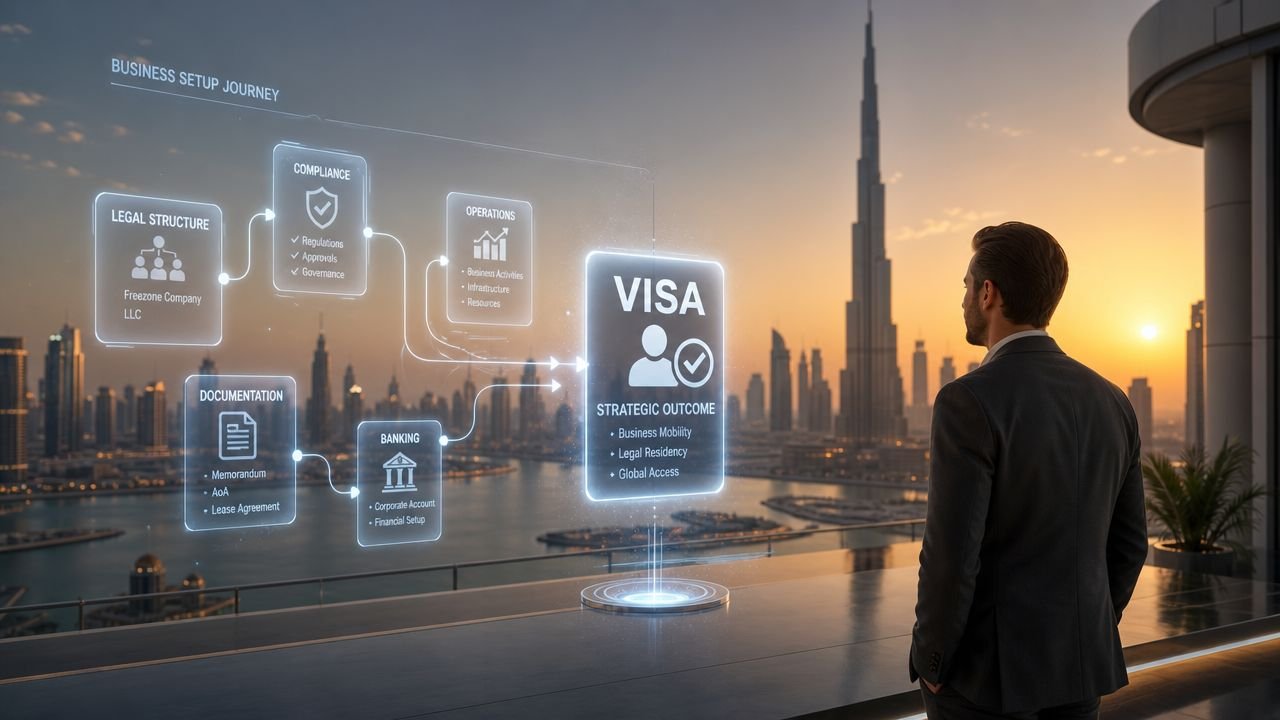
This distinction is important. Many founders search for “freezone visa dubai” as if they are buying a residence permit on its own. In practice, they are choosing a company setup route that may allow residence, hiring, banking, and future expansion, or may limit all four.
Why founders get this wrong
The wrong starting point is the visa fee.
The right starting point is the operating model. Business activity, jurisdiction, licence package, and office arrangement usually shape whether the visa path works at all, how many visas the company can support, and whether the structure fits the way the business will earn money.
A consultancy, holding company, e-commerce business, and regional back-office operation can all end up with a residence visa. That does not make them interchangeable. The trade-offs sit underneath the visa. Some setups are cost-efficient but restrictive on staffing. Some are fast to launch but poor for businesses that need regular mainland client-facing work. Some look cheap until you need extra visa allocation, a larger desk package, or a compliance upgrade.
Practical rule: If your first question is only about visa fees or visa validity, you are starting too late. Start with business scope, hiring plan, and where the company will operate.
What smart operators do instead
They structure the company first and let the visa follow.
- Define the operating model: Will the company invoice clients, hold assets, hire staff, or serve as a regional vehicle for group operations?
- Choose the free zone for fit, not marketing: Different jurisdictions handle activities, document review, office requirements, and immigration capacity differently.
- Map visas to growth, not just launch: Founder residency is only one piece. Staff hiring, dependent sponsorship, and future headcount should be tested before the licence is issued.
That is the useful way to assess a Dubai freezone visa. It is a business structuring outcome with immigration attached. If you choose the structure well, the visa supports the business. If you choose it badly, the visa becomes the least important part of the problem.
How a Free Zone Visa Actually Works
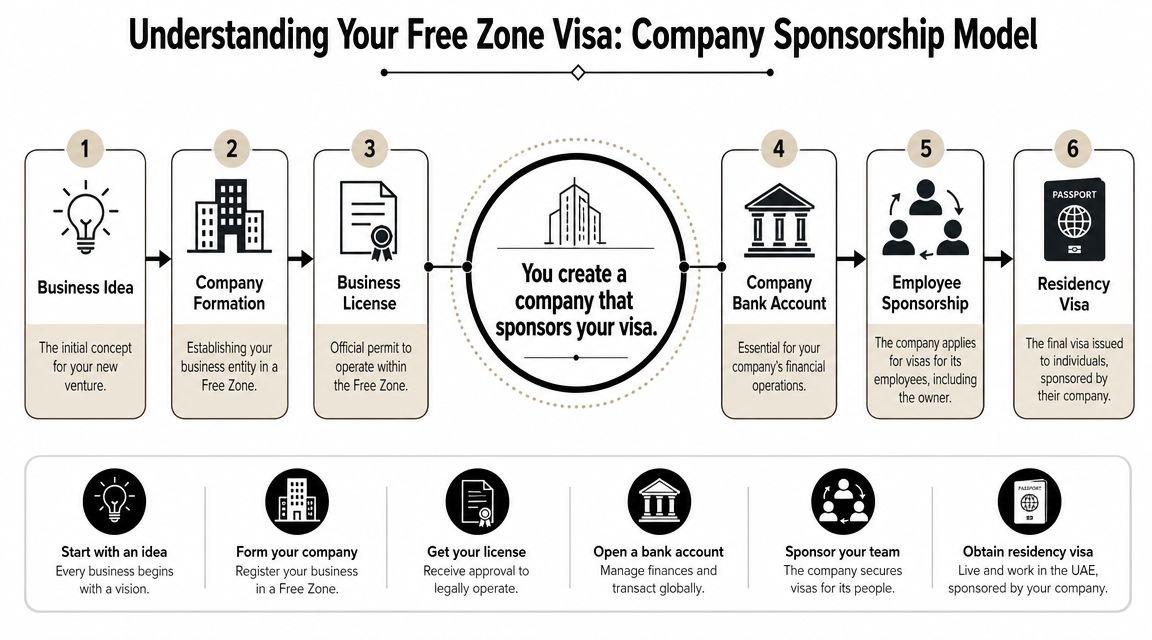
A free zone visa does not start with an immigration form. It starts with a company that is licensed, set up for immigration, and permitted to sponsor the person tied to that business.
That distinction matters because founders often treat the visa as the product they are buying. It is not. The visa is the output of a business structure. If the structure is wrong, the visa process becomes slow, limited, or expensive to fix later.
The Dependency Chain in Practice
The sequence is straightforward, but each step depends on the one before it.
- Business activity is selected
- Free zone entity is formed
- Business licence is issued
- Immigration file is enabled through the free zone structure
- The company sponsors the visa applicant
- Residence visa is issued after the immigration steps are completed
Where founders get caught out is step four. A company can exist on paper and still not be ready to sponsor. The free zone, licence package, and workspace model all affect whether immigration quotas are available and how quickly the file can be activated.
This is why free zone choice is a structuring decision first. As noted earlier, the UAE offers a wide range of free zones with full foreign ownership in many cases. On paper that gives you options. In practice, each jurisdiction handles activity approvals, desk requirements, visa allocation, and immigration processing a little differently.
The Sponsorship Relationship Explained
If you own the company, the company is usually the platform through which your residence is processed. If you hire staff, the same company becomes their sponsor through the free zone authority.
That creates operational consequences immediately.
| Component | Why it matters |
|---|---|
| Licence status | The visa file usually stalls if the licence is not active and aligned with the entity records |
| Business activity | The approved activity should match what the company is doing, especially if the free zone reviews substance or client contracts |
| Immigration readiness | Establishment card, file activation, and related approvals must be in place before the person can be sponsored |
| Workspace package | In many zones, visa capacity is linked to the office or desk package, which affects headcount planning |
The practical point is simple. You are not only applying for residence. You are setting up a sponsor that must remain compliant for as long as those visas stay live.
For a solo founder, a lean package may work well if the business only needs one or two visas. For a company expecting to hire quickly, the cheap setup can become the expensive one once extra visa quota, upgraded space, or document amendments are needed. That is the trade-off generic visa guides usually skip.
The visa sits at the end of the chain. The company setup controls the chain.
A better question than "Can I get a freezone visa in Dubai?" is this: "Will this company structure support the founder visa, future hires, and the way the business will operate?" That is the question that prevents rework.
Choosing Your Path Employee Investor or Freelancer
The visa category should follow the business structure. Founders get into trouble when they treat the visa as a menu item and pick the fastest-looking option, instead of matching it to ownership, payroll, and how the company will operate after setup.
That choice affects more than the residence file. It shapes how your role appears in company records, how banks and counterparties read the business, and how easily you can add people later.
Free Zone Visa Categories at a Glance
| Visa Type | Primary Holder | Basis of Sponsorship | Typical Validity |
|---|---|---|---|
| Employee | Staff member | Sponsored through the company and free-zone process | Two to three years in many Dubai free-zone cases |
| Investor or Partner | Owner, shareholder, partner | Linked to ownership in the free-zone entity | Three years is a common benchmark for investor visas |
| Freelancer | Independent professional | Based on a freelance permit or similar free-zone structure | Varies by zone and structure |
For planning, two to three years is the common range many applicants work with in Dubai free zones. Investor visas are often issued for three years. The exact period still depends on the zone, the permit type, and the current immigration policy applied to that file.
Employee visa
This is the clean route for genuine hires.
Use it when the person is employed by the company, paid as staff, and fits the approved staffing model of the free zone. If you are building an operating business with a team, employee visas usually keep HR records, renewals, and sponsorship responsibility in one place.
Employee status works well when:
- The person is on payroll
- The company controls the role and reporting line
- You want a repeatable hiring process for future staff
The trade-off is simple. An employee visa does not solve a weak company setup. If the business has limited visa quota, the wrong office package, or a licence structure that does not match the staffing plan, the employee route becomes harder to scale.
Investor or partner visa
This route fits shareholders, partners, and founders whose legal relationship to the business is based on ownership.
In practice, this is often the better choice for a founder because it aligns the immigration position with the corporate documents. That matters during account opening, compliance reviews, and any situation where a third party compares the licence, shareholder records, and visa basis.
If you are building the company, place yourself according to the cap table and licence, not by default under an employee label.
There is a trade-off here too. Some founders assume an investor visa gives complete operational flexibility. It does not. You still need the company to remain compliant, and the visa does not remove free-zone restrictions on where and how the business can trade in the mainland.
Freelancer route
This option is narrower than online guides suggest.
A freelance visa can be a good fit for a solo consultant, creative, or specialist who wants a personal operating platform without setting up a fuller company structure. It is usually a poor fit for a founder who expects to hire, build departments, or expand into a broader service model within the first year.
Check the structure before choosing it:
- Good fit: Solo professionals with a defined service offering
- Weak fit: Businesses planning to recruit soon
- Key point: The freelance permit matters as much as the residence visa
I often advise founders to be careful here. A freelance setup can look cheaper at entry, then create friction when the business needs staff visas, a wider activity scope, or a stronger commercial profile for clients and banks.
The overlooked short-term option
Some assignments do not justify a full residence visa. Fragomen reported that Dubai Development Authority and JAFZA began offering a Mission Visa or Visit Visa for Work Assignment in select free zones, a route previously associated with mainland use (mission visas in select UAE free zones).
This can be useful for project-based work, temporary deployments, or short specialist assignments. If the engagement is limited in duration and scope, a mission-style route may be cleaner than building a full residence file that the business does not need.
The Application Blueprint From License to Residency
Founders often treat the visa as the main event. In practice, the visa is the output of a company setup that has been approved, activated, and given immigration capacity.
That distinction matters because delays usually start on the corporate side, not in the applicant's medical or Emirates ID appointment. If the licence activity, establishment card, or visa allocation is not in place, the residency file does not move.
Stage one builds the platform
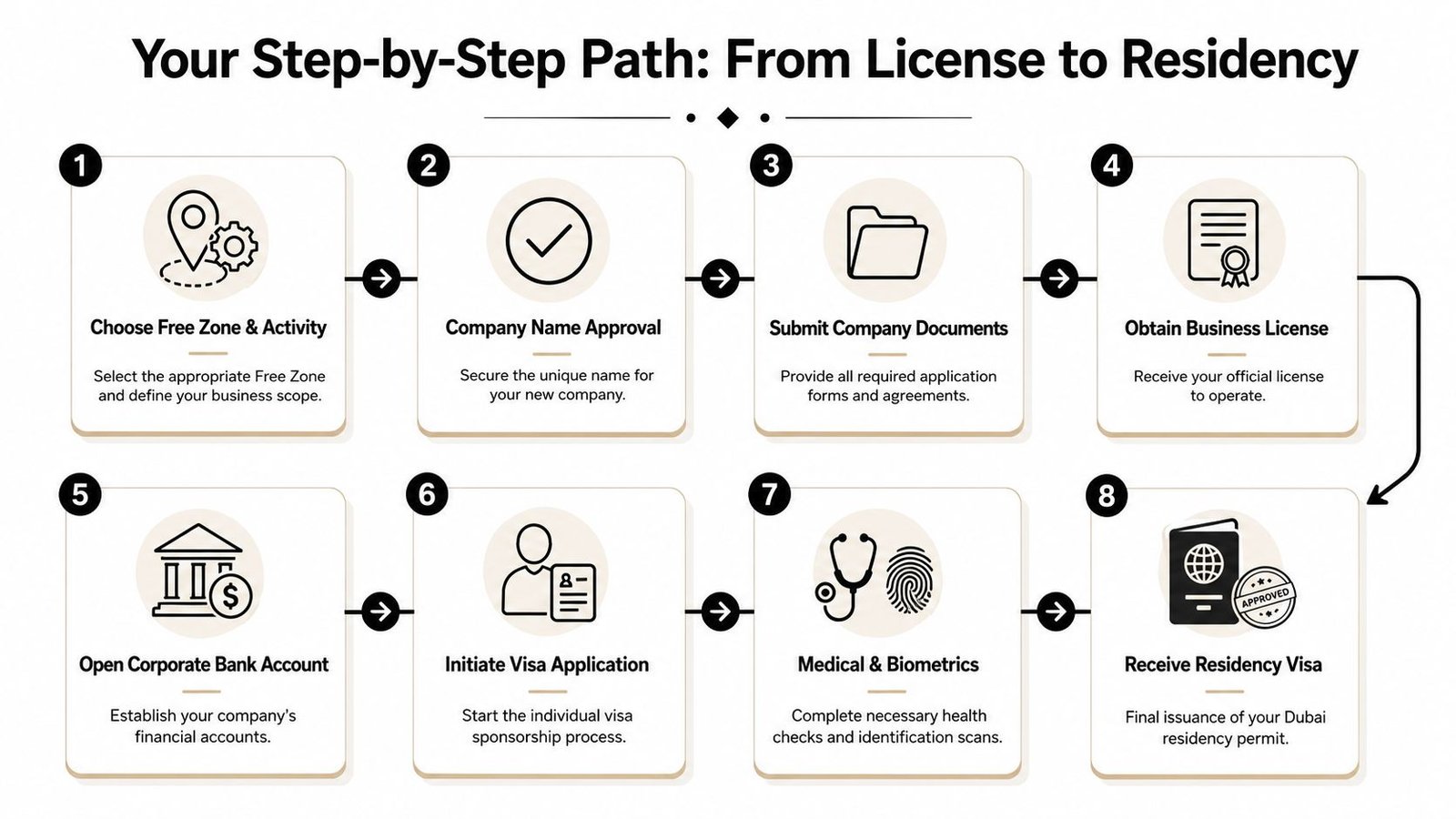
Start with the company, because the person cannot be sponsored before the entity is ready to sponsor.
- Choose the free zone and activity
- Reserve the trade name if required
- Submit formation documents
- Receive the licence
- Complete the company-side immigration setup
A free zone visa is tied to an approved business structure, not processed as a separate immigration product. UAE government guidance states that employers need the proper free-zone establishment and immigration records before sponsoring staff, which means visa approval depends on the company's compliance status and setup sequence (UAE guidance on establishing business and sponsoring staff in free zones).
The Practical Dependency Chain is simple. No licence, no establishment file. No establishment file, no sponsorship. No sponsorship, no residence visa.
Rushed founders run into avoidable delays because they prepare passport copies and photos before confirming whether the company can sponsor under the selected package. I see this often with low-cost setups that include a licence but leave founders to discover the immigration steps, visa quota, or desk requirement later.
A visual overview helps if you're mapping the process internally:
Stage two moves the person through immigration
Once the company is eligible to sponsor, the personal file usually follows a predictable sequence.
- Entry permit: Issued first where applicable.
- Status adjustment: Handled based on whether the applicant is inside or outside the UAE.
- Medical fitness test: Required before residence issuance.
- Emirates ID biometrics: A core part of the residency process.
- Residence visa issuance: Final approval and stamping stage.
The order matters. A founder hiring from overseas needs to coordinate travel dates with document issuance, medical timing, and onboarding plans. A founder already inside the UAE may use a different handling route, but the dependency chain remains the same.
At this stage, practical life admin begins. Banking, leasing, payroll registration, and family sponsorship plans usually wait for the residency file to reach the right point, so poor sequencing creates business delays outside immigration too.
Where applications usually slow down
Processing problems are usually operational, not mysterious.
| Checkpoint | What often goes wrong |
|---|---|
| Activity selection | The business activity does not match the intended commercial use of the company |
| Corporate documents | The company file is incomplete, inconsistent, or missing immigration setup |
| Personal documents | Passport copies, photos, attestations, or related records need correction |
| Timing | Applicants book travel or start dates before the residency sequence is ready |
A clean company file solves more visa problems than repeated follow-up calls.
How founders should manage the process
Handle the visa as a business operations process, not a one-person admin task.
Secure the right structure first. Confirm the visa capacity attached to that structure. Then prepare the shareholder or employee file and schedule medical, biometrics, and issuance in the correct order. For teams, build the process once and reuse it. The goal is not only to get one residence visa approved. The goal is to set up a company that can keep sponsoring people without friction each time you hire.
Budgeting and Timelines What to Actually Expect
Cost problems usually start before the visa file opens. They start when a founder buys a company setup package first and only later asks how many visas it supports, what office requirement sits behind it, or whether the business will need staff on the mainland.
Treat the visa budget as part of the structuring decision, not as a separate admin fee. Your licence, facility type, visa allocation, and hiring plan all affect the total spend in practice. A low entry package can become expensive once you add extra visa quotas, desk upgrades, deposit requirements, medicals, Emirates ID fees, and renewals.
The benchmark founders use, and where it misleads
A common planning range is AED 3,500 to AED 7,500 per visa on average, with higher-cost zones at the top end and more price-sensitive zones at the lower end. Free zone visas are also commonly issued for two to three years, with many investor visas falling into the three-year cycle, as noted earlier.
Use that range as a screening number only.
It helps compare options, but it does not tell you what your company will cost to run. Founders often focus on the visa line item and miss the bigger expense driver, which is the structure needed to support that visa count over time.
What usually changes the budget
Three factors move the number quickly:
- Free zone selection: Pricing reflects more than immigration. Some zones are cheaper because the setup is simpler or the market positioning is narrower. Others charge more for location, reputation, or service model.
- Visa capacity tied to premises: This is the trade-off generic guides skip. One package may look cheaper until you learn it only supports a limited number of visas unless you upgrade the office solution.
- Applicant and processing profile: Investor and employee files do not always cost the same. Corrections, attestations, translations, status changes, and priority handling can add cost fast.
For a founder building a small team, model the first 12 to 24 months, not one visa in isolation. If the company starts with one shareholder visa and plans to hire two employees, price the structure that can carry all three. That usually produces a better decision than choosing the cheapest entry package and rebuilding the setup later.
Timelines follow the structure
Founders often ask for one fixed visa timeline. That is not how UAE company-linked residency works.
The timing depends on whether the company structure is ready to sponsor the applicant cleanly. A straightforward file can move in an orderly sequence:
- Company incorporation and licence issue
- Immigration card or establishment file activation
- Entry permit or status adjustment
- Medical test, biometrics, Emirates ID, and visa stamping
Any weakness earlier in the chain slows the rest. A mismatch between activity and use case, missing corporate paperwork, quota limits, or document corrections can add delay long before the applicant reaches biometrics.
The business point is simple. Do not tie client delivery, first payroll, office move-in, or family relocation to the fastest-case timeline. Build in margin. In practice, the founders who avoid disruption are the ones who budget for the full structure and plan their start date around process risk, not brochure speed.
Strategic Pitfalls and Key Comparisons
The best visa isn't the one with the simplest brochure. It's the one that fits how the business will operate.
That's why the freezone visa in Dubai should always be compared against the mainland and Golden Visa routes in business terms, not just immigration terms. Ownership, market access, office needs, team growth, and long-term flexibility matter more than a neat headline promise.
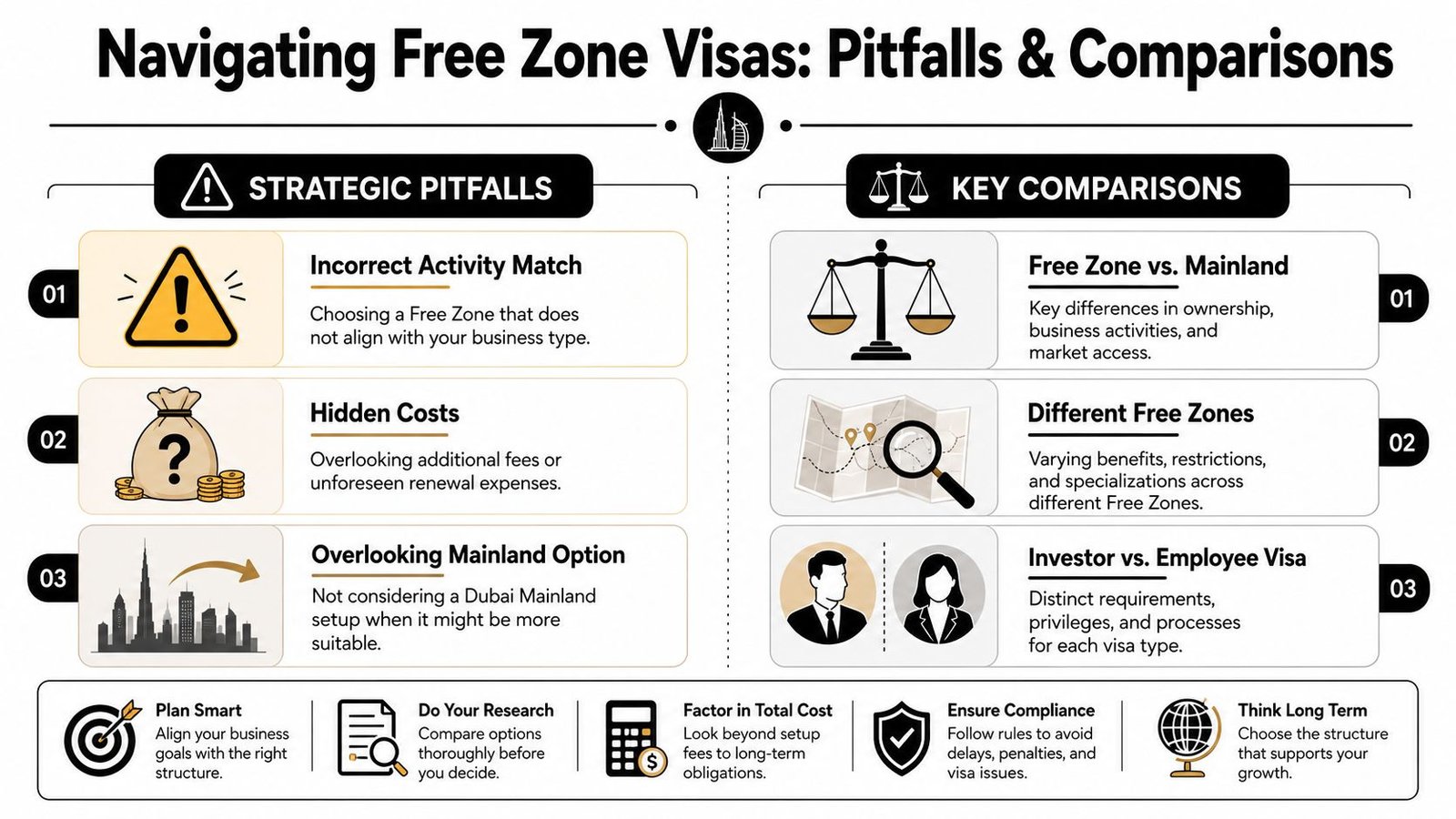
Free zone versus mainland versus Golden Visa
Here's the strategic comparison founders should make:
| Route | Best for | Main advantage | Main caution |
|---|---|---|---|
| Free zone | International founders, SMEs, lean regional setups | Strong ownership position and structured setup environment | Work scope and visa rights need to match the chosen jurisdiction |
| Mainland | Businesses that need direct onshore operating flexibility | Better fit for certain market-facing activities in the UAE | May not be the leanest route for every early-stage company |
| Golden Visa | People seeking a self-sponsored long-term residency route | Reduced dependence on employer or company sponsorship | It doesn't replace the need to choose the right operating structure for the business |
A free zone is often excellent for controlled setup, founder ownership, and a well-defined compliance environment. A mainland structure can be the better answer when the company's commercial activity requires broader onshore positioning. A Golden Visa can support personal residency strategy, but it doesn't solve company formation design by itself.
The visa quota trap most founders miss
This is one of the most expensive misunderstandings in free-zone planning. The workspace package can directly affect how many visas the company can hold.
DMCC states that a flexi-desk package can support up to 3 visas, a serviced office can support 4 or 5 visas depending on size, and physical office space is typically allocated at around 1 visa per 9 square metres (DMCC visa types and workspace-linked visa quotas).
That means premises choice is not just a real estate decision. It is a hiring decision.
If you expect to hire after setup, don't choose your office package only on year-one cost. Choose it on year-two headcount reality.
A founder who starts with a minimal desk package and then needs to add multiple staff can end up restructuring office commitments earlier than expected. Sometimes that's fine. Sometimes it's an avoidable disruption.
What a free zone visa does not let you do
This point gets glossed over in many generic guides. A free zone visa is tied to the business or employment within that free zone and does not permit onshore mainland employment, according to UAE guidance and free-zone operating rules (UAE guidance on recruiting in free zones and mainland work limits).
That doesn't mean you can't live in Dubai, meet clients, or run a serious business. It means your legal work basis must align with the jurisdictional structure behind the visa.
Founders need to be brutally honest about their model:
- If your main activity is internal, remote, export-focused, or regional, a free zone often works well.
- If your company needs broad onshore execution under a mainland model, forcing a free-zone structure can create friction.
- If your immigration goal and business goal are different, solve for both separately instead of assuming one setup covers everything.
The strategic test worth using
Before choosing a freezone visa Dubai route, ask three questions:
- Where will the company earn revenue?
- How many visas will the business need after launch, not just on day one?
- Will the founder's residency path still make sense if the company changes shape?
Those questions expose weak setups quickly. The strongest UAE structures are rarely the cheapest on paper. They're the ones that don't need fixing six months later.
Next Steps After Your Visa Is Stamped
Once the residence visa is issued, the work doesn't stop. It changes shape.
At that point, the focus shifts from approval to usability. You need the residency status to function in daily business and personal administration, and that means turning the visa outcome into a working operating base.
Immediate priorities after issuance
Start with the essentials:
- Collect and use the Emirates ID: This becomes a core identity document for banking, telecoms, tenancy, and general administration.
- Align your banking process: Personal and corporate banking often depend on a clean document set that matches the licence and visa basis.
- Update internal records: If you're the founder, make sure shareholder, signatory, and immigration records align. If you're onboarding staff, update HR files immediately.
For founders, this is also the stage where practical life admin begins. Housing, utilities, mobile registration, and internal company controls usually become easier once the residency position is fully active.
Questions that come up right away
Can you sponsor family members
In many cases, free-zone residency supports family sponsorship planning, but the exact path depends on the visa holder's status and current rules in the relevant jurisdiction. Founders should treat this as a follow-on process, not an automatic add-on.
What about renewal
Renewal is usually part of a recurring compliance cycle. The key is to keep the company licence, immigration standing, and underlying records clean well before expiry. Businesses that wait until the last minute often create pressure that was avoidable.
What if a visa needs to be cancelled
Cancellation can become necessary if a shareholder exits, an employee leaves, or the company restructures. The practical lesson is simple. Plan exits as carefully as entries. In the UAE, immigration status and company records are closely linked, so cancellations should be handled in step with the corporate side.
Clean renewals and clean cancellations both start with clean records.
What good operators do next
They don't treat the stamped visa as the finish line. They use it as the point where the UAE platform becomes operational.
That means confirming the company can bank properly, sponsor correctly, renew on time, and support the next stage of growth without legal or administrative drift. If the visa came from the right structure, everything after issuance becomes easier.
If you want a clear path through company formation, PRO processing, and visa execution, Inpro Corporate Services L.L.C. helps founders and operators set up the right UAE structure from the start, so the visa outcome matches the business model instead of fighting it.