

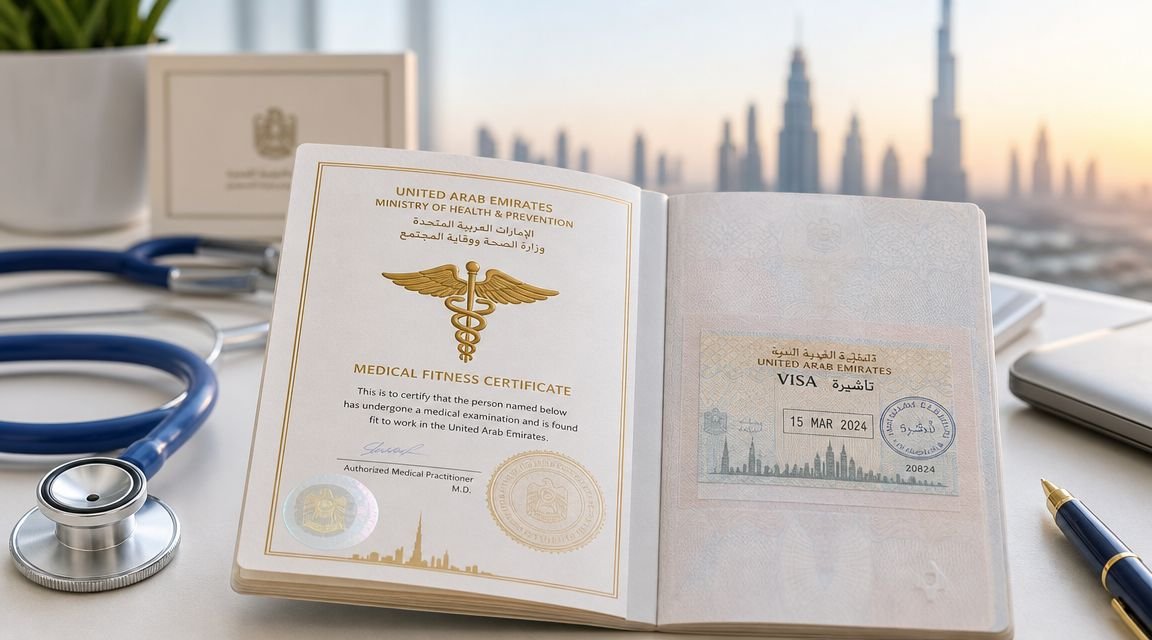
You've got the entry permit moving, the trade licence is sorted, and someone now tells you the employee or investor “just needs the medical”. That's the point where many founders lose time.
The confusion is predictable. In most countries, a medical certificate can mean a doctor's note, a pre-employment check, or a generic fit-to-work letter. In the UAE, that assumption causes problems. For residency processing, the medical fitness certificate is part of the immigration workflow itself. If you treat it like a routine clinic visit, you risk delays, mismatched documents, and a visa file that stalls for reasons that are completely avoidable.
Founders, HR teams, and first-time applicants need to think like operators, not patients. The medical step sits inside a compliance chain. It affects residency issuance, renewals, family sponsorship, onboarding schedules, and in some sectors, whether someone can legally start work at all.
Table of Contents
- Your UAE Visa Hinges on This Medical Certificate
- What the UAE Medical Fitness Test Actually Screens For
- The Step-by-Step Process to Get Your Medical Certificate
- Certificate Validity, Renewal, and Associated Costs
- Common Rejection Reasons and How to Prepare
- Streamline Your Visa and Medicals with Inpro
- Frequently Asked Questions About the UAE Medical Test
Your UAE Visa Hinges on This Medical Certificate
A common founder mistake goes like this. The company is incorporated, the visa file opens, the applicant lands in the UAE, and everyone assumes the remaining steps are administrative. Then the medical fitness appointment gets delayed, booked incorrectly, or treated as if any clinic can issue the right paper.
That's the wrong approach.
In the UAE, the medical fitness certificate is not a casual health document. It is a formal residency compliance requirement. Dubai's health authority states that medical fitness examinations are required for residency visa issuance and renewal for residents aged 18 and above, which makes this a recurring legal checkpoint rather than a one-off health formality, as noted in the FAA-linked verified data reference used for this UAE compliance point.

A doctor's note is not the same thing
International applicants often misunderstand the requirements. A letter from a family doctor, an occupational health note from your home country, or a pre-employment certificate from a private employer may be useful for internal HR records. It does not replace the government-mandated UAE medical fitness process tied to residency.
If your visa category requires the UAE medical fitness certificate, immigration cares about the approved testing pathway, the correct authority, and whether the result is properly linked to the visa file.
Practical rule: If the certificate doesn't come from the approved UAE process connected to residency processing, assume it won't satisfy the visa requirement.
Why founders should treat it as a compliance milestone
The medical test affects more than one person's clinic appointment. It changes operational timing across:
- Employee onboarding: A new hire can't be treated as fully processed if the medical stage is still pending.
- Investor residency: Founders often prioritise licensing and forget that personal residency still has to clear this checkpoint.
- Family sponsorship: One delayed medical can hold up the dependent visa sequence.
- Renewals: This isn't something you solve once and forget.
The useful mindset is simple. Treat the medical fitness certificate the same way you treat licence renewals, Emirates ID processing, and immigration submissions. It belongs on the compliance calendar, not on a personal to-do list.
What the UAE Medical Fitness Test Actually Screens For
Most applicants ask the wrong first question. They ask, “How long will it take?” The better question is, “What are the authorities checking?”
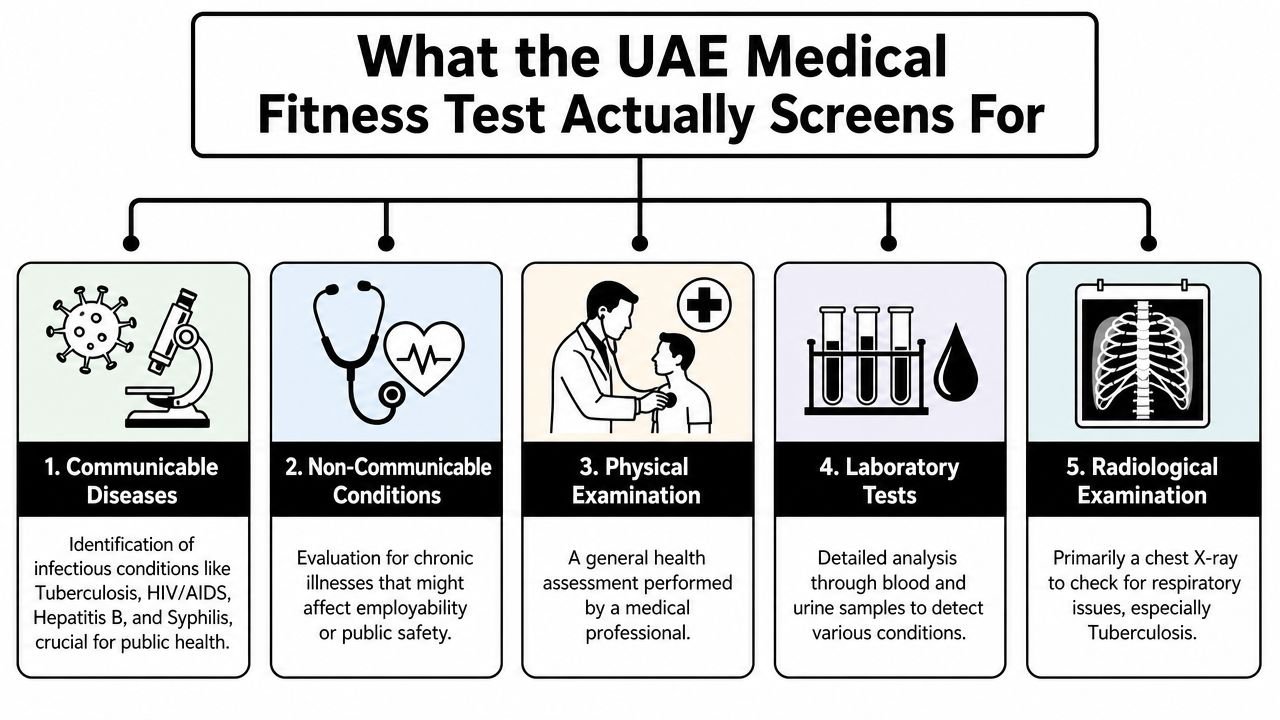
At a practical level, the UAE medical fitness process is designed as a government clearance step. It is not meant to produce a broad wellness profile. It is a targeted screening workflow tied to residency and public-interest controls.
The core screening logic
In day-to-day visa processing, applicants should expect the medical fitness workflow to centre on a blood test and a chest X-ray. Those are the steps people usually mean when they say, “I need to do the medical.”
Online discussions often turn this into a rumour mill. They mix residency testing with private health checks, travel notes, and employer-specific forms. That's why founders should separate two things clearly:
- the government residency medical, and
- any extra employer or sector medical requirements.
The UAE medical fitness certificate is about immigration clearance first. Employer paperwork comes after that, not instead of it.
Some jobs face functional fitness rules too
Not every medical fitness certificate operates under the same logic. For maritime roles, for example, the certificate is tied to STCW and flag-state fitness standards. The applicant must be able to perform basic training tasks, communicate effectively, and have no condition or medication side effect that could impair routine or emergency duties. Those certificates are typically valid for up to two years, or one year for seafarers under 18, according to STCW medical certificate requirements in maritime practice.
That distinction matters because many UAE employers run mixed workforces. Office staff may only need the standard residency-linked medical process. Seafarers, marine crews, and other regulated roles may face an additional fitness standard that is functional and role-based.
Industrial and safety-sensitive roles are stricter in practice
The same pattern appears in industrial work. The DGMS medical certificate format used in mining and industrial settings requires a qualified practitioner to certify that the worker is free from deafness, defective vision including colour vision, or any mental or physical infirmity that could interfere with work efficiency, based on the DGMS medical certificate of fitness format.
For employers, that creates a practical split:
| Certificate type | What it usually answers |
|---|---|
| Residency medical fitness certificate | Can this person clear the immigration-linked medical requirement |
| Job-specific fitness certificate | Can this person safely perform this role's duties |
If you treat those as interchangeable, you create hiring risk. If you map them correctly, onboarding gets cleaner and easier to defend.
The Step-by-Step Process to Get Your Medical Certificate
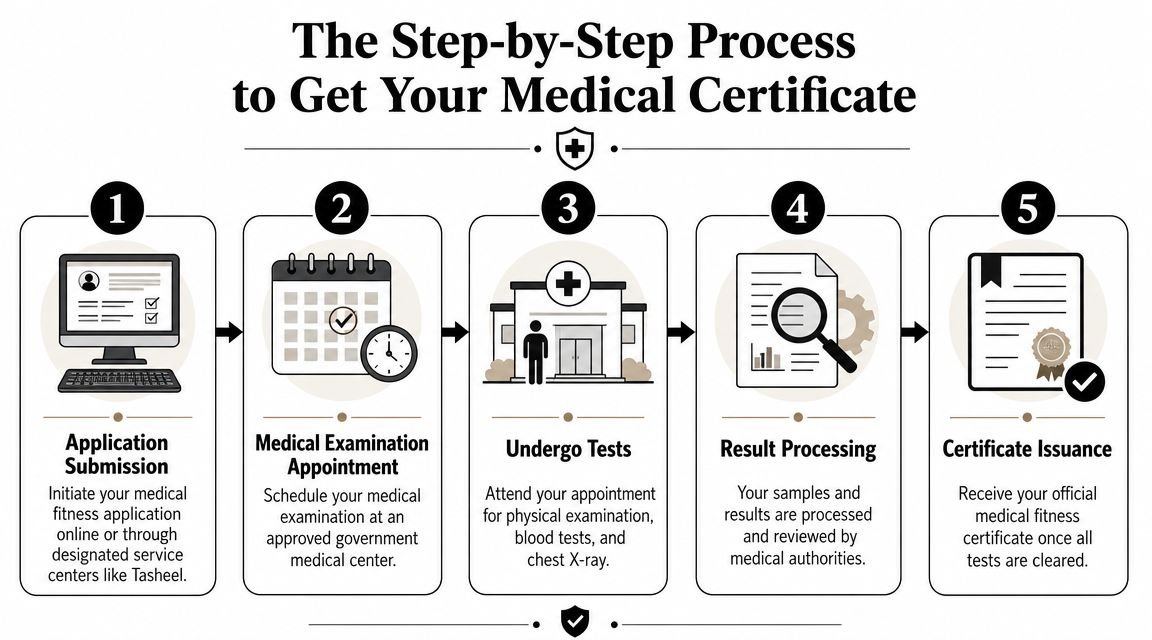
A founder signs an offer, books a joining date, and assumes the visa will move once the candidate visits a clinic. Then the file stalls because the applicant went to the wrong medical centre, the application reference was not live, or the test was treated like a private doctor's certificate instead of an immigration requirement.
That mistake is common. In the UAE, the medical fitness certificate for residency is a government-mandated compliance step tied to the visa file. It is not the same as a general health note from a doctor, and it only works when it is booked through the right channel and linked to the correct immigration case.
Start with the visa file status
Before booking anything, confirm that the residency or status change file is ready for medical processing in the relevant emirate. This is the point many first-time applicants miss.
Medical testing in the UAE is not a free-floating appointment. It sits inside the immigration sequence. If the file has not been opened properly, if the entry permit details are wrong, or if the application is sitting under the wrong category, the medical result can be delayed or linked incorrectly. That creates avoidable rework at the stage where time usually starts to matter.
Approved centres and booking rules also differ by emirate and authority. A clinic that works for one type of application may not fit another. The practical check is simple: confirm file status first, then book the medical under the exact application that will carry the residency process forward.
Choose the turnaround that matches the business deadline
Medical centres usually offer standard and faster processing options. Price matters, but timing matters more if payroll, onboarding, travel, or a dependent application is waiting behind the result.
I usually advise applicants to pay for faster service when a delay would affect a joining date, freeze a status change, hold up Emirates ID steps, or block family sponsorship filings. If the file has enough buffer, standard service is often enough.
Use this as a working comparison:
| Service Tier | Typical Cost (AED) | Result Timeline | Best For |
|---|---|---|---|
| Standard | Varies by centre and authority | Standard processing | Applicants with buffer in the visa timeline |
| Priority | Varies by centre and authority | Faster than standard | New hires, founders, or dependants with linked filings |
| VIP or express | Varies by centre and authority | Fastest available processing | Time-sensitive immigration cases and executive schedules |
Fee tables change, and copied pricing from old blog posts causes problems. Confirm the current charge with the approved centre handling the file.
A short walkthrough helps if this is your first time dealing with the process:
Bring documents that match the live application
The medical centre is checking identity, application linkage, and processing eligibility. Clean paperwork speeds that up.
Bring:
- Passport copy with clear personal details
- Entry permit, visa, or status change documents tied to the active case
- Emirates ID application reference if already generated
- Appointment confirmation from the approved medical centre
- Passport photos if that channel still requests them
One mismatch can hold the result. A wrong passport number, an outdated entry permit, or a booking made under the wrong file is enough to slow the immigration process even if the medical screening itself is completed on time.
The medical test takes minutes. Fixing a file-linking error can take days.
Attend the approved centre and complete the screening
Once the booking is confirmed, the applicant attends the authorised centre, completes registration, and undergoes the required screening. The medical part is usually the simplest stage operationally. The compliance side is where delays appear.
The centre submits the result into the government system. That means applicants and HR teams should care less about the clinic visit itself and more about whether the result was attached to the right immigration record.
Check the result, then push the visa file immediately
A passed test does not finish the visa process by itself. Someone still needs to confirm the result has been released correctly and move the file to the next stage without delay.
The clean workflow looks like this:
- Confirm the immigration file is active
- Book the approved medical centre under the correct application
- Attend the test with matching documents
- Track the result release
- Check that the result is linked to the residency file
- Continue immediately with the next visa step
Founders often lose time. They assume the system will carry everything forward automatically. Sometimes it does. Sometimes a mismatch, duplicate file, or simple inactivity leaves the application sitting untouched until a travel date or onboarding deadline forces an urgent fix.
Handled properly, the medical fitness certificate is not just a health check. It is a gate inside the residency process. Treat it that way and the visa file keeps moving.
Certificate Validity, Renewal, and Associated Costs
Many applicants assume the medical fitness certificate is a permanent personal record once issued. It isn't. In UAE practice, validity follows the residency logic.
Medical fitness certificate validity is governed by age, purpose, and authority-specific rules, and the certificate's validity is typically linked to the visa cycle, as described in this medical certificate validity reference.
Validity follows the visa logic
That means the certificate should be treated less like a standalone medical document and more like a supporting compliance item within the broader residency term.
For founders and HR teams, the useful operating rule is simple:
- New visa issuance usually requires the medical process at the relevant stage.
- Visa renewal often brings the medical requirement back into play.
- Different categories such as employee visas, investor visas, and family sponsorships may move on different timelines.
The mistake is waiting until the visa file is already under pressure. By then, the medical appointment becomes urgent, centre availability matters more, and one delay starts affecting everything behind it.
Why renewal failures create bigger problems than medical delays
A delayed first-time medical is inconvenient. A delayed renewal medical is more serious because it sits inside an existing legal status.
That's why strong HR teams don't track only visa expiry. They track the medical requirement that feeds the renewal path. If you only react once the renewal file is already open, you've left yourself no room for mismatched records, rescheduling, or additional review.
Renewal planning works best when medical fitness is treated like a deadline-driven compliance task, not a personal errand.
A practical way to budget for the process
There's no single cost figure you can safely rely on across all UAE jurisdictions, centres, and service levels. Fees usually move based on:
| Cost factor | What changes |
|---|---|
| Emirate and authority | Different systems and approved centre structures |
| Service speed | Standard, priority, or VIP turnaround |
| Applicant type | Investor, employee, or dependent workflow differences |
| Administrative handling | Whether the company manages it directly or through a PRO team |
For budgeting, the right question isn't “What's the cheapest medical fitness certificate?” It's “What option gets this visa file completed without causing downstream delay?”
That's the number that matters operationally.
Common Rejection Reasons and How to Prepare
This is the part applicants worry about most, and for good reason. A failed medical fitness outcome isn't a minor inconvenience. It can affect visa issuance, continuation of a residency process, or a family sponsorship plan.
The worst way to handle this is with guesswork. The best way is to separate genuine risk from noise and prepare accordingly.
What usually triggers a problem
In practice, the highest-risk cases are applicants who already know there may be a relevant medical issue and still approach the appointment as if it were routine.
Common problems tend to involve issues that raise concerns in immigration-linked screening or in role-specific fitness reviews. The exact handling depends on the authority, the condition, and whether further assessment or committee review is required.
For some specialised sectors, the logic is functional. Maritime fitness rules, for example, focus on whether a person can safely perform duties, communicate effectively, and avoid medication-related impairment in normal or emergency conditions. Industrial fitness standards can also turn on hearing, vision, colour vision, or mental and physical capability for the job.
What smart applicants do before the appointment
If there's any known history that could trigger follow-up, prepare before the medical rather than after a problematic result lands in the file.
That preparation usually means:
- Reviewing medical history accurately. Hidden issues create worse outcomes than disclosed ones.
- Bringing supporting records when relevant. If prior treatment or ongoing management matters, paperwork helps.
- Checking whether the role has extra standards. A residency clearance and a safety-sensitive work clearance are not always the same thing.
- Escalating early for professional guidance. If a condition may require authority review, get advice before booking blindly.
If you already suspect a problem, the medical centre is not the place to start thinking about strategy.
A separate but common issue is the “false confidence” problem. Applicants hear that someone else passed, assume all cases work the same way, and ignore the details of their own history or their own visa category. That's how files get stuck.
The better approach is conservative. If there's uncertainty, treat the case as one that needs planning. That doesn't mean the outcome will be negative. It means you don't leave important decisions to the last day.
Streamline Your Visa and Medicals with Inpro
Founders usually don't struggle with the medical fitness certificate because the test is medically complex. They struggle because the process sits at the intersection of licensing, immigration, scheduling, document control, and authority-specific procedure.
That's where managed PRO support changes the experience. Instead of asking a founder, office manager, or new hire to coordinate every detail, the workflow gets handled as one connected immigration task.
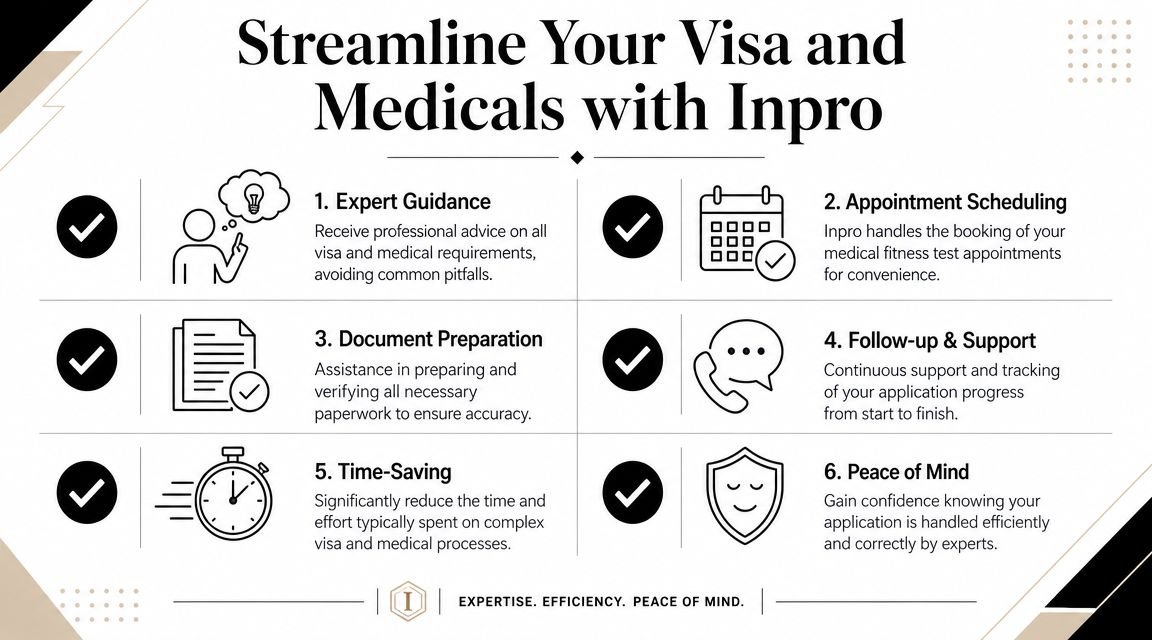
A good PRO team doesn't just “book an appointment”. It handles the operational points that usually cause delay:
- Application handling so the medical booking matches the actual immigration file
- Centre selection based on jurisdiction, urgency, and applicant profile
- Document checks before the appointment, not after a rejection at the counter
- Result tracking so the file moves as soon as the clearance is available
- Immigration coordination to confirm the medical outcome feeds directly into the next visa step
- Renewal planning so the same scramble doesn't repeat at the next cycle
For HR and operations teams, that matters because medical processing is rarely the only moving part. Joining dates, labour cards, Emirates ID steps, travel plans, and dependent filings often sit around it. One unmanaged medical appointment can slow all of them.
The value of a structured PRO workflow is simple. It turns the medical fitness certificate from a source of friction into a controlled compliance checkpoint.
Frequently Asked Questions About the UAE Medical Test
Can I do the medical test before arriving in the UAE
A common founder mistake is treating this as a general health document. It is not. For UAE residency, the medical fitness certificate is a government immigration requirement linked to the residence visa file, not a private doctor's note from abroad.
That distinction matters in practice. A fit-to-work letter from your home country may be useful for HR onboarding or internal company policy, but it does not replace the medical test required by the UAE authorities for residency processing. If the visa file needs medical clearance, the test must be completed through the approved local process.
What if a dependent fails the medical test
A failed or unresolved result can interrupt the dependent's residency application and delay the sponsor's wider planning. I have seen families book travel, school admissions, and housing around an expected approval timeline, only to have the file stop at medical clearance.
The risk is bigger than the appointment itself. If a dependent's result needs follow-up, the sponsorship sequence can pause until the case is resolved or the immigration authority issues a decision.
Is this required for tourist or short-term visit visas
Usually, no. The medical fitness certificate sits inside the residency process, so it is generally relevant for employment visas, investor visas, and dependent residence visas.
For a short-term visit or tourist entry, the rules are different. The confusion starts when applicants assume every UAE visa requires the same medical step. It does not. The test becomes relevant when the objective is legal residence, not short-stay travel.
If you want the medical fitness certificate handled as part of a clean, end-to-end visa workflow, Inpro Corporate Services L.L.C. helps founders, HR teams, and expanding businesses manage UAE immigration, PRO processing, and compliance without the usual bottlenecks.