

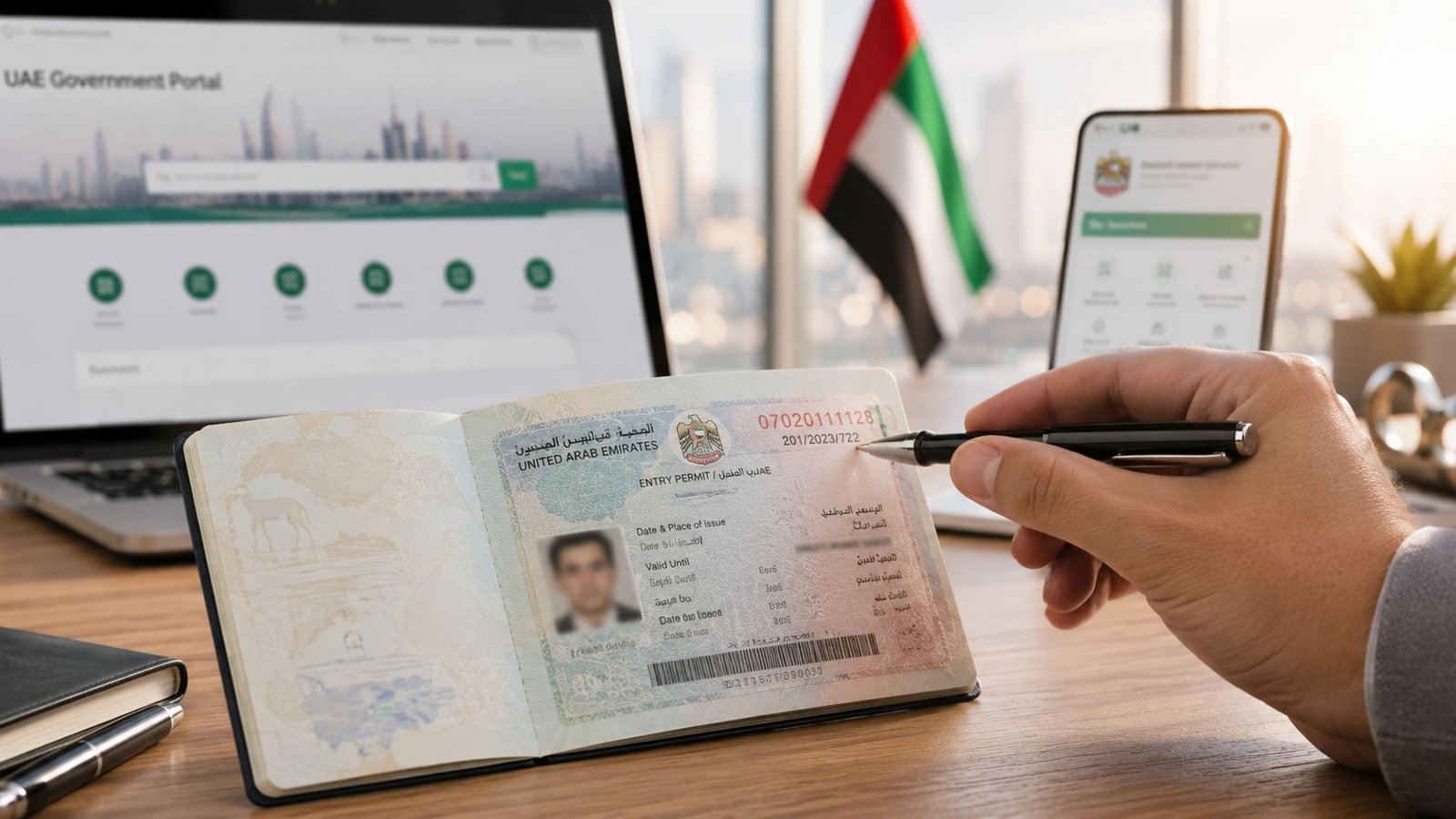
The UAE residence visa number is the visa-file identifier printed on the residence visa sticker or e-visa PDF, tied to your current residency permit rather than a permanent personal record. It changes when a new residence visa is issued, so it isn't the same as your UID, Emirates ID number, or visa file number.
You usually need it when a bank, tax authority, employer, landlord, school, or immigration portal asks for proof of your current residence record. The confusion starts because Dubai and the other emirates don't always use the same immigration channel, and several numbers appear on related documents. A founder in Dubai should usually start with the General Directorate of Residency and Foreigners Affairs, or GDRFA Dubai. A resident whose file sits in Abu Dhabi, Sharjah, or another non-Dubai emirate should generally use the federal Federal Authority for Identity, Citizenship, Customs and Port Security, known as ICP.
Table of Contents
- What the Residence Visa Number Actually Is
- Residence Visa Number vs UID vs Emirates ID vs File Number
- Where to Find Your Residence Visa Number Step by Step
- How the Number Fits Into Employee and Golden Visa Workflows
- Common Uses for the Residence Visa Number
- Mistakes That Delay Onboarding and How to Avoid Them
- Compliance, Renewals, and When to Ask a PRO for Help
What the Residence Visa Number Actually Is
What does the residence visa number identify?
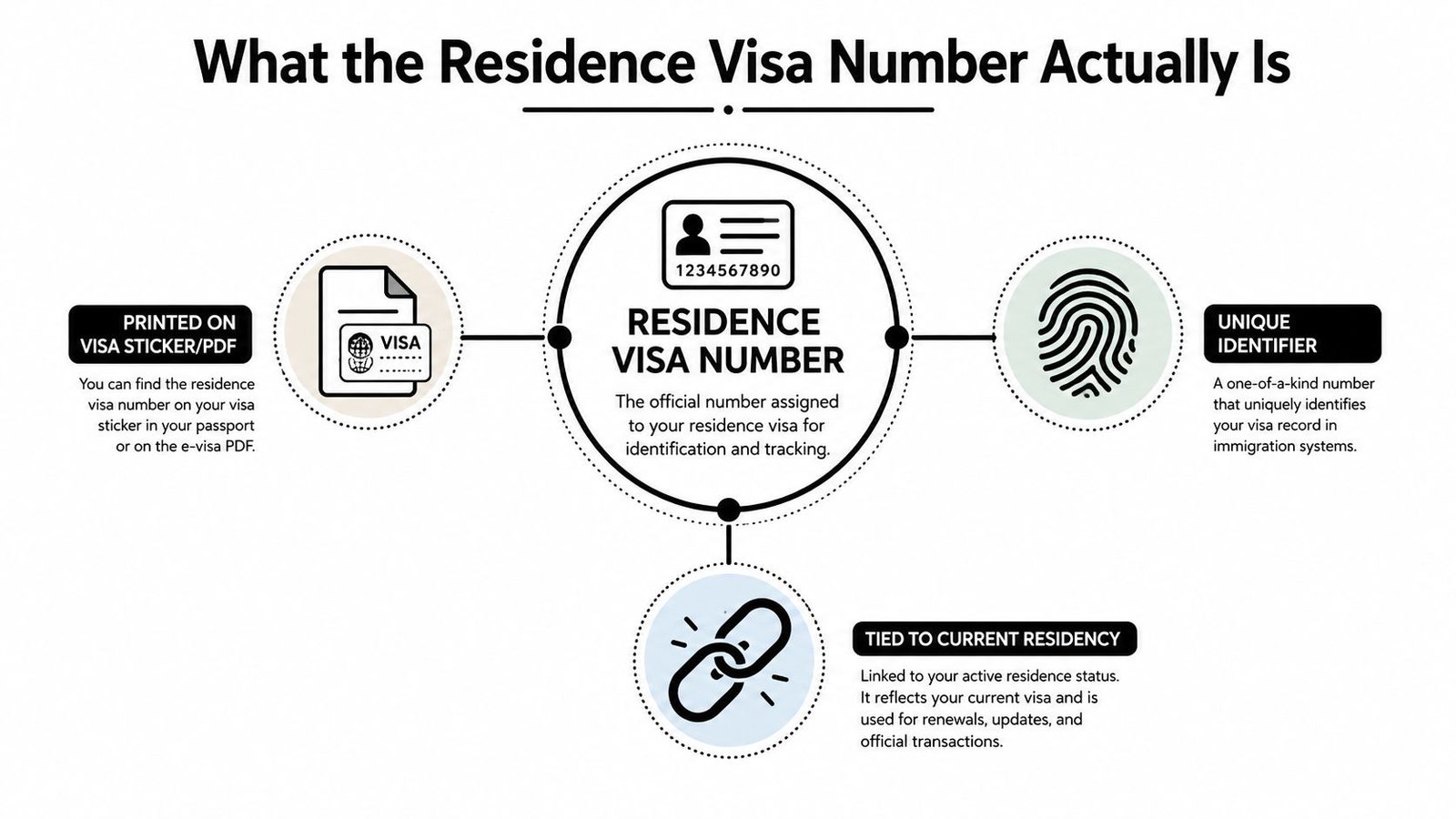
The residence visa number is a permit-level identifier for the current residency permit issued to you in the United Arab Emirates. You'll normally find it on the physical residence visa sticker in your passport or on the electronic residence visa PDF, often beside other immigration references such as the file number and Unified Identification Number, or UID.
It identifies the specific residence permit transaction, not your permanent identity record. When your residence permit is renewed, cancelled and reissued, or replaced under a new visa category, the residence visa number may change with the new permit.
Where does it appear on the document?
On many visa documents, the number appears in a field labelled “Residence Visa No.” or “رقم التأشيرة”. On Dubai GDRFA printouts, it can appear as a numeric string near the top-right area of the visa page. Federal records issued through ICP can display a different format or a longer numeric string, so don't reject a number because it doesn't look like a Dubai document.
The residence visa number is often printed close to the visa file number and UID. Read the field label before copying anything. The number beside “UID”, “Unified No.”, “File No.”, or “Emirates ID” is not automatically the residence visa number.
Practical rule: Copy the value beside the residence visa label, not the first long number you see.
Why does the number change?
The number follows the current permit. Your UID remains the longer-term immigration identifier associated with your records across government services, but the residence visa number belongs to the particular residence permit currently in force. This distinction matters during employee renewals, investor visa changes, family sponsorship, and Golden Visa applications.
The scale of the system explains why these references matter. GDRFA reporting lists 5.99 million residence transactions, alongside 18.30 million entry-permit transactions and 24.2 million smart-gate transactions in the same reporting set, as referenced in the UAE immigration data overview. Residence administration isn't a niche process. It supports company formation, employee onboarding, and investor relocation throughout the UAE.
Capture the number as soon as the current visa record is issued. Store it with the employee's passport details, Emirates ID record, UID, visa category, issuing authority, and expiry information. That simple recordkeeping habit prevents a bank form or government submission from being completed with an old permit reference.
Residence Visa Number vs UID vs Emirates ID vs File Number
Which identifier should you use?
A residence file can show several long numbers together, but each one serves a separate purpose. The residence visa number identifies the current permit. The UID connects the person to an ongoing immigration record. The Emirates ID number identifies the federal identity card, and the visa file number points to the sponsorship or immigration file supporting the application.
| Identifier | Issuing Authority | Format | Where It Appears | Typical Use |
|---|---|---|---|---|
| Residence visa number | GDRFA Dubai or ICP, depending on the file | Numeric string, format varies by authority and document | Residence visa sticker or e-visa PDF | Current permit checks, KYC, residency applications |
| UID | UAE immigration authorities across linked records | Often described as a 9 to 15 digit identifier in UAE records | Visa documents and immigration records | Person-level record matching and government service linkage |
| Emirates ID number | Federal identity system | Begins with 784 | Emirates ID card and related digital records | Banking, employment, housing, identity verification |
| Visa file number | Sponsoring immigration authority | Format varies by emirate and sponsor file | Visa documents and establishment records | Sponsorship, employee processing, family applications |
The issuing authority depends on the emirate and file. Dubai residence records are handled through GDRFA Dubai, while federal immigration records are handled through ICP. That distinction matters when a portal asks for a specific reference and when a company PRO checks an employee's record.
The UID is a person-level reference that generally remains connected to the resident's immigration records through visa renewal or an employment change. The UID explanation for UAE residents describes it as a permanent immigration file identifier and separates it from the Emirates ID number.
The Emirates ID number belongs to the biometric identity card issued by the federal identity system. Banks and service providers may request it for identity verification while separately asking for residence permit details.
Why do forms reject the wrong number?
A form requesting the residence visa number expects the permit reference. Entering a valid UID can still trigger a rejection because the system is checking a different field. Employees make the same mistake with an Emirates ID number, entry permit number, or reference copied from an expired visa.
Use the label on the request as your decision point:
- Visa number field: Enter the residence visa number from the current sticker or e-visa PDF.
- UID or Unified Number field: Enter the UID retrieved from the immigration record.
- Emirates ID field: Enter the card number beginning with 784.
- File number field: Use the visa or residence file reference shown in the immigration record or establishment file.
Banks may request Emirates ID details and the residence visa number in the same application. They use the two references for separate checks, identity verification and current residency. Tax or government applications may request a UID or file reference instead. Match the requested label precisely, then verify that the document is current.
Where to Find Your Residence Visa Number Step by Step
Your residence visa number is easiest to confirm from the latest residence visa sticker or e-visa PDF. Open the document and find the field labelled “Residence Visa No.” or “رقم التأشيرة”, usually near the upper-right area. Do not copy the first number you see. The same page can show the file number and UID, so the label determines which reference you need.
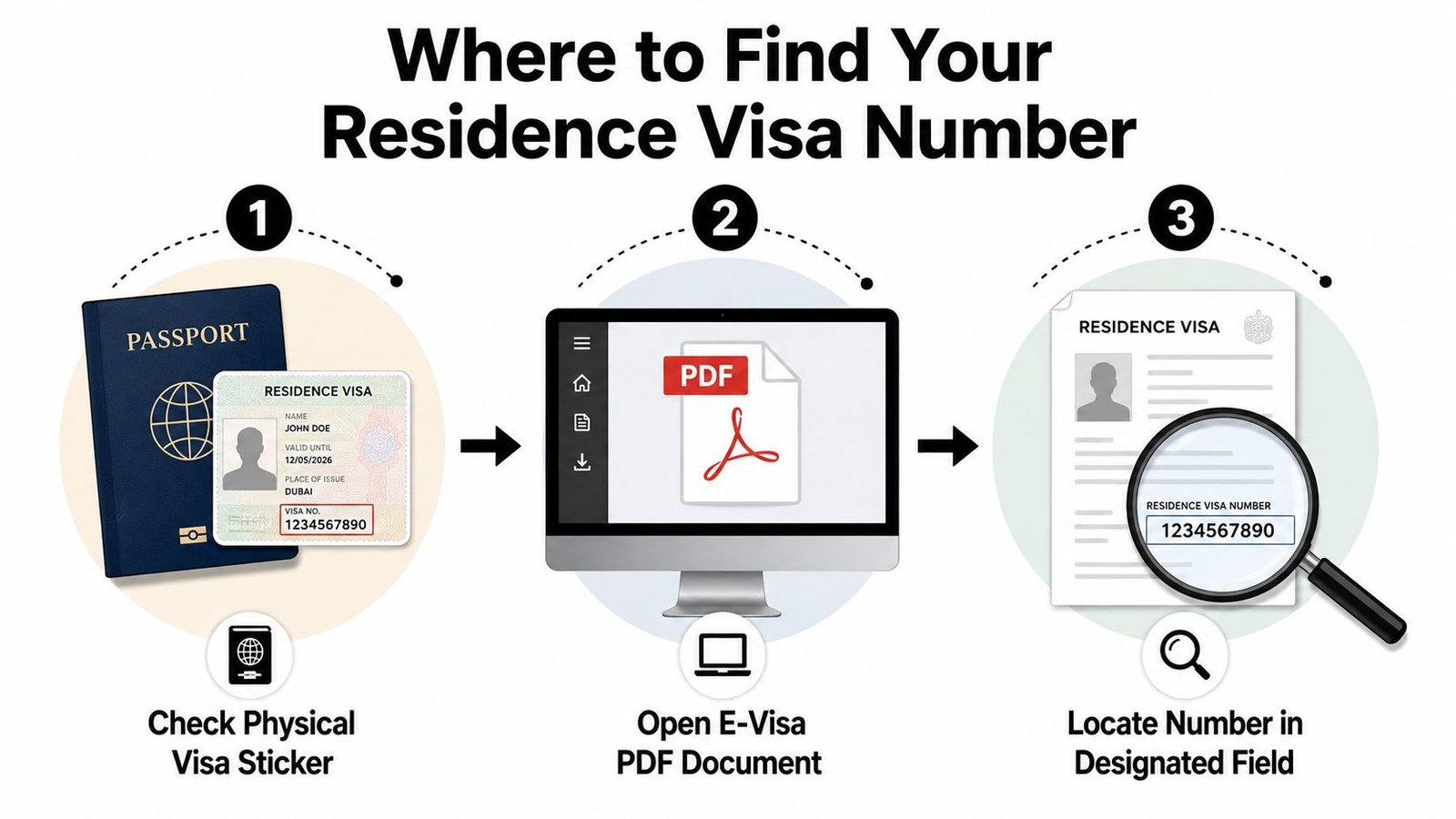
An entry permit may not show the final residence visa number. It authorises entry or allows the residence issuance process to continue. The final residence record creates a separate permit-level reference, so do not use the entry permit number in a form asking for the residence visa number.
What should Dubai residents do?
If your immigration file belongs to Dubai, check it through GDRFA Dubai, the emirate's immigration authority. Use the GDRFA Dubai visa status and validity services, DubaiNow when the relevant service and record are available, or an authorised service centre.
Sign in with the permitted identity details, open the residency service, and retrieve the current residence record or PDF. If the result displays both a UID and a visa number, select the field specifically marked for the residence visa. GDRFA's “Find my Unified Number” service is for retrieving the UID. It does not replace the residence visa number.
What should Abu Dhabi, Sharjah, and other emirates do?
For Abu Dhabi, Sharjah, Ajman, Umm Al Quwain, Ras Al Khaimah, and Fujairah, begin with ICP, the federal immigration authority. Use the ICP website or ICP smart app, then choose the relevant visa status, residence inquiry, or residency permit service. The federal service route covers these emirates, while Dubai files remain with GDRFA Dubai.
The portal may request passport details, nationality, Emirates ID information, or a UID before showing the record. Once the residence permit document appears, download it and read the labelled visa-number field. Do not treat the first identifier in the search result as the answer.
What if the visa page is missing?
Use the route that matches your documents:
- Stamped physical visa: Open the passport to the current residence sticker and copy the number beside the residence visa label.
- E-visa only: Download the latest PDF from GDRFA Dubai or ICP and check the residence visa field.
- Emirates-ID-only case: Do not infer the visa number from the card. Ask the sponsor, employer, or company PRO to retrieve the current immigration record through the correct authority.
- Employee file: Send the request to the company's PRO. An approved PRO can access the establishment or sponsorship file through government channels without asking you to share passwords.
MOFA is separate from this process. MOFA attestation authenticates documents for use in the UAE or abroad. It does not retrieve a residence visa number.
What does the retrieval process look like?
Use the short visual guide below if you need a document-focused walkthrough.
Save the retrieved PDF in the employee's or founder's compliance folder. Record the issue date and issuing authority beside the number. A renewal can create a different residence visa reference, so keep the current document with the current number.
How the Number Fits Into Employee and Golden Visa Workflows
Where does it appear in an employee visa?
An employee arrives on an entry permit sponsored by the employer, then completes medical fitness checks, Emirates ID registration, biometrics where required, and residence permit issuance. The responsible authority depends on the file location: use GDRFA Dubai for Dubai immigration files and ICP for federal files in the other emirates.
The residence visa number belongs to the issued residence permit. HR should capture the entry permit reference in the recruitment or onboarding tracker first. Once the permit is issued, the PRO should update the employee's HRIS, immigration register, and compliance folder with the current residence visa number, issuing authority, issue date, and expiry date. Keep the entry permit reference as the earlier workflow record rather than overwriting it.
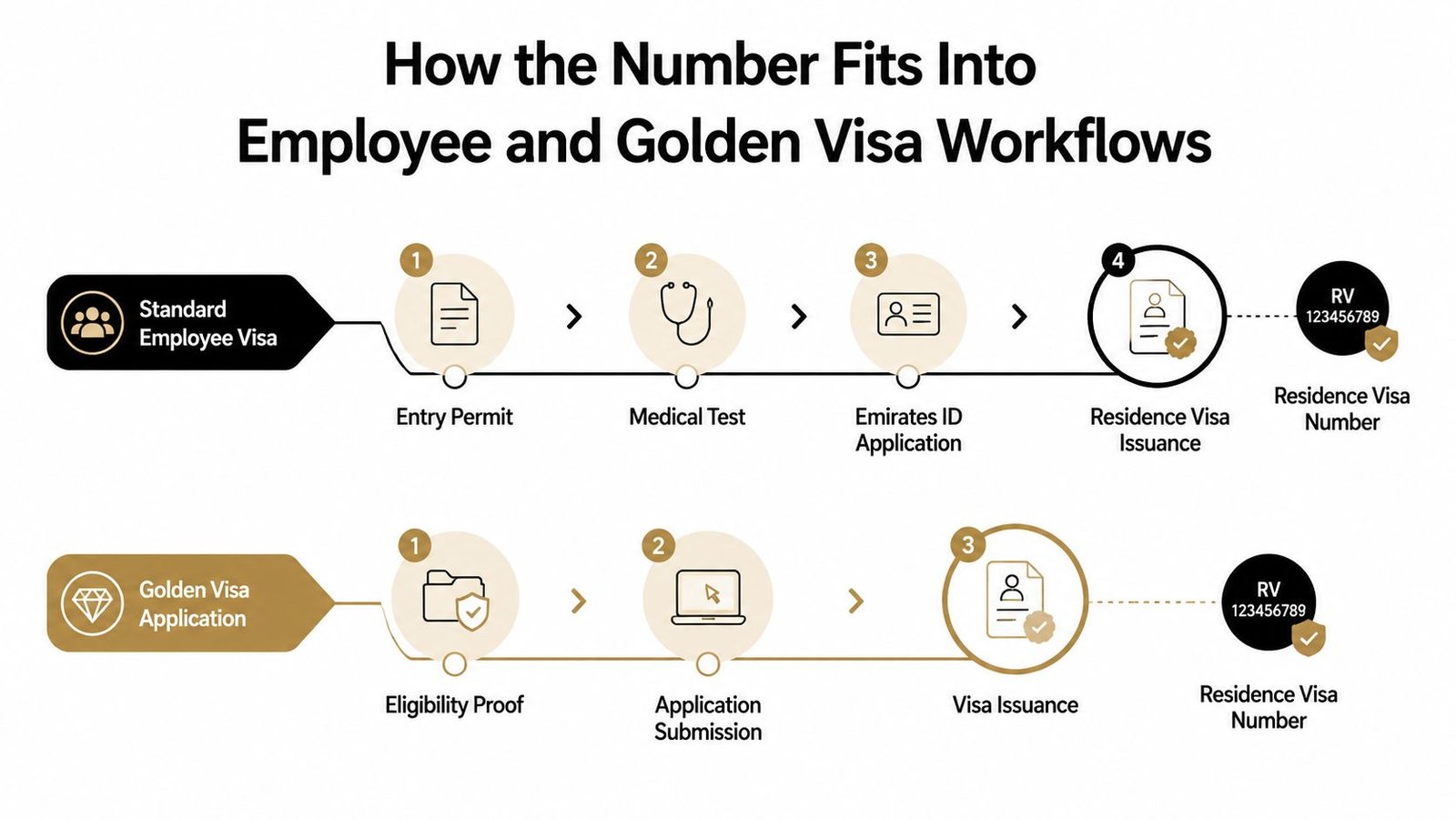
For files handled through ICP, the ICP residency permit issuance service states that the foreigner's stay must not exceed 60 days from the date of entry while completing residence issuance. Track that deadline in the company's immigration register, and escalate the file to the PRO before the deadline approaches.
How does the Golden Visa record differ?
The UAE Golden Visa is a long-term residence visa valid for 5 or 10 years. The official UAE Government Golden Visa guidance states that renewal is available when the eligibility criteria continue to be met. GDRFA Dubai or ICP records the application according to the applicant's emirate and category.
The process can include eligibility documents, nomination or pre-approval, application submission, medical and identity steps where applicable, and final permit issuance. HR or the founder's administrator should create the Golden Visa record only after issuance, then link it to the applicant's existing UID and Emirates ID record. The residence visa number identifies the issued permit. The UID remains the wider immigration identifier.
For founders, maintain one row for each resident with these fields:
- Identity: Passport number, nationality, UID, and Emirates ID number.
- Permit: Residence visa number, visa category, issuing authority, issue date, and expiry date.
- Sponsorship: Employer, investor, family sponsor, or Golden Visa category.
- Status: Entry permit, residence issuance, renewal, cancellation, or replacement.
This structure separates a pending application from an issued permit and prevents an old employee visa number from being reused after a Golden Visa issuance or renewal.
Common Uses for the Residence Visa Number
When do organisations ask for it?
The residence visa number is a lookup key for the current residency permit. A bank may use it with the Emirates ID number to confirm that the customer has an active residence record. An employer may need it for onboarding documents, salary-related administration, or a government submission. A tax residency application may ask for several identifiers, so copy the exact field requested rather than assuming the visa number is always sufficient.
The number can also appear in requests connected with tenancy, telecom services, school enrolment, family sponsorship, and domestic worker processing. Each organisation has its own form, but the reason is usually similar: it wants to match your application to a valid immigration record.
| Use Case | Asking Authority | What They Verify |
|---|---|---|
| Bank account or KYC | Bank or financial institution | Identity, residency status, and current permit details |
| Salary account activation | Employer and bank | Employee identity and lawful resident record |
| Tax residency application | Federal Tax Authority or related government process | Residency information and linked immigration records |
| Salary certificate or NOC | Employer | Employment and current sponsorship information |
| Tenancy registration | Ejari in Dubai or Tawtheeq in Abu Dhabi | Resident identity and supporting occupancy details |
| Telecom post-paid service | Telecom provider | Identity and eligibility for the service |
| School enrolment | School or education provider | Parent or guardian identity and residency documents |
| Family or domestic worker sponsorship | GDRFA Dubai or ICP | Sponsor record, dependent relationship, and permit status |
Which number should you send?
Ask the organisation to identify the field if its form uses vague wording such as “residence number” or “visa ID”. A bank may mean the residence visa number, while another service may mean the UID or Emirates ID number. If the request comes from a government portal, follow the exact label used on that portal.
Keep the current visa PDF and Emirates ID copy together, but don't merge their numbers into one internal record. The ICP residency permit renewal service also shows that the Emirates ID follows the residence issuance workflow and is delivered through authorised courier companies. The visa number therefore sits inside a wider identity and permit process, not as an isolated print string.
Mistakes That Delay Onboarding and How to Avoid Them
Why do people submit the wrong identifier?
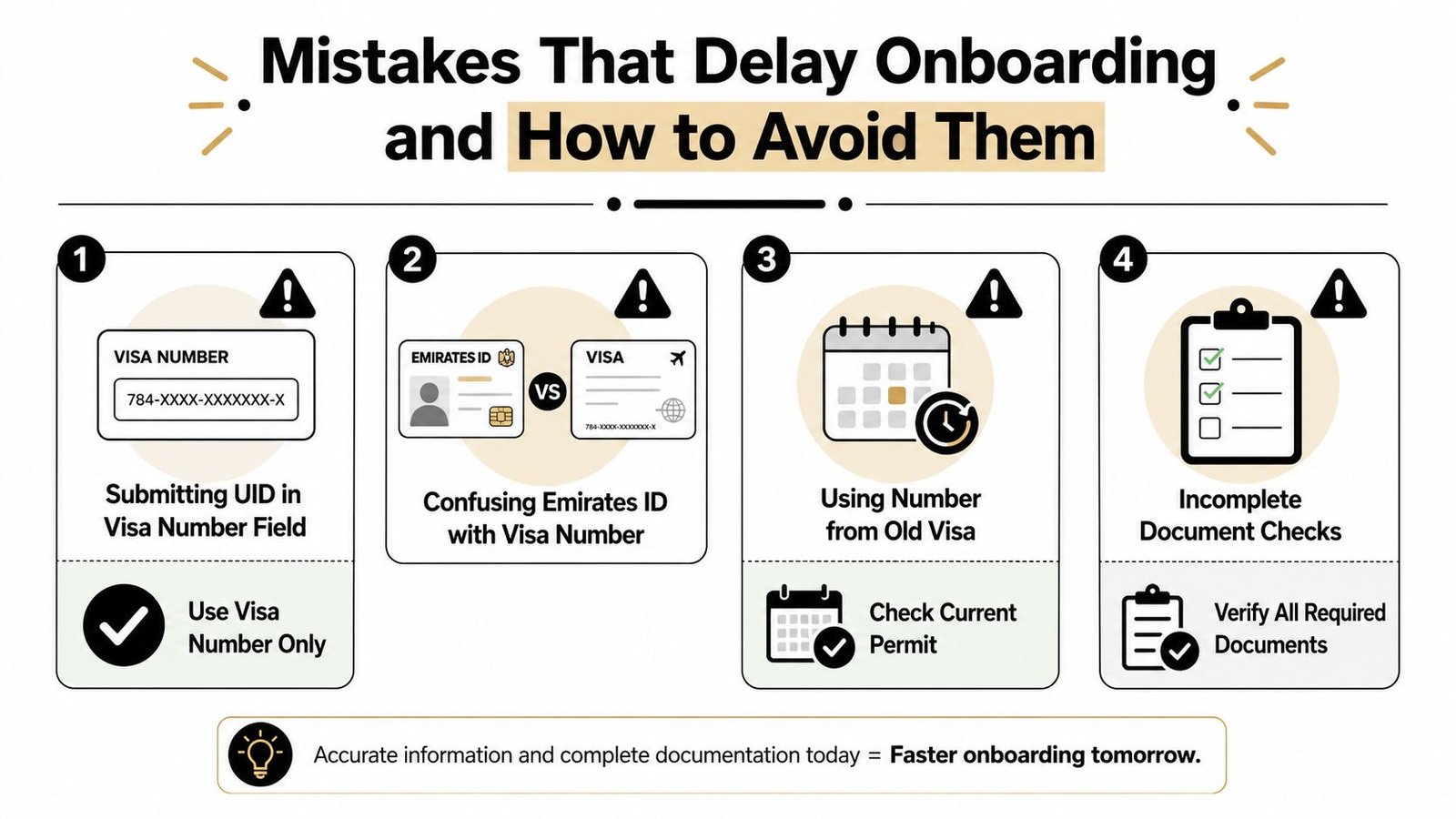
An onboarding file can show several valid identifiers at once. The UID, Emirates ID number, entry permit reference, and residence visa number serve different purposes. Copying the wrong value into a form can stop a bank, employer, or government service from matching the immigration record.
Use the field label as the control point. Confirm the current permit, then choose the authority that owns the file. Dubai records generally follow GDRFA Dubai. Records from the other emirates usually follow the federal ICP route. Do not assume a Dubai lookup will find a federal file.
What errors should HR catch?
- Submitting the UID: Enter the value labelled “Residence Visa No.” when the form requests the permit number.
- Confusing Emirates ID: Use the number beginning with 784 only when the form asks for Emirates ID.
- Using an entry permit reference: Replace it with the issued residence visa number after residency issuance.
- Using an old visa: Check the latest GDRFA Dubai or ICP record after renewal, transfer, or category change.
- Mixing Dubai and federal records: Send Dubai files through GDRFA Dubai and most other emirate files through ICP.
- Ignoring the issuance deadline: Track the post-entry residence issuance limit stated by the ICP residency service.
A wrong identifier often creates a preventable delay. The company PRO should verify the current official record instead of testing several numbers in the same form.
When should you stop relying on forum advice?
Forum discussions can reveal common questions, but they cannot establish which authority owns a particular file. A Dubai visa may require a different lookup from a federal record, and an e-visa PDF may display details differently from an older passport sticker.
If the portal cannot find the record, check the emirate, document type, passport details, and current status. Then submit the corrected information through the relevant authority, rather than opening another application with an unverified identifier.
Compliance, Renewals, and When to Ask a PRO for Help
How should HR monitor the record?
A residence visa number can change after renewal, transfer, cancellation, or replacement. HR should set a renewal review cycle for every founder, employee, dependent, and Golden Visa holder, with alerts well before the permit expiry date. Review the live GDRFA Dubai or ICP record at each trigger, then archive the superseded document and retain an audit trail showing who checked the update and when.
Keep the register focused on action: permit expiry, renewal stage, responsible staff member, pending government step, and evidence of completion. This gives HR a clear escalation list without rebuilding the identifier records already maintained during retrieval.
For standard residence issuance, ICP allows 60 days from entry to complete the process. Set an internal alert before that period ends. The issuance file may require a passport, personal photo, water or electricity bill, and proof of kinship for family cases, as noted earlier. Missing documents can delay creation or updating of the final permit record.
When is a PRO the sensible choice?
Use a PRO when staff are split between Dubai and other emirates, Golden Visa dependents are involved, medical or Emirates ID steps stall, or a portal cannot locate an apparently valid record. Dubai files should be checked through GDRFA Dubai, while federal files generally belong in ICP. A PRO can compare the establishment record with the live authority record and identify the correct identifier for the form.
The standard should be an audit-ready file, not a screenshot in one employee's inbox. Inpro Corporate Services L.L.C. handles UAE company formation, employee and investor visa processing, Golden Visa files, Emirates ID workflows, and PRO coordination through the relevant government channels. Visit Inpro Corporate Services L.L.C. to organise residence records and confirm the correct immigration portal.