


The UAE has no annual property tax for individual owners, but 7% to 9% in total purchase fees for a cash buyer is still a real cost, and company-held property can bring 9% corporate tax into play above AED 375,000. If you've only heard “Dubai is tax-free,” you've heard the marketing version, not the full cost of tax and property in the United Arab Emirates.
That difference matters for founders, expats, and investors. The key question is not whether property is taxed every year, but how the fee stack, ownership structure, and VAT rules shape what you keep.
Table of Contents
- The Reality of UAE Property Taxes and Fees
- Understanding Your Initial Property Purchase Costs
- Ongoing Property Costs and Municipal Fees
- How Your Ownership Structure Affects Tax Liability
- VAT Rules for UAE Real Estate Transactions
- A Practical Checklist for Property Compliance
The Reality of UAE Property Taxes and Fees
The UAE does not charge individual owners an annual property tax, and there is no personal income tax on rental income or capital gains from residential property. That part is real, and it is one reason the United Arab Emirates attracts global buyers who want a structurally low-tax market, not just a lower headline rate. But that does not mean property ownership is free of tax-like costs.
The better way to think about the UAE is that it runs a fee-based system. Transfer costs come upfront, recurring charges appear through the life of the property, and corporate ownership can change the tax result completely when the asset sits inside a company rather than in a personal name. The official distinction between individual ownership and company-held assets is where many first-time investors get caught out, because “no property tax” is only part of the picture.
Practical rule: if the property is bought for personal ownership, your cost profile is one thing. If it is held through a company, you need to check tax treatment before you sign.
This distinction matters in Dubai, Abu Dhabi, and other emirates because the state-level message is often simplified for marketing. A buyer looking at a villa, an apartment, or a small portfolio should ask a different question: what is the full ownership cost, and who legally owns the asset? That is where tax and property planning starts to become practical, not theoretical.
Understanding Your Initial Property Purchase Costs
Buying property in the UAE starts with one major reality check, the initial cost stack is meaningful. A typical purchase carries about 7% to 9% in total fees and taxes for a cash buyer, and 9% to 12% for a mortgage buyer, so the purchase price is never the full story (Engel & Völkers UAE property tax guide). That is why buyers who budget only for the listing price often end up short on completion.
What are the main transfer fees in Dubai and Abu Dhabi
The biggest upfront cost is the transfer fee. In Dubai, the land department transfer fee is commonly 4% of the purchase price, while Abu Dhabi's is 2% (Engel & Völkers UAE property tax guide). The rates matter because they change the cash you need on closing day, and they also affect your yield if you later compare one emirate against another.
| Fee Type | Dubai Rate | Abu Dhabi Rate |
|---|---|---|
| Land department transfer fee | 4% | 2% |
Other charges can sit around the transfer, even when the marketing pitch makes the deal sound simple. Buyers should ask about registration charges, agent commission, and any no objection certificate, often called an NOC, which is a document from the developer confirming the sale can proceed. Those amounts vary by deal and building, so the safest approach is to treat them as part of the closing budget rather than as afterthoughts.
How should you budget before signing
Start with the purchase price, then add the transfer fee, then add the other closing items the seller or broker mentions. If you are financing the purchase, leave extra room because mortgage buyers usually face a higher total cost stack than cash buyers. A property can still be a good investment, but only if the numbers are built on the actual acquisition cost, not the advertised price alone.
Practical rule: ask for a written cost sheet before you pay any deposit. If the numbers are vague, the deal is not ready.
For investors buying in Dubai or Abu Dhabi, tax and property planning simplifies, as the emirate rate, the financing structure, and the closing fees together determine the actual entry cost. Ignore any one of them and the purchase can look better on paper than it does in practice.
Ongoing Property Costs and Municipal Fees
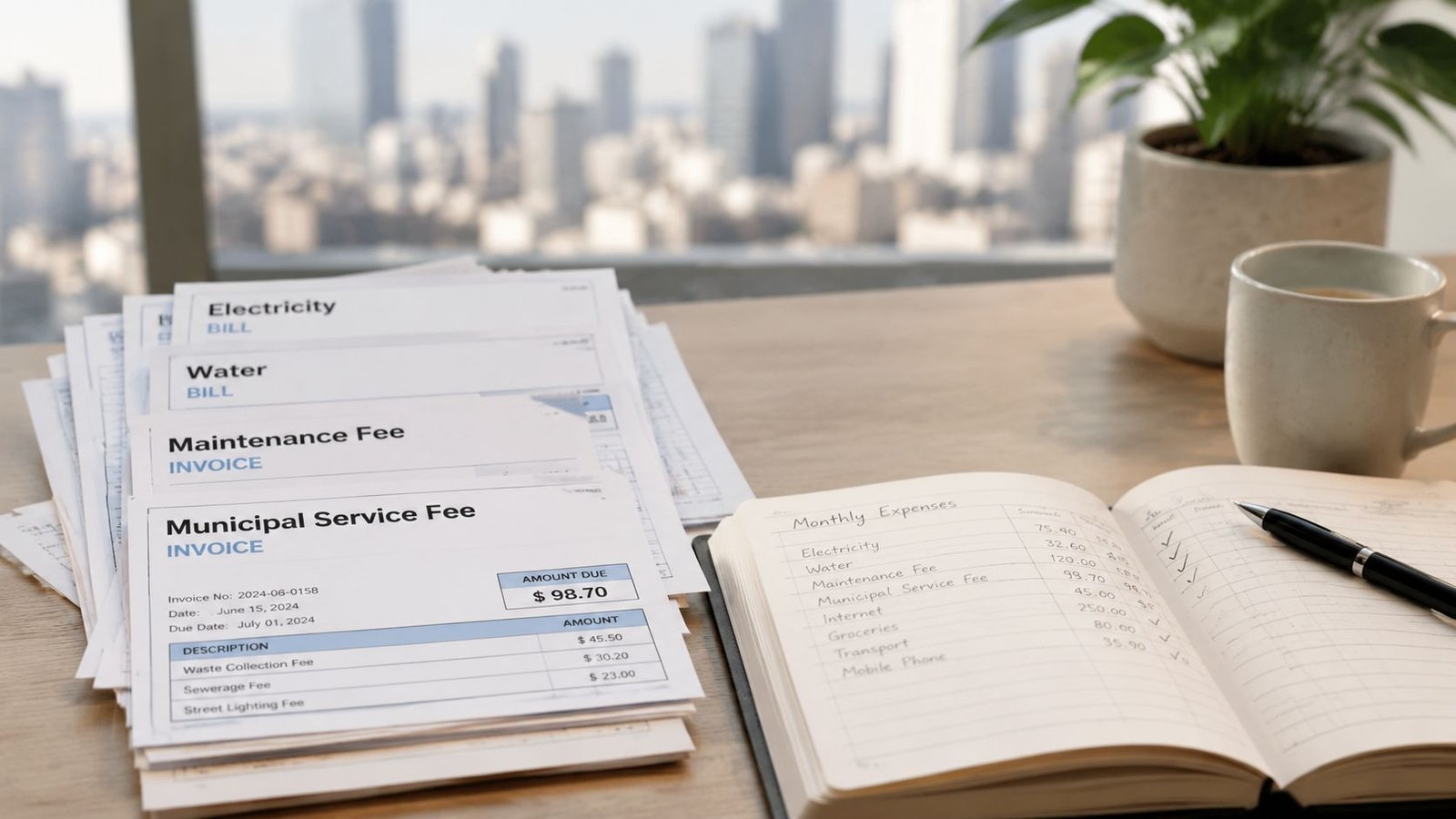
No annual property tax does not mean no ongoing property cost. Owners still face recurring charges, and those charges can affect the actual return on a rental unit or the monthly affordability of a family home. The UAE property system is fee-based, not “tax-free,” and that difference changes net yields in a direct way (Jarnia Scyril on UAE property taxation).
What keeps coming back every year
The most familiar recurring items are service charges, which cover building upkeep, shared facilities, and management of common areas. In Dubai, the Municipality Housing Fee is another recurring charge, collected through DEWA bills, and it sits alongside utility costs rather than appearing as a separate annual bill. That structure is one reason owners sometimes underestimate their holding cost, especially in apartment buildings with lifts, lobbies, gyms, or pools.
A landlord should also think about how these costs show up in net rental yield calculations. Gross rent can look healthy, but recurring fees eat into the amount that ultimately reaches the owner. In residential buildings, that gap can be the difference between a sensible long-term hold and a property that only looks good in a brochure.
Why investors should treat these as part of the model
The right way to model ownership is to separate purchase cost from holding cost. Purchase cost happens once, but recurring charges continue while you own the asset, even if the unit sits empty. That matters for short-term investors too, because a property that is easy to buy can still become expensive to hold.
When buyers ask whether a home in Dubai or Abu Dhabi is “tax-free,” the practical answer is no, not in the everyday sense. The system just taxes less through annual ownership and more through transaction and occupancy-related fees. That is a very different planning problem, especially for people comparing the United Arab Emirates with markets where annual property tax is the main cost.
How Your Ownership Structure Affects Tax Liability
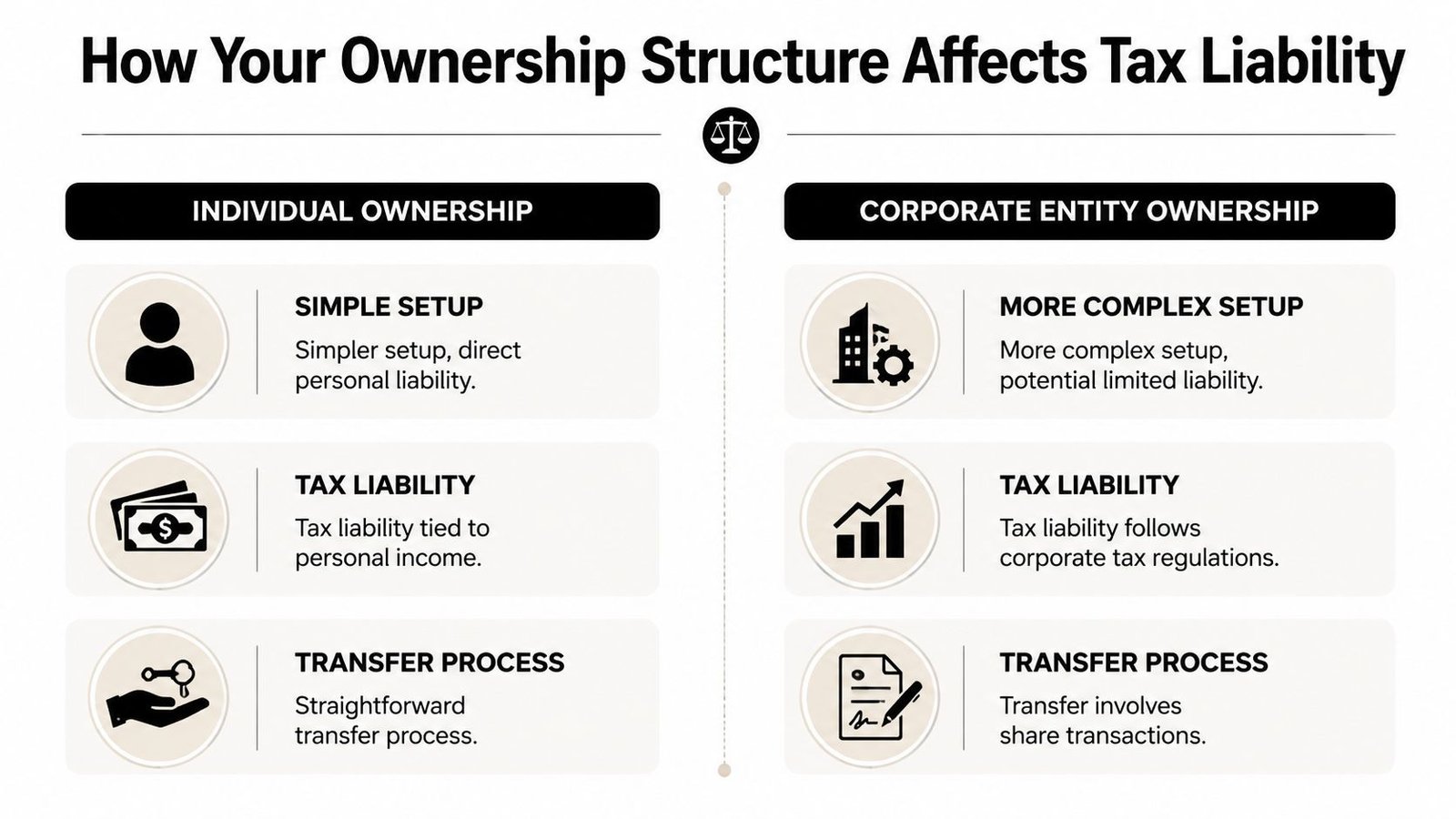
Ownership structure is where tax and property decisions become strategic. The UAE introduced a federal 9% corporate tax on business profits above AED 375,000 on 1 June 2023, and that changed how business owners need to think about assets held in company names (Savory & Partners tax guide). For individuals, the position is different, because direct ownership of real estate income and capital gains is generally outside corporate tax, according to UAE guidance (UAE tax portal).
What changes when the property sits in your personal name
Direct individual ownership is the cleanest structure for many private buyers. The property is held in a personal capacity, rental income is generally not subject to personal income tax, and capital gains on residential property are also not taxed for individuals under the current UAE framework (Engel & Völkers UAE property tax guide). That makes personal ownership straightforward for family homes and simple buy-to-let investments.
The limitation is that personal ownership does not suit every situation. Some buyers want asset protection, some need financing flexibility, and some prefer to separate property from their operating business. Once that happens, the tax result stops being as simple as the “no property tax” slogan suggests.
What changes when a company owns the property
A company-held property can fall into the corporate tax perimeter, which is the part many articles gloss over. UAE government guidance says income and capital gains from real estate are generally not subject to Corporate Tax when held directly by individuals, and that exemption does not automatically extend to property held by companies (Invest in Dubai tax alert). That gap matters for founders, holding companies, and SPVs.
A free zone company is not a magic shield either. Dubai free zones usually restrict companies from doing business outside the free zone unless they get the proper local licence from the Dubai Department of Economic Development, now the Department of Economy and Tourism, or DET (Tamimi on mainland activity through free zone entities). In plain language, a property vehicle in a free zone still needs careful structuring if it interacts with mainland activity or broader business operations.
For many business owners, the decision is not “individual versus company” in the abstract. It is whether the company structure really matches the commercial purpose, and whether the tax treatment stays efficient once rent, sale proceeds, and the wider group structure are all considered.
VAT Rules for UAE Real Estate Transactions
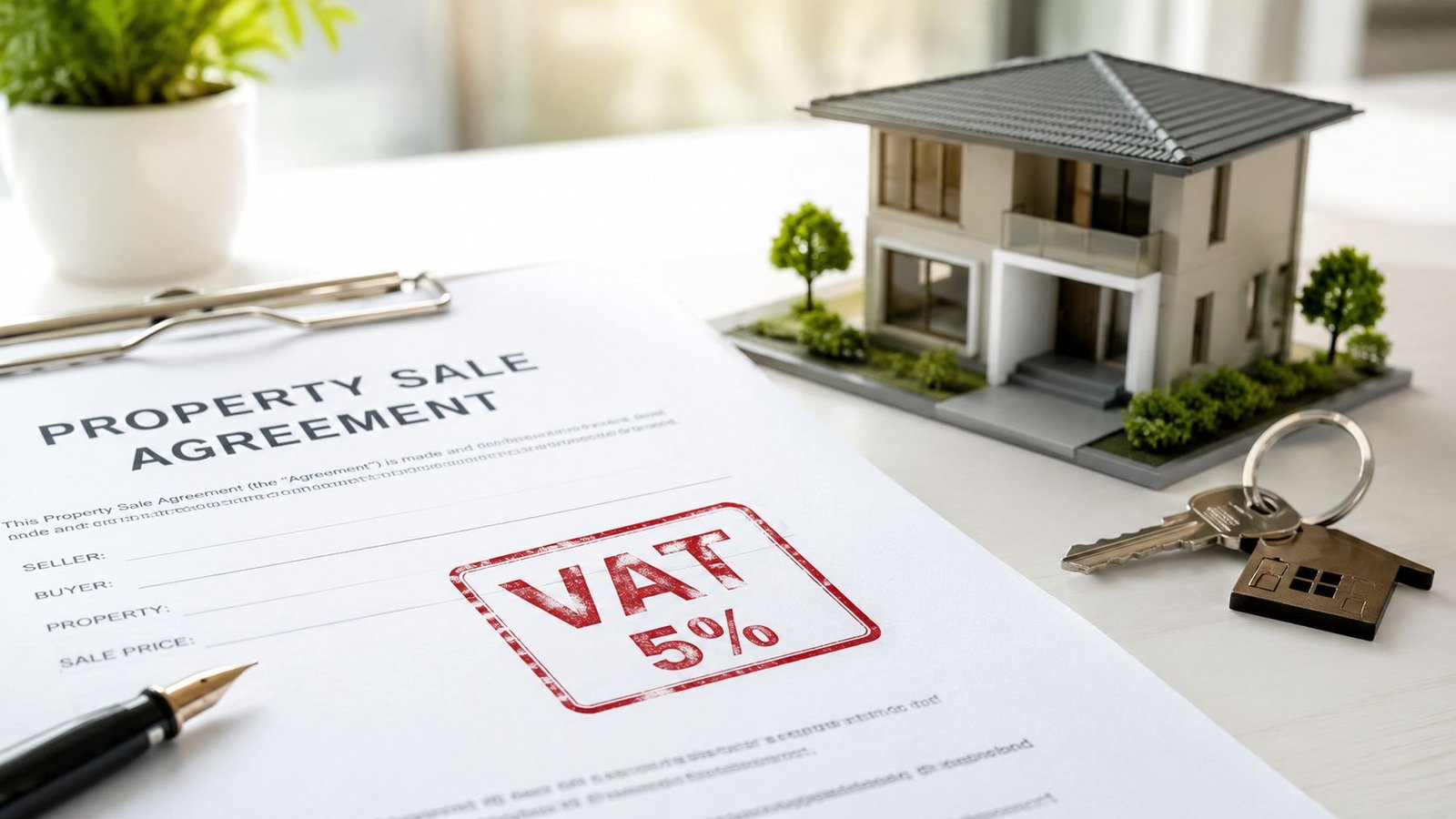
VAT causes confusion because people assume all property is treated the same. It isn't. The Federal Tax Authority treats residential and commercial property differently, and that affects both sale documents and lease invoices.
How does VAT work on residential and commercial property
Residential property usually gets more favourable treatment than commercial space, while commercial property transactions are more likely to attract standard VAT treatment. A buyer or landlord should never guess here, because the invoice language and the use of the property both matter. If the property is mixed-use or the lease arrangement is unusual, the tax position needs checking before money changes hands.
For owners who hold rental property through a company, VAT registration can also become relevant. Businesses in the UAE must register for VAT if their taxable turnover exceeds AED 375,000, and that can include income from commercial property rentals (Alpadis UAE setup guide). That means the rental strategy, not just the ownership name on the title deed, can affect compliance.
What should owners check before issuing invoices
The cleanest process is to confirm the property's use, confirm who the owner is, and confirm whether the rental or sale falls inside VAT registration rules. If a landlord or company gets that wrong, the error can ripple into contract pricing, tenant billing, and filings later on. That is why property teams, HR teams handling relocation housing, and founders buying offices all need the same basic discipline.
Practical rule: do not copy a previous invoice template just because it “worked last time.” VAT treatment follows the transaction, not habit.
For residential buyers, the main risk is assuming all ownership costs sit in the title transfer. For commercial investors, the risk is broader, because rent, lease structure, and registration duties can all sit inside the VAT framework. In the UAE and the United Arab Emirates, that distinction is one of the easiest ways to avoid a compliance mistake before it becomes expensive.
A Practical Checklist for Property Compliance
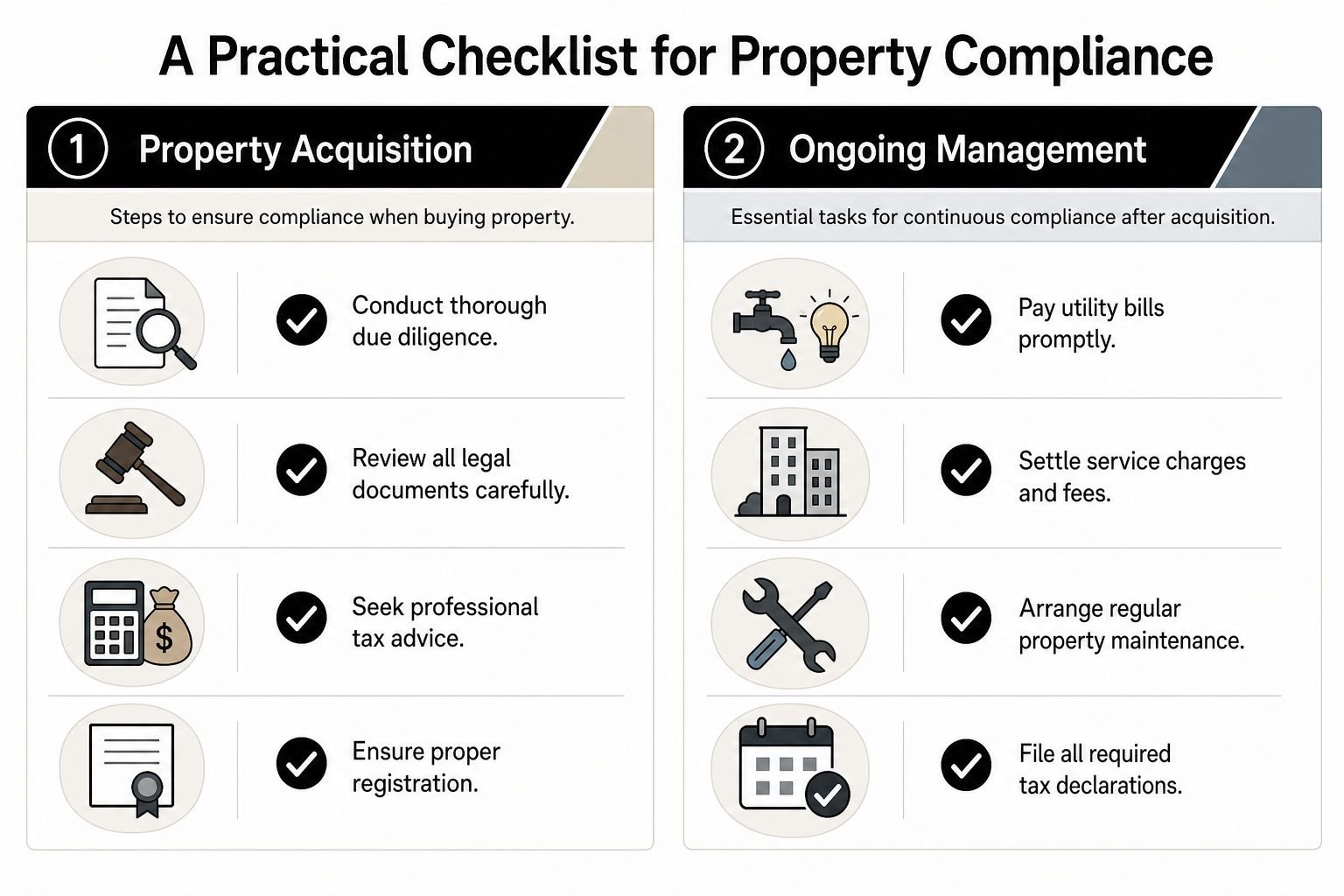
The most reliable way to handle tax and property in the UAE is to make the compliance work happen before purchase, not after it. Start with the ownership structure, because that decision affects transfer treatment, possible corporate tax exposure, and later VAT questions. Then build the rest of the file around the actual use of the asset, not the brochure description.
What should you do before buying
- Budget for the full closing cost. Include the transfer fee, registration items, and any deal-specific charges so you are not surprised at completion.
- Choose the ownership structure early. Decide whether the property belongs to you personally, a mainland company, or a free zone vehicle before contracts are signed.
- Check the tax treatment on rental income. If the asset is in a company, confirm whether Corporate Tax and VAT issues apply.
- Keep the paperwork clean. Title documents, company documents, and lease agreements should all support the same ownership story.
What should you keep doing after purchase
- Pay recurring charges on time. Service charges, utility bills, and municipal fees should never be left to drift.
- Review rental invoices carefully. If the property is commercial or held in a taxable structure, make sure VAT treatment is correct.
- Track filing duties. A company that owns property may also have Corporate Tax and VAT obligations that need scheduled attention.
- Recheck the structure if the use changes. A personal home, rental unit, office, or portfolio asset can each trigger a different compliance profile.
The underlying tax shift is already in place, because the UAE introduced a federal 9% corporate tax on business profits above AED 375,000 on 1 June 2023 (Savory & Partners tax guide). That makes it even more sensible to review ownership before you buy, not after the asset is already in the wrong entity.
If you're planning a purchase, a relocation, or a company structure around property in Dubai, Abu Dhabi, or another emirate, get the tax and paperwork checked before you commit. A short review now is much cheaper than fixing the wrong structure later. A CTA for Inpro Corporate Services L.L.C..