

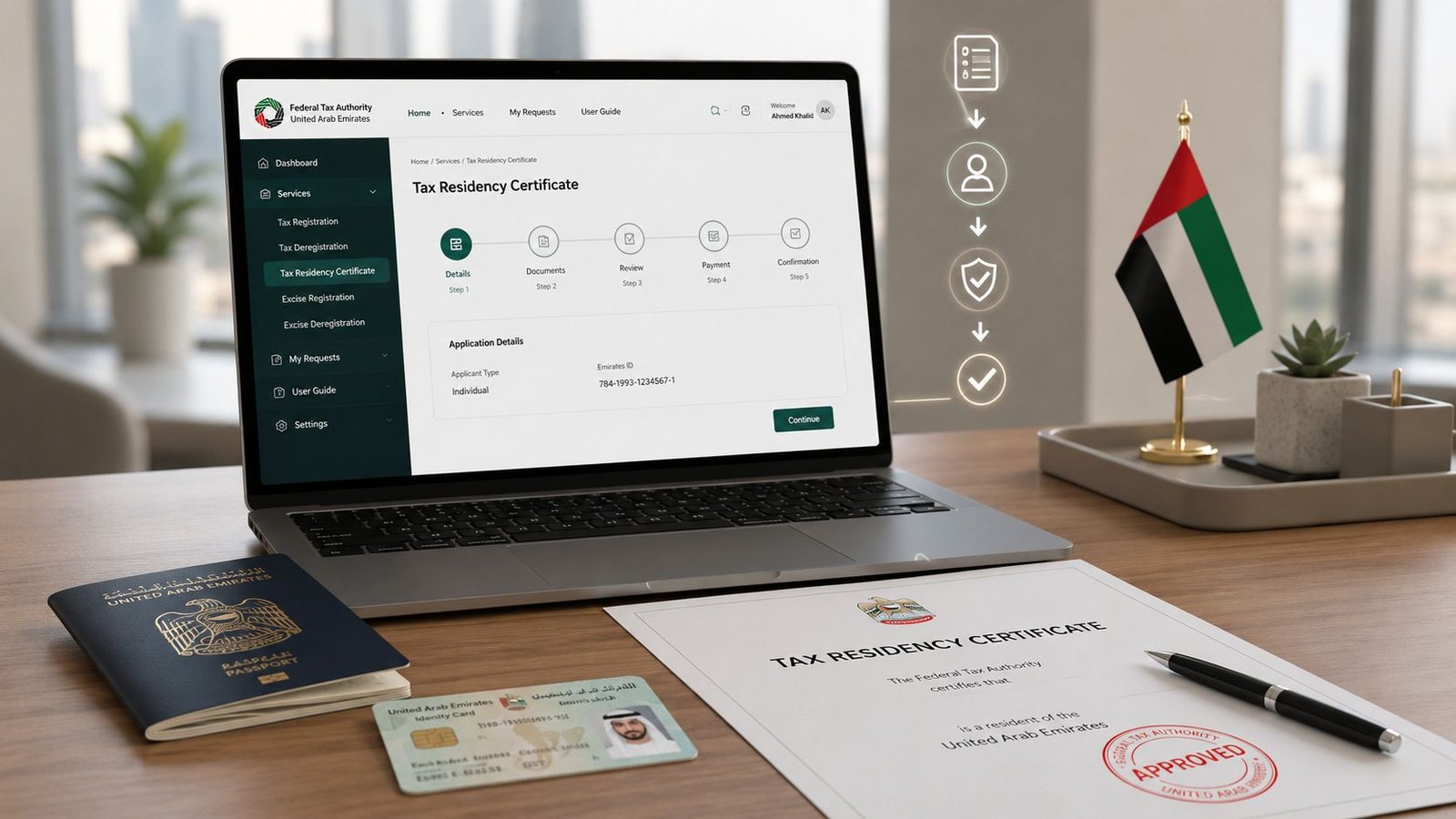
A UAE Tax Residency Certificate is filed online through EmaraTax by the Federal Tax Authority, costs AED 50 to apply plus AED 500 to AED 1,750 on approval, and usually clears in 5 to 7 working days if the file is clean. If the documents are messy, the delay is almost never the portal, it's the applicant.
If you're a founder, freelancer, HR lead, or Golden Visa holder staring at foreign tax paperwork, this is probably the form that keeps coming back to you. The TRC certificate UAE process looks simple on paper, but the cases that bounce usually fail for small, avoidable reasons, not because the applicant is in the wrong category.
Table of Contents
- What You Need to Know Before You Apply
- What a TRC Certificate Is in the UAE
- Who Qualifies for a TRC in the UAE
- Documents You Need for Individuals and Companies
- Walking Through the EmaraTax Application
- Fees, Processing Time, and What to Budget
- Why TRC Applications Get Rejected and How to Fix Them
What You Need to Know Before You Apply
If your file is clean, budget for AED 50 to submit, then AED 500 to AED 1,750 after approval, with a normal turnaround of 5 to 7 working days. That's the straightforward answer for a trc certificate UAE application, not the polished version people like to repeat in meetings. The Federal Tax Authority (FTA) runs the process through EmaraTax, and the portal is open 24 hours a day, 7 days a week FTA tax certificate service.
Who actually needs it?
Founders use it when they earn income across borders and need treaty relief. Remote workers and freelancers ask for it when a foreign tax authority wants proof that their tax home is in the United Arab Emirates, not just that they hold a UAE visa. Holding companies and operating companies need it when they want to claim benefits under double tax treaties, and HR teams often get pulled in when employee filings or relocation files need supporting residency proof.
The UAE Ministry of Finance reports that the country has over 140 double taxation avoidance agreements, so this certificate is not a niche form. It's a standard document for cross-border planning, especially if you're dealing with Dubai, Abu Dhabi, Sharjah, or a free zone structure TRC overview and treaty context.
Practical rule: get the certificate for the period you actually need, not the period you wish you had. Most foreign tax authorities want a current certificate, and a backdated file rarely helps when the deadline is already close.
You can file it yourself, and many people do. Still, the process is rarely quick on the first attempt because the work happens before submission, not after.
What a TRC Certificate Is in the UAE
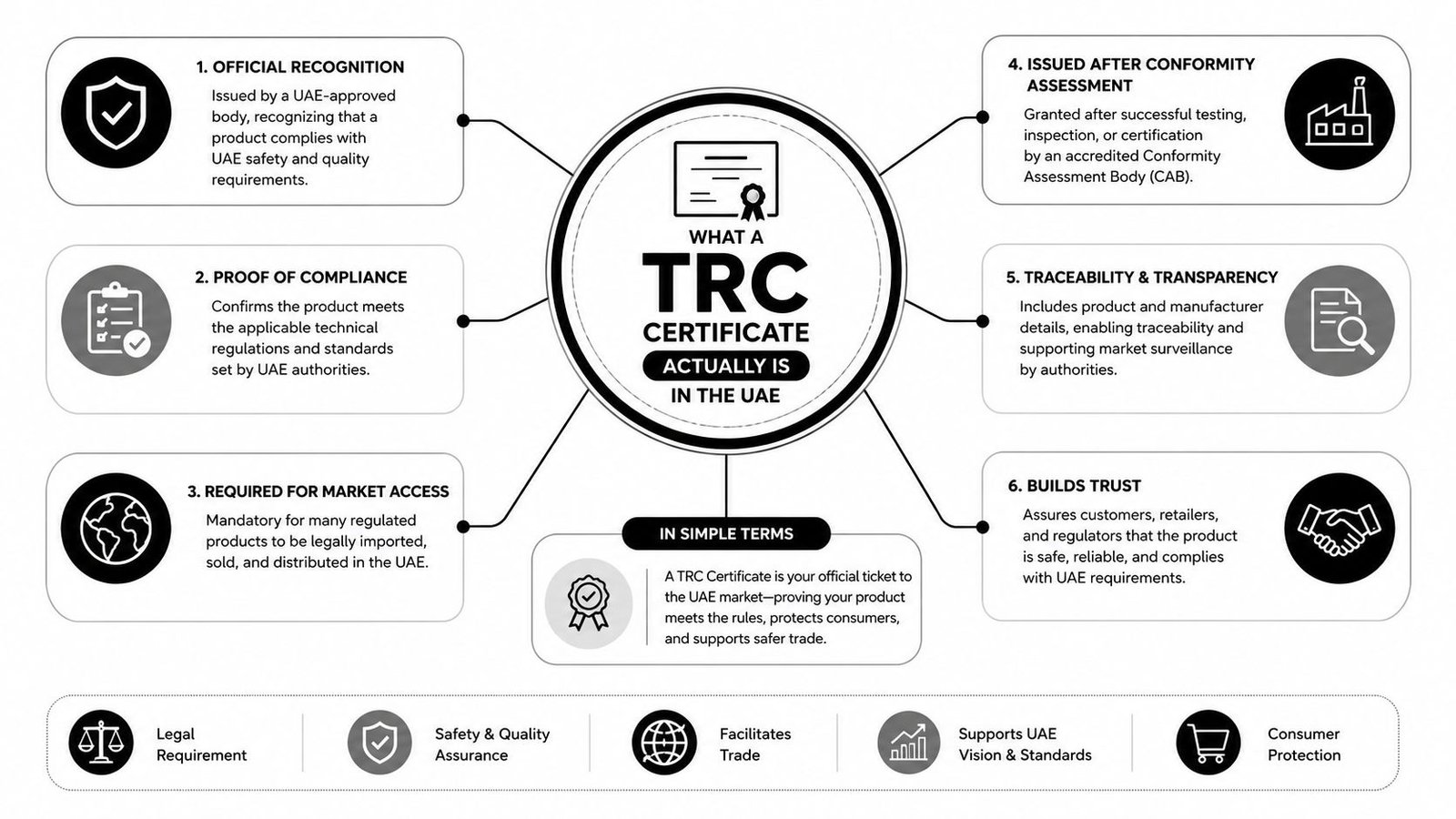
A Tax Residency Certificate is an official document issued by the FTA that confirms an individual or legal entity is a UAE tax resident for a specific period. Its main job is to support access to benefits under the UAE's double taxation avoidance agreements, which is why it keeps coming up in international tax files and bank requests TRC definition and use case.
Residency visa is not the same thing
A residency visa proves immigration status. A TRC proves tax residency for a defined period. That difference matters because foreign tax authorities care about where you are treated as a tax resident, not just where you live or work.
The UAE's treaty network makes this certificate practical rather than ceremonial. It is the document that lets a UAE-based person or company present treaty residency to a foreign authority, whether the file relates to a withholding tax claim, dividend income, or business profits abroad. The UAE's network includes key partners such as India, France, and the United Kingdom, so the TRC is used in real cross-border filings, not just as a compliance label TRC and treaty network.
Why the validity window matters
The certificate is commonly valid for one year, so it's an annual compliance task, not a one-off file you keep forever validity and renewal context. If your foreign filing cycle runs yearly, you should plan the UAE application before the foreign deadline, not after.
A clean TRC file is usually less about proving who you are and more about proving the right period. If the dates don't align, the application gets weak fast.
Who Qualifies for a TRC in the UAE
There are three practical routes: physical presence, treaty-based residency, and company nexus. If you know which lane you're in before you upload anything, you'll save yourself a round of corrections on EmaraTax.
The 183-day route for individuals
Under Cabinet Resolution No. 85 of 2022, one cited route for individuals is 183 days of physical UAE presence within a 12-month period physical presence route. That matters for founders who travel a lot, because heavy travel doesn't always break eligibility if the day count still works across the relevant 12-month window.
This route fits people who live much of the year in the UAE, even if their work takes them to London, Riyadh, or Singapore in bursts. If you're counting flights, hotel nights, and border stamps, you're probably in this bucket.
The treaty-based route for individuals
Some applicants qualify through treaty conditions tied to their home country and their centre of vital interests. In plain English, that means the FTA looks at where your real life sits, not just where your passport was issued. This route usually suits expats with a stable home base in the UAE, especially where personal and economic ties are clearly centred here.
The corporate route for companies
Companies are judged on incorporation, management, and control in the UAE. That can fit Mainland companies in Dubai or Abu Dhabi, Free Zone entities in places like DIFC, which stands for Dubai International Financial Centre, or ADGM, which stands for Abu Dhabi Global Market, and also offshore holdings in structures such as JAFZA or RAK ICC if the facts support the residency claim. The key question is simple, where is the business run from?
If you're a founder, ask which of these describes you best before you open the portal. That one decision shapes the documents, the wording in your cover letter, and how clean your file looks to the reviewer.
Documents You Need for Individuals and Companies
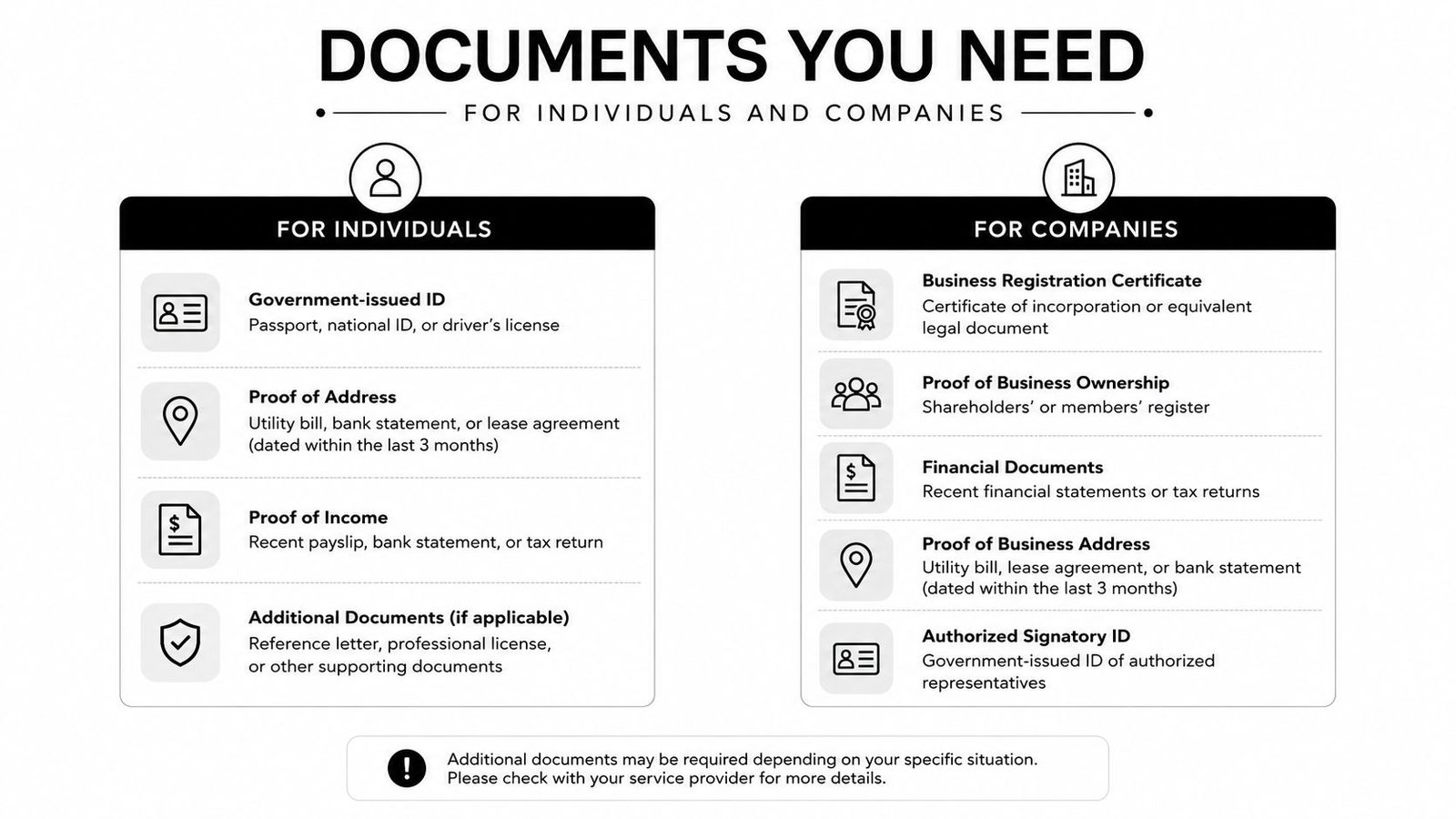
For individual applicants, the file should read like proof, not like a scrapbook. For company applicants, it should read like a legal existence pack, not a marketing folder. The FTA reviewer wants a coherent story.
If you're applying as an individual
- Emirates ID: Use the current card, and make sure the name matches the passport exactly.
- Passport copy: Include the main identification page with clear expiry details.
- Residence visa page: This shows your UAE status, but it does not replace tax residency proof.
- Utility bill or tenancy contract: This helps show a UAE address, which strengthens the file.
- Employment evidence or trade licence: Use this if your residency ties are through work or business.
- Short cover letter: State the residency period clearly and keep the wording plain.
If you're applying for a company
- Trade licence: It should be current and aligned with the legal entity name.
- Memorandum of Association: The FTA uses this to understand the company structure.
- Shareholder passport copies: These need to match the legal records.
- Authorised signatory list: Include who can act for the company.
- Audited financials where available: Helpful when the company profile calls for stronger financial proof.
KPMG's UAE tax guide says bank statements are no longer a requirement for individual TRC applications under the treaty-based route KPMG guidance on TRC documents. That matters because many older checklists still ask for them, which pushes applicants to over-collect documents and still miss the point.
Practical rule: if a document doesn't prove residency, identity, authority, or business presence, don't upload it just to look prepared.
Arabic translations and attestation can still matter for foreign use cases, especially where another authority insists on a stamped or translated package. Sort that out before submission, not after approval, because post-approval urgency is where people start paying twice.
Walking Through the EmaraTax Application
EmaraTax is the online portal the FTA uses for the TRC service, and it's open 24 hours a day, 7 days a week FTA service access and submission flow. That helps if you're filing from a Dubai office at night or handling a cross-border matter from Abu Dhabi while another jurisdiction is already working.
What the portal asks for
First, you log in or register if you're new to the FTA system. Then you choose the Tax Residency Certificate service and pick the correct applicant type, natural person or legal entity. If you already have a TRN, which means Tax Registration Number, you link the application to that record. If you don't, the portal still lets you proceed through the relevant non-registrant path.
The form fields are structured, so don't freestyle them. Use the exact legal name, exact passport spelling, exact licence details, and the exact period you want covered. Most bad files start with small mismatches, not dramatic legal problems.
What happens after upload
You upload the supporting documents in the correct categories, then submit the request for review. Once the file is in, the status typically shows as pending, and the FTA may ask for additional information if something doesn't line up. When approved, the certificate becomes available for digital download from the portal.
Keep the cover letter simple. A reviewer should be able to tell in one glance who the applicant is, which route they're using, and what period they're asking for.
A clean submission feels boring, and that's a good sign. The best TRC files are the ones that don't force the reviewer to guess what you meant.
Fees, Processing Time, and What to Budget
Do the paperwork cleanly and the cost stays predictable. Miss a step, and the file sits while the reviewer waits for a fix, which is where founders lose time and end up paying for extra copies they did not plan for.
The base cost starts with the application review fee, then the approval fee depends on the request type, and a printed certificate adds another charge per copy. The FTA fee schedule lists the fee structure for tax certificate services, while practitioner guidance places a complete file at roughly 5 business days and an overall window of 5 to 7 working days once every document is in order FTA fee schedule, industry timing guide.
UAE TRC Costs and Timing at a Glance
| Item | Cost (AED) | Timing |
|---|---|---|
| Application submission | 50 | At submission |
| Processing fee after approval | 500 to 1,750 | After approval |
| Printed certificate per copy | 250 | After approval, if requested |
| Typical complete-file turnaround | N/A | About 5 to 7 working days |
A solo founder who only needs the digital certificate should budget for the submission fee and the relevant approval fee, then stop there if no foreign authority asks for paper. That is the cleanest route, and it avoids paying for printed copies you may never use.
A holding company with several jurisdictions asking for originals or printed evidence should budget for the processing fee plus multiple printed copies, because the copy count is where the total climbs faster than people expect. The bank-statement myth causes wasted work here too. Banks do not issue the certificate, and a strong statement set does not rescue a file with the wrong legal name, missing licence data, or mismatched residency dates. On EmaraTax, those are the mistakes that trigger bounce-backs in the Emirates, not some grand eligibility debate.
The key trap is treating the TRC as a fixed-price item. It is not. The approved certificate can stay digital, or it can turn into a more expensive filing once a foreign tax authority wants paper copies, apostille-style handling, or a cleaner paper trail for its own review.
Why TRC Applications Get Rejected and How to Fix Them
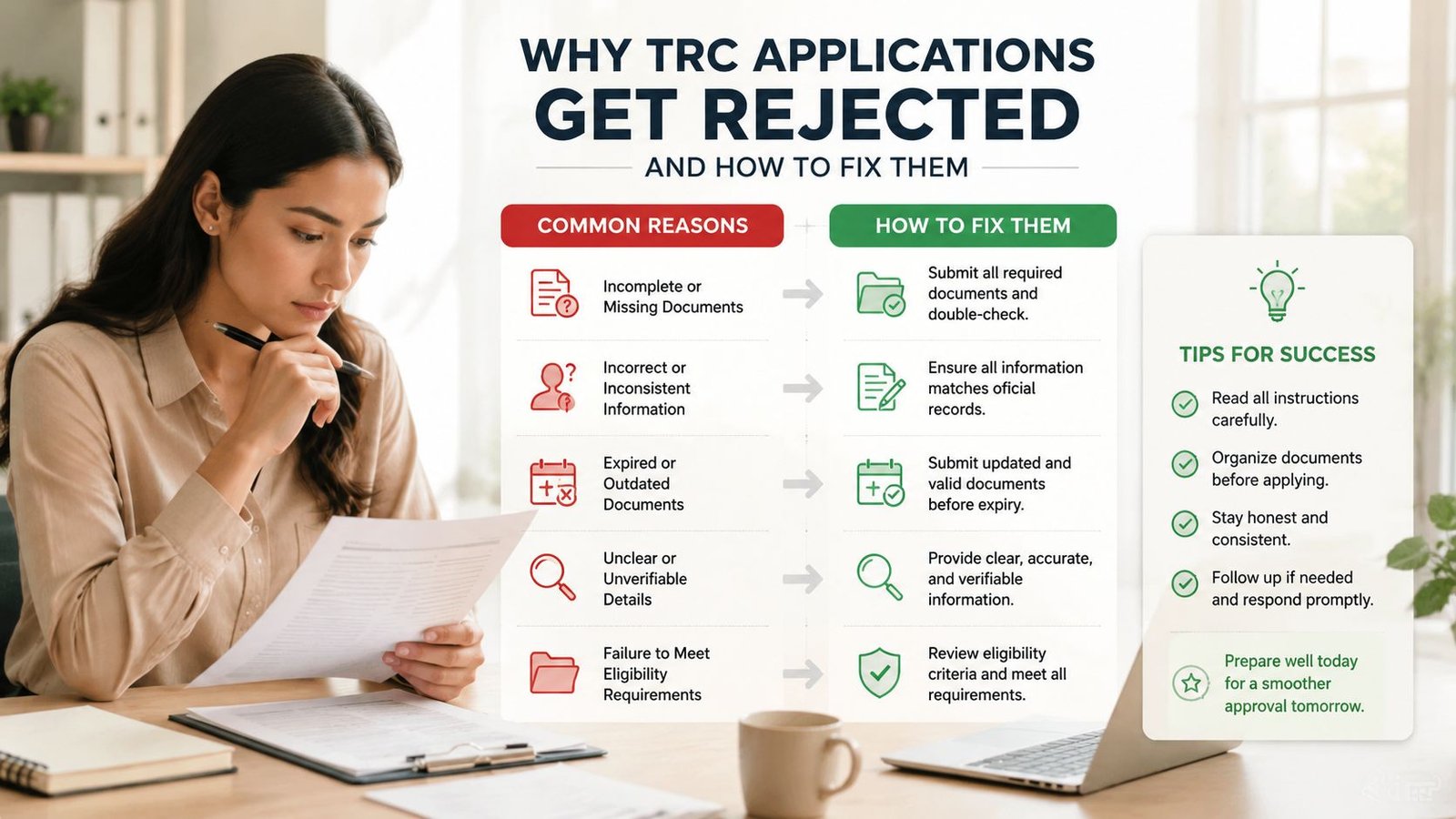
A TRC application usually gets rejected because the file is messy, not because the applicant has no real UAE presence. The FTA looks for a clean, consistent story across the passport, Emirates ID, licence, and residency evidence. If one piece points in a different direction, the reviewer stops and sends it back.
The mistakes I see over and over
- Name mismatch across documents: The Emirates ID shows one spelling, the passport shows another, and the licence uses a third version. Align the legal spelling across every attachment before you submit, including any cover letter and supporting residency proof.
- Weak day-count evidence for the 183-day route: People assume a travel history is enough on its own. It is not. Upload a clear residency timeline, passport entry and exit pages, and any supporting travel records that match the period you are claiming.
- Expired or missing trade licence: Companies often apply with old paperwork. Renew the licence first, then file the TRC request, so the reviewer sees a current legal entity with no gap in status.
- Unsigned cover letter: This looks careless and gives the reviewer nothing to verify quickly. Sign it, state the applicant period clearly, and make sure the legal name matches the rest of the file.
- Wrong upload category: A document is there, but it sits in the wrong slot. Check each attachment before final submission, because a misplaced file can trigger a bounce even if the document itself is fine.
The bank-statement myth creates extra noise, and it also leads people to upload the wrong supporting pack. Banks do not issue the certificate, so a statement alone will not fix a file with a wrong legal name or inconsistent residency dates. If you want to include bank statements, use them as supporting proof for account activity or local presence, not as a substitute for the core documents. The clean upload set is the passport copy, Emirates ID, trade licence for companies, residency evidence, and a properly signed cover letter.
When to get help
If the file involves travel-heavy founders, foreign shareholders, multiple jurisdictions, or a company with more than one decision-maker, bring in a UAE PRO early. That saves time when the reviewer asks for clarification, because the issue is usually how the file is presented and sequenced, not a big legal fight.
A TRC is annual, so the first clean filing becomes the template for every renewal. Get the structure right once, and the next cycle is easier to handle.
If you want a clean TRC filing without the back-and-forth, Inpro Corporate Services L.L.C. can review your residency route, check your document set, and handle the submission properly through the UAE government channels. They work with founders, companies, and HR teams across the United Arab Emirates, so you get a practical filing plan instead of guesswork.