


You’ve signed the candidate. They’re the first hire who can move your UAE expansion forward. Then the operational questions arrive all at once. Which authority handles the visa, what documents need attestation, how fast can they enter, and what happens if you choose the wrong jurisdiction for the company structure.
That’s where most founders lose time. Not because the UAE employment visa process is obscure, but because it’s tightly linked to market entry, licensing, quota planning, and compliance. If you treat the visa as a back-office formality, you usually end up fixing avoidable issues later. If you treat it as part of your launch strategy, hiring gets much cleaner.
The good news is that the process is far more organised than many first-time employers expect. The actual work isn’t guessing what to do next. It’s making the right decisions early, especially around jurisdiction, document readiness, and who owns the workflow from start to finish.
Table of Contents
- Beyond the Offer Letter The Modern UAE Visa Landscape
- The Groundwork Quota, Offer, and Entry Permit
- In-Country Processing Medical, Biometrics, and Stamping
- Mainland vs Free Zone How Jurisdiction Changes the Process
- Navigating Costs, Timelines, and Common Delays
- Streamline Your Visa Workflow for Faster Growth
Beyond the Offer Letter The Modern UAE Visa Landscape
A lot of first-time employers still picture the uae employment visa process as a long chain of office visits, fragmented approvals, and unpredictable delays. That picture is outdated.
The current system is far more digital and centralised. A major shift came with the UAE’s Work Bundle initiative, which reduced work permit and residency visa processing from 30 days to 5 days, according to this overview of the UAE Work Bundle employment visa rollout. That matters well beyond convenience. It changes how quickly a new company can activate talent after formation.
For founders, that speed creates a strategic advantage. It means the visa process no longer has to sit outside commercial planning. You can now line up licence issuance, hiring, onboarding, and client delivery with much tighter coordination, as long as the paperwork and jurisdiction choice are sound.
Why this matters for market entry
Your first employee often carries more than a job title. They may be your sales lead, technical operator, country manager, or compliance contact. If their visa stalls, the business stalls with them.
That’s why the visa process shouldn’t be treated as an HR afterthought. It sits at the intersection of:
- Entity readiness. Your company must be properly licensed and authorised to sponsor.
- Jurisdiction logic. Mainland and Free Zone routes don’t behave the same way.
- Document discipline. A missing attestation can delay an otherwise straightforward case.
- Operational sequencing. Entry permit timing, arrival planning, medicals, and biometrics have to line up.
Practical rule: don’t ask “How do I get a visa?” first. Ask “Is my company structure set up to sponsor the hire I actually need?”
What the modern process rewards
The UAE system works best when the employer acts early on the parts that are still easy to get wrong. That usually means confirming sponsorship capacity before making promises on start dates, checking whether educational documents need attestation, and deciding whether a Free Zone or Mainland route better fits the role.
What doesn’t work is waiting until the employee is ready to travel, then discovering the company has no quota, the job title doesn’t align cleanly, or the authority handling the visa differs from what the founder assumed.
The process is structured. That’s its advantage. It’s also unforgiving when businesses skip the groundwork.
The Groundwork Quota, Offer, and Entry Permit
A founder usually feels confident once the candidate says yes. In the UAE, that is often the moment the actual execution risk starts.
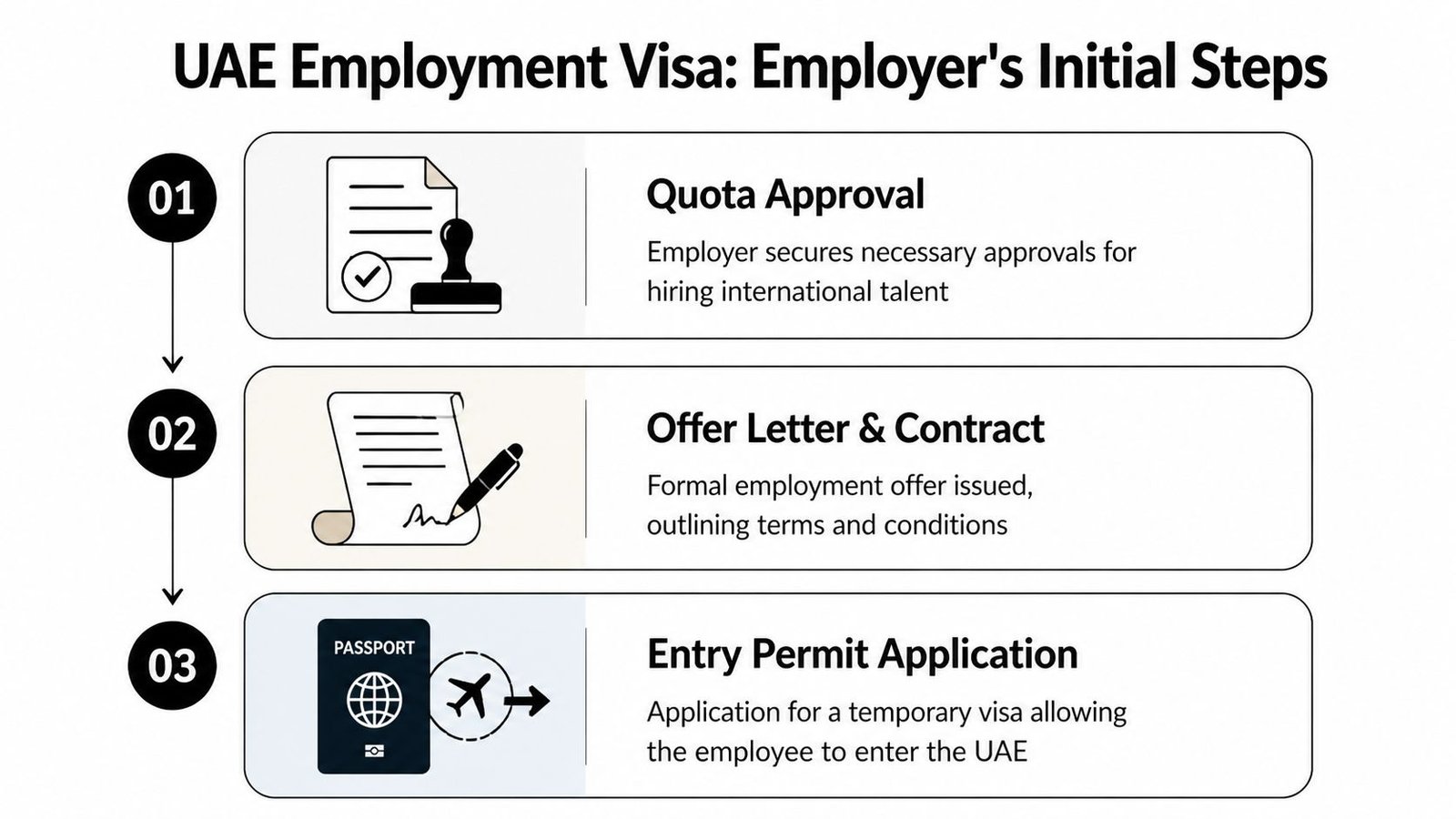
The first phase sits almost entirely with the employer. If the company sets up quota, contract terms, and entry permit timing properly, the rest of the file is usually predictable. If those pieces are handled late, the business pays for it through missed start dates, rework, and pressure on the employee before they even arrive.
Confirm sponsorship capacity before committing to a start date
Quota approval comes first. It decides whether the entity can sponsor that hire under its current licence, activity, and jurisdiction. For Mainland companies, that usually runs through MOHRE-linked channels. For Free Zone entities, the relevant zone authority applies its own quota and approval rules.
Market-entry strategy manifests in a practical way during this phase. A founder choosing between Mainland and Free Zone is not only choosing an incorporation model. They are also choosing a visa workflow, a quota framework, and a level of operational flexibility for early hires.
I have seen companies lose two weeks here because the role was commercially urgent but the entity was not ready to sponsor it. The problem was not the candidate. The problem was filing a visa plan after making the hiring decision instead of before it.
Build the file around the actual role
Once quota is available, the offer and contract need to line up with the sponsoring entity and the job being approved. Avoidable errors frequently creep in during this stage. A sales hire gets drafted under one title, the approval goes in under another, and then the employer has to explain the mismatch while the employee waits.
The cleaner approach is to prepare the file against the actual compliance position, not the internal shorthand the business uses. That usually means checking:
- Passport validity. The employee’s passport should have enough remaining validity for processing.
- Role-specific qualification requirements. If the position depends on a degree or professional credential, confirm early whether attestation is needed.
- Entity details. Trade licence information, company name, and sponsor details need to match across the application set.
- Signed terms. Salary, title, and contract structure should be settled before submission, not revised mid-process.
A weak file at this stage creates a slower, more expensive case later.
Treat the entry permit as part of hiring operations
After the initial approvals, the employer applies for the entry permit. It gives the employee the legal basis to enter the UAE for the in-country steps that follow.
The permit has a limited validity window, as noted earlier. That matters more than many first-time employers expect. If the employee is serving notice, relocating family, or waiting on document legalisation, an approval issued too early can create a timing problem rather than solving one.
That is why experienced PRO teams do not treat the entry permit as a box to tick. They use it to sequence the hire properly. The best filing date is not always the earliest possible date. It is the date that gives the employee enough time to travel and lets the company move directly into the next processing steps without the file going cold.
The strategic choice is speed with control
Some employers try to manage this phase internally to save cost. That can work if the company already understands the authority involved, has document discipline, and can monitor each approval stage closely. If not, the cheaper route often becomes the slower one.
A process partner such as Inpro Corporate Services L.L.C. is useful here for one reason. It reduces execution risk at the point where jurisdiction rules, quota logic, and document quality all meet. For a first international hire, that is often the difference between a controlled launch and a preventable delay.
A strong pre-arrival phase usually looks like this:
- Quota is secured before the company confirms the joining plan.
- The contract matches the sponsor, role, and approval route.
- The entry permit is filed against the employee’s real travel timeline, not an optimistic one.
That is the groundwork that protects both hiring speed and compliance.
In-Country Processing Medical, Biometrics, and Stamping
A founder often feels the hire is nearly done once the employee enters the UAE. In practice, this is the point where timing risk becomes operational risk. A missed medical slot, an ID appointment booked too late, or a status issue that surfaces after arrival can push back onboarding, payroll setup, bank access, and even housing arrangements.

What happens after arrival
The file usually moves in a fixed order. The employee completes the medical fitness test, attends Emirates ID biometrics, and then the residence visa is issued through the relevant authority workflow, whether that ends in a digital approval record or a formal stamping step.
Treat this stage as a controlled sprint, not routine admin.
The medical exam is a required part of residence processing for employment visas. The practical point for employers is not the test content itself. It is making sure the employee has the correct passport copy, entry document, photographs if required by the centre, and a booking window that does not leave the file sitting idle for days.
Biometrics creates a similar bottleneck. If the employee misses the appointment or arrives without the required documents, the whole case can stall. For a first international hire, that delay is rarely isolated. It affects joining plans, internal announcements, client-facing timelines, and the confidence of the employee who has just relocated.
The visit visa status change issue
Some candidates are already in the UAE on a visit visa when the company decides to hire them. That route is workable, but it needs clean handling from the start. The employer must confirm the person’s current status, validity dates, and whether a status change is required before the residence process can continue.
Guidance from this visa processing guide for employers and employees in Dubai notes that employers handling in-country applicants must manage status change correctly to avoid overstay exposure before the file moves into medicals and Emirates ID processing.
If your candidate is already in the UAE, verify their current visa category and expiry date before you lock the joining date.
I have seen straightforward hires turn difficult because this check happened too late. The company assumed the candidate could convert in place without complication. The candidate assumed HR had already confirmed it. Both sides lost time.
What the employee should expect on the ground
The employee experience matters here because the process is document-heavy and time-sensitive. Senior hires notice quickly whether the company is in control. Junior hires feel the stress even more because they are often handling relocation, temporary accommodation, and local setup at the same time.
A well-run in-country process usually includes:
- Appointments booked as early as the file allows. Waiting until the employee arrives to start scheduling wastes working days.
- A simple document brief. The employee should know exactly what to carry, what the company has already filed, and which originals may be requested.
- A clear sequence. Medical first, biometrics next, residence completion after that.
- A named owner on the company side. One PRO, HR lead, or external partner should track the case end to end.
A short visual overview can help a first-time employer understand the sequence before coordinating the case:
The strategic point is simple. Fast in-country processing shortens the gap between arrival and productive employment. Slow processing does the opposite. It leaves the company paying for a hire who is physically present but still waiting on the documents needed to settle in and operate normally.
Mainland vs Free Zone How Jurisdiction Changes the Process
A founder often feels the jurisdiction decision at the first hire, not at company setup. Two businesses can issue the same offer on the same day and still see very different visa timelines because the approval path, quota logic, and document review sit with different authorities.
Mainland hiring usually runs through MOHRE-linked channels and a broader government workflow. Free Zone hiring usually runs through the zone’s own portal and internal approval structure. On paper, both routes end with the same commercial goal. In practice, they reward different operating models.
The practical difference in workflow
Mainland works well for companies that need direct onshore market access, broader customer-facing activity, or a structure built for hiring across multiple functions as the business grows. The trade-off is process discipline. Quota position, licence activity, establishment records, and job classification need to line up cleanly before the file moves.
Free Zones tend to give founders a more controlled operating environment. The process often feels more contained because one authority handles much of the sequence inside its own system. That can reduce back-and-forth, but only if the chosen zone fits the hiring plan. Free Zone rules still vary by authority, office allocation, and permitted headcount, so a founder should not assume one zone’s timeline or flexibility applies to another.
Mainland vs Free Zone Visa Process At a Glance
| Factor | Mainland (MOHRE) | Free Zone Authority |
|---|---|---|
| Primary authority path | MOHRE-linked workflow | Zone-specific internal portal |
| Quota handling | More directly affected by MOHRE quota controls | Managed within Free Zone rules and office allocation |
| Process feel | More centralised, but often stricter on compliance sequencing | Often more contained and administratively streamlined |
| Hiring fit | Useful when the business needs onshore market access | Useful when speed and controlled setup environment matter |
| Common pressure point | Quota availability and company-side capacity | Zone-specific quota and approval timing |
| Shared pitfall | Degree attestation issues can disrupt the file | Degree attestation issues can disrupt the file |
The wrong choice usually shows up as delay, not as a legal failure.
I see three patterns repeatedly:
- Commercial model points one way, company setup points another. A business expects onshore sales activity and broader staffing flexibility, but chose a Free Zone because setup looked faster at the start.
- Hiring plan outpaces quota planning. A Mainland entity is legally set up, but the founder assumed visas would scale as quickly as recruitment.
- Role requirements were not checked against document readiness. The candidate can do the job, but the file stalls because qualification documents were not prepared early enough.
Jurisdiction choice affects hiring speed, compliance risk, and how quickly a new employee can start contributing. Treat it as an operating decision, not just a setup preference.
There is also a timing issue many first-time employers miss. Public guidance on Dubai work visa timing and process differences notes that Free Zone processing can vary more than founders expect because internal approvals and quota steps differ by zone. That does not make Free Zones slower overall. It means the right question is narrower: which authority fits the role, the headcount plan, and the company’s ability to manage the file without avoidable rework?
For a first international hire, the best jurisdiction is usually the one that matches how the business will sell, staff, and expand over the next 12 months. That is the strategic view founders should take before the first visa application goes in.
Navigating Costs, Timelines, and Common Delays
A founder usually feels the visa process become real at one moment. The offer is signed, the employee is preparing to move, and the question shifts from approval theory to operating reality. How much cash should be set aside, how long will the person be unavailable for work, and what can still go wrong after the company has already committed to the hire?
Those are not just admin questions. They affect start dates, payroll timing, housing support, laptop provisioning, and, in some cases, whether a market-entry plan stays on schedule.
What to budget for a standard employment visa
For a standard 2-year employment visa, costs usually sit across several line items rather than one simple fee. Employers should expect government charges for the visa itself, medical testing, and Emirates ID issuance. The exact amount depends on factors such as the sponsoring entity, employee profile, and the authority handling the file.
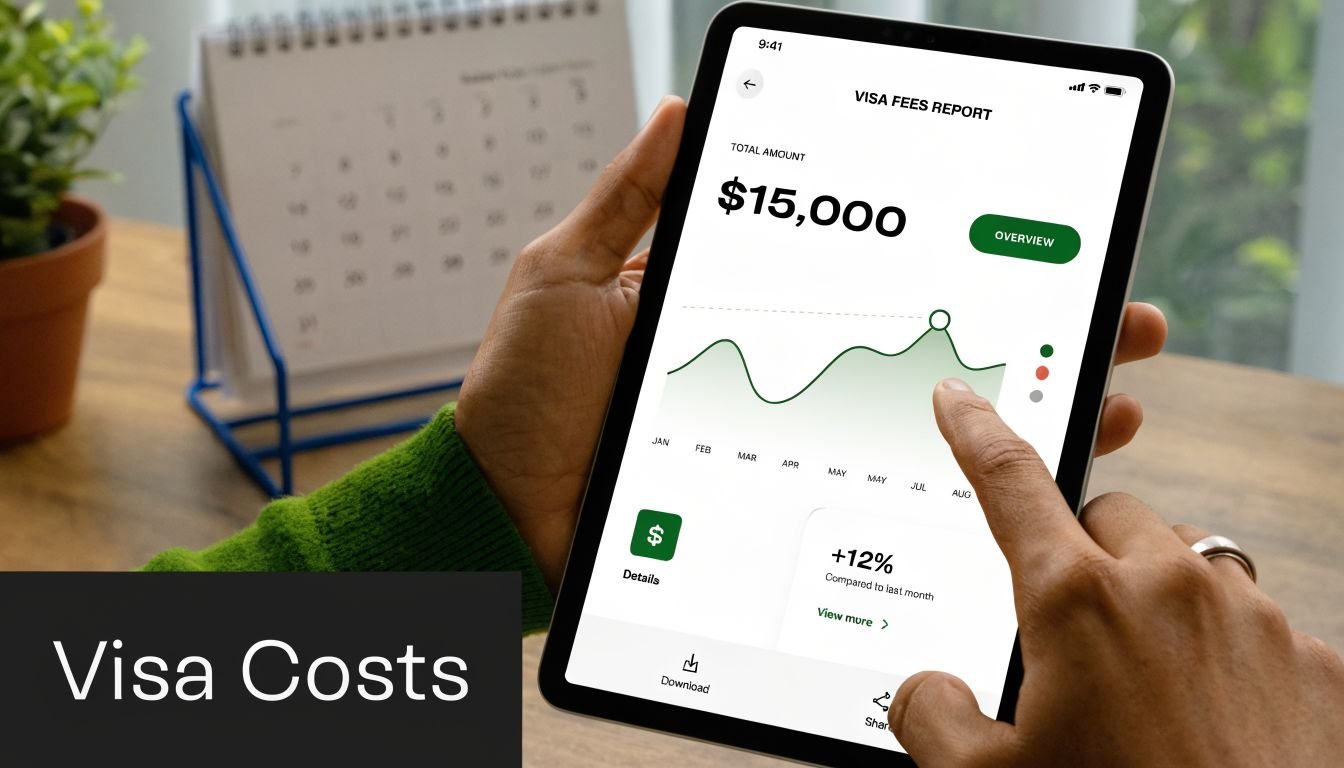
That visible spend is only part of the budget.
The larger commercial cost usually comes from delay. If a file is returned for correction, the business may absorb extra accommodation, revised flight plans, a postponed onboarding schedule, and manager time spent chasing approvals instead of building the local operation. For an early-stage company entering the UAE, that indirect cost often matters more than the government fee.
A practical budget should cover four things:
- Government charges for visa processing, medical testing, and Emirates ID
- Document preparation costs, including attestation or legalisation where required
- Employee relocation expenses tied to the actual start window
- Contingency for rebooking, resubmission, or short processing slippage
That is the difference between pricing the application and pricing the hire properly.
Where timelines slip in real life
Visa timelines rarely fail because of one dramatic problem. They slip because small issues stack up across the file.
One common example is document readiness. A candidate may be fully suitable for the role, but the degree certificate is not attested, the passport copy is unclear, or the name format does not match across documents. Each of those issues is fixable. Each also costs time once the application is already in motion.
Scheduling causes another set of delays. Medicals, biometrics, travel dates, and permit validity have to line up. If the employee arrives too late, books travel before checking the permit window, or misses an appointment slot during a busy period, the process slows down even when the file itself is otherwise acceptable.
Authority timing also varies. Public holidays, workload at immigration or labour channels, and internal processing practices all affect how quickly a case moves. That variance is normal. The avoidable delay is the one created by weak coordination between the employer, the employee, and whoever is handling submissions.
What experienced operators do differently
The fastest files are usually the best-prepared files.
That means checking the entire case before the first submission, not fixing problems stage by stage. Confirm the sponsor route. Review passport validity early. Verify whether educational documents need attestation. Match the title, contract, and supporting documents before they reach the authority. Give one person clear ownership of the timeline.
The opposite model creates drag. The founder handles one part, HR handles another, the employee books appointments alone, and no one has a full view of the sequence. In that setup, the visa may still get issued, but it often takes longer than it should and creates unnecessary compliance risk on the way.
A sensible timeline plan uses layers:
- Employer preparation and initial approvals
- Employee travel and entry coordination
- In-country medical, biometrics, and residency completion
- Post-approval readiness, including payroll, banking, and onboarding
That approach helps founders make better market-entry decisions. A company that wants its first UAE hire productive quickly should not only ask, “How fast can the visa be issued?” The better question is, “How fast can this person be legally onboarded and operational without creating rework?” That is where process discipline pays off.
Streamline Your Visa Workflow for Faster Growth
Your first UAE hire often stalls before day one. The offer is signed, the candidate is ready to move, and the business plan assumes a quick start. Then the file gets slowed by a quota issue, a document mismatch, or a jurisdiction choice that looked cheaper on paper but added approval steps you did not account for.
That is why the visa process should be treated as part of market entry planning, not just an HR task. A founder choosing between Mainland and Free Zone is also choosing a compliance route, an approval sequence, and a likely hiring speed. The wrong setup does more than delay one visa. It can slow payroll, bank onboarding, and the timing of your next hire.
The companies that execute well usually put one accountable party in charge of the full process. Sometimes that is an experienced in-house operations lead. Sometimes it is a PRO team. Sometimes it is a specialist partner handling document review, quota planning, submissions, follow-up, and status tracking across the full case.
Inpro Corporate Services L.L.C. is one example. It handles company formation, licensing, attestations, PRO services, and employee visa processing across UAE jurisdictions. For founders, the practical benefit is simple. Decisions stay at management level, while one operator controls the submission sequence and catches problems before they become delays.
A DIY model can still work, but it works best when the company already understands the authority path, document standards, and jurisdiction-specific approval habits. Founders entering the UAE for the first time often underestimate the coordination load. The official process may be digital, but the main risk sits in handoffs, timing, and incomplete checks.
Free Zone cases make that trade-off clearer. As noted earlier, approval timing can vary between zones even when the employee profile is similar. That matters if the hire is tied to a client launch, local signing authority, or a regulated activity where the employee must be fully onboarded before taking action.
The practical goal is not just a visa approval. It is getting the employee legally active, operational, and compliant on the timetable your expansion plan requires. Companies that treat visa processing as an execution function, with clear ownership and early review, usually hire faster and make fewer expensive corrections later.
If you’re planning your first UAE hire, or building a repeatable immigration workflow for a growing team, Inpro Corporate Services L.L.C. can help map the right jurisdiction, prepare the document path, and manage the visa process alongside setup and compliance so your hiring plan stays aligned with your market entry plan.