

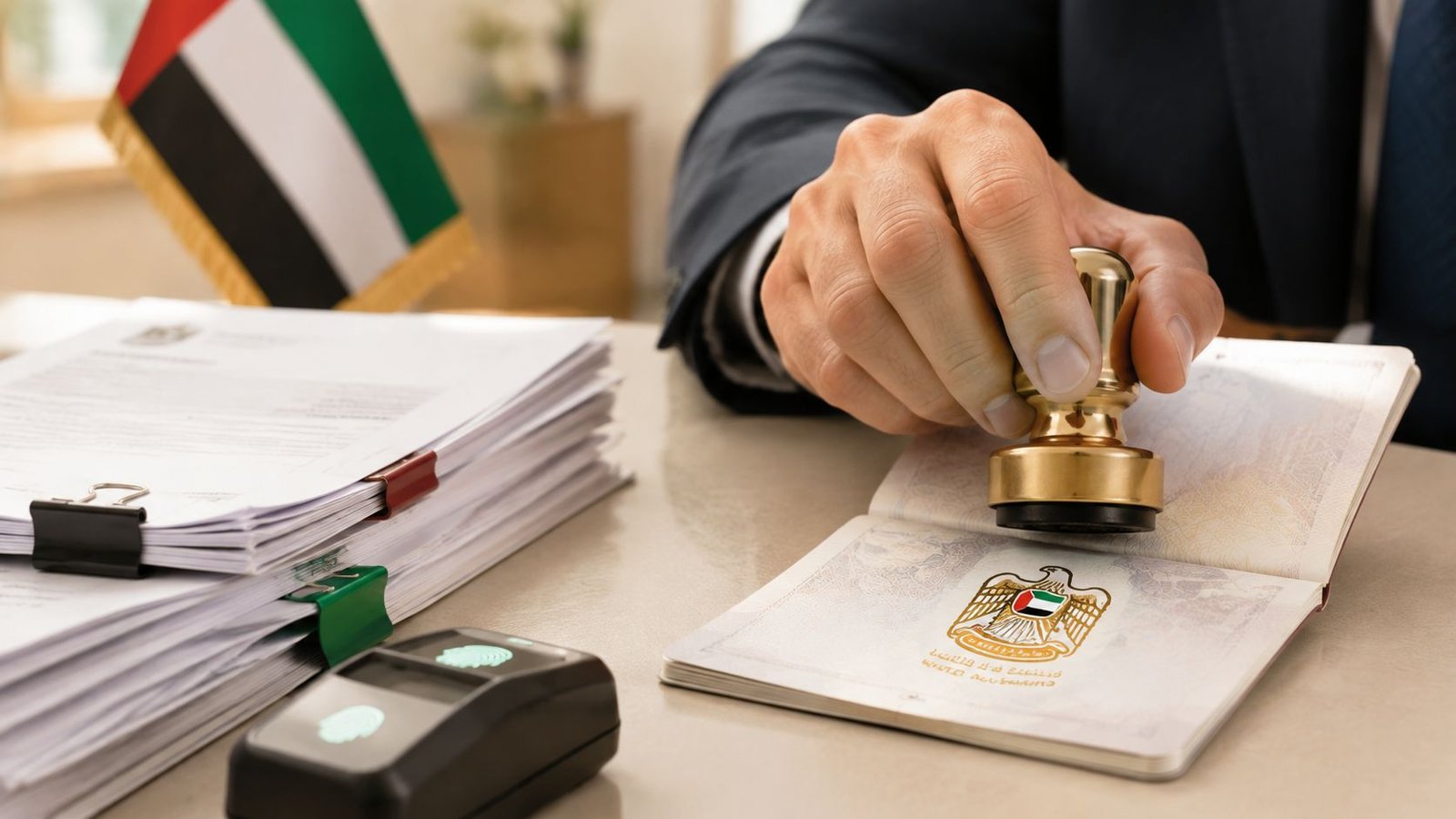
You've found a candidate, agreed a start date, and then discovered that the company may not yet be able to sponsor the hire. UAE employment visa requirements depend on both the employee and the sponsoring business, with jurisdiction, trade licence, quota, and labour compliance often deciding approval before the applicant's document checklist does.
Table of Contents
- What UAE Employment Visa Requirements Mean
- Employment Visa Types by Jurisdiction
- Employee Documents and Eligibility
- Why Employer Eligibility Determines Approval
- Medical and Biometrics Process
- Costs Timelines and Age Factors
- How Inpro Simplifies Each Stage
- Common Questions on UAE Work Visas
What UAE Employment Visa Requirements Mean
A UAE employment visa isn't one document. It normally combines a work permit issued through the Ministry of Human Resources and Emiratisation, or MoHRE, with a separate residence process handled through the Federal Authority for Identity, Citizenship, Customs and Port Security, or ICP. The UAE Government's work permit guidance confirms that the standard work visa applies to private and government-sector employees and is linked to the competent labour and immigration authorities.
What is the work permit layer?
A work permit is the legal authorisation to perform employment for a UAE employer. Under Federal Decree Law No. 33 of 2021, Article 6, a person can't legally work in the United Arab Emirates without a valid permit issued by MoHRE. A residence visa, entry stamp, or tourist status doesn't replace that authorisation.
The law also sets the basic age threshold. A worker must generally be at least 18 years old, except where a juvenile work permit or student training or employment permit applies. That makes age and permit status the first two legal checks, before medical appointments, Emirates ID registration, or residence stamping.
How does the residence layer work?
Once the employer's work authorisation is accepted, the file moves through immigration. The employer usually sponsors the employee, obtains an entry permit where required, and then completes the medical, Emirates ID, and residence steps through the relevant authority.
This sequence explains why an employee shouldn't travel to Dubai, Abu Dhabi, or Sharjah and begin working while waiting for paperwork. The employer must normally start the file before the employee travels or changes status inside the UAE, because the right to work and the right to reside are separate approvals.
Practical rule: Treat the employment relationship as unlawful until the work permit is in place. A passport stamp alone doesn't give someone permission to work.
For founders, the process therefore starts with the company, not the employee. The sponsor must be legally established, licensed for the relevant activity, and able to open an eligible labour file. Only then does the applicant's passport, photograph, education record, and medical status become part of an approvable application.
Employment Visa Types by Jurisdiction
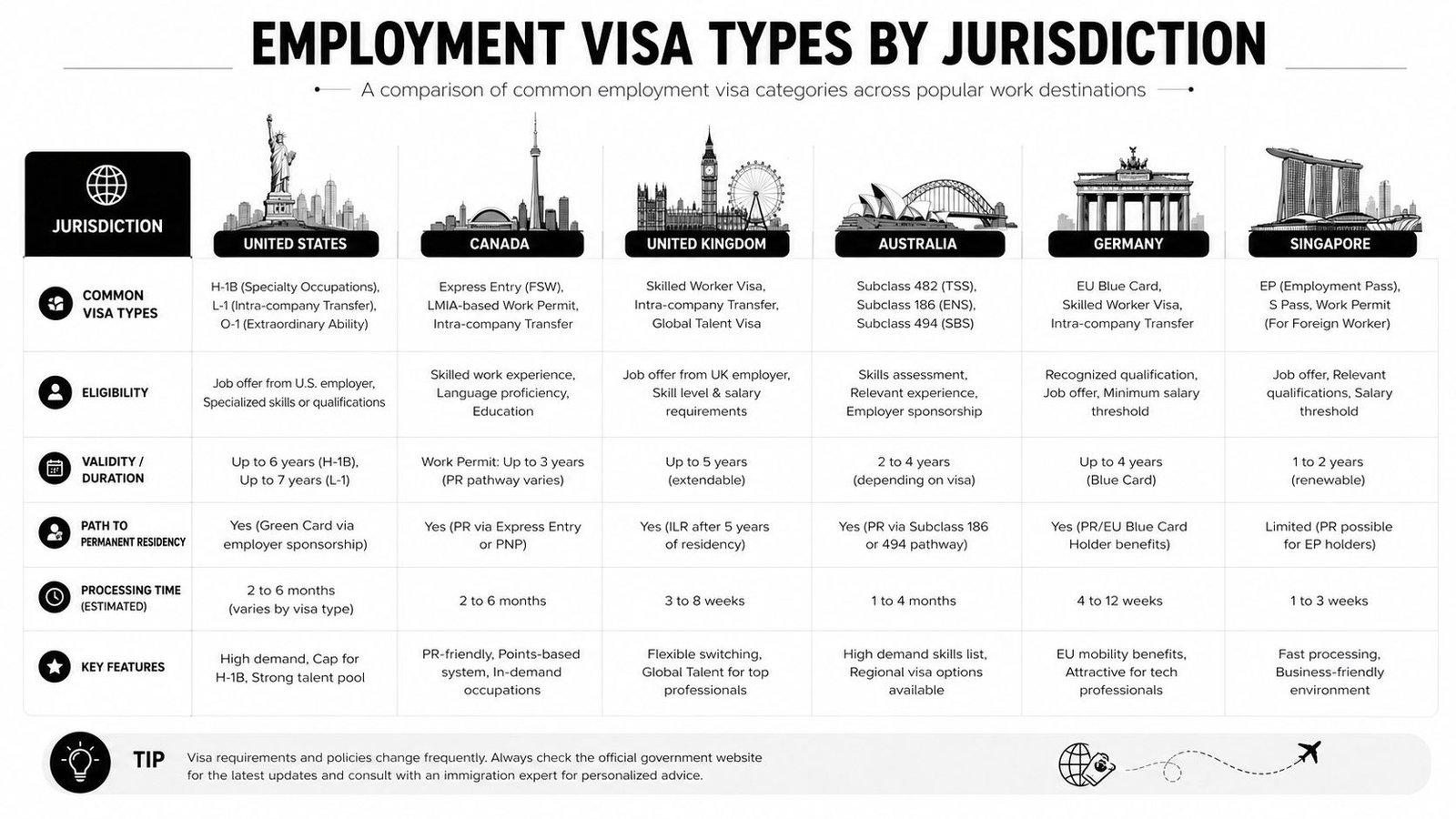
The sponsoring company's jurisdiction often determines whether an employment visa application can proceed. Mainland refers to a company licensed by the emirate's economic department, such as Dubai's Department of Economy and Tourism, formerly commonly called DED. Free zones operate through their own licensing authorities. Offshore companies are generally structured for holding or asset purposes, not ordinary employment.
How do Mainland, Free Zone, and Offshore routes differ?
| Jurisdiction | Sponsorship Authority | Hiring Limit |
|---|---|---|
| Mainland | MoHRE through the licensed mainland employer | Hiring is tied to the company's approved quota and licensed activity |
| Free Zone | The relevant free-zone authority, with immigration processing through the applicable channel | Hiring is tied to the zone's rules, licence, office arrangement, and approved quota |
| Offshore | Usually not structured for ordinary operating employment sponsorship | Limited suitability for resident worker visas and day-to-day local employment |
A mainland employer usually works directly with MoHRE for labour authorisation. The trade licence, establishment record, licensed activity, quota, and employment contract must support the proposed role. Dubai and Abu Dhabi mainland companies follow the federal labour framework, although their local licensing and immigration interfaces can differ.
Free-zone employers use the authority responsible for their specific zone. DIFC, the Dubai International Financial Centre, and ADGM, the Abu Dhabi Global Market, are separate financial free zones with their own employment frameworks. Other free zones set their own portal procedures, office requirements, quota rules, and administrative steps. A free-zone licence generally cannot sponsor someone for an unrelated mainland role without the required additional arrangement.
The employer's licence and quota therefore deserve review before collecting a full employee file. A complete passport package cannot correct a mismatch between the company's activity, office arrangement, quota, and requested position.
Offshore structures create a common error. An offshore company may suit share or asset holding, but it should not be treated as a normal operating employer with unrestricted UAE hiring capacity. If staff will work from an office in Dubai or Abu Dhabi, a mainland or operating free-zone structure is usually the more suitable starting point.
The trade-off is direct. Mainland supports broader access to the local market. Free zones can suit specialised activities and international operations. Offshore may support ownership objectives, but it is usually a poor fit for building a resident workforce.
Employee Documents and Eligibility
The employee file matters, but it does not decide the application by itself. Once the employer's jurisdiction and proposed occupation are confirmed, prepare documents that support the employee's identity, role, and professional status. The age rule was covered earlier. Do not treat ordinary employment sponsorship and juvenile or student permits as the same route.
Which documents does the employee need?
The passport should generally have at least six months of validity, with a recent passport-style photograph. These checks are basic but frequently cause delays. A passport nearing expiry, a different spelling of the applicant's name, or inconsistent nationality and date-of-birth details can require corrections or a new travel document before filing.
For skilled and regulated roles, the file may also need an attested academic certificate, an equivalency, or approval from the relevant professional regulator. The UAE work permit document guidance covers passport validity, photographs, and attested educational documents used in mainland and free-zone employment applications.
The job title needs the same review as the paperwork. A genuine, properly attested degree may still fail to support a profession that requires a specific qualification or sector approval. Confirm the occupation before ordering attestations, especially for medical, engineering, education, legal, and other regulated work. The authority handling the application may assess the proposed profession against the employer's licence and jurisdiction, so a document list cannot be separated from the sponsoring company's setup.
Use this preparation order:
- Confirm identity details: Match the passport name, nationality, date of birth, and application information.
- Check passport validity: Renew early if the document falls below the required validity.
- Prepare the photograph: Use a recent image that meets the application specification.
- Review the profession: Check whether the role needs an attested certificate, equivalency, or regulator approval.
- Align the contract: Ensure the job title, salary information where required, and company activity describe the same position.
For a skilled hire, collect credentials early enough for attestation and review. For an ordinary role, avoid ordering unnecessary certificates before confirming the occupation and sponsoring jurisdiction. A clean employee file can support approval, but it cannot correct an employer-side licence, quota, or activity mismatch.
Why Employer Eligibility Determines Approval
A founder can have a qualified candidate ready to start, yet the application may stall because the sponsoring company is not ready. Employer-side checks often determine approval before the authority examines the applicant's full file. The UAE work visa process overview identifies a valid trade licence, active establishment record, MoHRE registration, quota approval, and compliance with the Wage Protection System, or WPS, as key parts of the process.
What must the company have in place?
The trade licence must authorise the company's stated activity, and that activity should support the proposed occupation. A consultancy sponsoring a consultant is straightforward to explain. A company with a narrow licensed activity may face questions if it sponsors a worker for an unrelated role.
MoHRE registration links a private-sector employer to the federal labour system. The establishment record, immigration file, authorised signatory details, office information, and quota should all remain active and consistent. A mismatch between these records can create delays even when the employee's documents are complete.
Quota approval permits the employer to hire within its approved workforce capacity. It does not guarantee acceptance of every proposed employee. The occupation, nationality, office arrangements, and the company's compliance record may still affect processing.
WPS records whether wages are paid through the required payroll-monitoring system. Unresolved labour compliance issues can hold up a new employment file, regardless of how well the applicant has prepared.
Jurisdiction also changes the review. Mainland employers generally deal with MoHRE and federal immigration channels, while free-zone sponsors follow the relevant zone authority and its immigration process. Offshore structures are not ordinarily designed for standard UAE employee sponsorship. Confirm the sponsoring entity and authority before assessing the candidate's documents.
Why doesn't a fast digital process solve this?
The Work Bundle has shortened parts of the administrative flow. A work permit can take about five working days under that process, while entry permission, medical screening, Emirates ID, and residency steps follow in sequence.
Speed helps only when the sponsor is eligible. Digital processing can move a clean application quickly, but it cannot correct an expired trade licence, missing quota, inconsistent activity, or unresolved WPS issue.
Before promising a start date in Dubai or Abu Dhabi, verify the sponsor's jurisdiction, licence status, establishment record, quota, role alignment, and labour compliance history. This employer review often prevents more delay than asking the candidate to resend a clearer passport scan.
Medical and Biometrics Process
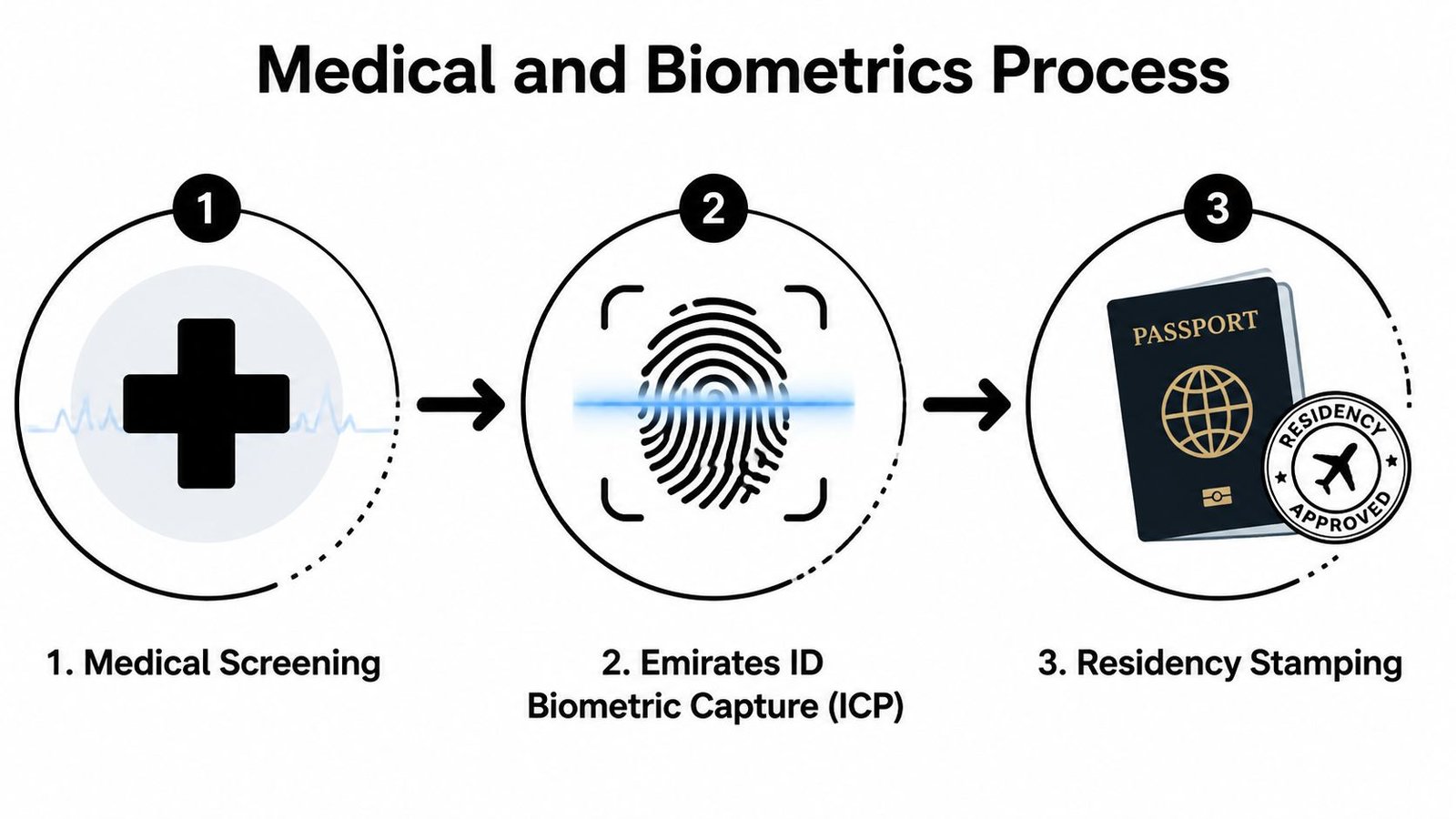
After the employer obtains the relevant authorisation and entry permission, the employee completes the physical steps that create the UAE residence record. The sequence is usually entry permit, medical screening, Emirates ID biometric capture, and residence processing.
What happens after entry permission?
An entry permit allows the employee to enter or regularise status for the employment process. It isn't the final residence visa and doesn't, by itself, replace the employer's work authorisation.
Once in the United Arab Emirates, the employee attends an approved medical fitness centre. The purpose is to complete the health screening required for residence processing. The exact centre depends on the emirate and the channel used by the sponsor, so an employee in Sharjah may follow a different appointment route from someone based in Dubai.
Next comes Emirates ID registration. Emirates ID is the resident identity card issued through ICP, and biometric capture can include fingerprints and a photograph. The employee's physical presence is needed for this step.
The final stage is residence issuance or stamping, depending on the current processing format. The employer or its authorised service provider submits the completed file to the immigration authority.
How should founders plan the employee's schedule?
Don't book the employee's travel around a vague promise that “the visa will be done soon”. First confirm that the entry permission is issued, then schedule the medical appointment and allow time for the Emirates ID centre. Keep the employee available in the UAE until the required in-country steps are complete.
The Work Bundle can coordinate these stages more tightly. As the 2026 process guidance explains, the work permit may be completed in about five working days, but the employee still needs to attend the relevant medical and biometric appointments.
The fastest process is still a sequence. Missing one appointment can create more delay than the original application.
For employees arriving in Abu Dhabi, Dubai, or Sharjah, give them a written checklist with the appointment location, passport requirement, contact person, and expected next action. Clear ownership prevents the common problem where the employee assumes HR is waiting for them, while HR assumes the employee has already attended.
Costs Timelines and Age Factors
Visa planning has two separate variables, time and cost. Both can change with the employee's age, the company's jurisdiction, and the sponsor's compliance status. Mainland, Free Zone, and Offshore structures may also follow different authority processes, so the company's setup should be confirmed before budgeting.
How long is the standard employment visa valid?
The official UAE platform states that an employer-applied work visa is normally valid for two years, subject to applicable conditions. Renewal is not automatic. The employer must still have an active licence, labour file, available quota, valid contract, and compliant status when renewal falls due.
Age adds another approval consideration. UAE employment guidance commonly describes the standard working age as up to 60, with continued employment possible up to 65 where MoHRE approves an annual work permit. After 60, the employer should treat each renewal as conditional and confirm approval requirements early.
What changes after age 65?
Hiring an employee aged 65 or above can create an additional cost. One UAE employment guide cites an extra AED 5,000 per work permit for workers in that age group, as described in the UAE age-limit guidance.
That amount affects more than the initial application budget. It should be included in renewal forecasts, role costing, and the decision about whether another residency route is appropriate. HR should identify age-related approval requirements before issuing a final offer, especially where the employer's jurisdiction has its own permit workflow.
The Work Bundle processes the permit stage in approximately five working days, as noted above. The remaining budget and schedule still depend on entry permission, medical screening, Emirates ID, and residence completion. A clean sponsor file supports efficient processing, while a licence, quota, or jurisdiction issue can stop the application before employee processing begins.
Record the employee's age, visa jurisdiction, renewal date, role classification, and sponsor status together. That gives the founder a practical forecast instead of a generic visa-cost estimate.
How Inpro Simplifies Each Stage
A founder shouldn't have to discover a quota problem after the employee has resigned from an overseas role. The sensible starting point is a sponsor review, before any promise is made about travel or joining.
What does the review cover?
Inpro Corporate Services L.L.C. can check the trade licence, licensed activity, establishment record, quota position, and labour file before preparing the application. That review helps identify whether the proposed role belongs under a Mainland, Free Zone, or Offshore structure and whether the chosen jurisdiction can support the intended hire.
The next stage is file preparation. The team can organise the MoHRE work permit documents, employment contract, passport and photograph checks, attested qualifications where required, and the ICP residence workflow. This separates labour authorisation from residence processing so that a missing document in one layer doesn't get confused with an approval issue in the other.
How are the practical appointments managed?
After entry permission, Inpro can coordinate medical screening, Emirates ID biometrics, and residence completion with the employee and HR contact. The value is operational clarity. Everyone knows which party is responsible for the next action, what has been submitted, and which event controls the start date.
The service also covers companies operating across Dubai, Abu Dhabi, Sharjah, and UAE free zones, where the portal and authority may differ. Clear pricing and timelines help founders budget without treating every application as an identical government transaction.
A local PRO partner can't bypass legal eligibility, but it can spot a weak sponsor file before the employee's relocation is committed. That's the difference between processing documents and managing the approval path.
Common Questions on UAE Work Visas
Can a UAE employment visa holder sponsor dependents?
A dependent visa is a residence route sponsored by a UAE resident for eligible family members. Whether a visa holder can sponsor a spouse, children, or other dependents depends on the sponsor's residency status, income, documents, housing, and the applicable immigration authority. The family application is separate from the employee's work permit, so the employer's sponsorship of the worker doesn't automatically create residence for relatives.
What happens when switching employers inside the UAE?
Changing jobs means the new employer must take responsibility for the new work authorisation and residence sponsorship process. The employee should follow the employment contract, notice, cancellation, and labour requirements that apply to the existing relationship before starting under the new sponsor. A new offer letter alone doesn't authorise work for the second company.
Is a freelance permit separate from employment?
A freelance permit is a self-employed authorisation, not the same as an employee work permit sponsored by a company. It may suit an independent professional working under an approved freelance or self-employment route, while an employee hired into a company role normally needs the employer-sponsored process described above. Founders should choose between the routes based on the working relationship, not on which application appears shorter.
Inpro Corporate Services L.L.C. helps founders and HR teams assess jurisdiction, confirm employer eligibility, prepare MoHRE and ICP files, and coordinate the medical, Emirates ID, and residency stages. Visit Inpro Corporate Services L.L.C. to discuss your UAE employment visa requirements before you commit to a start date or relocation plan.