

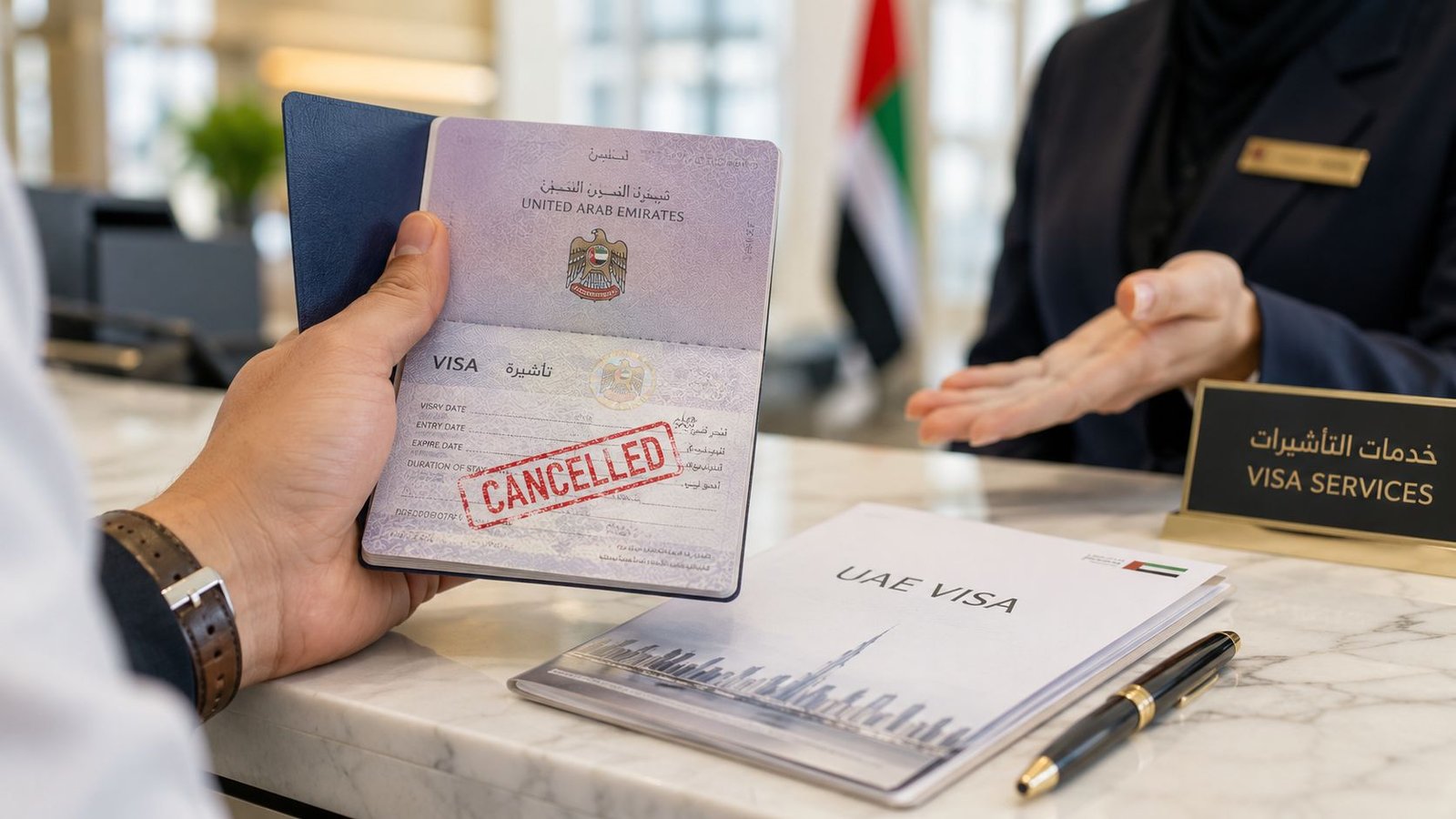
You're probably dealing with a deadline, a sponsor who hasn't replied, or a file that's already half-prepared and still not moving. The visa cancellation process in the UAE is not one generic submission, it's a sequence, and the file usually fails when people confuse the labour step, the immigration step, and the grace-period clock.
Table of Contents
- What Cancelling a UAE Visa Actually Means
- Who Can Cancel and Whose Call It Really Is
- Where to File by Emirate and Jurisdiction
- The Cancellation Workflow Step by Step
- Cancelling Employee, Investor, and Golden Visas
- Timelines, Overstay Penalties, and Refund Eligibility
- Checklist and How Inpro Handles It For You
What Cancelling a UAE Visa Actually Means
A UAE cancellation has two separate legal events, and people mix them up all the time. First comes the work permit or labour contract cancellation, then comes the residence visa cancellation through the immigration authority.
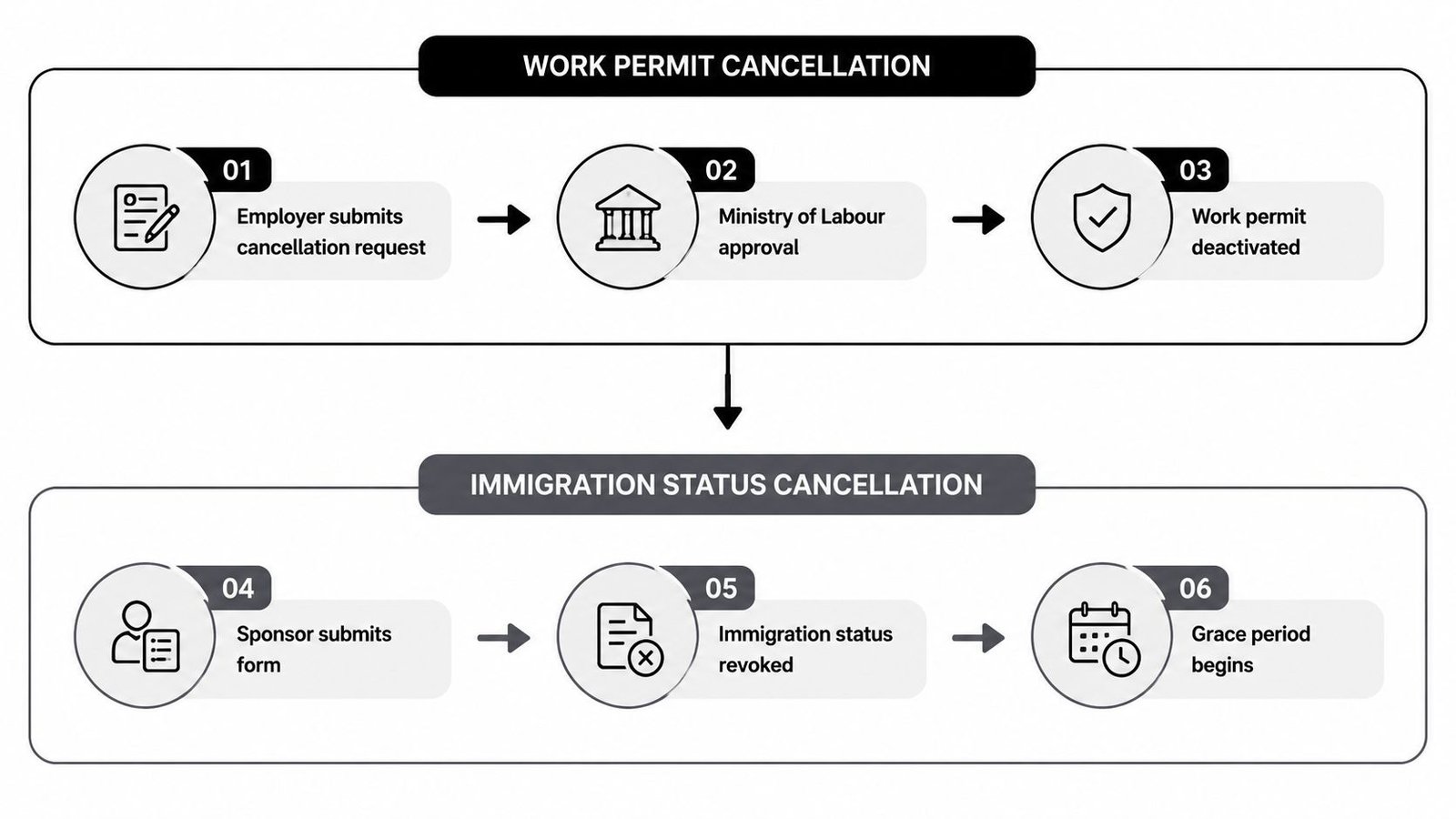
The labour file closes first
For mainland employees, the employer starts with the Ministry of Human Resources and Emiratisation, or MOHRE, which is the federal labour authority in the UAE. For free zone staff, the free zone authority handles that first closure inside its own system.
If you skip that sequence, the residence file often stalls. That is where avoidable delays start, because immigration is not supposed to close a residence record that still has an active work relationship attached to it.
The residence file closes second
After labour cancellation, the residence visa is cancelled through GDRFA, the General Directorate of Residency and Foreigners Affairs, in Dubai, or through ICP, the Federal Authority for Identity, Citizenship, Customs and Port Security, in other emirates. The approval paper that comes out at the end is the operational document, because it shows the grace-period end date.
Practical rule: treat the approval paper as the start of the countdown, not the day you first submitted the file.
A lot of stress comes from confusing a submission receipt with a completed cancellation. They're not the same thing. A receipt only proves the file was lodged, while the cancellation paper proves the visa file is closed and the next legal clock has started.
Who Can Cancel and Whose Call It Really Is
In the UAE, cancellation is usually sponsor-led, not visa-holder-led. That one fact changes the whole process, because the person under the visa normally can't just decide to cancel it on their own.
The sponsor is the one who files
For employees, the employer is the sponsor. For free zone staff, the sponsor is usually the company or the free zone entity. For investor visas tied to a licensed business, the company structure still sits at the centre of the file.
For Golden Visa dependents, the Golden Visa holder is the sponsor for those dependents, and each dependent cancellation has to be dealt with separately. That matters because a family file is not one single switch you flip, it's a set of linked records.
Entry permits have their own rule
ICP is strict on tourist entry permits. A cancellation request generally can't be filed after the beneficiary has already entered the country, unless it's connected to a status-adjustment application. That trips people up when they plan an arrival, then try to undo a permit that's already been used.
If you're a founder timing onboarding, or an HR team planning a transfer, check whether you're dealing with an entry permit or a residence visa. Those are different lifecycles, and the filing rights are different too.
The practical takeaway is simple. Ask first who holds sponsor authority, then ask which authority controls the file. If you ask in the wrong order, you waste days chasing a form nobody can legally sign.
Where to File by Emirate and Jurisdiction
Where you file changes the channel, the fee, and how quickly the paper comes back. Dubai, Abu Dhabi, Sharjah, and the other emirates do not all use the same front door, even when the end result is the same.
Main routes by place of issue
| Channel | Covers | Typical Fee | Typical Turnaround |
|---|---|---|---|
| GDRFA Dubai | Dubai residence visa cancellation | AED 190–225 | Online confirmation can come in 24 to 48 hours, manual files can take 1 to 3 working days |
| ICP Smart Services | Residence visa cancellation outside Dubai | About AED 150 | Online confirmation can come in 24 to 48 hours, manual files can take 1 to 3 working days |
| MOHRE or free zone portal first | Labour or work permit closure before residence cancellation | No number is given in the verified data | Depends on sponsor file readiness |
| Amer Service Centre | Dubai in-person filing | Service fee applies through the channel used | Manual processing window is typically 1 to 3 working days |
Online cancellation is faster than paper handling, and the difference shows up in real files. One UAE guide reports confirmation within 24 to 48 hours after digital submission, while another cites the paper issuance window at 1 to 3 working days and fee bands of about AED 150 via ICP and AED 190–225 via GDRFA Dubai. The delay usually isn't the authority, it's the documents.
Mainland, free zone, and offshore don't behave the same
Mainland Dubai files usually go through MOHRE for the labour side, then GDRFA or Amer for residence cancellation. Free zones such as DMCC, DIFC, ADGM, JAFZA, and RAKEZ typically use the zone PRO desk first, then move to GDRFA or ICP for the immigration file.
Offshore structures such as JAFZA Offshore and RAK ICC usually don't issue residence visas, so the issue is often corporate closure rather than a residence cancellation. That is why you should never assume “cancel the visa” is the right instruction until you've checked the jurisdiction.
The decision rule that saves time
If the person has a UAE residence visa, start with sponsor authority, then go to the right residence channel. If they only hold a permit linked to a company file, deal with the corporate side first. That's the cleanest way to avoid duplicate filing and rework.
The Cancellation Workflow Step by Step
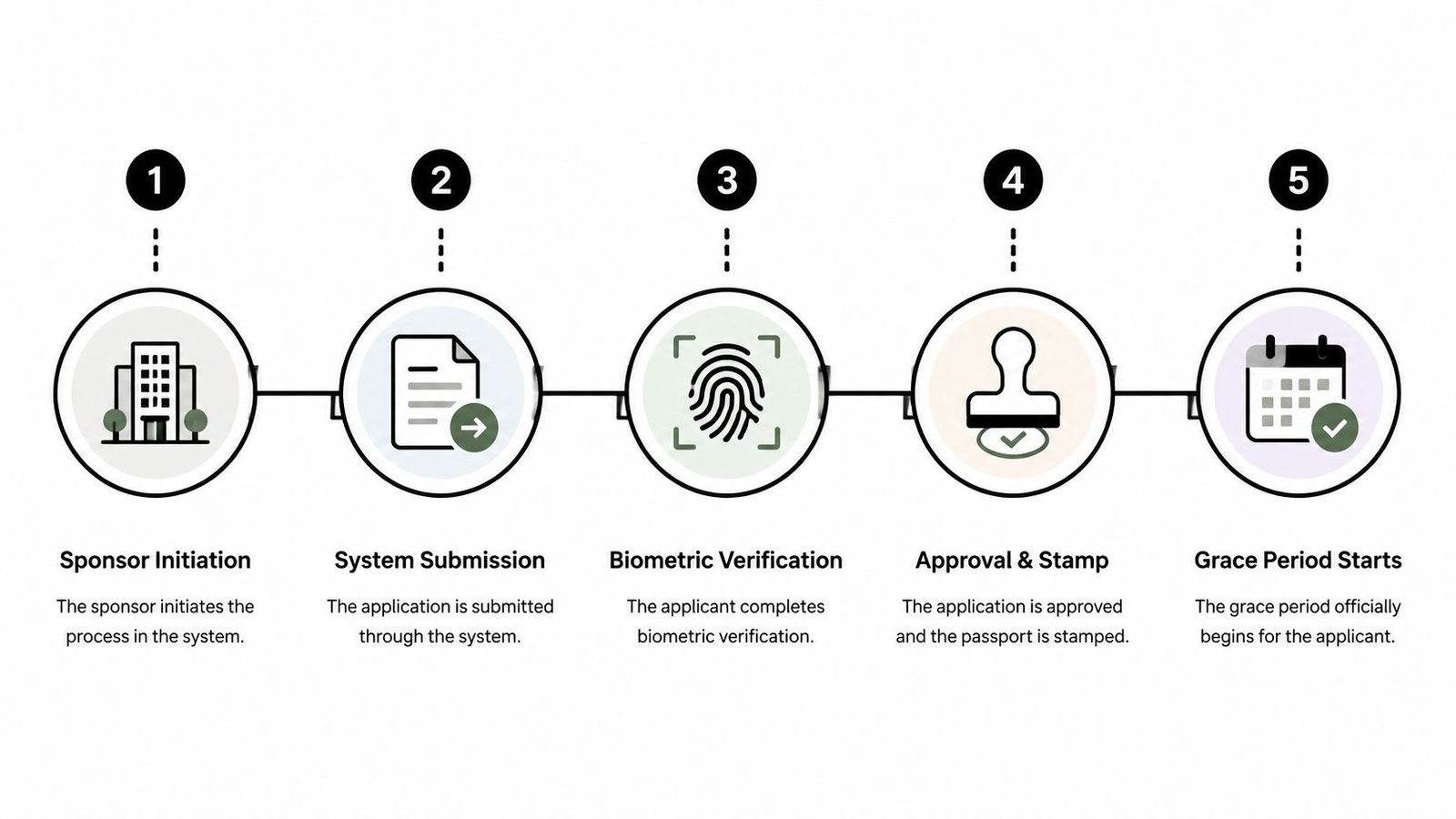
The file starts inside the sponsor's portal, not at the counter. Someone in the company, the free zone, or the family sponsorship structure submits the request, and that person has to make sure the passport details, Emirates ID, and visa file number are aligned before anything goes forward.
Then the labour or work permit closure is approved by MOHRE or the relevant zone authority. After that, the residence visa is filed with GDRFA in Dubai or ICP elsewhere, the fee is paid, and the approval paper is downloaded once the authority closes the file.
Why the paper matters more than the submission
The cancellation paper is the document that closes the visa file. It also carries the grace-period end date, and that date controls your next move, not the date you clicked submit.
Many people make a costly mistake. They plan travel, payroll, housing, or a sponsor transfer from the submission date, then discover the clock started later or earlier than they assumed. The paper is the anchor.
The most common stall point is mismatched file data. Passport number, Emirates ID, and visa number must match exactly, because these checks are the most effective way to avoid rejection and pointless back-and-forth.
What you can do before the grace window closes
Once the approval paper is issued, you're usually working against a short operating window. The sensible options are exit, transfer to a new sponsor inside the country, or adjust status if that route applies to your case.
Don't leave this until the last day. If there's a sponsor change, start the new file as soon as the cancellation paper is in hand.
If you want a simple mental model, use this one. Sponsor initiates, authority approves, paper is issued, then the grace period begins. Everything else is admin around that chain.
A freelancer moving to an employer visa is a good example. The old file closes, the new sponsor's file starts, and the dates have to line up cleanly or the person can fall into unnecessary overstay exposure.
Video guide for a quick visual reference.
Cancelling Employee, Investor, and Golden Visas
Employee cancellation is the cleanest path because the sponsor relationship is obvious. The employer closes the labour side, then the residence side follows through the right government channel.
Investor files need the company cleaned up too
An investor visa held through a mainland LLC or a free zone company is not just a person-level file. The licence or shareholder position often has to be addressed alongside the visa, because the company structure and the visa structure are tied together.
That is where founders get stuck. They assume the visa can be cancelled cleanly while the business record stays untouched, but in practice the company may still need a sponsor structure or a formal change in ownership and signatory records before the immigration side settles.
Golden Visa dependents are separate files
Golden Visa holders are self-sponsored, so the holder or an authorised PRO can initiate the cancellation directly. Dependents do not disappear automatically when the main holder changes plans, each dependent must be cancelled as its own transaction.
The order matters. If you leave dependents for last without planning the sequence, they can end up in a bad status gap while the main file is already moving. That is one of the fastest ways to create avoidable panic inside a family move.
Freelancer and remote-work cases need extra care
Freelancer visas can sit under a free zone permit, while remote-work arrangements may sit under a federal programme. The sponsor structure is different in each case, so the cancellation filing path changes with it.
The usual mistake is trying to use an employee cancellation mindset on a permit that doesn't have a traditional employer sponsor. That creates delays because the wrong person is being asked to sign the wrong file.
The mistake that causes the most rework
For employee, investor, and Golden Visa files alike, the most common rework comes from assuming one sponsor action will close every linked record. It won't. Each linked person or entity needs the correct authority, the correct sequence, and the correct supporting paper.
Timelines, Overstay Penalties, and Refund Eligibility
The risk starts after the cancellation paper is issued. That is the date that matters, because the grace-period clock starts from that approval and not from the day the file was submitted.
The grace period starts from the approval paper
For most residence visa categories, the post-cancellation grace period is typically 30 days, as stated on the ICP website. The clock starts from the date on the cancellation paper, not the submission date. That date controls exit planning, transfer timing, and any in-country adjustment.
Miss that window and the file turns expensive fast. Overstay fines start to build, departure can get blocked, and re-entry can be refused until the file is cleared. In UAE practice, the common mistake is treating submission as the deadline. It is not. The approval paper is the deadline you plan around.
Refunds are not automatic
Refund eligibility for unused visa time is limited, and sponsor-led cancellations often do not end with a clean cash-back outcome. In practice, the sponsor or authority has to confirm whether any refund path exists before anyone leaves the country or closes payroll.
The fixes that usually clear blocked files
- Mismatched details: Recheck passport, Emirates ID, and visa file number before resubmitting.
- Open traffic fines: Clear the fines before asking for the next approval.
- Missing Emirates ID return: Hand back the card, because stuck files often sit there for no good reason.
- Wrong channel choice: Move the file to the correct authority, since Dubai and non-Dubai routes do not follow the same desk.
The mistake I see most often is simple, people plan around the submission date and ignore the paper date. That one error creates late exits, rushed sponsor transfers, and avoidable cost.
Checklist and How Inpro Handles It For You
A clean cancellation file starts with the right papers, not with the application itself. If you're gathering documents today, use this as the minimum set.
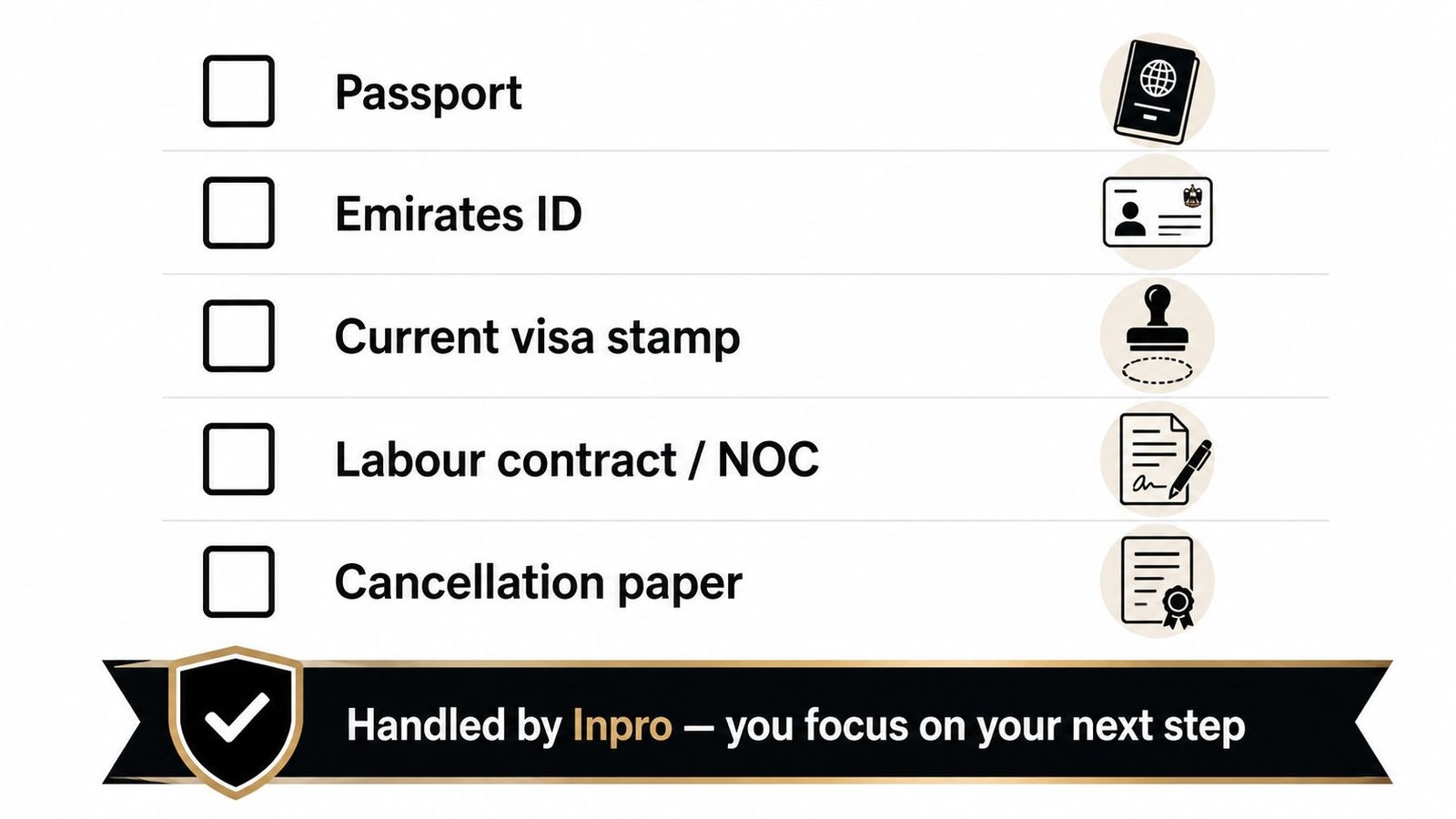
What to gather before filing
- Passport: Make sure the copy is clear and the number matches the visa file.
- Emirates ID: Check the card number carefully before submission.
- Current visa stamp: Keep the latest residency page ready.
- Labour contract or NOC: Use the correct sponsor-side document for your category.
- Cancellation paper: Save the approval as soon as it's issued, because the grace period starts from there.
Before you file, do a quick clean-up of the practical blockers too. Check traffic fines, close utility accounts where needed, and make sure any bank or payroll handover has been handled. Those loose ends don't sound like visa issues, but they often slow the file anyway.
The order that avoids wasted time
- Confirm who the sponsor is.
- Close the labour or corporate side first if it applies.
- File the residence cancellation through the correct authority.
- Download the approval paper.
- Act inside the grace window, whether that means exit, transfer, or status change.
If you'd rather not manage the coordination yourself, that's exactly the kind of file a good PRO team should handle correctly. The work is in the sequencing, the document checking, the authority routing, and the follow-through after approval.
Inpro Corporate Services L.L.C. handles UAE visa cancellation files with sponsor coordination, government-channel submission, approval-paper retrieval, and grace-period tracking so the process doesn't stall at the wrong desk. If you want a calm, handled approach for employee, investor, Golden Visa, or dependent cancellations, visit Inpro Corporate Services L.L.C. and speak with the team about your next step.