

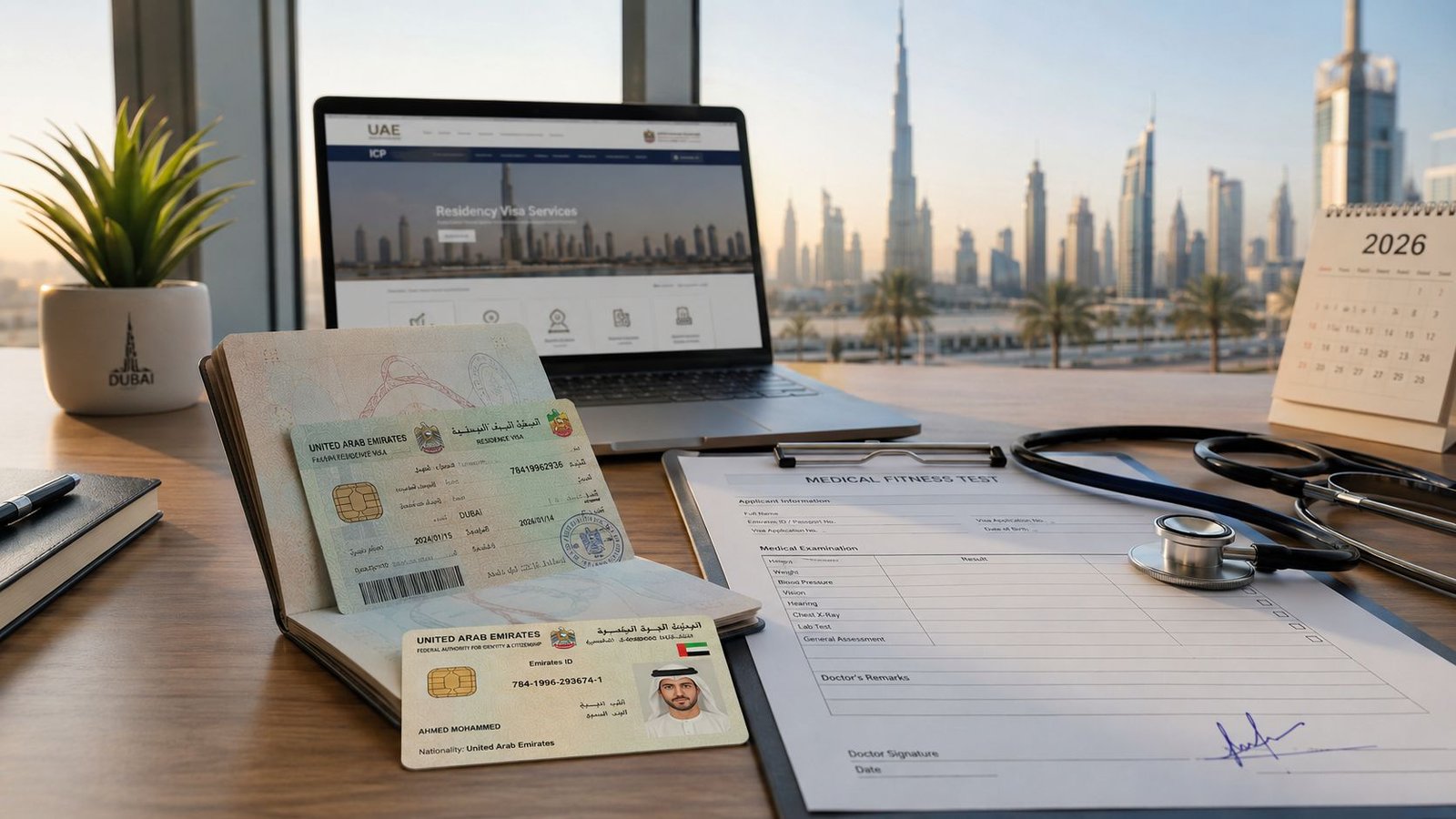
A visa expiry notice usually lands at the worst time. Payroll is running, an investor trip is coming up, onboarding is half-finished, and someone in HR spots that a founder, employee, or dependent visa is close to lapsing. At that point, visa renewal in Dubai stops being paperwork. It becomes an operations issue.
If you manage a business in Dubai, a renewal delay can ripple far beyond immigration. Internal approvals slow down. Employee confidence drops. Bank, tenancy, insurance, and identity-linked tasks can become awkward fast. The businesses that handle renewals well don't treat them as a last-week admin chore. They treat them like a controlled compliance workflow with owners, deadlines, and fallback plans.
That's the difference between a routine renewal and a preventable disruption.
Table of Contents
- Your 2026 Guide to Dubai Visa Renewal
- The Core Renewal Workflow and Required Documents
- Renewal Paths for Employee, Family, and Investor Visas
- Understanding Renewal Costs, Timelines, and Penalties
- Common Renewal Mistakes and How to Avoid Them
- When to Partner with a PRO for Visa Renewal
Your 2026 Guide to Dubai Visa Renewal
A renewal file often looks under control until one missing dependency stops the whole case. The visa expiry date is close, the employee is still working, travel is booked, and HR assumes the renewal is a routine submission. Then an underlying issue becomes apparent. Insurance has lapsed, passport validity is too short, or the sponsor record does not match the immigration file.
That is why visa renewal in Dubai should be managed as an operations task, not a clerical one.
Dubai's own immigration authority, GDRFA Dubai, provides the official channels for residency services, including renewal-related transactions through its smart services portal and service centers, as outlined on the GDRFA Dubai website. The practical point is simple. Approval depends on a clean, matched, eligible file. The portal only processes what the underlying records can support.
I have seen the same mistake many times. Founders and HR teams count the government processing window, but they do not count the time needed to fix the file before submission. That is where delays usually start. A medical test gets booked too late. Emirates ID details do not align. The sponsor side assumes someone else has handled the paperwork. By the time the issue is found, the company is dealing with overstays, blocked travel, payroll questions, or an employee who cannot continue normal work without uncertainty.
The better approach is to treat each renewal as a business-continuity checkpoint. Review the case early. Check whether the employee, dependent, or investor still fits the right renewal route. Confirm that all linked records are current before anyone pays fees or books urgent appointments.
A workable renewal plan usually has four controls:
- One accountable owner for the file, whether that is HR, operations, or a PRO
- An early validity check on passport, sponsor records, insurance, and identity details
- A buffer for corrections if a document needs updating or a record needs to be amended
- A channel decision upfront so the case goes through the correct authority without avoidable resubmission
Handled properly, renewal stays routine.
Handled late, it starts affecting staffing, travel, compliance, and management time.
The Core Renewal Workflow and Required Documents
A renewal usually feels routine until someone needs to travel next week, payroll is due, and the file stalls on a mismatch that should have been caught earlier. That is why I treat renewals as an operations process, not a typing exercise on a portal.
The order matters because each step depends on the one before it. Start by checking whether the person is still eligible under the same sponsor and visa route. Then confirm passport validity, medical fitness requirements, Emirates ID record status, insurance, and the correct submission channel. Dubai residence files are generally handled through GDRFA Dubai, while federal residency services sit under ICP, according to the UAE Government's official residency and visa services guidance.
To keep the sequence clear, this workflow summary helps:
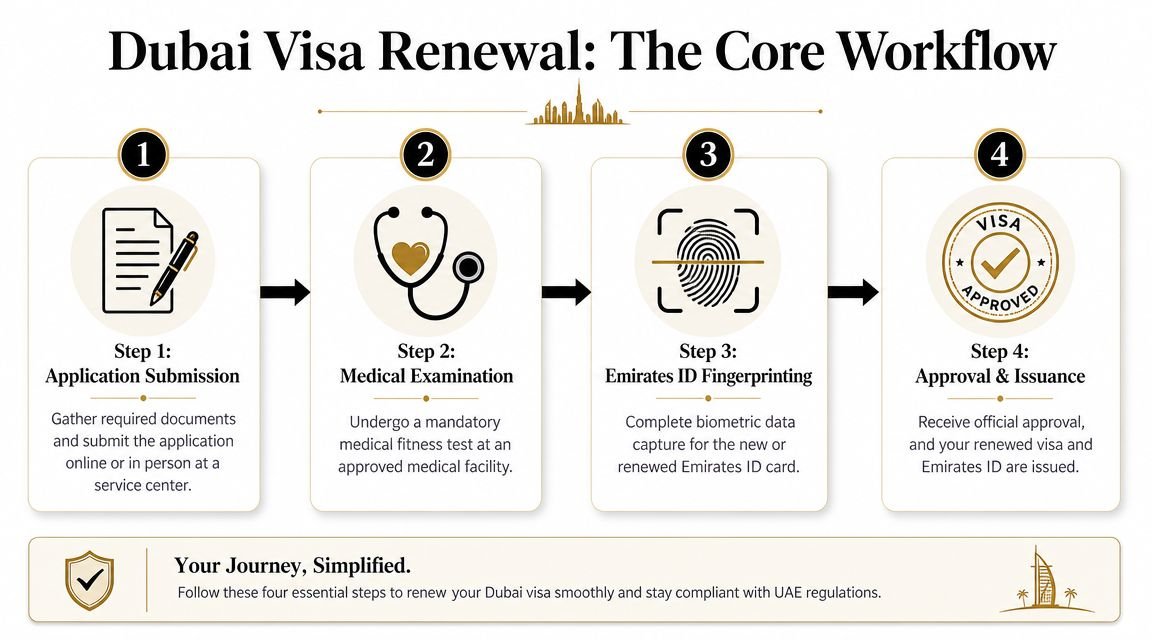
The file must be approval-ready before submission
The portal does not fix a weak file. It only processes what the records can support.
In practice, the first checkpoint is the passport. If validity is too short, the renewal can stop before the case properly starts. After that, I look for record alignment. Names must match across the passport, visa record, Emirates ID data, and sponsor records. Small inconsistencies create bigger delays than many applicants expect because they often trigger manual review or a correction cycle.
A workable renewal file usually includes:
- Passport copy with enough validity remaining
- Current visa copy and Emirates ID details
- Recent passport photographs in the required format
- Sponsor or company documents where the visa category requires them
- Medical fitness documentation where applicable
- Valid health insurance linked to the renewed status
Sponsor-side errors rarely cause a short delay. They usually stop issuance until the underlying record is corrected.
Medical, ID, and insurance need to be handled in the right order
For many adult renewals, the medical fitness test is part of the approval chain, and approved Dubai screening centres handle that process under the Dubai Health medical fitness services framework. Book it late and the whole file slips, even if every document is ready.
The Emirates ID side also needs close attention. If immigration data and identity records do not line up, the application can pause while the mismatch is fixed. Insurance creates the same problem. A policy that is expired, not updated, or not accepted for the residency category can block progress at the point many teams expect payment to clear and issuance to follow.
Later in the workflow, many applicants find it useful to review a visual walk-through before submission:
What keeps renewals on track
The best files are usually the least dramatic. One person owns the case, checks the sponsor side before requesting employee documents, books medicals early where needed, and confirms the right channel before fees are paid.
The weak approach is to submit first and sort out the record later. That creates rework, added fees in some cases, avoidable overstay risk, and unnecessary disruption for the employee, the family member, or the business.
Renewal Paths for Employee, Family, and Investor Visas
A founder usually notices visa renewal only when something operational starts to slip. An employee cannot travel. A dependent cannot update records. An investor discovers the company documents behind the visa are no longer in clean order. By that stage, the issue is no longer administrative. It is a business continuity problem.
The workflow may look similar on paper, but renewal approval depends on the legal basis of the visa. That basis changes by category. Treat all renewals the same and small filing gaps turn into avoidable delays.

Employee visa renewals
Employee renewals depend first on the employer file, then on the individual file. HR teams often reverse that order. They collect passport copies, photos, and Emirates ID details from the employee, then discover a sponsor-side issue that should have been cleared first.
The practical check is simple. Confirm the company can sponsor the renewal cleanly before asking the employee to spend time on appointments and document updates. If the labour and immigration records do not align, the application can stall even when the employee has submitted everything requested.
Common pressure points include:
- Sponsor record mismatches between company records and immigration records
- Employment status changes that were not reflected properly before renewal
- Poor batch planning where one delayed case affects travel, role transfers, access cards, or payroll administration
Good HR teams track dates in bulk but clear risks case by case. That is the difference between processing renewals and actually controlling them.
Family visa renewals
Family renewals sit on the sponsor's status. That is the point many households miss.
A family file can look complete and still pause because the sponsor's residency, income evidence, housing documents, or insurance position no longer matches what the authority expects for that dependent relationship. The dependent is not assessed in isolation. The sponsor file supports the whole renewal logic.
The safest approach is to build the file family by family, not person by person. Gather the sponsor documents first, then line up each dependent record against that base. This saves repeat visits and reduces the common problem of one family member moving ahead while another gets held for a mismatch.
I have seen this often with growing families. A child's passport is renewed, a spouse's insurance is updated later, and the sponsor assumes the rest of the file is unchanged. On submission, the case splits into follow-up tasks that could have been avoided with one full review at the start.
A family renewal usually stalls because the sponsor file and dependent file no longer match in a way the applicant noticed early enough.
Investor visa renewals
Investor renewals require a different mindset. The question is not only whether the applicant's personal documents are current. The key question is whether the business or investment basis behind the visa still supports renewal in its present form.
That means checking the underlying structure before submission. Is the licence current? Does the shareholding or authorised role still match the visa basis? Has anything changed in the company setup since the last approval? If the answer to any of those questions is yes, the renewal path may need to be adjusted before fees are paid.
This category creates the most preventable disruption for business owners because a visa delay can coincide with licence renewals, banking updates, signature authority issues, or travel plans. A weak filing strategy creates friction far beyond immigration.
A simple comparison shows where each route tends to break:
| Visa type | Main driver | Common risk |
|---|---|---|
| Employee | Company sponsor records | HR focuses on employee paperwork before clearing sponsor issues |
| Family | Sponsor eligibility and dependent alignment | One dependent record no longer matches the sponsor's current status |
| Investor | Current business or investment basis | Applicant files on personal documents alone and misses a structural change |
The strategic point is straightforward. Visa renewal is not one process repeated three times. It is three different approval logics that happen to end with the same outcome. Teams that understand that early avoid delays, reduce compliance risk, and protect day-to-day operations.
Understanding Renewal Costs, Timelines, and Penalties
Most applicants ask, “What does renewal cost?” That's the wrong first question. The better question is, “What are the cost layers in my case?” Dubai renewal costs aren't one fixed national number, and relying on a single figure is where budgeting starts to drift.
One UAE fee structure cited for extensions shows an AED 100 application fee plus AED 500 extension fee, while Dubai's GDRFA tourist visa extension page lists AED 600, plus 5% VAT and additional charges such as AED 10 Knowledge Dirham and AED 10 Innovation Dirham where applicable, according to Oplus Realty's summary of UAE visit visa renewal fees. That spread matters because cost depends on visa type, issuing authority, and how the request is processed.
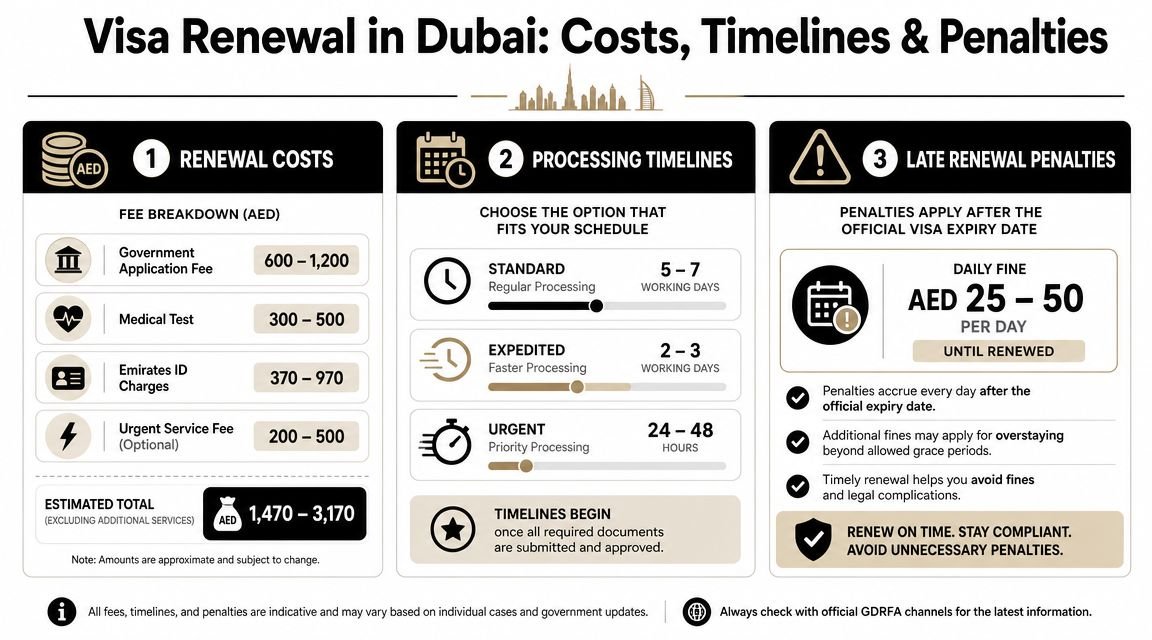
What you are actually paying for
A renewal bill usually has several parts. Government charges are only one layer.
Another Dubai guide places the base renewal flow at roughly AED 300 to 400 for one year and AED 600 to 700 for two years, before add-ons, and notes that applicants should start about 30 days before expiry to reduce exposure to late fines and absorb turnaround time, according to BizVibez's UAE residence visa renewal guide.
In practice, your total outlay may include:
- Government renewal charges linked to the visa type and authority
- Emirates ID fees for the identity side of the process
- Medical fees for the mandatory health screening stage
- Typing, service, or delivery charges if a service layer is used
This is why “How much is visa renewal in Dubai?” often produces confusing answers. Different people are quoting different layers of the same transaction.
Why timing matters more than most applicants think
Applicants often focus on the grace period as if it were extra working time. It isn't a planning tool. It's a safety net that you don't want to lean on.
If you start early, you have room to fix a passport issue, correct sponsor records, align insurance, or resubmit a file. If you start late, every exception becomes urgent. The pressure isn't only financial. It spills into travel, payroll coordination, employee availability, and management time.
A practical rule for business teams is simple:
- Budget by layers, not by one headline number
- Start with a buffer, not with the expiry date
- Assume one correction may be needed, even for straightforward renewals
That approach keeps timing and cost under control without pretending the process is identical for every applicant.
Common Renewal Mistakes and How to Avoid Them
Most renewal problems aren't caused by a difficult system. They're caused by bad assumptions. Someone thinks the visa is renewable because it was renewable last time. Someone else thinks payment equals progress. Neither assumption is safe.
The most overlooked issue is the gap between renewal mechanics and renewal eligibility. A Dubai-focused explainer points out that renewal depends on continued eligibility and valid supporting conditions, such as a valid trade licence or employment contract, which is why founders and HR teams often need to ask not “how do I renew?” but “can I renew if the sponsoring relationship has changed?” as explained in UAE Expert Hub's residence visa renewal guide.
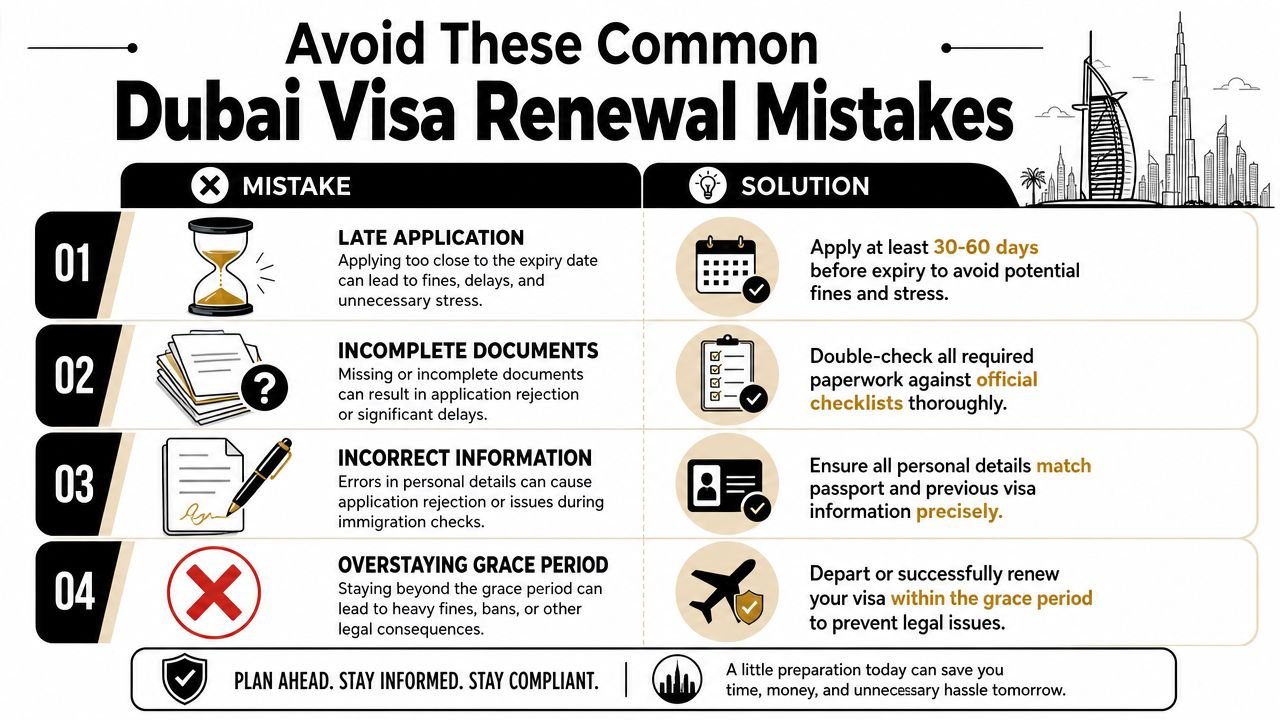
Mistaking process for eligibility
This is the costliest mistake because it wastes effort before anyone addresses the actual issue. If the underlying sponsor relationship has changed, the file may need a different route, updated support, or a more fundamental immigration review.
For founders, this often appears when a company record has changed but the team still tries to renew as if nothing happened. For employees, it appears when job status and sponsor records no longer line up. For dependants, it appears when the sponsor's own status has moved.
What to do instead:
- Check the legal basis first before collecting routine documents
- Confirm sponsor continuity rather than assuming prior approval guarantees new approval
- Escalate edge cases early if employment, licence, or sponsor status has changed
Treating documents as a formality
A complete file is not admin polish. It is the application.
The routine failures are familiar. Passport validity has dropped below the required threshold. Insurance proof is missing or no longer valid. A sponsor document doesn't match the rest of the file. None of these are dramatic errors, but each one can halt progress.
If a file is incomplete, the portal doesn't care how urgent your deadline is.
A disciplined pre-check usually covers:
| Document area | Why it matters |
|---|---|
| Passport validity | Short validity can block the renewal path entirely |
| Sponsor documents | Mismatch can delay or reject the application |
| Insurance evidence | Invalid cover can stop the file from moving |
| Identity records | Unaligned data creates avoidable friction |
Leaving no room for exceptions
The last major mistake is calendar arrogance. Teams assume the straightforward case will stay straightforward.
It often does, until it doesn't. A medical step may need follow-up. A portal upload may need correction. A sponsor-side document may need renewal first. Once that happens, a late-starting application turns into a business interruption.
The practical fix is operational, not theoretical:
- Set an internal renewal trigger well before the final date
- Review every file for dependencies, not just missing papers
- Track exceptions separately so one problematic case doesn't vanish inside a batch
Good renewal management isn't about moving faster at the end. It's about removing reasons for delay at the beginning.
When to Partner with a PRO for Visa Renewal
A straightforward single renewal can often be handled internally. If the sponsoring basis is stable, the documents are clean, and one person can track the file properly, DIY can work.
When DIY still works
The do-it-yourself route is usually reasonable when the case is simple and the cost of delay is low. One founder renewing a stable visa with organised records may decide the extra coordination isn't necessary.
That said, even simple cases need discipline. Someone still has to monitor document validity, schedule the medical step, check the sponsor basis, and make sure the file goes through the correct channel. DIY only works when someone owns those tasks.
When specialist support saves time and risk
A PRO becomes the better choice when renewal risk spreads beyond one person. That usually happens in a few situations:
- You're managing multiple employee renewals and need tracking, escalation, and sponsor-side coordination
- The visa type is more complex, especially where business or investment records drive eligibility
- A prior application was delayed or rejected, and the file now needs sharper handling
- The business can't afford admin drift because travel, onboarding, payroll, or compliance timelines are tied to residency status
The value isn't just form-filling. It's process control. An experienced PRO spots whether the issue is timing, eligibility, document mismatch, or channel choice before the file gets stuck in the wrong place.
That matters for founders because leadership time is expensive. It matters for HR because one broken renewal can consume disproportionate attention. It matters for operations because immigration delays rarely stay inside immigration.
The right time to involve a PRO is before the file becomes urgent, not after the system exposes the gap.
Professional support is most useful when it removes uncertainty from a recurring operational process. That's why mature businesses don't view visa renewals as isolated admin tickets. They treat them as managed compliance workflows with deadlines, dependencies, and consequences.
If you'd rather keep your team focused on running the business than chasing renewals, Inpro Corporate Services L.L.C. helps founders, HR teams, and growing companies handle UAE visa and PRO workflows with clear timelines, direct government-channel coordination, and practical support across employee, investor, and business-linked cases.