


ILOE insurance is a mandatory unemployment safety net for most employees in the UAE, and it has applied since 1 January 2023. In simple terms, it's a federal scheme that can pay up to 60% of an employee's average basic salary before job loss, subject to category caps, if that employee loses work involuntarily and meets the qualifying rules.
That catches many founders off guard because ILOE sounds like an optional employee benefit. It isn't. In the United Arab Emirates, it sits closer to a compliance rule than a perk, which means businesses in Dubai, Abu Dhabi, Sharjah, and most free zones need to treat it as part of normal hiring and onboarding discipline.
For employers, the issue isn't just understanding what ILOE is. It's knowing where teams slip up. New hires delay subscribing. HR assumes free zone staff are exempt. Employees think they're covered from day one, then discover a payment gap can invalidate a future claim. Those are the mistakes that create stress later.
Table of Contents
- Introduction
- What Is ILOE and Who Must Subscribe
- How Much ILOE Costs and What It Covers
- What ILOE Insurance Does Not Cover
- How Companies Should Manage ILOE Compliance
- ILOE Insurance FAQs for 2026
- Conclusion
Introduction
ILOE is one of the first UAE hiring compliance checks that companies underestimate. It sounds employee-facing, but for employers it affects onboarding, HR administration, and the risk of avoidable penalties if staff miss the subscription requirement.
The scheme was introduced under Federal Decree-Law No. 13 of 2022 and took effect on 1 January 2023 for eligible employees in the private sector and federal government, including many free zone roles. For founders and HR managers, the practical point is straightforward. ILOE is now part of the normal employment setup in the UAE, not an optional extra to sort out later.
That changes the question from “what is ILOE insurance?” to “how do we make sure no one slips through the process?”
The Ministry of Human Resources and Emiratisation (MOHRE) is the UAE federal authority that oversees employment regulation in the private sector. While the subscription and payment sit with the employee, companies still carry the operational risk if new joiners are not guided properly, records are incomplete, or HR assumes payroll teams are handling it.
In practice, I see the same mistake repeatedly. A business completes the visa, labour card, and payroll setup, then treats ILOE as the employee's personal task. That is where preventable problems start. A better approach is to build ILOE into onboarding checklists, joining instructions, and probation-period follow-up so compliance does not depend on reminders after the fact.
Practical rule: Treat ILOE as part of employee onboarding control, not as a side issue after hiring.
What Is ILOE and Who Must Subscribe
What is ILOE insurance in plain English
ILOE is part of the UAE employment rulebook, and employers who treat it as an afterthought usually create avoidable HR problems. For employees, it is a mandatory unemployment insurance scheme that can provide temporary income support if they lose their job for reasons outside their control. For founders and HR teams, the bigger point is operational. It affects onboarding, policy wording, employee communications, and compliance tracking across entities.
For international businesses entering the UAE, that distinction matters. ILOE is not a company-sponsored perk. It sits alongside the normal employment setup for eligible workers, which means HR teams need a consistent process from day one.
Use this visual if you want the fastest way to explain it to a team member or new hire.
Who has to subscribe
The rule applies broadly. Eligible employees in the private sector and federal government sector must subscribe, and that includes most free zone employees. There are limited exceptions: Dubai International Financial Centre (DIFC) and Abu Dhabi Global Market (ADGM) follow a different position, where participation is voluntary.
In practical terms, a mainland company in Dubai, a manufacturer in Sharjah, or a business operating in a standard UAE free zone will usually fall under the standard ILOE framework for employees who hold work permits and receive a salary. The scheme applies to both UAE nationals and expatriates, subject to the eligibility rules set by the authorities.
A quick reference point helps:
| Employee type | Typical ILOE position |
|---|---|
| Mainland private sector employee | Mandatory |
| Federal government employee | Mandatory |
| Most free zone employee | Mandatory |
| DIFC or ADGM employee | Voluntary |
| Investor in own company | Exempt |
After the core definition, many teams want a quick walk-through. This short video helps with that.
Who is exempt
Some groups sit outside the mandatory scheme. Common exemptions include:
- Investors: People working in companies they own are generally outside the mandatory employee pool.
- Domestic workers: Household staff are not covered under the standard ILOE framework.
- Temporary contract holders: Short-term contract arrangements are excluded.
- Workers under 18: Minors do not need to subscribe.
- Retired Emirati pensioners: Retired UAE nationals already receiving a pension are excluded if they return to work.
The compliance trap is usually not the exemption list itself. It is misclassification.
A common example is a business with one entity in a standard free zone and another in DIFC. HR applies one rule across both populations, then assumes every employee is either automatically covered or automatically exempt. That is the kind of error that causes missed subscriptions, inconsistent onboarding instructions, and employee complaints later on.
The safer approach is simple. Check the legal status of each employing entity, then map ILOE rules by employee group instead of using one blanket process for the whole company. For growing businesses with multiple licences or offices, that small control avoids a disproportionate amount of cleanup later.
How Much ILOE Costs and What It Covers
How much employees pay
ILOE is inexpensive on paper. The practical issue for employers is not usually the amount. It is making sure staff understand the payment structure early, complete the subscription correctly, and keep proof on file.
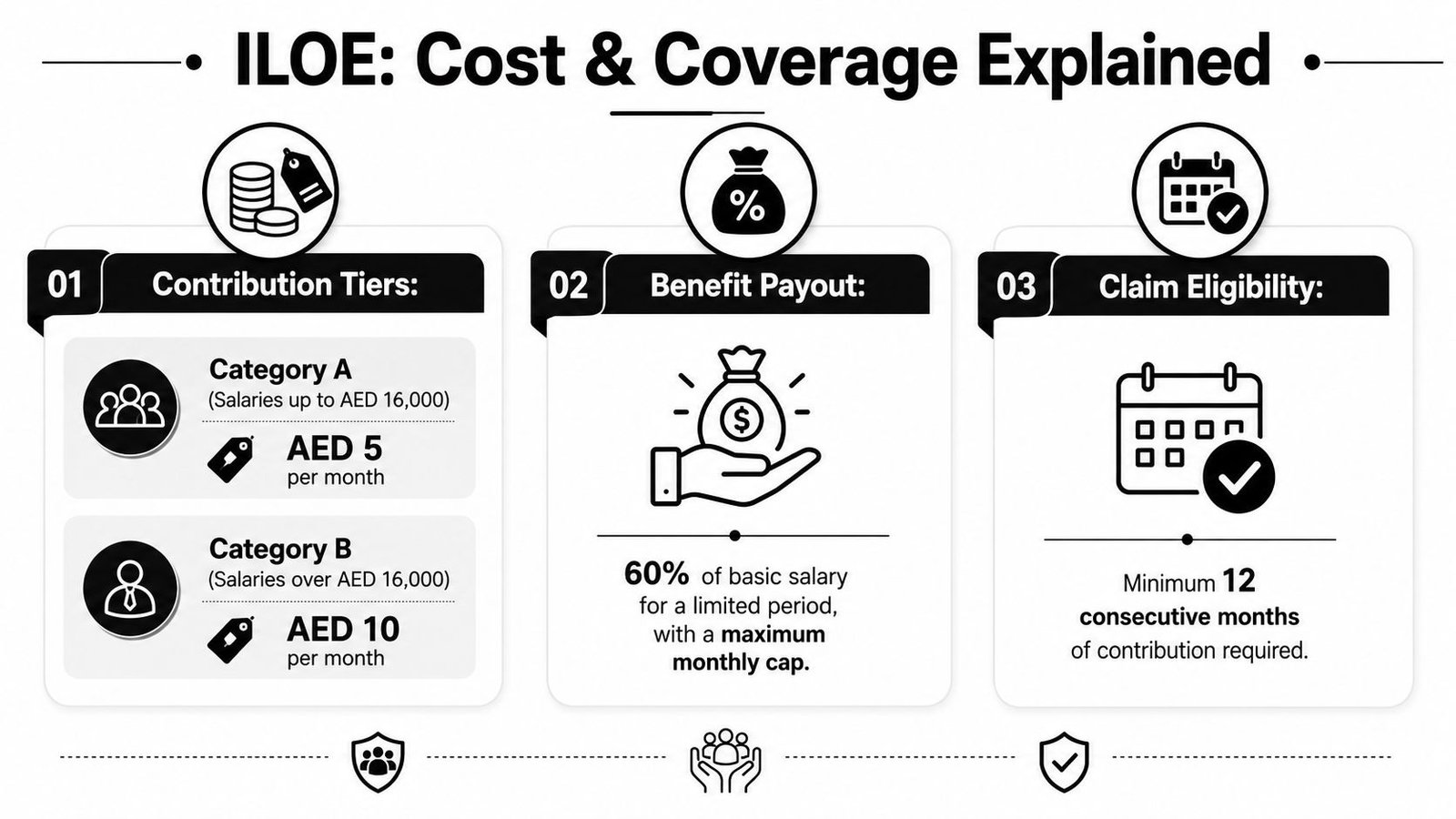
According to AA Consultancy's ILOE cost breakdown, employees with a basic salary of AED 16,000 or less pay AED 60 per year (AED 5 per month), while employees earning more than AED 16,000 pay AED 120 per year (AED 10 per month).
The two statutory tiers are:
| Category | Basic salary | Statutory premium |
|---|---|---|
| Category A | AED 16,000 or less | AED 60 per year or AED 5 per month |
| Category B | More than AED 16,000 | AED 120 per year or AED 10 per month |
There is also a payment detail that often catches employees off guard. For subscriptions initiated from January 2024, the minimum upfront payment is two years, costing about AED 126 for Category A and AED 252 for Category B including VAT, as outlined in UAE Expert Hub's ILOE guide.
For founders and HR managers, this matters more than the fee itself. An employee who is told the scheme costs AED 5 or AED 10 per month may still hesitate when asked to pay two years upfront. If that point is not explained during onboarding, HR ends up chasing delayed subscriptions and handling avoidable complaints.
What the policy can pay out
The policy is designed to cushion a job loss, not replace the full employment package.
As explained on the official ILOE platform, the scheme can pay up to 60% of the employee's average basic salary for the last 6 months before job loss. The monthly compensation is capped at AED 10,000 for Category A and AED 20,000 for Category B, with payment limited to 3 consecutive months per claim.
That distinction matters in workforce communication. Employees often hear “unemployment insurance” and assume full salary continuity. In practice, the scheme covers only part of basic salary, and only for a limited period. It does not cover allowances, bonuses, or the wider value of the employee's total package.
A clear explanation at hiring stage helps. It sets realistic expectations and reduces pressure on the company later if someone exits and discovers the payout is lower than they assumed.
What trips people up
The biggest problem is timing.
To qualify for a payout, the employee must have maintained continuous premium payments for at least 12 consecutive months before involuntary job loss, and any gap in that period can invalidate the claim, according to Movingo's guide to ILOE eligibility rules.
For HR teams, late subscription is not a minor admin slip. It can wipe out future protection and lead to a difficult conversation with a former employee who believed they were covered. From the employer side, that creates trust issues, reputational friction, and extra time spent answering complaints that could have been prevented with a tighter onboarding checklist.
The practical fix is simple. Treat ILOE confirmation like any other joining document. Give employees the instruction early, set a deadline, and keep evidence that the subscription was completed.
What ILOE Insurance Does Not Cover
Which job losses are excluded
Many employee assumptions break down regarding ILOE coverage. ILOE does not cover every end of employment. The scheme excludes employees who resign voluntarily or are terminated due to disciplinary action, as stated on the official ILOE platform.
That distinction matters because employees often use “lost my job” as a broad phrase. The insurance uses a narrower standard. It is built for involuntary job loss, such as layoffs or company closure, not for exits the employee chose or dismissals linked to misconduct.

A clean way to explain it to staff is to separate outcomes into two buckets:
- Usually covered: Redundancy, restructuring, employer shutdown, or similar involuntary loss of employment.
- Not covered: Resignation, disciplinary dismissal, or similar exits outside the scheme's protection rules.
What HR should do in practice
Employers can reduce confusion with a short, repeatable process instead of a long legal explanation.
- At offer stage: Tell employees ILOE is mandatory if their role falls inside the scheme.
- At onboarding: Ask them to complete subscription promptly and keep proof in the employee file.
- During employment: Remind staff to keep payments current so they don't create a gap that could affect a future claim.
- At offboarding: Explain clearly whether the employment end appears to fall inside or outside ILOE's basic claim logic.
That last point offers greater assistance than many understand. Staff leaving under difficult circumstances often make fast assumptions. Clear communication early prevents disputes later.
Staff don't need a lecture on decree-laws. They need a simple explanation of whether the policy is meant for their situation.
How Companies Should Manage ILOE Compliance
ILOE may sit in the employee's name, but the compliance problem usually lands on the company's desk.
I see the same pattern across mainland entities and free zone businesses. HR assumes the employee will handle it alone, no one checks proof of subscription, and the issue only surfaces later when a worker believes they are covered and finds out they are not. By that stage, the legal position may still sit with the employee, but the operational fallout sits with the employer. Complaints rise, offboarding becomes harder, and trust drops quickly.
Where companies get this wrong
The first mistake is treating ILOE as outside the company's process. It is an employee subscription. It still needs a place in onboarding, file management, and employee communication.
The second mistake is using informal judgment on exemptions. A business with staff across mainland UAE, multiple free zones, and different visa profiles should not rely on memory or verbal guidance. HR needs a written rule set, a standard check at joining, and one person accountable for exceptions.
The third mistake is assuming subscription at joining means the risk is closed. It is not. Payment continuity and claim conditions still matter, so HR should avoid language that makes the cover sound automatic or permanent.
A workable compliance process
The best process is the one your HR team will follow under pressure.
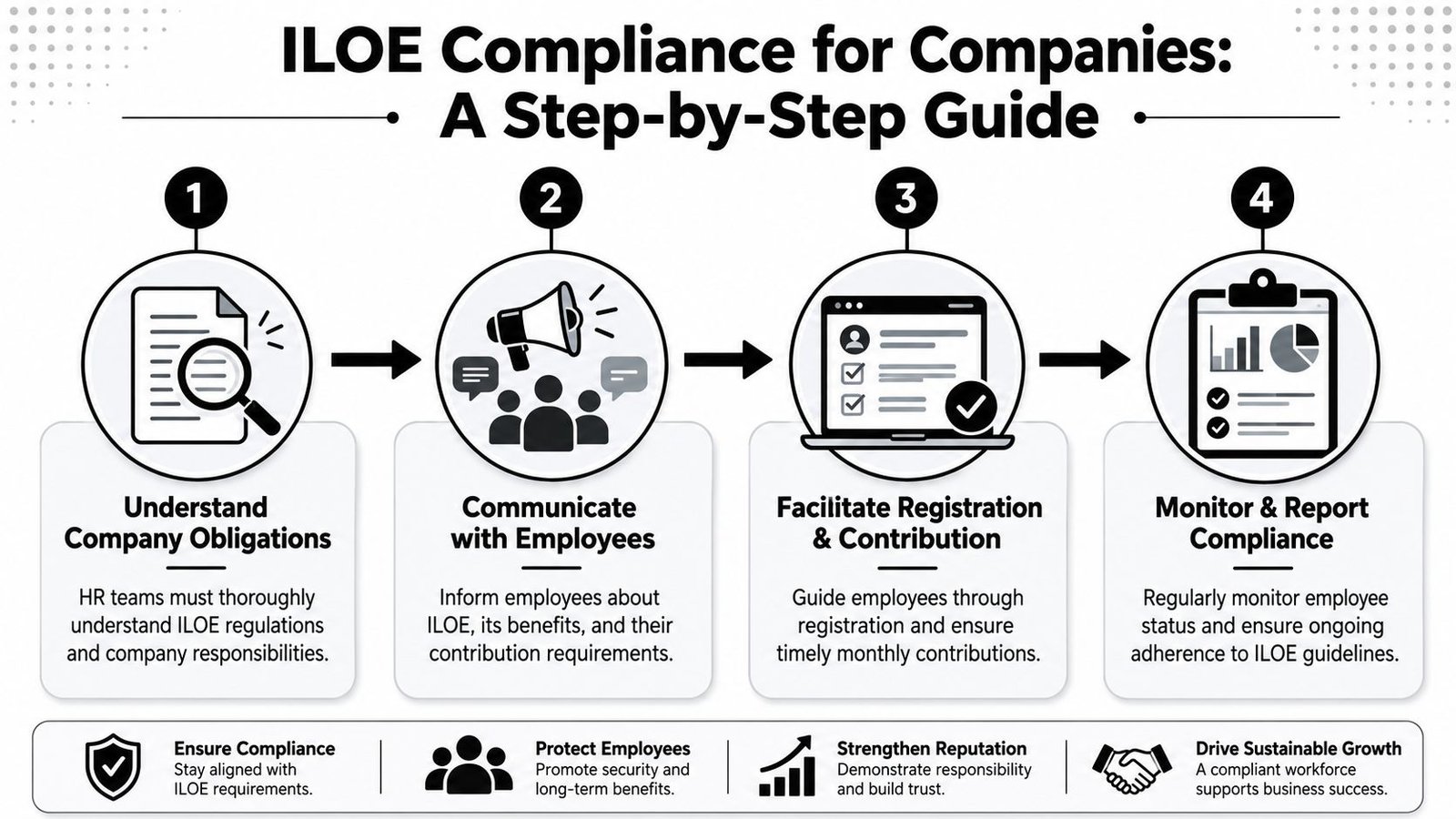
For most companies, a simple four-step workflow is enough:
Classify the employee correctly
Confirm whether the role falls under mainland, federal government, most free zones, or a voluntary framework such as DIFC or ADGM.Build ILOE into onboarding
Add a short plain-English instruction to the offer pack or joining checklist. Staff should know what they must do before they start chasing visa, bank, and payroll tasks.Collect and store proof
Ask for subscription confirmation after joining and save it with the employee's visa and labour records. If your team cannot find proof quickly, treat that as a process failure.Set a follow-up reminder
A reminder helps catch missed subscriptions, misunderstandings, or incomplete records before they become disputes.
This does more than keep files tidy. It reduces avoidable friction with new hires and gives HR a cleaner answer when an employee asks, months later, whether the company informed them properly.
Why the lifetime limit matters to employers
This point affects retention and employee expectations more than many founders realise.
As noted earlier, ILOE has a cumulative lifetime cap on claim months across a person's UAE working life. If an employee uses 3 months after one job loss, those 3 months are gone from future ILOE eligibility, even if another involuntary job loss happens years later.
That changes the HR conversation. Employees who understand the scheme often ask better questions about employment stability, probation risk, and gaps between jobs. It also means HR should never describe ILOE as something that resets with each new employer. It does not.
Handled properly, ILOE compliance is not difficult. It just needs ownership, a repeatable process, and careful wording from HR at the moments that matter most.
ILOE Insurance FAQs for 2026
Does ILOE apply to freelancers and Golden Visa holders
Eligibility depends on employment status, not visa prestige or how long someone plans to stay in the UAE.
A Golden Visa holder who is employed under a qualifying work arrangement may still fall within the scheme. An investor, business owner, or self-sponsored person in an exempt category may not. Freelancers also need the same careful check. HR should avoid assumptions based on job title or visa label and confirm whether the person is classed as an eligible employee under the scheme rules already discussed.
This matters in practice. Founders often assume senior hires, consultants, or self-sponsored team members can be handled the same way as standard employees. That is where compliance mistakes start.
What changed with the two-year upfront payment
The practical shift was simple. New subscribers were no longer dealing with a light monthly commitment at the point of setup. They had to commit to a longer prepaid period, as noted earlier in the article.
For employers, the risk is not the cost itself. It is the confusion around who pays, when it must be done, and what HR told the employee during onboarding. If a new joiner expects a quick payroll deduction later but the scheme requires payment upfront at subscription, frustration shows up early. Good HR teams deal with this before day one, not after the employee starts asking why a mandatory scheme was never explained properly.
A short script helps. Tell the employee that ILOE is mandatory if they are eligible, that subscription is their responsibility unless the company chooses to assist administratively, and that proof should be shared back to HR for recordkeeping.
What does the lifetime claim limit mean in practice
The limit follows the employee across their UAE working life. It does not restart with each new employer.
That point affects expectations more than many companies realise. An employee who has already used part of their benefit may still be fully compliant today, but their future protection is lower than a colleague who has never claimed. HR should explain that carefully, especially for mid-career hires who ask detailed questions about employment stability, probation exposure, or redundancy protection.
For hiring and retention, the message is straightforward. ILOE is a useful statutory safety net, but it is not a substitute for clear employment terms, thoughtful notice periods, and good workforce planning. The companies that explain that well usually face fewer disputes later.
Conclusion
ILOE insurance is a straightforward part of UAE employment compliance once you separate the basics from the common myths. It's mandatory for most eligible employees, it has fixed contribution tiers, and it only works as intended when staff subscribe correctly and keep coverage continuous.
For businesses, the smart move is simple. Build ILOE into onboarding, explain the exclusions clearly, and keep records tidy across mainland and free zone hires. That removes most of the friction.
Not sure where to start? Inpro Corporate Services L.L.C. can help you set up the right UAE structure, manage employee visa workflows, and keep your hiring process aligned with local compliance rules.