

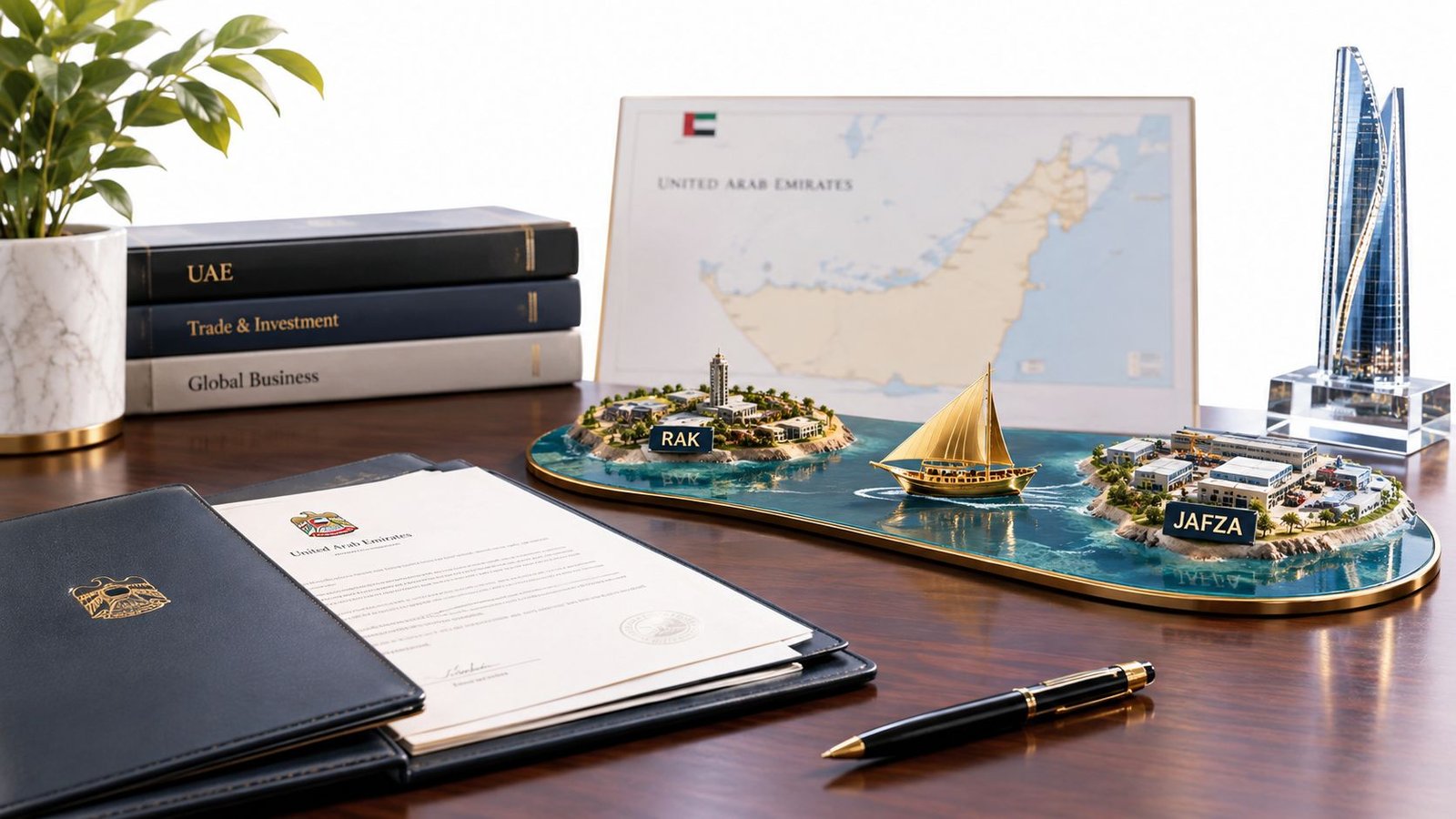
A UAE offshore company is the right fit when you need a legal entity for holding assets, owning shares, or structuring cross-border business, not when you need a licence for day-to-day trading in the UAE. If your real plan is to sell to Dubai customers, hire staff in Abu Dhabi, or run a shop in Sharjah, an offshore setup is usually the wrong tool.
Table of Contents
- What a UAE Offshore Company Is and Is Not
- Comparing RAK ICC and JAFZA Offshore Jurisdictions
- Benefits and Hard Limits on Ownership Privacy and Activity
- Governance Substance and Tax Rules You Must Follow
- Real World Uses for Offshore Mainland and Free Zone Paths
- Formation Steps Banking Costs and Timeline Explained
- Risks Traps and Your Best Next Move in the United Arab Emirates
What a UAE Offshore Company Is and Is Not
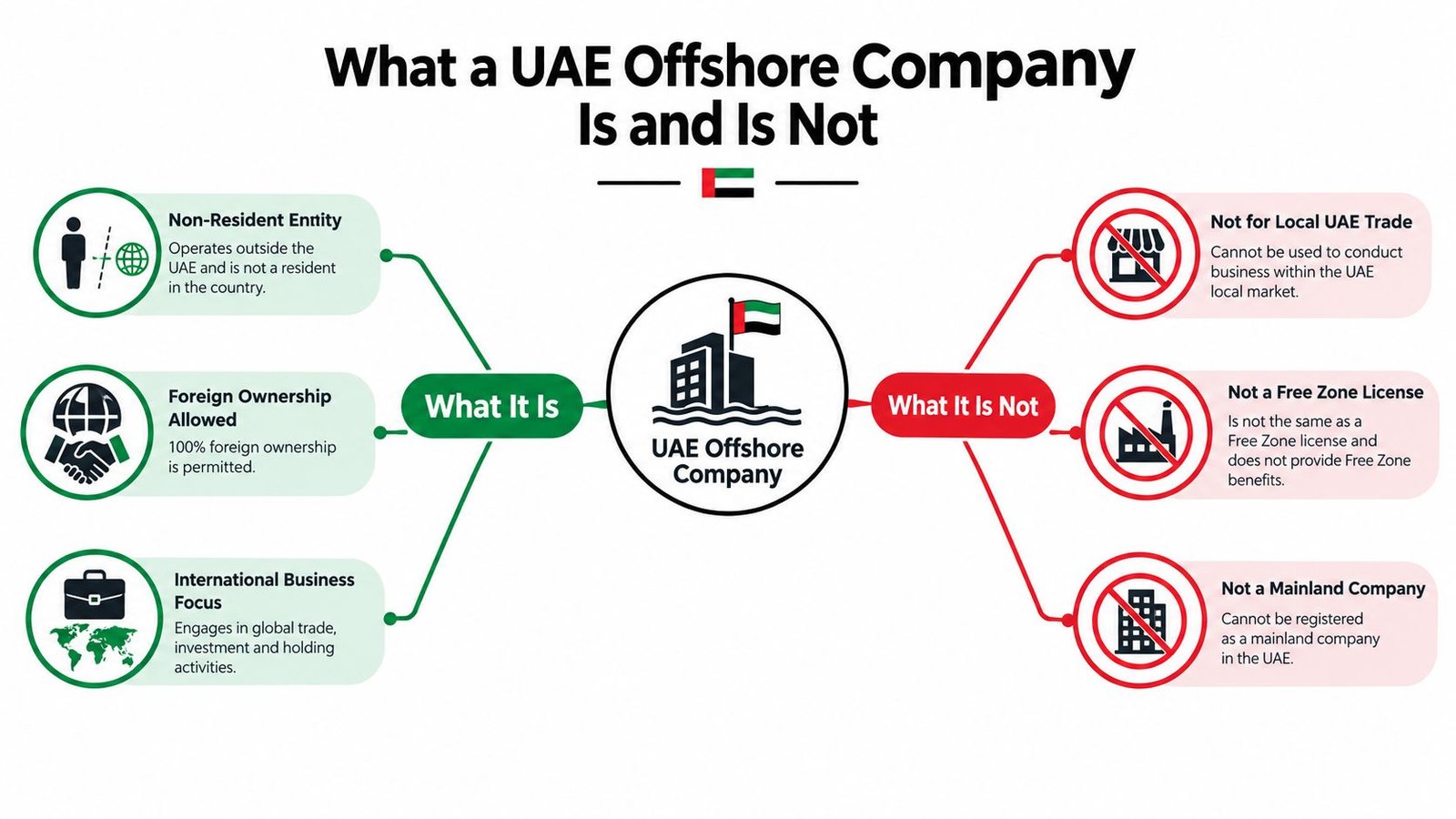
A UAE offshore company is a company registered in the United Arab Emirates for international holding and ownership purposes, not for local trading. It is a legal entity, which means it can own things and be owned, but its job is usually to sit behind another structure rather than operate a storefront or office that serves the local market.
A few simple definitions help here. Mainland is the part of the UAE where a company is set up to trade inside the country under the local licensing system. Free zone is a designated area with its own rules, often used for operating companies, while offshore is usually for holding, asset ownership, and cross-border structures. The distinction matters because the wrong structure creates delays later, especially when a bank, registrar, or tax officer asks what the company does.
Practical rule: if the founder's main question is “Can this company hold my shares or property?” offshore may fit. If the real question is “Can this company invoice UAE customers and hire locally?” it usually shouldn't be offshore.
That is why the use case matters more than the label. A proper offshore setup is built around passive ownership, clean records, and a clear boundary between the company and local operations. For a plain-language overview of formation basics, you can also read this offshore company formation guide.
Comparing RAK ICC and JAFZA Offshore Jurisdictions
The UAE does not run offshore companies through one federal register. The two main routes people usually compare are JAFZA Offshore in Dubai and RAK ICC in Ras Al Khaimah, and both sit under emirate-level rules rather than the same licensing model used for mainland or ordinary free-zone operating companies.
| Feature | RAK ICC | JAFZA Offshore |
|---|---|---|
| Jurisdiction | Ras Al Khaimah | Dubai |
| Registry history | Formed in 2016 by consolidating predecessor registries | Offshore regime introduced in 2003 |
| Administrative style | Dedicated corporate centre with its own legislation and registry administration | Separate offshore registrar process linked to JAFZA |
| Typical use | Holding, asset ownership, cross-border structures | Holding, asset ownership, international structures |
| Market access | Not a local trading licence | Not a local trading licence |
RAK ICC came later, but its formation was a deliberate move toward a unified, internationally oriented corporate-services jurisdiction. JAFZA Offshore, by contrast, had already built a long operating history before RAK ICC existed, which is one reason some service providers still see it as the familiar Dubai-facing option.
A founder should choose based on the actual need, not the brand name. If your structure will mostly sit as a holding company, either regime may work, but provider comfort, banking expectations, and the convenience of the service corridor can differ. A Dubai-based entrepreneur often leans toward JAFZA Offshore because it is closely associated with Dubai's business ecosystem, while some founders prefer RAK ICC for its dedicated corporate-centre structure.
If you want a broader overview of how offshore registration is positioned in the UAE, this offshore company in UAE overview helps frame the choice.
Benefits and Hard Limits on Ownership Privacy and Activity
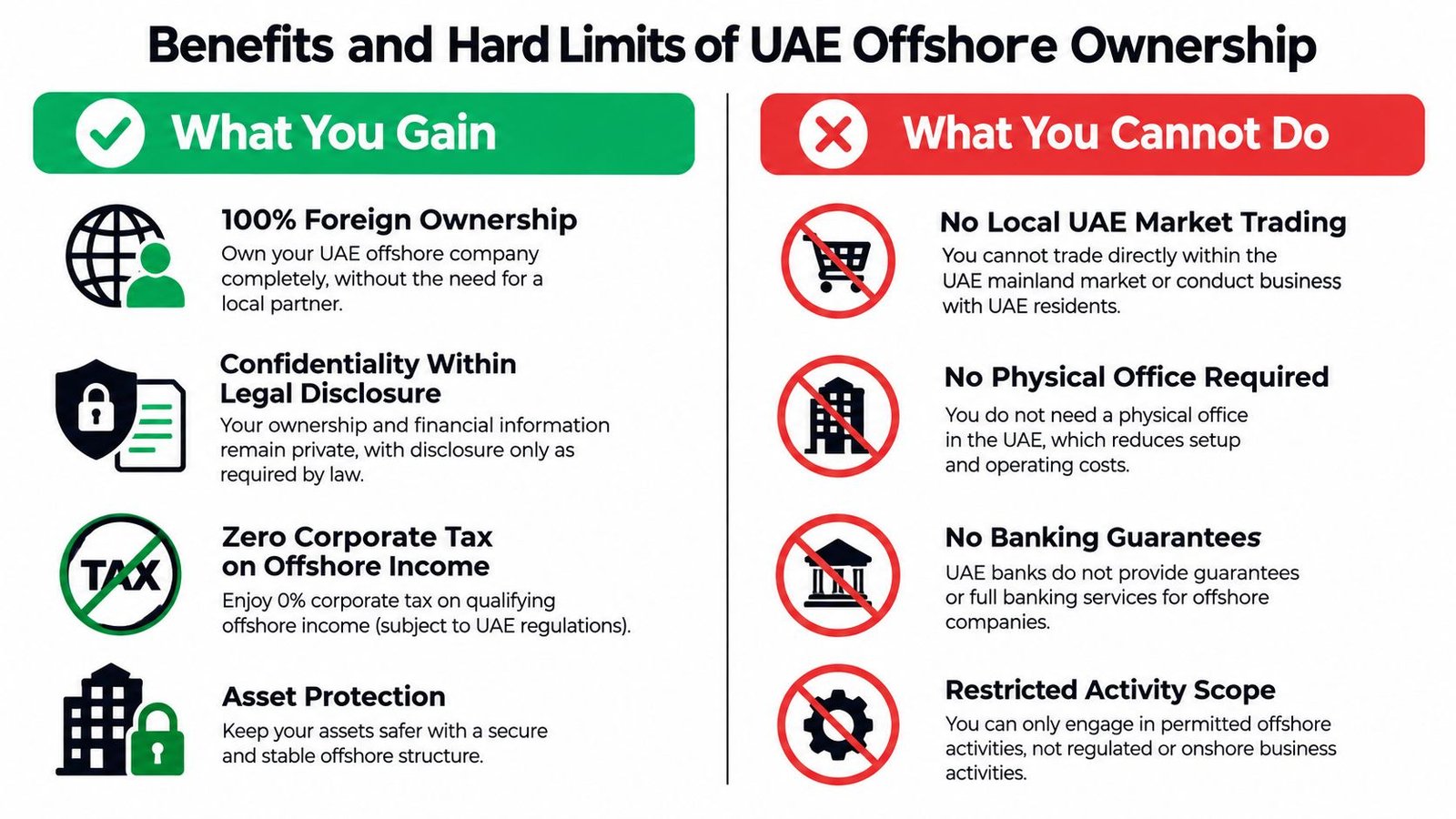
A UAE offshore company gives you foreign ownership, legal separation of assets, and a structure that can sit behind a wider holding arrangement. It does not give you a blank cheque to trade in the UAE, rent an office, or assume a bank will open an account just because incorporation is complete.
What does the privacy angle really mean
Privacy in this context means confidentiality within legal disclosure rules, not secrecy. UAE beneficial-ownership rules require current registers identifying the natural person who ultimately owns or controls the entity, including control through ownership chains or indirect means, and the Central Bank's UAE rulebook uses 25% ownership or control as the standard identification test (see the UAE beneficial-ownership guidance from Abu Dhabi Global Market and the Central Bank framework linked there). Nominee arrangements do not remove disclosure duties, so the company must still keep accurate records and respond to competent authorities when asked.
What can it hold
An offshore company is often used to hold shares, intellectual property, or other assets, and that is where it tends to make the most sense. It can help keep ownership separate from operating activity, which is useful when the business sits elsewhere, perhaps in a mainland company in Dubai or a free zone entity in Sharjah. The structure is helpful when the goal is clean ownership, not local storefront activity.
What it cannot do comfortably
A UAE offshore company is generally the wrong choice for local trade, local hiring, regulated activity, or a UAE-facing sales operation. It also shouldn't be treated as a substitute for a residence visa pathway or a premises-based operating licence. Banking is separate again, because incorporation doesn't force a bank to say yes.
Straight answer: if the business needs people, premises, and local invoices, think operating licence first. If it mainly needs ownership and separation, offshore is worth a look.
Governance Substance and Tax Rules You Must Follow
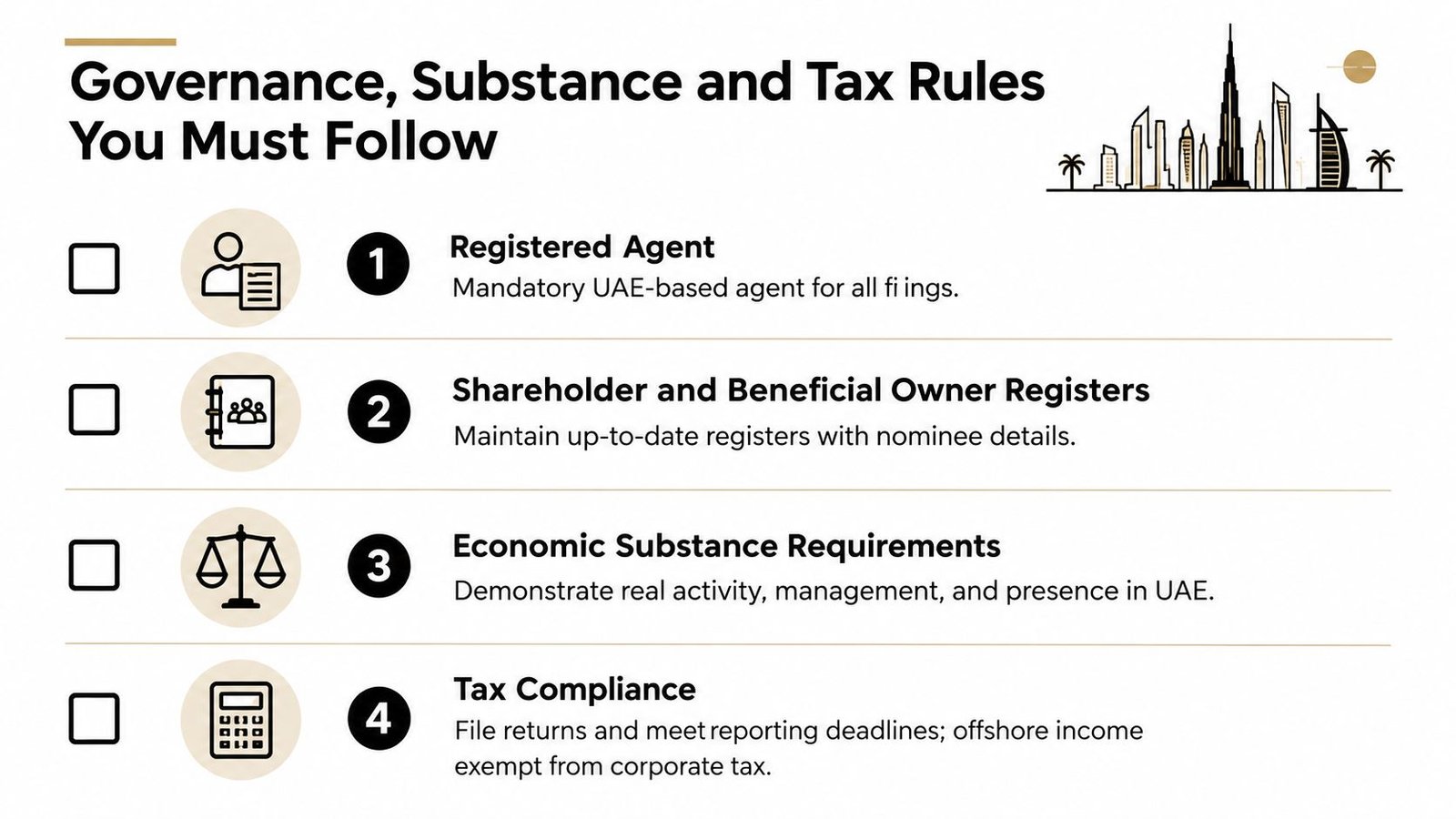
Could your company explain who controls it, where decisions are made, and how its income is classified? An offshore structure works only when its records support those answers. Banks, registrars, and authorities expect clear ownership information, orderly paperwork, and evidence that the company operates as described.
What the records need to show
Keep shareholder, partner, and beneficial-owner records current. The company should be able to provide them to the registrar or another competent authority when required. Before incorporation, map the ownership chain, gather notarised or legalised corporate documents where necessary, and identify each person who ultimately controls the company. Update the file promptly after any change in ownership or control.
A useful test is simple: someone unfamiliar with the structure should be able to follow the ownership path without guessing.
How tax registration works now
An offshore or free-zone entity is not automatically outside the UAE Corporate Tax regime. The Ministry of Finance requires Free Zone Persons to register for Corporate Tax. A Qualifying Free Zone Person may access the 0% rate on Qualifying Income only when the statutory conditions are satisfied.
Income linked to excluded activities, a domestic or foreign permanent establishment, or most immovable-property income may fall outside that preferential treatment and become subject to the 9% rate, as explained in the Federal Tax Authority Corporate Tax guide, 2023. Registration and classification therefore need review during setup, not after the first tax filing is due.
What substance means in practice
Substance means that the company's decisions, records, and evidence match its stated activities in the UAE. Keep accounting records, document strategic management, and prepare transfer-pricing support where relevant. Separate qualifying and non-qualifying income carefully. The word “offshore” does not determine the tax result.
Treat the file like an audit trail. It should show who approved important decisions, where those decisions occurred, and why the income belongs in its stated category. This also helps when a bank asks how the company works and why it needs an account.
Keep the structure honest from day one. A tidy file is easier to bank, renew, and explain to auditors.
For formation documents, agent coordination, and related administrative work, Inpro provides UAE company formation and PRO services.
Real World Uses for Offshore Mainland and Free Zone Paths
A Dubai investor wants a company to hold shares in another business and a property interest outside the operating company. An offshore structure fits that role neatly, because the company is there to own, not to trade from a shopfront in Business Bay.
A second founder runs an overseas client business from the UAE and needs a clean holding layer for contracts, assets, or internal ownership. That founder may still choose offshore, but only if the activity stays outside local UAE trading and the banking story is consistent. The company can sit in the background while the operating activity happens elsewhere.
Then there's the common mistake. A startup plans to sell to customers in the UAE, hire staff in Abu Dhabi, and lease space in Sharjah, but chooses offshore because it looks simpler. That is where the structure breaks, because the business really needs a mainland or free zone operating licence, not a passive holding vehicle.
How to read the use case
- Passive holding: offshore can fit.
- UAE customer sales: look at mainland or a suitable free zone licence.
- Local staff or premises: offshore usually won't do the job.
- Regulated activity: get the correct operating approval first.
The useful test is not “Can I form it?” but “Can it legally do the work I want?” If the answer is no, the cheapest structure becomes the most expensive one after the first correction.
Formation Steps Banking Costs and Timeline Explained
The formation process is straightforward when the structure matches the use case. It starts with name checking and agent appointment, then moves into due diligence, incorporation documents, share certificates, and tax registration where needed.
What happens first
The registrar or service provider checks the proposed company name, confirms the shareholder and director details, and reviews supporting documents. If a corporate shareholder is involved, the entity documents usually need extra care, because the ownership chain must be clear and consistent.
Why banking is a separate decision
Bank approval is not the same as incorporation approval. The bank will look at beneficial ownership, the source of funds, expected transaction flows, and the economic reason for the account, so a clean registration file still isn't enough on its own. A company that says it will hold assets should present a different banking story from a company that expects regular cross-border payments.
Banking rule of thumb: if the file can't explain who owns the company, where the money comes from, and why the account is needed, the bank is likely to slow down.
What the founder should plan for
- Documentation: passport copies, address evidence, and corporate papers where relevant.
- Compliance: company records, tax registration, and renewals.
- Cost items: registrar fees, agent fees, document legalisation where needed, and banking support.
- Timeline: depends on document quality, name approval, and how quickly due diligence clears.
For a deeper look at account opening requirements, this UAE corporate bank account guide is useful when you're comparing offshore and operating structures.
Risks Traps and Your Best Next Move in the United Arab Emirates
Could your offshore company pass an incorporation check yet fail your real business test? That happens when founders use an offshore structure for UAE sales, employees, premises, visas, or regulated work. Local trading usually points to a mainland or suitable free zone licence. JAFZA may suit an operating free zone business, while RAK ICC is generally considered for holding and ownership purposes. The choice should follow the activity, not the company label.
Tax registration also needs an income map. Because excluded activities and permanent-establishment income can move income into the 9% rate, list each revenue stream before registration and keep contracts, invoices, and management records aligned. Use the Federal Tax Authority Corporate Tax guide, 2023 when checking how the rules apply. A clean map is like a building plan: it shows where each activity belongs before problems appear in a filing.
Banking follows the commercial story. The application should explain who owns the company, where funds come from, what payments are expected, and why the chosen structure fits. Incorporation alone does not guarantee an account.
If you want a holding company, build a holding company. If you want a trading business, build a trading structure.
If you are unsure which UAE path fits, Inpro can compare offshore, mainland, and free zone options and support formation, banking, and PRO steps. Visit Inpro to discuss a structure that matches your actual business.