


You may be weighing a UAE property purchase, a company launch, or an investment transfer and wondering which residence permit it will support. There isn't one universal "investment visa": the right route depends on what you own, how it's funded, and whether you're applying for ordinary investor residency or Golden Residency.
Table of Contents
- What an Investment Visa in the UAE Covers
- Who Qualifies and What Each Route Requires
- Documents and Evidence You Need to Prepare
- Step-by-Step Application Workflow and Real Timelines
- Costs, Renewals, and How Long Your Visa Lasts
- Choosing the Right Route for Your Situation
- Common Pitfalls and How to Avoid Each One
- Working With a PRO Team From Start to Finish
What an Investment Visa in the UAE Covers
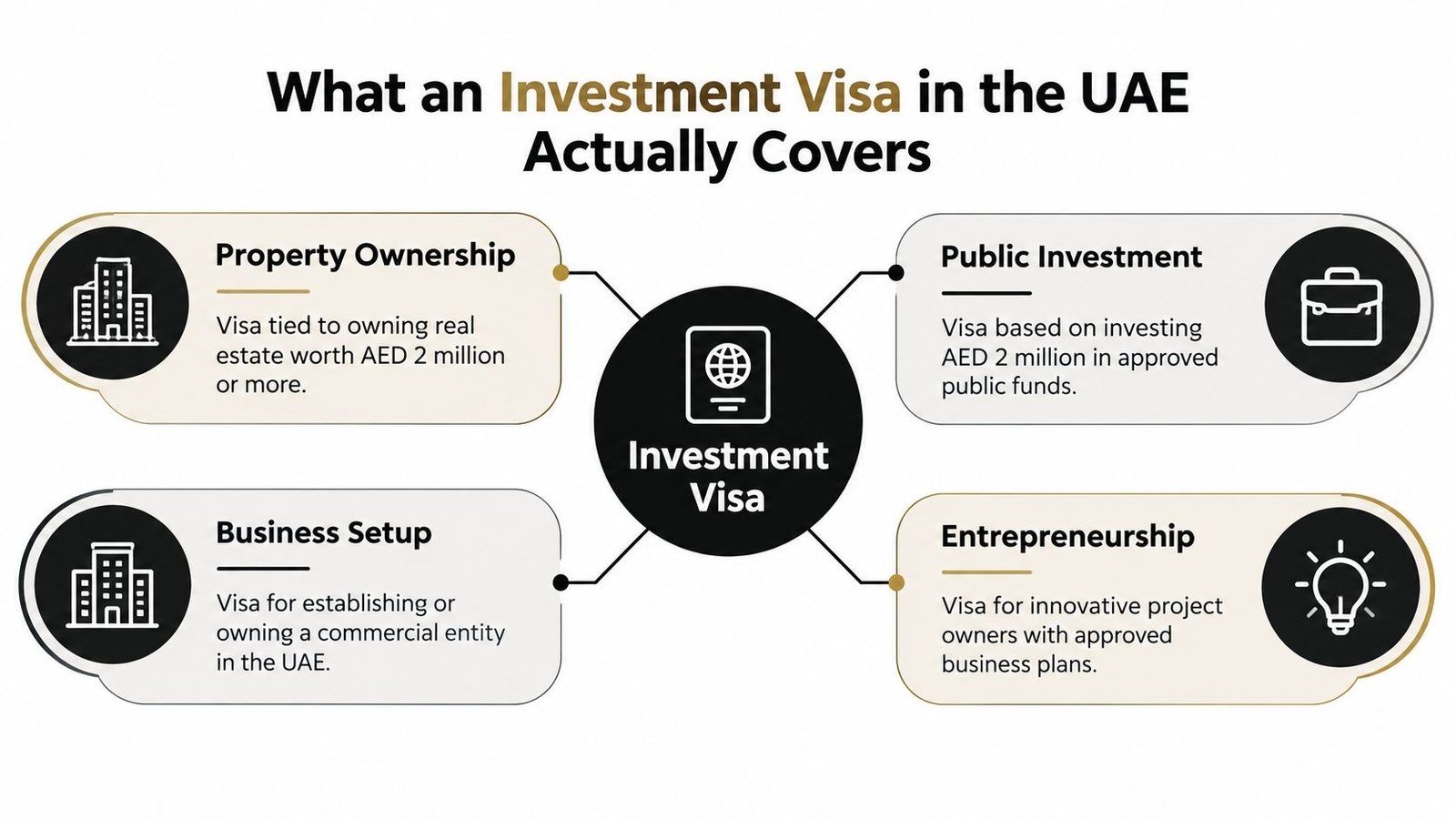
You buy an AED 2 million apartment in Dubai, half of it covered by a developer payment plan, and a friend tells you that purchase gets you a 10-year Golden Visa. Maybe it does. Maybe it gets you nothing. The answer depends on how the purchase is funded, who the developer is, and which permit you file for.
An investment visa in the UAE is not one permit. It covers several distinct routes: a standard Investor Residence Permit, property-based Golden Residency, public-investment Golden Residency, and a partner or owner residence visa tied to a UAE company. Each carries its own eligibility test, duration and document file. Name the exact permit you want before you gather a single paper, because the wrong label produces the wrong application.
Golden Residency is the long-term category. Under current federal guidance, qualifying public-investment applicants generally receive a 10-year permit while qualifying real-estate investors receive a 5-year permit, and the official UAE Golden Visa guidance sets out these category distinctions. A company-linked residence permit does not become a Golden Residency just because you put money into the business.
Which authority handles an application?
The Federal Authority for Identity, Citizenship, Customs and Port Security (ICP) runs federal immigration services. In Dubai, the General Directorate of Residency and Foreigners Affairs (GDRFA) processes residence applications through its own channels, and Abu Dhabi and Sharjah operate separate government channels too. The emirate you file in changes the procedure, so confirm the correct channel before compiling documents.
The system has also moved. The ICP Golden Residence overview records that the programme launched by Cabinet decision in 2019, first targeting around 7,000 investors already living in the UAE, with original thresholds of AED 5 million for property and AED 10 million for general investment plus conditions on funding and capital retention. Those figures are history. Today's published requirements differ, so never judge your eligibility by an old article or by the conditions attached to an ordinary investor permit.
Own property? Start with the property route and check how it is financed. Holding a deposit, fund position, company capital or a tax-generating shareholding? Review public-investment eligibility instead. Planning to form or join a UAE company? Treat the partner or owner permit as its own track before assuming company formation qualifies you for Golden Residency. In every case, the funding structure behind the money decides whether you qualify.
Who Qualifies and What Each Route Requires
Two investors can each hold AED 2 million in UAE assets and get opposite answers at the counter. The headline threshold is only a starting point. Your asset type, ownership share, financing and evidence decide whether a route fits. The ICP service guidance for UAE Golden Residency sets out the federal investment pathways and their evidence requirements.
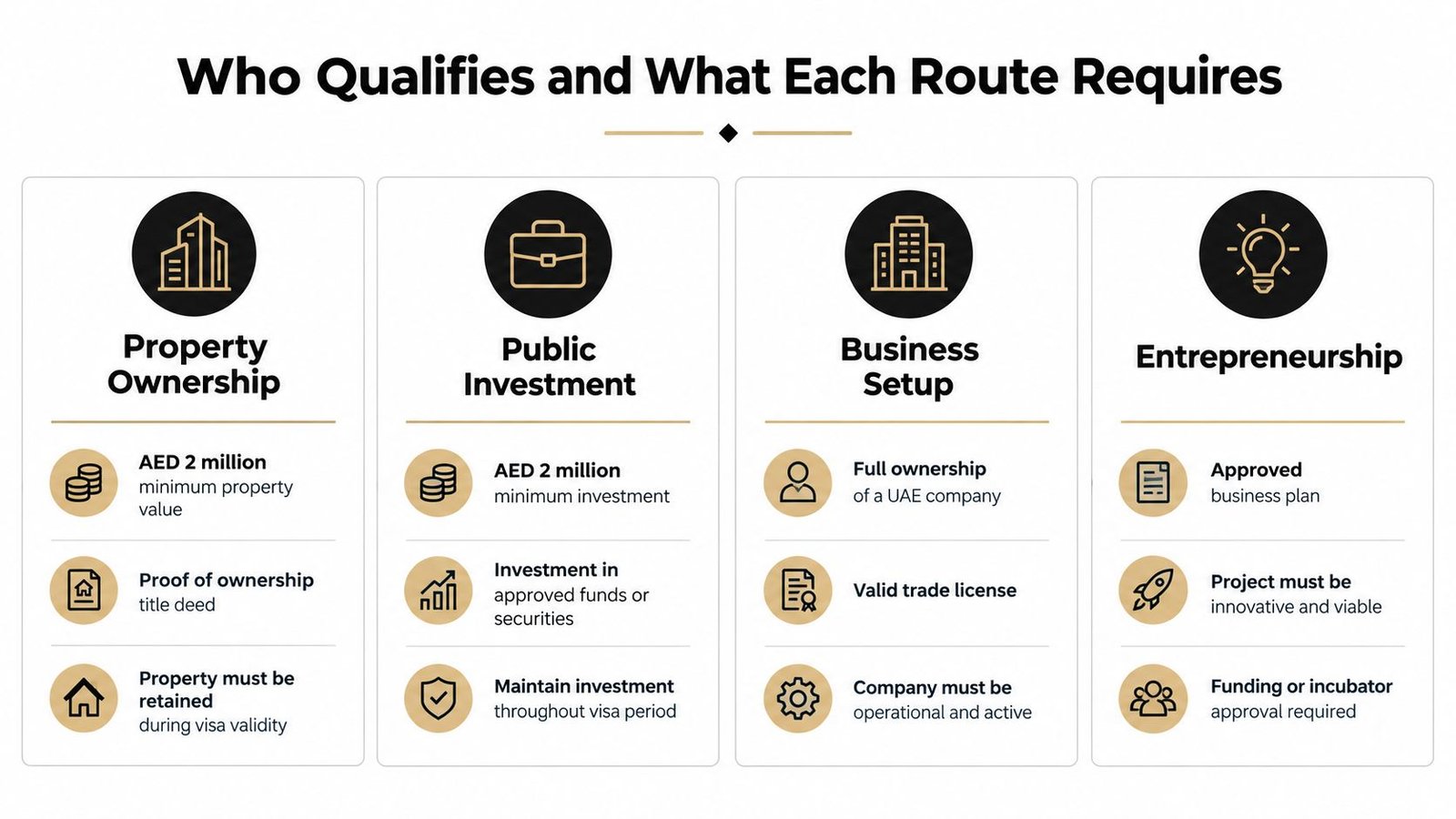
Which investment routes meet the published thresholds?
- Property ownership: You may qualify for property-based Golden Residency by owning one or more UAE properties with a combined value of at least AED 2 million. Qualifying finance must come through an approved local bank, and an off-plan purchase must be with an authorised UAE developer.
- Public investment: A qualifying route may be a deposit of at least AED 2 million with an eligible investment fund or national bank, UAE company capital of at least that amount, or a company share worth at least that amount.
- Tax contribution: A further route may apply when the company pays at least AED 250,000 in annual federal taxes and the investor's qualifying share corresponds to that tax contribution.
- Company partner or owner residency: Owning or partnering in a UAE company can support a company-linked residence permit, but that fact alone doesn't establish Golden Residency eligibility. Confirm the company and immigration requirements for your emirate and licence before filing.
That last point trips people up constantly. A partner residence permit issued against a trade licence is a shorter-term product tied to the licence itself. It is a different product from Golden Residency, it lapses if the company does, and holding one does not put you on a path to the other. If someone sold you company formation as a Golden Residency shortcut, get a second opinion before you spend more.
A funding distinction decides most borderline files. Public-investment capital must be investor-owned rather than loan-derived, and its source must be documented. Property financing is treated differently: the accepted route is limited to qualifying finance from an approved local bank. A foreign mortgage or an undocumented transfer will fail the evidence test.
As noted earlier, the programme's original framework extended certain benefits to a spouse, children, one executive director and one consultant. Current family sponsorship conditions depend on the applicable route and file, so verify them before making plans around dependants.
| Route | Minimum capital | Duration | Key evidence |
|---|---|---|---|
| Real estate | AED 2 million | 5 years | Proof of ownership and qualifying property value |
| Public investment | AED 2 million, subject to route | 10 years | Deposit, company capital or shareholding evidence |
| Federal tax contribution | AED 250,000 annual company tax, subject to qualifying share | 10 years | Tax evidence and proof of the investor's qualifying share |
For an initial route check, compare your documents and ownership structure against Golden Visa eligibility guidance. A nominal asset value is not enough if the ownership evidence or funding trail doesn't match the route.
This walkthrough summarises the four routes and their evidence requirements:
Documents and Evidence You Need to Prepare
Files fail on evidence, not eligibility. Your file has to show what you own, how you funded it, and why the asset meets the route's conditions. Dubai GDRFA publishes different evidence lists for company, deposit and property applications, so check the Dubai investor Golden Residence service page for the current document list and published issuance charges before you collect anything.
Building the company investor file
A company-capital application must establish two things: the company's position and your personal share. Depending on the route, GDRFA may ask for a certified financial report from an accredited UAE audit firm, a valid trade licence and partner appendix, company bank statements, or a free-zone certificate confirming the capital and your shareholding.
For the tax-contribution route, add tax registration evidence and receipts supporting the company's annual federal tax payment. Consistency decides these files. If the trade licence shows one shareholding structure and the audit report or tax records show another, the file stalls. Resolve the mismatch before you submit, not after.
Evidence for a deposit or property application
A financial-deposit application needs proof of the qualifying UAE bank deposit. A property application needs ownership documents showing the property, or combined properties, meet the applicable value threshold. For financed property, get lender documentation confirming the finance comes from an approved local bank. For off-plan purchases, confirm the developer's authorisation and keep the purchase records together.
Run this check before you pay submission fees:
- Identity: Valid passport, and Emirates ID if you already hold one.
- Asset evidence: Title documents, deposit confirmation, company records or tax documents matched to the route.
- Company file: Trade licence, partner appendix, audit report, bank statements and free-zone certificate where applicable.
- Personal requirements: Confirm the health insurance and photograph requirements for your application channel.
- Document quality: Check whether each document needs certification, attestation or translation before paying for it.
Don't treat a typing centre visit as a document review. Typing centres submit what you hand them; they don't verify it qualifies. Confirm the current checklist with the authority handling your application. The GDRFA service page referenced above lists the Dubai requirements. Order translations and attestations only after you know which documents the route requires, since paying to attest the wrong certificate is a cost you won't recover.
Step-by-Step Application Workflow and Real Timelines
A residence application moves through distinct stages, but the precise sequence and timing depend on your status and the authority handling the file. Avoid planning around an assumed approval date until the route and documents have been checked.
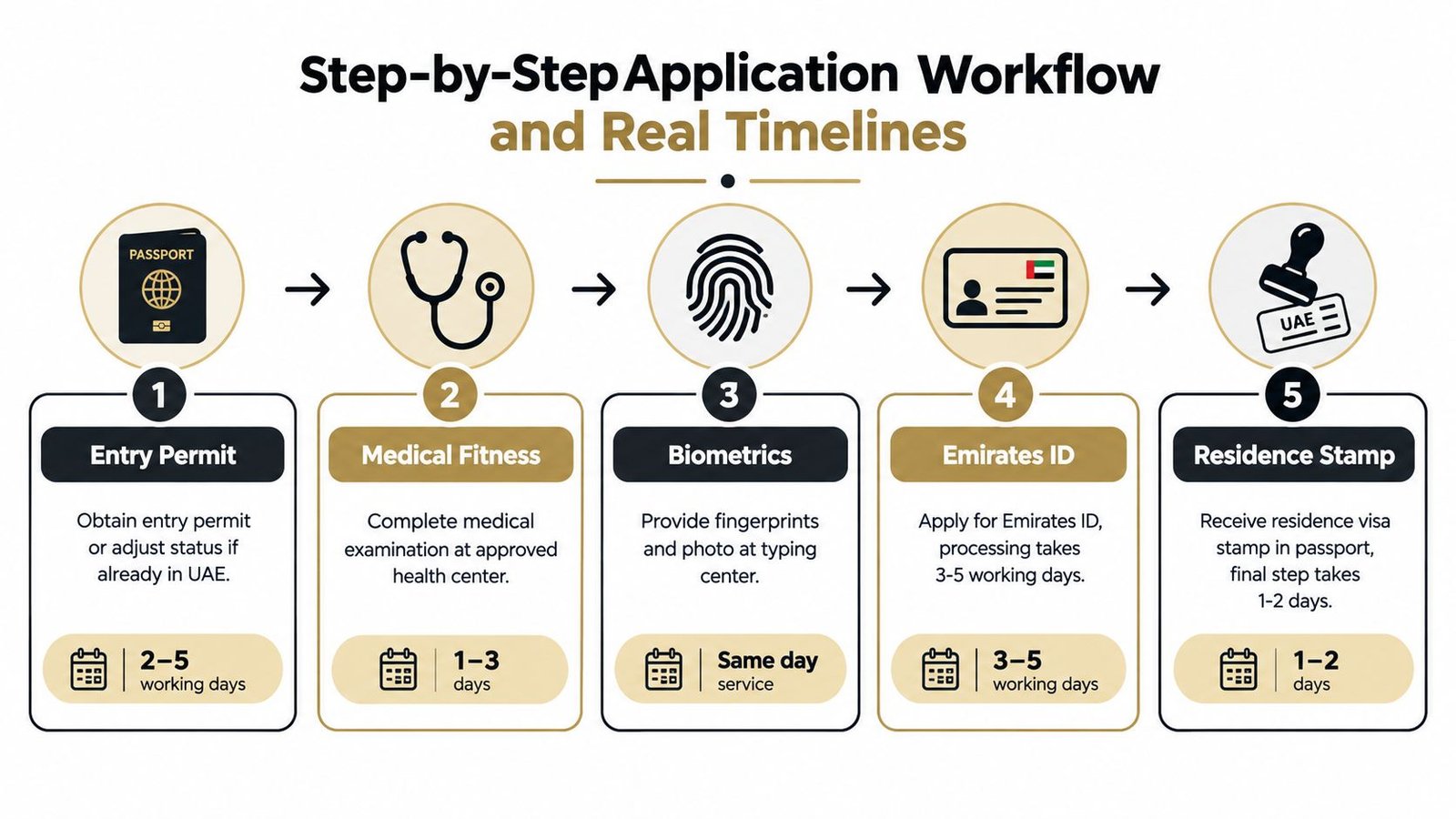
What happens after the route is confirmed?
First, prepare the application and entry step. If you're outside the UAE, confirm whether your case requires an entry permit. If you're already in the country, check whether you can apply through a status adjustment. The right option depends on your current immigration status and the route being filed.
Next, complete the required medical and identity steps. Once instructed, attend the medical fitness process and provide biometrics where required. The authority then processes the Emirates ID and residence application through the applicable channel. Follow the appointment instructions closely, and keep confirmation records in one place.
Then, track issuance and plan dependants. Once the principal applicant's residence is issued, check the separate requirements for family sponsorship. Don't assume dependants can be filed before the sponsor's status is active; confirm the sequence with the relevant authority.
Where do founders lose time?
Usually, it's at the point where business formation and immigration are handled as unrelated tasks. A partner or owner residence application tied to a UAE company depends on the required company records, including the relevant trade licence. Plan the company setup and residence file together rather than paying for appointments before the corporate documents are ready.
Golden Residency is a separate category from a company-linked permit, so don't assume it always depends on incorporating a business. The route must still be supported by the qualifying investment and evidence.
A PRO can review the file before submission, coordinate appointments, follow up on application status and help prepare a corrected submission if a document is rejected. That support can reduce avoidable back-and-forth, but no adviser can promise approval or replace the authority's assessment. Ask for the scope of work and any extra charges in writing before appointing anyone.
Costs, Renewals, and How Long Your Visa Lasts
Budget for the whole file, not the headline fee. Government charges are only one line; medical examinations, Emirates ID issuance, health insurance, translation, attestation and service fees sit on top, and the total shifts with your category, emirate and application status.
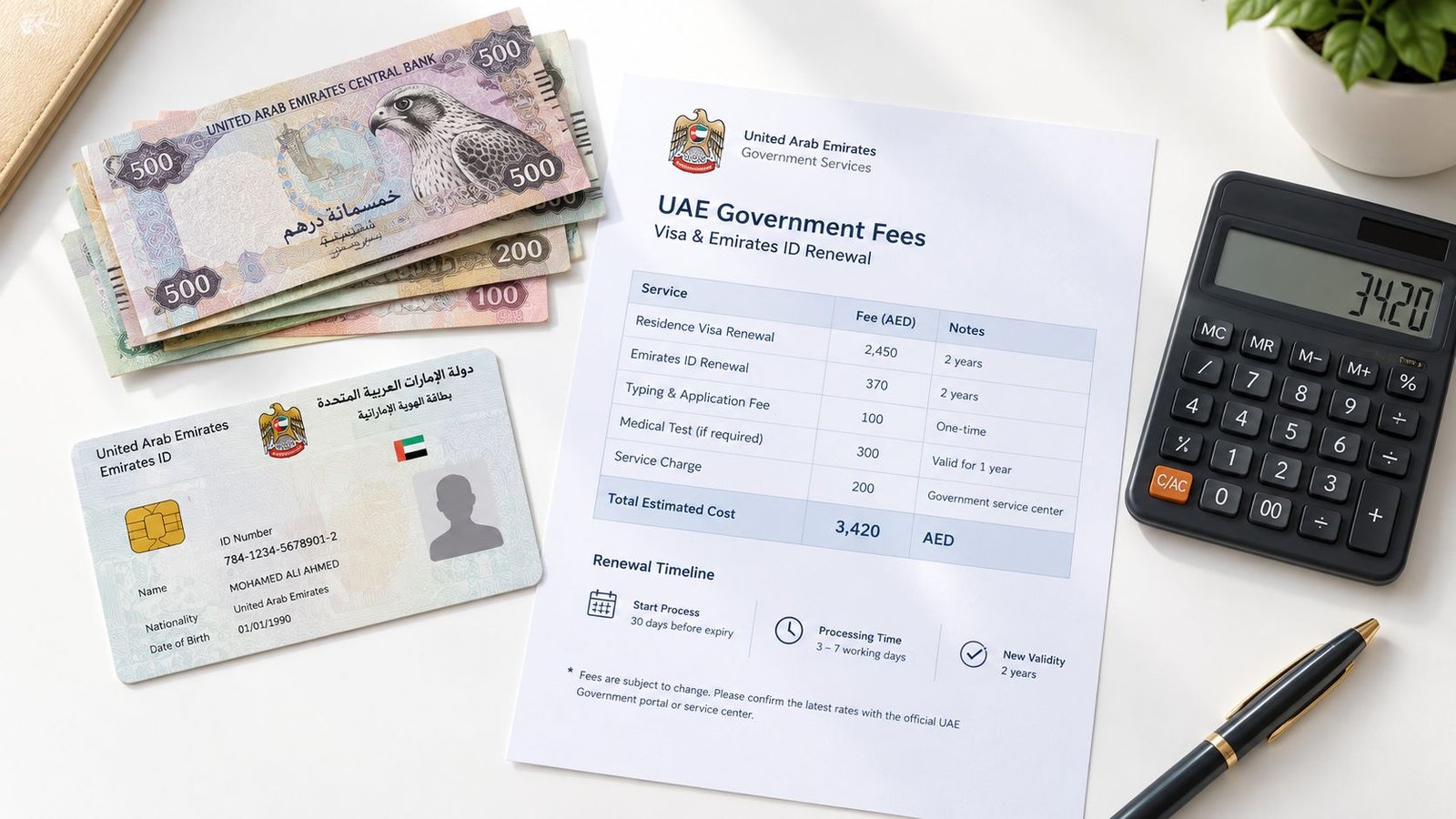
What Dubai issuance fees are published?
Dubai GDRFA lists a base issuance fee of AED 1,100 for the investor residence service, plus an additional AED 500 for applicants already inside the UAE, AED 10 for the Knowledge Dirham, AED 10 for the Innovation Dirham and AED 20 for delivery. Check the current fee details for your case on the GDRFA investor residence service page referenced earlier, and budget separately for anything not included in those listed charges.
Treat any single-figure quote with suspicion. Ask which charges are government fees, which are service fees, and what happens to the price if the authority requests extra documents.
How long does Golden Residency last?
As covered earlier, real-estate Golden Residency runs 5 years and public-investment Golden Residency runs 10 years. A standard company-linked investor permit is a different route and shouldn't be priced or described as if it automatically carries Golden Residency's duration.
Renewal is a fresh test of eligibility, not a payment formality. The qualifying investment still has to exist: sell the property, withdraw the fund deposit or dilute the shareholding below the required level and the basis for the permit goes with it. Company-linked residence also depends on the underlying licence and corporate records staying in order.
Start the file early. Review the UAE visa renewal process well before your permit expires, confirm your insurance and identity documents are current, and fix licence or ownership issues while you still have room to correct them.
Choosing the Right Route for Your Situation
The cleanest route is the one your documents can prove, not the one that sounds most attractive in a search result. Compare the asset, financing and evidence before spending on translations, attestations or application fees.
Which route fits these founder situations?
A property buyer using a foreign mortgage should not assume the property qualifies for Golden Residency. The financing condition is tied to an approved local bank. First confirm the lender's status and the authority's evidence requirements; if the financing doesn't fit, assess another residence route rather than submitting a weak property file.
A tech founder with a UAE free-zone company and a clear capital trail should compare the company-capital route with a company-linked residence permit. The deciding documents may include the free-zone certificate, trade licence, partner appendix, audit evidence and company bank statements. A clean trail helps, but the founder still needs to demonstrate the qualifying share or capital required for the chosen Golden Residency route.
A serial investor holding a UAE fund deposit should examine public-investment Golden Residency. The practical test is whether the fund or bank is eligible, the deposit meets the published threshold, and the applicant can demonstrate ownership and source of funds. Don't transfer capital until those points are confirmed.
A small or medium-sized business owner may consider the tax-contribution route if the company pays enough annual federal tax and the owner's qualifying share corresponds to the required contribution. A modest tax bill doesn't automatically qualify. Check the company's tax evidence and shareholding before treating this as an alternative.
What should you decide before paying for paperwork?
Name the route first. For property, establish the ownership value and financing position. For a company, confirm whether you're applying based on capital, tax contribution or company-linked residence. For a deposit, verify the institution and traceability of funds.
The most common mistake is preparing a generic “investor visa” file. Authorities assess a defined category, so organise the application around the evidence that category requires. If your asset or funding doesn't fit, choose another lawful residence route rather than trying to force the wrong application.
Common Pitfalls and How to Avoid Each One
A threshold on paper doesn't guarantee that the authority will accept the asset. Avoid the common assumption that total value alone decides the case.
Why do investment files get delayed or rejected?
Property financing doesn't meet the route's conditions. A buyer may have property above the threshold but rely on financing from a lender that isn't approved for the application. Confirm the lender's eligibility and required evidence before filing; don't treat every mortgage as equivalent.
An off-plan purchase lacks the required developer connection. The property route recognises qualifying off-plan purchases from authorised UAE developers. Check the developer and retain the purchase documentation before using the property as the basis for an application.
Company records don't match the claimed investment. A certificate may show less capital than the applicant expects, or the investor's documented share may not support the claim. Reconcile the licence, partner appendix, capital certificate and financial statements before submission.
Tax evidence and shareholding tell different stories. Under the tax route, the company's tax contribution must correspond to the investor's qualifying share. Get the tax registration, payment evidence and ownership documents reviewed together, not as separate paperwork.
The source of funds is unclear. A large balance doesn't explain where capital came from or who owns it. Keep transaction records and ownership evidence available, and don't rely on borrowed capital for a route that requires investor-owned funds.
The company's underlying status has lapsed. A company-linked residence file can run into trouble when the licence or other company records are no longer current. Check company compliance and licence status before applying or renewing.
If an application is returned, identify the exact missing or inconsistent evidence before resubmitting. Repeating the same file with a new cover page won't fix the underlying problem.
Working With a PRO Team From Start to Finish
A founder shouldn't have to guess whether the investment, company paperwork and immigration application line up. A clear process starts with an eligibility review, then moves to a route-specific checklist, document checks, appointment coordination and application follow-up.
What does practical support look like?
A PRO team can help confirm which government channel applies, organise supporting documents and coordinate the medical and Emirates ID stages. For a company-linked residence application, it can also help ensure the company records are ready before the immigration file is submitted. Family sponsorship can be planned once the principal applicant's status is issued and the relevant conditions are confirmed.
The provider should be clear about what it handles directly, what requires your attendance, and what may create additional charges. Ask for the deliverables, exclusions and communication process in writing. Inpro Corporate Services L.L.C. provides company formation, licensing and PRO support, including investor, Golden and employee visa processing; founders can review its PRO and visa services in Dubai.
A straightforward engagement keeps responsibility clear: you provide accurate ownership and funding records, the adviser checks the file against the selected route, and the application is submitted through the appropriate authority channel. Government decisions remain with the authorities, but organised evidence makes the process easier to manage.
If you're weighing property, company capital or a fund deposit, Inpro can help review the route, prepare the supporting documents and coordinate the UAE visa process. Contact the team to discuss your situation before you commit to an application or spend on paperwork.