


You've just incorporated a company in Dubai or Abu Dhabi, and you're deciding whether an ordinary employment residence visa is enough. UAE Golden Visa eligibility depends on your investment, business, professional profile, or recognised achievement, and qualifying applicants may receive renewable residence for five or ten years without a traditional sponsor, subject to approval and category requirements. The Federal Authority for Identity, Citizenship, Customs and Port Security explains the programme.
Table of Contents
- What the UAE Golden Visa Actually Is
- Eligibility Categories at a Glance
- Investor Eligibility and Financial Thresholds
- How to Apply Through ICP Channels
- Documentation Pitfalls and How to Avoid Them
- Three Founder Profiles and Their Paths
- Next Steps and When to Seek Assistance
What the UAE Golden Visa Actually Is
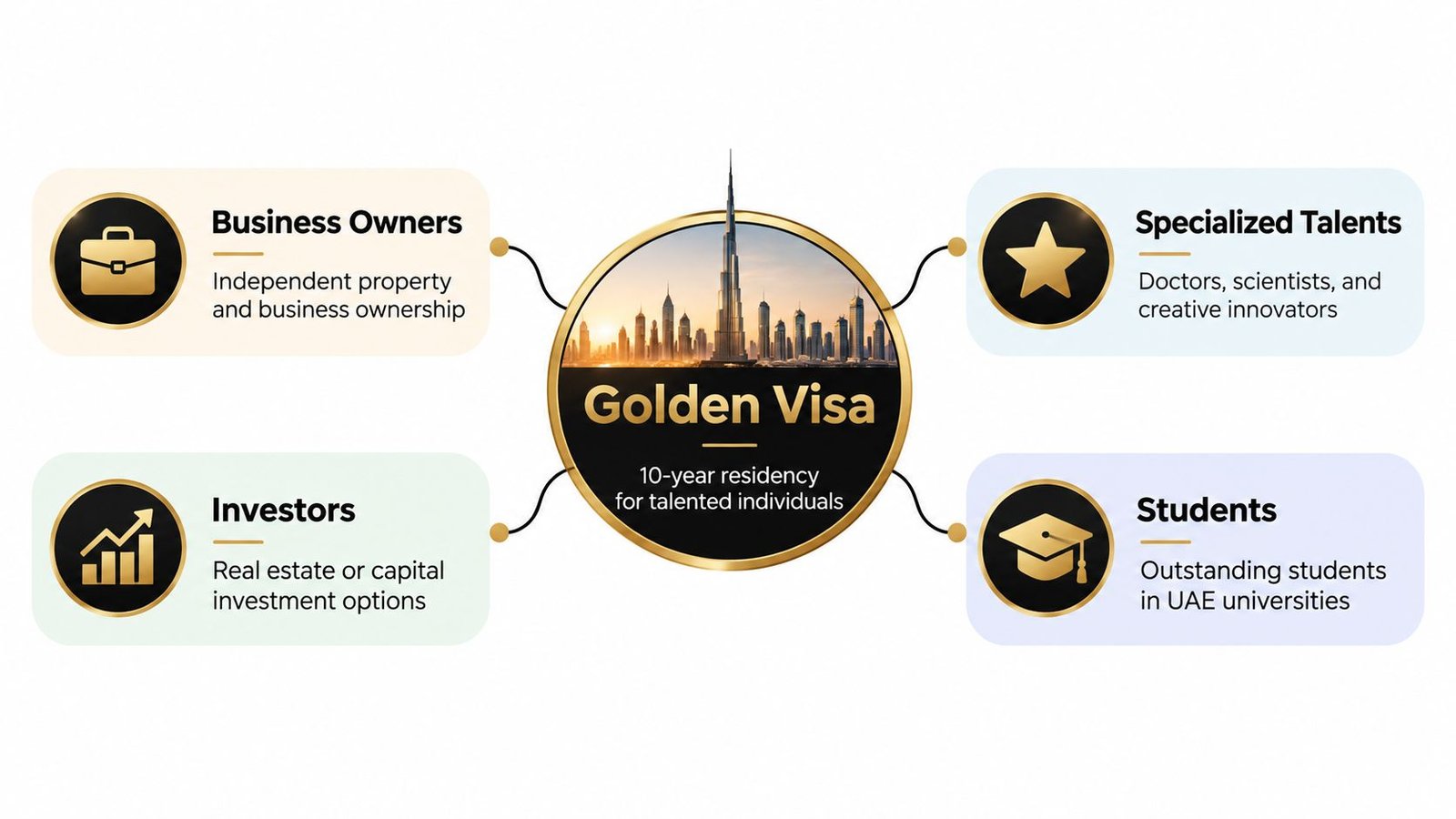
The UAE Golden Visa is a long-term residence pathway for eligible investors, entrepreneurs, skilled professionals, educators, students, and other talented individuals. The United Arab Emirates introduced the Golden Residency programme in 2019, and it can be issued for five or ten years, depending on the applicant's category. It can be renewed when the eligibility conditions remain satisfied, and it doesn't require a traditional local sponsor. ICP describes the Golden Residency structure and eligible groups.
That distinction matters if your current status depends on an employer. An ordinary employment-linked residence arrangement is connected to a specific sponsorship relationship, while Golden Residency is assessed through your investment, company ownership, qualifications, talent, or contribution. A founder can therefore have greater independence if the qualifying profile remains valid, rather than relying only on a UAE employment contract.
What does long-term residence change?
The practical benefit is residency stability. Eligible holders can maintain longer-term residence while living, working, or investing in the UAE, and eligible family members may also benefit from the holder's longer-term status under the applicable rules. This can make planning easier for founders moving between Dubai, Abu Dhabi, Sharjah, and UAE free zones.
Golden Residency is still a residence permit, not citizenship. It also isn't an automatic approval based on incorporation alone. The applicant must show that their circumstances fit a recognised category and provide documents that allow the relevant authority to verify the claim.
Practical rule: A UAE company licence may support an application, but the licence by itself doesn't prove Golden Visa eligibility.
The programme is relevant to an international founder establishing a UAE company, an investor acquiring qualifying property or business interests, and a senior specialist whose qualifications or contribution meet the applicable standards. Before applying, identify the category first. The correct category determines which authority letters, ownership records, academic documents, or professional evidence you'll need.
Eligibility Categories at a Glance
A founder with a UAE company may fit more than one headline category, yet each route asks for different proof. A company licence can support an application, but it does not decide whether the applicant qualifies. The authority matches the applicant's circumstances and documents to one recognised category. The official ICP overview lists the principal Golden Residency groups.
| Category | Who it may suit | What normally needs to be demonstrated |
|---|---|---|
| Investors | Individuals investing in qualifying public investments, UAE companies, or property | Qualifying capital or property ownership, plus proof of ownership and source |
| Entrepreneurs | Founders developing or owning a recognised business project | A viable entrepreneurial profile and category-specific supporting evidence |
| Scientists and researchers | Researchers and scientific specialists | Recognised credentials, professional standing, and evidence of contribution |
| Outstanding students and graduates | High-achieving students or graduates | Academic distinction and documentation from the relevant institution |
| Humanitarian pioneers and frontline heroes | Recognised humanitarian contributors, medical workers, first responders, and frontline health staff as defined by the issuing authority | Evidence of service, recognition, or contribution in an accepted capacity |
Which category fits a founder?
A founder usually begins by comparing investment with entrepreneurship. The routes may appear similar, but their evidence works differently. An investor may need to prove qualifying capital ownership and its source. An entrepreneur may need to establish the strength and recognition of a business project under the applicable rules.
That distinction matters in practice. A business can be properly incorporated while the applicant still lacks the ownership records, project approvals, or source-of-funds documents required for the selected route.
Can professionals and specialists qualify?
They may qualify when their qualifications, role, or contribution meets the relevant standards. A senior employee in Dubai, a scientist working with an Abu Dhabi institution, and a specialist operating from a free zone may face different approval paths. A job title alone does not establish eligibility. Federal categories provide the framework, while the issuing authority and emirate-level process can affect the evidence and approvals requested.
What about students and humanitarian workers?
Outstanding students and graduates need academic records showing that they meet the applicable standards. Humanitarian pioneers and frontline heroes need evidence of recognised service or contribution in an accepted capacity.
Download the current evidence list from the ICP service page for your category before ordering attestations, because required documents changed between the 2022 and 2024 updates.
Investor Eligibility and Financial Thresholds
For many founders and international business owners, the investor route is the clearest starting point. The headline threshold is AED 2 million, but that figure doesn't describe one single application method. The required evidence changes according to whether you're using a deposit, company capital, business tax payments, or UAE property.
How does the public investment route work?
A public-investment applicant may qualify through one of several structures:
- Bank or fund deposit: A deposit of at least AED 2,000,000 with an approved investment fund or UAE national bank.
- UAE company capital: Ownership or partnership in a UAE company with capital of at least AED 2,000,000.
- Federal tax route: Ownership of a business that pays at least AED 250,000 in annual federal taxes.
These routes come from the official UAE Government summary of Golden Visa requirements. Review the federal investor routes and category distinctions on the UAE Government platform.
The capital generally must be fully owned by the applicant and cannot come from a loan. You'll also need evidence of ownership and source. That means registering a company with a large stated capital amount isn't enough if the records don't show that the qualifying capital belongs to you and can be traced to a legitimate source.
How does the property route differ?
Real-estate investors must own one or more UAE properties with a combined value of at least AED 2,000,000. The property should be registered in the principal applicant's name. Financing may be accepted when it comes through an approved local bank and the applicant provides the documents required by the relevant authority.
For a mortgaged property in Dubai, Dubai Land Department guidance refers to a bank no-objection letter identifying the amount paid and outstanding balance. You should also obtain the official valuation or registration evidence and confirm that the specific financing arrangement is accepted in the emirate where you're applying.
Why do published visa durations differ?
Official summaries don't present real-estate duration in exactly the same way. The UAE Government platform lists public investment as ten years and real-estate investment as five years, while current ICP guidance describes qualifying investor Golden Residency as a ten-year pathway. Dubai Land Department's Dubai-specific service also describes a renewable ten-year permit.
This isn't a detail to guess. Confirm the duration with the issuing authority for your emirate and route before relying on it for relocation, family planning, or business timelines. You can also review the expected government and service charges through Inpro's Golden Visa fees guide, then verify current figures with the relevant authority.
Source-of-funds test: Meeting the AED threshold is only one part of the assessment. Your documents must connect the qualifying amount to you.
How to Apply Through ICP Channels
The Federal Authority for Identity, Citizenship, Customs and Port Security, usually called ICP, is the federal immigration authority responsible for the relevant digital channels. ICP states that qualifying applicants may apply for candidacy through its official digital services, subject to category-specific documentation and approval. Use the ICP Golden Residency service information as the starting point.
What happens first?
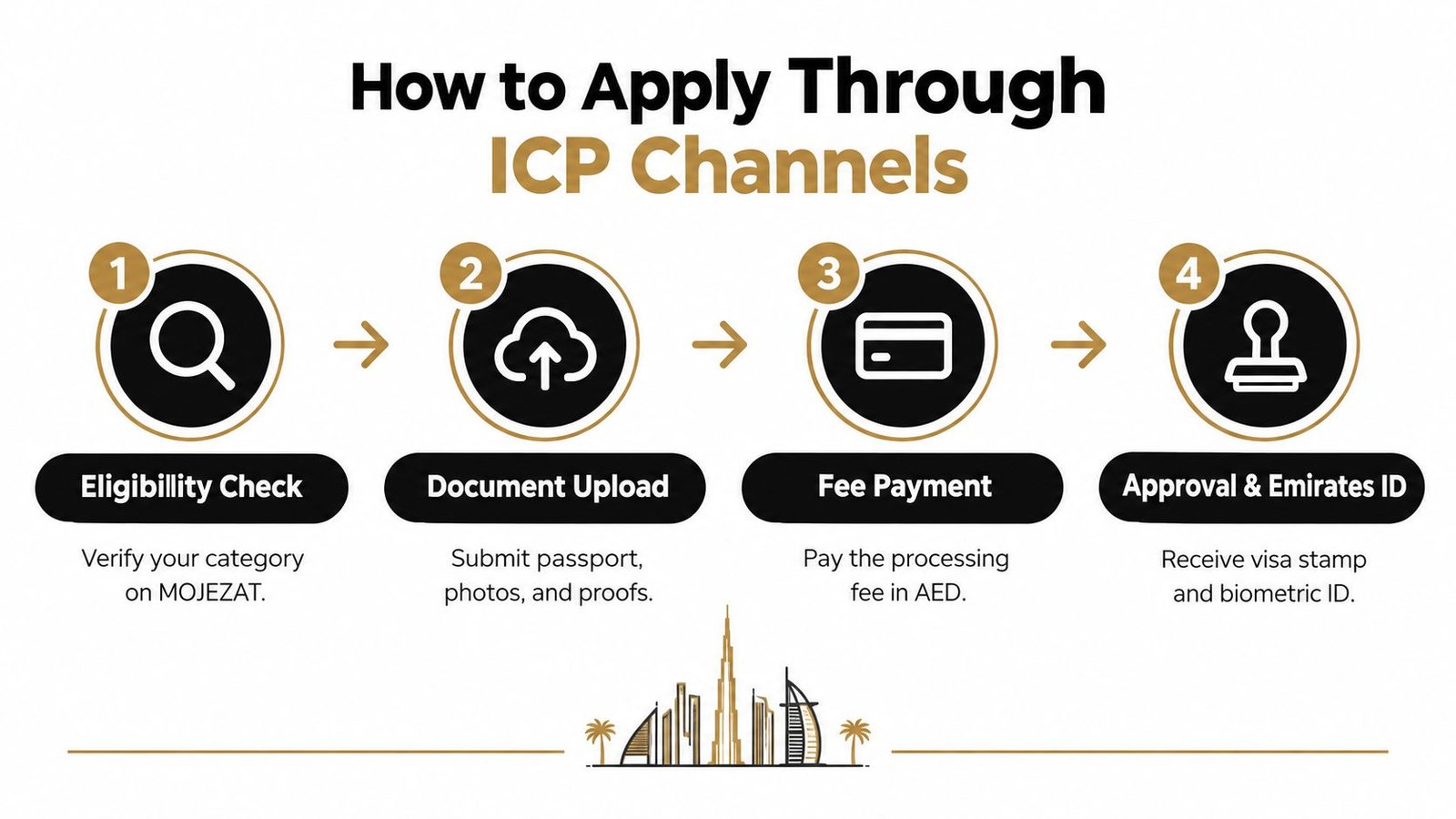
Begin by identifying the category and checking its current documentation requirements. Create or access your account on the appropriate ICP digital platform, select the relevant service, and provide the requested personal and eligibility information. The authority may require a candidacy or nomination stage before the final residence process continues.
Prepare readable copies of your passport and identity documents, then add the evidence that proves your category. For an investor, that might include company records, bank or fund confirmation, property registration, tax evidence, and source-of-funds documents. For another category, the file may instead centre on qualifications, academic records, or recognised contributions.
Which documents should you prepare?
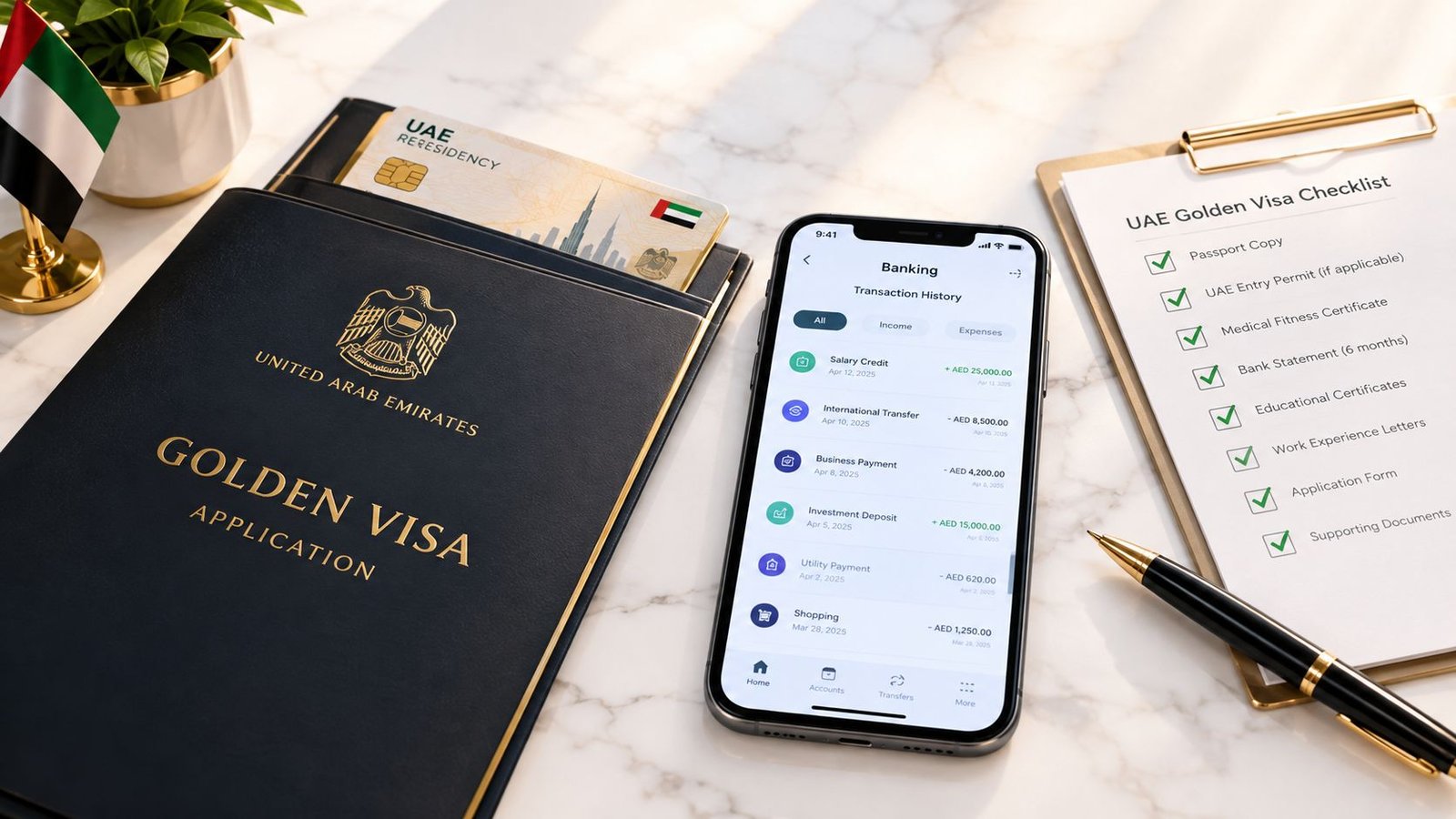
Use a document checklist rather than uploading files as you find them:
- Identity documents: Passport copies and any current UAE residence or identity records requested by the service.
- Eligibility evidence: Company ownership, investment confirmation, property records, tax documentation, academic certificates, or professional evidence.
- Ownership and source records: Bank statements, corporate records, fund letters, and documents showing how the qualifying amount was acquired.
- Family documents: If family members are included, prepare the relationship and identity documents required for their applications.
- Authority-specific papers: Obtain no-objection letters, valuation documents, attestations, or translations where the issuing authority asks for them.
You can read a practical application overview in Inpro's guide on how to apply for a Golden Visa in the UAE. The authority may request clarification after submission, so monitor the application account and respond with documents that directly answer the request.
The application process can include review, approval, medical or identity procedures, and Emirates Identity Card steps, depending on your status and route. Don't commit to a personal relocation date until the relevant authority confirms approval and the remaining issuance steps are clear.
Watch this visual guide before starting your document preparation:
Documentation Pitfalls and How to Avoid Them
Most avoidable problems occur when an applicant proves that money exists but doesn't prove where it came from, who owns it, and how it relates to the qualifying investment. A personal bank statement may show a balance, but it may not explain the transfer into a UAE company, the acquisition of shares, or the payment of a property purchase.
What does source-of-funds evidence need to show?
The file should create a clear chain between the applicant and the qualifying amount. Depending on the route, that chain may include:
- Corporate records: Share registers, capital records, audited statements, or company documents linking the applicant to the ownership.
- Bank evidence: Statements or bank letters showing the relevant deposit, transfers, and ownership of the account.
- Investment confirmations: A letter from the approved fund or bank confirming the qualifying investment.
- Tax evidence: Federal Tax Authority documents connecting the business and its annual federal tax payments to the applicant.
- Property records: Registration or valuation evidence showing the property is held in the principal applicant's name.
This is why a newly incorporated company may not be enough on its own. The authority needs evidence that the qualifying investment is real, owned by the applicant, and supported by a traceable source.
Which financing mistakes create trouble?
Applicants sometimes assume any financing arrangement will count towards the threshold. The federal investor guidance says the invested capital must be fully owned and not derived from a loan, while property financing may be accepted under applicable local-bank rules. Those are different situations, so don't treat a mortgage-supported property and loan-funded company capital as equivalent.
Emirate-level procedures can also differ. Dubai Land Department may ask for a bank no-objection letter for a mortgaged property, while another authority may apply a different document process. Confirm the current route with the authority handling your application before you order attestations or submit translations.
For help organising attestations and supporting records, review the documents that may need attestation for the UAE. A clean file doesn't guarantee approval, but it gives the reviewer a coherent explanation of your eligibility.
Three Founder Profiles and Their Paths
Consider three fictional founder profiles. They show why the best route depends on the evidence behind the business, not just the person's job title or residence location.
How might a Dubai technology founder qualify?
A technology founder incorporates a company in Dubai Internet City with AED 3 million in registered capital. On the facts provided, the founder may fit the public-investment route because the company capital exceeds the AED 2 million threshold.
The application still needs more than the incorporation certificate. The founder should be ready to show that the capital is paid and owned in reality, supported by corporate records and financial evidence that links the amount to the applicant.
What does a financed Abu Dhabi property case look like?
A real-estate investor buys a property in Abu Dhabi valued at AED 2.5 million using bank financing. The property value exceeds the AED 2 million real-estate threshold, so the investor may fit the property route if the title and financing structure meet the applicable requirements.
The bank's documentation becomes central. The investor should obtain the required no-objection letter and confirm that the property is registered in the applicant's name. Abu Dhabi's issuing process should be checked directly rather than assuming that Dubai Land Department procedures apply unchanged.
Can a Sharjah free-zone consultant use the tax route?
A freelance entrepreneur operates a digital consultancy through a Sharjah free zone and pays annual corporate taxes exceeding AED 250,000. On those facts, the entrepreneur may fit the business taxation route, provided the payments are federal taxes recognised for the application and the company ownership can be verified.
A free-zone licence doesn't automatically establish eligibility. The applicant needs Federal Tax Authority evidence and business records that connect the tax payments to the owned company and the applicant's role. This example also shows why founders should distinguish a company's location from the federal evidence required for the selected route.
Next Steps and When to Seek Assistance
Start with a category decision, not an online form. Write down whether your proposed route is public investment, property investment, entrepreneurship, professional qualification, academic achievement, or recognised contribution. Then list the documents that prove ownership, value, source, and identity.
Next, compare the evidence you have with the current ICP requirements and the implementation used by the relevant emirate. If you're applying from Dubai, check whether Dubai-specific property or service documents apply. If your company is in Abu Dhabi, Sharjah, or a free zone, confirm which authority issues supporting records and whether additional letters are required.
A professional service can help when ownership is split, funds have moved between countries, property is mortgaged, or company and personal records don't align. Inpro provides Golden Visa eligibility review, document preparation, supporting-document coordination, and management of immigration workflows through government channels. It also supports wider UAE setup and visa administration, but applicants should still verify the final requirements and approval with the issuing authority.
Gather your passport, ownership records, bank evidence, tax records, property documents, and any required attestations before filing. If one document doesn't clearly answer who owns the qualifying asset or where the money came from, resolve that gap first.
Inpro can review your proposed Golden Visa category, organise the supporting documents, and coordinate the government application workflow. Visit Inpro to discuss your UAE setup, book a strategy call, or assess the next practical step for your application.